Google's BigQuery is part of the Google Cloud Platform, a database-as-a-service (DBaaS) supporting the querying and rapid analysis of enterprise data.
$6.25
per TiB (after the 1st 1 TiB per month, which is free)
Microsoft Power BI
Score 8.5 out of 10
N/A
Microsoft Power BI is a visualization and data discovery tool from Microsoft. It allows users to convert data into visuals and graphics, visually explore and analyze data, collaborate on interactive dashboards and reports, and scale across their organization with built-in governance and security.
$168
per year per user
QlikView
Score 8.2 out of 10
N/A
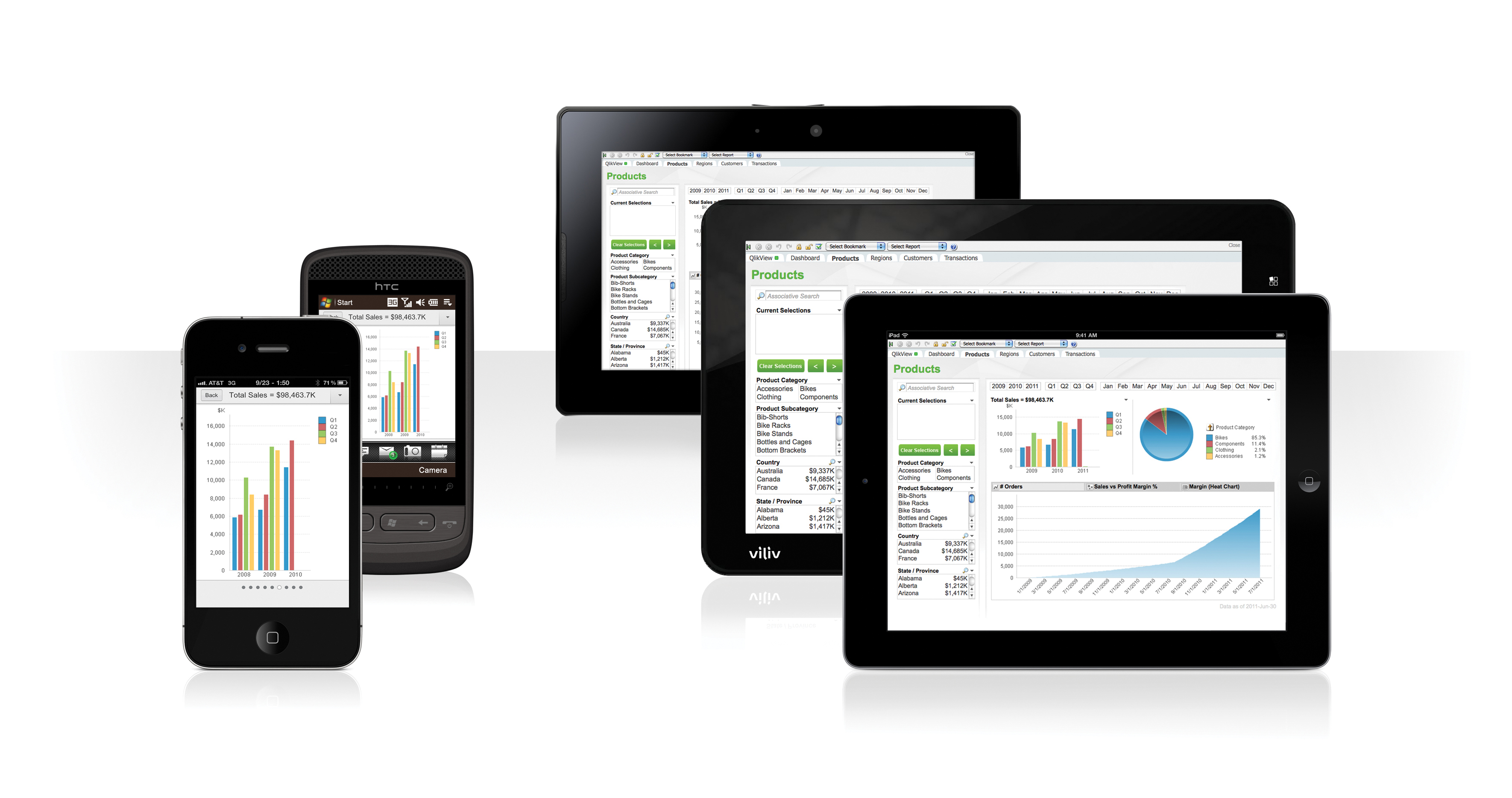
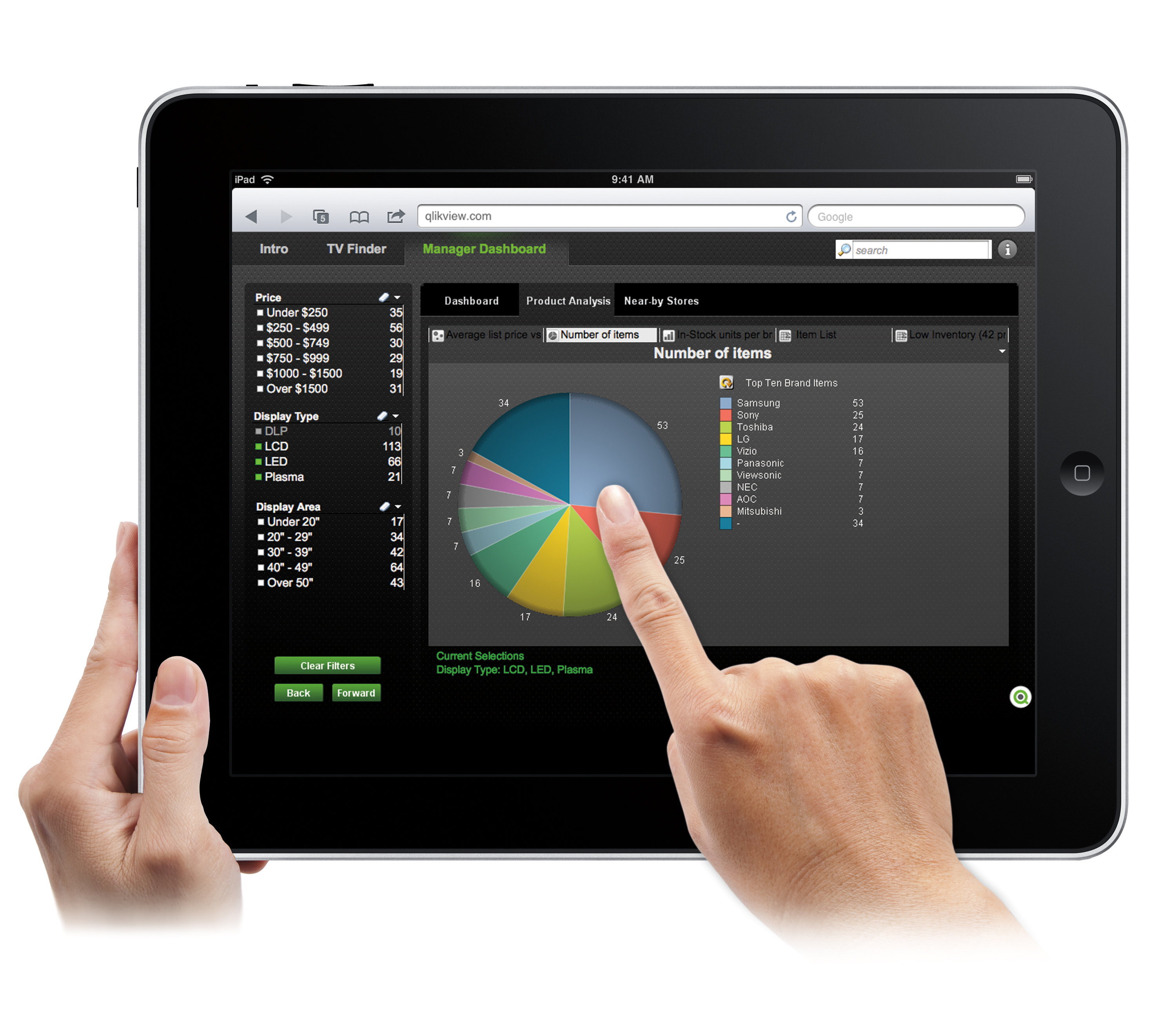
QlikView® is Qlik®’s original BI offering designed primarily for shared business intelligence reports and data visualizations. It offers guided exploration and discovery, collaborative analytics for sharing insight, and agile development and deployment.
N/A
Pricing
Google BigQuery
Microsoft Power BI
QlikView
Editions & Modules
Standard edition
$0.04 / slot hour
Enterprise edition
$0.06 / slot hour
Enterprise Plus edition
$0.10 / slot hour
Power BI Pro
$14
per month (billed annually) per user
Power BI Premium
$24
per month (billed annually) per user
QlikView
Custom
per user
Offerings
Pricing Offerings
Google BigQuery
Microsoft Power BI
QlikView
Free Trial
Yes
Yes
Yes
Free/Freemium Version
Yes
Yes
No
Premium Consulting/Integration Services
No
No
Yes
Entry-level Setup Fee
No setup fee
No setup fee
Optional
Additional Details
—
Power BI Desktop is the data exploration and report authoring experience for Power BI, and is available as a free download.
On an perpetual license basis, based on server plus number of users.
Contact vendor for pricing.
More Pricing Information
Community Pulse
Google BigQuery
Microsoft Power BI
QlikView
Considered Multiple Products
Google BigQuery
Verified User
Executive
Chose Google BigQuery
Google BigQuery of course collects a much much larger array of raw data and can handle (practically) an unlimited amount of data. For a large enterprise like ours that relies on large-scale analytics, this is absolutely imperative. Google BigQuery can also combine GA4 data with …
PowerBI can connect to GA4 for example but the data processing is more complicated and it takes longer to create dashboards. Azure is great once the data import has been configured but it's not an easy task for small businesses as it is with BigQuery.
I have used most of the data analytics platforms. Based on my work, I have found that the user interface of Google BigQuery is simple to navigate. I like the front view - ease of joining tables, and integration with other platforms.
Google BigQuery i would say is better to use than AWS Redshift but not SQL products but this could be due to being more experience in Microsoft and AWS products. It would be really nice if it could use standard SQL server coding rather than having to learn another dialect of …
Other locally hosted solutions are capable of providing the required level of performance, but the administration requirements are significantly more involved than with BigQuery. Additionally, there are capacity and availability concerns with locally hosted platforms that are a …
As mentioned earlier, Power BI is not as mature as QlikView or Tableau and, as a result, is more limited in the kinds of things it's capable of. That said, it's still highly capable of fulfilling most typical BI dashboard requirements. We chose Power BI partly because of a very …
Power BI, Tableau, and QlikView are the market leaders when analyzed on Gartner`s magic quadrant for business intelligence tool. One of the critical drawbacks of all these visionary tools is the absence or expensive back end that are needed to support the infrastructure. …
We were able to bundle Power BI with other Microsoft products we rely on heavily. This and the customization options were the main sellers for us.
Verified User
Analyst
Chose Microsoft Power BI
After several years using Google Looker Studio and BigQuery, Microsoft Power BI is a step-up in terms of visualizations. It is also much more powerful, leading to less errors and has a more intuitive interface. Looker Studio has a focus on Google Analytics whereas Microsoft …
It has more than 200 plus visuals in-store and is very easy to access. It has a great user community to help each other with an ample amount of responses. Almost all kinds of data sources are available to use and develop the reports Easy to use and learn with a lot of training …
Global Digital Operations Manager - BA Electrification
Chose Microsoft Power BI
Power BI was perfectly integrated in our Microsoft ecosystem what makes everything easier also, the fast evolution that has happened over the last years and their reaction to our needs is something that makes the differents. They listen to the customer and as they do a lot of …
Microsoft Power BI has better pricing, better features in the trial version. Power BI is also integrated with other Microsoft products, so you can publish dashboards to SharePoint pages and to Teams. Power BI is also the easiest to use. It has more wizards and all the pop-ups …
Microsoft Power BI was a little more expensive when comparing it to the competition, but it also offers a lot more options and is more flexible as well. Also, the quality and appearance of the reports and charts was more good looking and aesthetically pleasing than the other …
Power BI does not have the feel of a fully independent and robust BI Solution. It tackles smaller functional or department-level analytic needs and can operate in a small or solo roll-out environment. But scaling up to enterprise would be better suited for Qlik or Tableau. Same …
We selected Microsoft Power BI because it has the best GUI and easy-to-use interface. As part of Microsoft suite, it has the same structure as Office 365 solutions, therefore making it easier to get onboard. At the same time, having backend solutions from Microsoft such as …
Microsoft BI tool does a better job than most of the other software. The reason is excellent visualizations and its capability to connect with various other software and data sources. Tableau does a better job when it comes to tutorials and being more user-friendly. Also …
Power BI takes it to another level with the report and dashboard designing for a wide variety of purposes, and always gives you the option to be collaborative within their native sync features, that is also an advantage to set things up, for example, to promote reports into …
Much easier learning curve and integration with Microsoft Office gives it a leg up. People not knowing they have it, believe it or not, is limiting it's usage. Microsoft really needs to market it!
Power BI is a lot easier to use. The designs are also much nicer. Costs to implement Power BI (minus the existing data infrastructure) is much lower than other tools commercially available. However, the tool is still relatively new and still lacks many common features that …
As mentioned earlier it is free of cost and easy to learn as it is part of the Microsoft suite product. It blends well with ETL package tools such as SSRS and SSIS. It is also easy to distribute the dashboard to users of Office 365. It is a a complete Microsoft product which …
QlikView seems somewhat legacy compared to Microsoft Power BI, with more options to customize and format dashboards with a more enhanced look and feel. QlikView was already widely used in our organization before I came on board and was widely adopted as the single source of …
Each tool has their own pros and cons; QlikView works well for our needs at this time.
Verified User
Executive
Chose QlikView
I think it all comes down to personal preference and integration compatibility with the existing systems in the organization. However, I would argue that Qlik and PowerBI are the top-tier available solutions due to robust features and capabilities, and I would put solutions …
MS Power BI and other BI tools have similar functions to QlikView and some of them also have much cheaper price. However, the strength of QlikView is that it is much easier to use and to learn. If you need to train a new person to learn the tool, it costs around 1-2 days.
QlikView has its own data warehouse, which is the most important reason why would I choose QlikView over any other tools. Apart from that, the feature options are good for the ones who know the tool well but created a steeper learning curve in the beginning. Once you went …
Qlik was less intuitive than Paxata, but less expensive than either microstrategy or PowerBI. Qlik has enough breadth to accommodate most use cases without breaking the bank.
Power BI is cheaper, but more basic. Tableau is more expensive, but with greater capabilities. I feel like the other two are a little more intuitive. My company had Qlikview when I arrived.
Event-based data can be captured seamlessly from our data layers (and exported to Google BigQuery). When events like page-views, clicks, add-to-cart are tracked, Google BigQuery can help efficiently with running queries to observe patterns in user behaviour. That intermediate step of trying to "untangle" event data is resolved by Google BigQuery. A scenario where it could possibly be less appropriate is when analysing "granular" details (like small changes to a database happening very frequently).
Has significantly improved collation of data and visualisation especially with business across Europe. Has given me the ability to see the Site availability at the click of a button to see which Site is in the "money" and seize opportunities based on Market data
Sales data validations have helped manage our justifications in the past, especially with regard to new product development and new business introduction. It has also been helpful in identifying trends with business impact and direction specific to quarter and monthly sales from ERP data as well as decisions to purchase equipment of staffing based on run rates and product demand.
One thing that can get out of hand is data output - if you aren't careful in your query, you may be overloaded with data dumps and drown in the amount of info you have to filter through. This is a user caution, not a comment on the software itself.
GSheet data can be linked to a BigQuery table and the data in that sheet is ingested in realtime into BigQuery. It's a live 'sync' which means it supports insertions, deletions, and alterations. The only limitation here is the schema'; this remains static once the table is created.
Seamless integration with other GCP products.
A simple pipeline might look like this:-
GForms -> GSheets -> BigQuery -> Looker
It all links up really well and with ease.
One instance holds many projects.
Separating data into datamarts or datameshes is really easy in BigQuery, since one BigQuery instance can hold multiple projects; which are isolated collections of datasets.
Options for data source connections are immense. Not just which sources, but your options for *how* the data is brought in.
Constant updates (this is both good and bad at times).
User friendliness. I can get the data connections set up and draft some quick visuals, then release to the target audience and let them expand on it how they want to.
Please expand the availability of documentation, tutorials, and community forums to provide developers with comprehensive support and guidance on using Google BigQuery effectively for their projects.
If possible, simplify the pricing model and provide clearer cost breakdowns to help users understand and plan for expenses when using Google BigQuery. Also, some cost reduction is welcome.
It still misses the process of importing data into Google BigQuery. Probably, by improving compatibility with different data formats and sources and reducing the complexity of data ingestion workflows, it can be made to work.
We found that QlikView can be a bit slow in supporting some forms of encryption. It is web-based and we needed to upgrade all of our server to not support the older SSL and TLS 1 protocols, only support TLS 1.2 and TLS 1.3. However, QlikView could not run with TLS 1.2 and TLS 1.3. We had to wait over six months to get a version that would handle the newer TLS versions.
There are so many options with QlikView that you can get lost when developing a visualization. There are still items I have not yet figured out, such as labeling a graph with the name of a selected detail item.
QlikView works by pulling the data it is going to use for visualization into its database. I am a security reviewer and I need to make certain that PII and PHI is not pulled by QlikView for a visualization, otherwise this could become a reportable indecent.
We have to use this product as its a 3rd party supplier choice to utilise this product for their data side backend so will not be likely we will move away from this product in the future unless the 3rd party supplier decides to change data vendors.
Microsoft Power BI is an excellent and scalable tool. It has a learning curve, but once you get past that, the sky is the limit and you can build from the most simple to the most complex dashboards. I have built everything from simple reports with only a few data points to complex reports with many pages and advanced filtering.
Ease of use, ability to load from pretty much any data source. today I created an application that loaded time sheets from excel that are not in a table format. With Qlik's "enable transformation steps" I was able to automate loads of multiple spreadsheets and multiple tabs easily. Could not do that with any other tool.
I think overall it is easy to use. I haven't done anything from the development side but an more of an end user of reporting tables built in Google BigQuery. I connect data visualization tools like Tableau or Power BI to the BigQuery reporting tables to analyze trends and create complex dashboards.
Automating reporting has reduced manual data processing by 50-70%, freeing up analysts for higher-value tasks. A finance team that previously spent 20+ hours per week on Excel-based reports now does it in minutes with Microsoft Power BI's automated Real-time dashboards have shortened decision cycles by 30-40%, enabling leadership to react quickly to sales trends, operational bottlenecks, and customer behavior.
QlikView is very easy to implement. The installation is very straight forward. QlikView has several different data connectors that can connect to different data sources very smoothly. The user interface to build the reports is very easy to understand. This helps to have a smaller learning curve. Something very helpful is that QlikView is a browser application for the end users. So, you don't need to install any applications on the user's computer.
I have never had any significant issues with Google Big Query. It always seems to be up and running properly when I need it. I cannot recall any times where I received any kind of application errors or unplanned outages. If there were any they were resolved quickly by my IT team so I didn't notice them.
I think Google Big Query's performance is in the acceptable range. Sometimes larger datasets are somewhat sluggish to load but for most of our applications it performs at a reasonable speed. We do have some reports that include a lot of complex calculations and others that run on granular store level data that so sometimes take a bit longer to load which can be frustrating.
BigQuery can be difficult to support because it is so solid as a product. Many of the issues you will see are related to your own data sets, however you may see issues importing data and managing jobs. If this occurs, it can be a challenge to get to speak to the correct person who can help you.
It is a fantastic tool, you can do almost everything related with data and reports, it is a perfect substitutive of Power Point and Excel with a high evolution and flexibility, and also it is very friendly and easy to share. I think all companies should have Power BI (or other BI tool) in their software package and if they are in the MS Suite, for sure Power BI should be the one due to all the benefits of the MS ecosystem.
My experience with the Qlik support team has been somewhat limited, but every interaction I have had with them has been very professional and I received a response quickly. Typically if there is a technical issue, our IT team will follow up. My inquiries are specific to product functionality, and Qlik has been very helpful in clarifying any questions I might have.
My team attended, but I cannot myself rate, but I think it was good as they've successfully launched a training program at our company themselves for users. It was 3-4 day training.
Training was as expected. The demo environments tend to be more fully featured that our own environment, but the training was clear and well delivered.
"Implementation" can mean a few things... so I'm not sure that this is the answer you want.... but here it goes: To me, implementation means: "Is the user interface intuitive and can I produce meaningful reports with ease?" On that score, I'd say YES. The amount of training required was minimal and the results were powerful. The desktop implementation is a simple, "blank" interface just waiting for your creativity. The pre-populated templates give you a reasonable start to any project -- and a good set of objects to "play around with" if you're just getting started. Finally, note that the "implementation" I used was baked into QuickBooks 2016 Enterprise -- called "Advanced Reporting"..... That integration makes it ultra useful and simple.
PowerBI can connect to GA4 for example but the data processing is more complicated and it takes longer to create dashboards. Azure is great once the data import has been configured but it's not an easy task for small businesses as it is with BigQuery.
Microsoft Power BI is free. If I didn't want to create a custom platform (i.e. my organization insisted on an existing platform that I *had* to use), I'd use Microsoft Power BI. For any start-up or SMB, I'd just use Claude & Grok to build it quickly, also for free. Would not pay for Tableau or Sigma anymore. Not worth it at all.
The only other vendor product that I have worked with that provides a similar experience to Qlikview is Tableau. I would recommend Tableau if your use case is to build a fixed dashboard. You can share reports for free without needing to buy additional licenses. I would recommend Qlikview if your users are looking for a more interactive experience. They can create new objects to represent the data which can't be accomplished as easily in Tableau
We have continued to expand out use of Google Big Query over the years. I'd say its flexibility and scalability is actually quite good. It also integrates well with other tools like Tableau and Power BI. It has served the needs of multiple data sources across multiple departments within my company.
Google Support has kindly provide individual support and consultants to assist with the integration work. In the circumstance where the consultants are not present to support with the work, Google Support Helpline will always be available to answer to the queries without having to wait for more than 3 days.
Previously, running complex queries on our on-premise data warehouse could take hours. Google BigQuery processes the same queries in minutes. We estimate it saves our team at least 25% of their time.
We can target our marketing campaigns very easily and understand our customer behaviour. It lets us personalize marketing campaigns and product recommendations and experience at least a 20% improvement in overall campaign performance.
Now, we only pay for the resources we use. Saved $1 million annually on data infrastructure and data storage costs compared to our previous solution.
You can use the free desktop version to do a lot of reporting and analysis work more quickly so the ROI is huge
QlikView is great at finding outliers such as data entry errors
QlikView is great at helping you quickly discover new insights about your business that can prompt you to take action that can immediately affect your cash flow.