RSMeans data, from Gordian (formerly Costworks) is a construction and estimation software offering acquired by the Gordian Group in 2014. It includes cost books and construction project estimating software tools.
N/A
HCSS
Score 8.6 out of 10
Mid-Size Companies (51-1,000 employees)
HCSS is a construction software suite. It includes functionality for bidding, time card and project management, safety, planning, scheduling, equipment management, and data warehousing and reporting. Each module can be purchased separately. The suite can be hosted in the cloud.
N/A
Pricing
RSMeans data, from Gordian (Costworks)
HCSS
Editions & Modules
No answers on this topic
No answers on this topic
Offerings
Pricing Offerings
RSMeans data, from Gordian (Costworks)
HCSS
Free Trial
No
No
Free/Freemium Version
No
No
Premium Consulting/Integration Services
No
Yes
Entry-level Setup Fee
No setup fee
Required
Additional Details
—
—
More Pricing Information
Community Pulse
RSMeans data, from Gordian (Costworks)
HCSS
Features
RSMeans data, from Gordian (Costworks)
HCSS
Estimating
Comparison of Estimating features of Product A and Product B
RSMeans data, from Gordian (Costworks)
7.8
1 Ratings
3% above category average
HCSS
-
Ratings
Takeoff tools
6.01 Ratings
00 Ratings
Job costing
9.01 Ratings
00 Ratings
Cost databases
9.01 Ratings
00 Ratings
Cost calculator
8.01 Ratings
00 Ratings
Bid creation
7.01 Ratings
00 Ratings
Construction Project & Field Management
Comparison of Construction Project & Field Management features of Product A and Product B
Well Suited: Construction cost estimates for new larger projects where the construction will start within the next 6-9 months. Budgetary estimates for future buildings through its square foot models. Not Well Suited: Not accurate enough on small projects where labor, travel to sites, and OH&P are a higher percentage of unit costs than on larger projects where these costs are spread out across more units.
Our operation uses several pieces of what we call specialty equipment (not used every day on every job). The foreman when finished will give a location of where this equipment is left, this many times can be very vague and lead to a lowboy driver trying to block around to find the piece or driving down a street he cannot get turned around in. With the GPS devices, the driver can pinpoint exactly where the unit is and if he has room to turn around at that location.
CostWorks is very good at generating quick and valid estimates for standardized facilities such as office buildings, schools, etc. It allows you to validate other cost estimates at the UniFormat level when doing an estimate validation.
CostWorks' database of detailed line-items is a very resourceful asset when it comes to finding a very specific line-item. Sometimes, when using Success or MII, I will have CostWorks open on the other screen so I can find an item that the other softwares just don't have and build it into the other software from the CostWorks entry.
CostWorks does a very good job of generating reports that are both well-developed and have enough detail at the summary level to be able to sit with a client or a project manager and have them follow along and understand without being overwhelmed with detail and numbers.
#1 is support! HCSS is by far the best software support of any product we have ever used. Unlike most software companies HCSS utilizes their support calls to help upgrade their software. When you here them tell you that they will write down a particular issue you come across during a support call if they can't help you then and there they will research and get an answer to you extremely fast. If the software will not do it, you can bet there is a good chance it will be on the list of enhancements you will see come out in the near future.
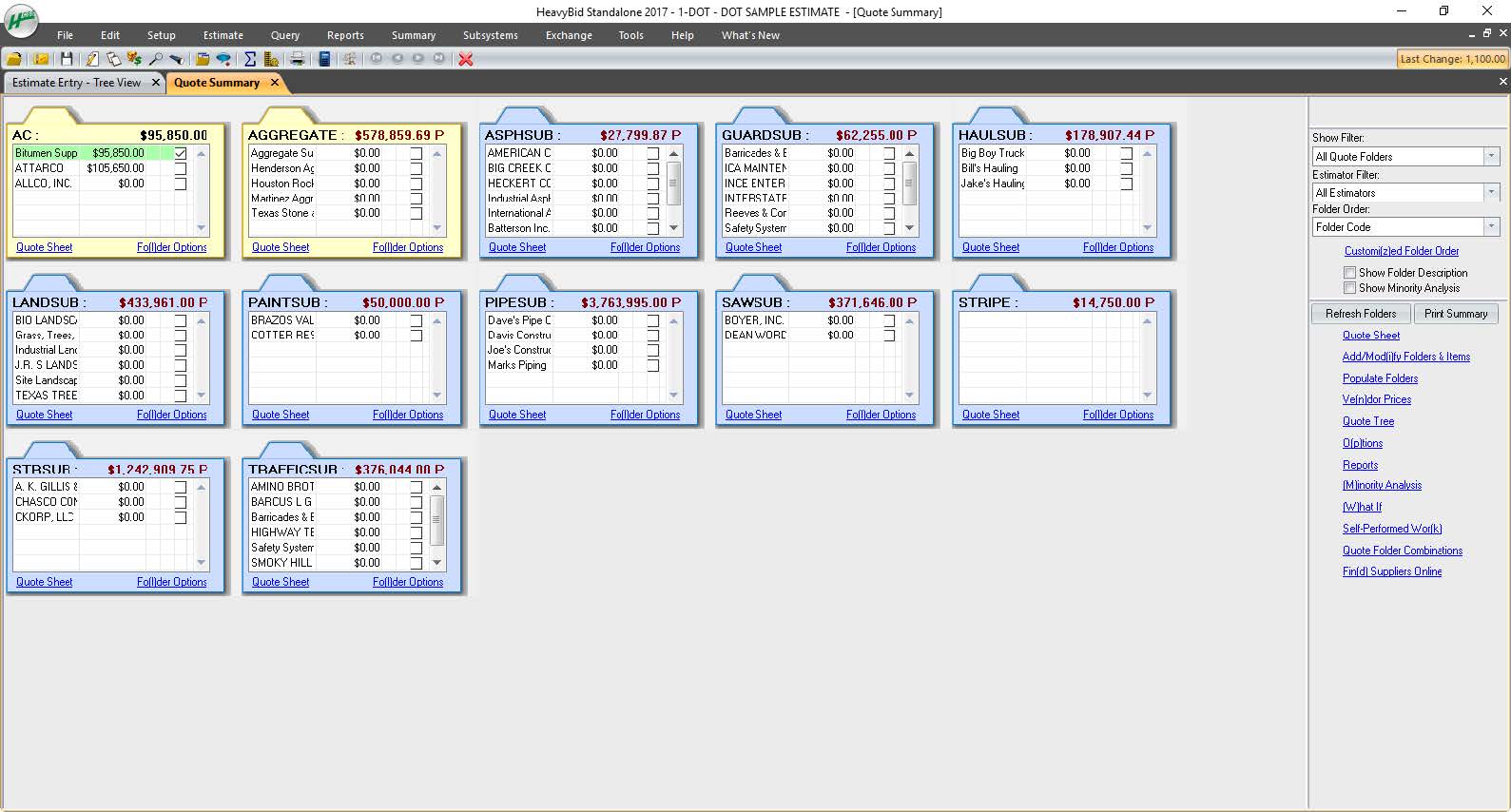
Estimating software is very extensive. Their software is capable of handling the smallest estimate all the way to the largest joint venture estimate. It has advanced features that make it extremely useful for analyzing job materials, subcontractors etc.
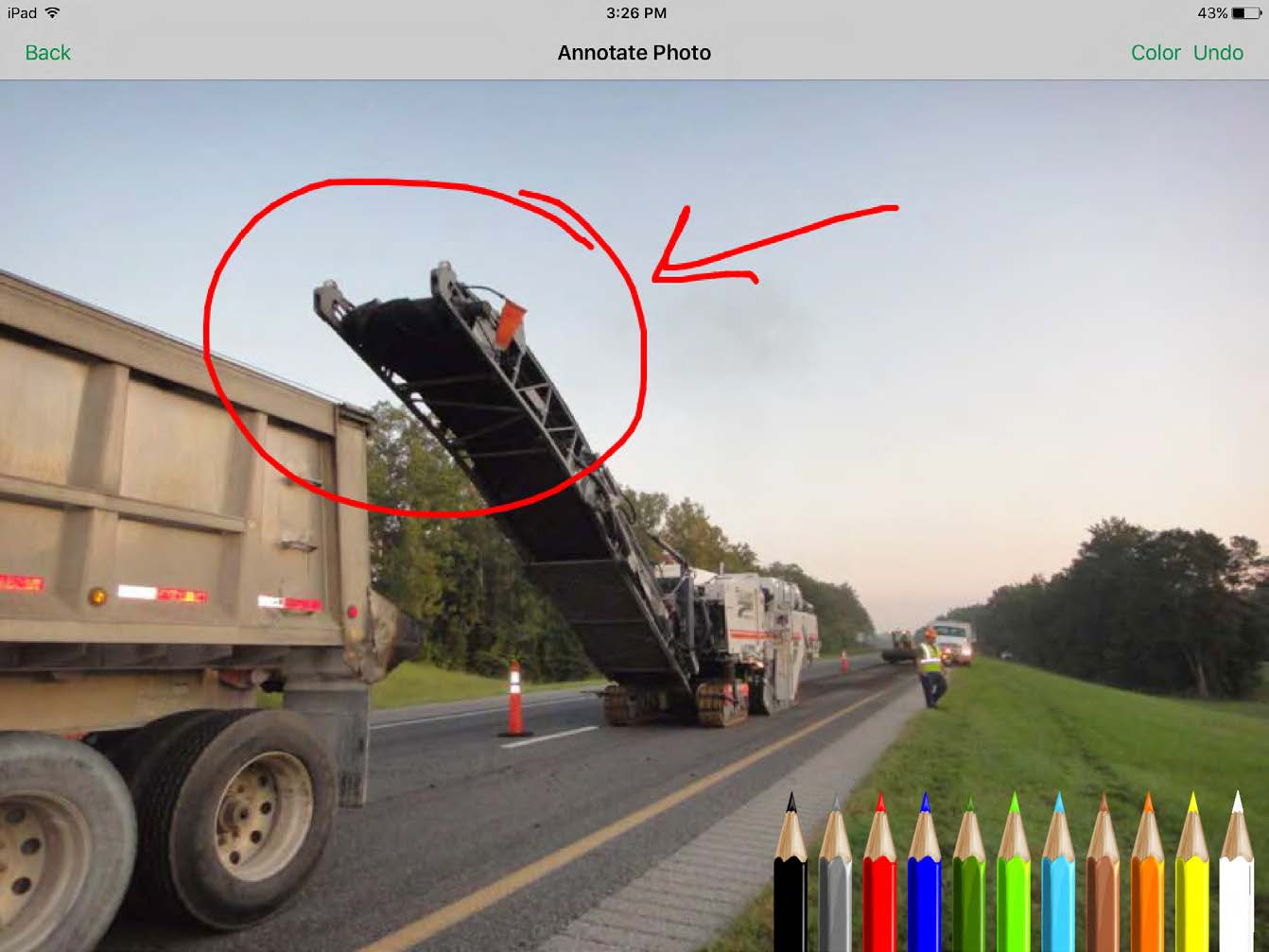
HeavyJob is an extremely useful tool for the field to keep the office up to date with job costs. Everything is at the Foreman's fingertips on Tablets to allow the information from the field to get uploaded to HeavyJob manager which then can export to accounting. We are also able to give our Foreman the ability to deal with the Daily and weekly safety needs (Tailgate Meetings, incident Investigation, observations etc.) right on the Tablets thru HeavyJob.
All their apps are on mobile devices. Although there is not a clear company policy on Android versus iPhone. Updates for features lag behind on Android. Some apps are exclusive to one platform making it hard to fully interconnect all programs.
As mentioned, user interface appears messy and complicated at initial onset. Training is necessary but becomes easy to maneuver through after solid daily use.
I have never had a bad experience or heard of one in 4 years of doing business with HCSS. That is unheard of even with the hurricanes and flooding in Houston area it feels like HCSS was always there and willing to help in every way.
I was not employed with PPI upon implementation. I would prefer to reference my previous statement, that each company needs to evaluate its culture and address your implementation accordingly. The purchasing company should assign an employee as point person and really take charge of not just the technical side of the implementation (HCSS pretty much handles that), but focus on company culture and training.
CostWorks is a unique software for estimating as compared to the other softwares I have listed above. PACES is mostly used for federal modeling and really cannot be compared to Costworks. It has its own developed modeling database and has its own quirkiness and issues. MII has been developed for the USACE and utilized a user-developed folder structure and RS Means Database. I use CostWorks along side this software to find line-items that are not in the MII RS Means Database. Success has been developed for NAVFAC and again, utilizes a user-developed folder structure and RS Means Database. When I use this software, I ALWAYS have CostWorks open on the other screen as Success' RS Means database is extremely lacking when it comes to the number of detail line-items. Timberline is by SAGE and I use it mostly for DOS and FAA work. Of the 3 RS Means Database softwares, this one has the most detailed database for reference, however, there are times when I do have to look up an item that Timberline does not have and the first software I open is CostWorks.
Other estimating products I have used consist of ICE/MC2 and MS Excel. ICE was not a good fit for our company, as they have awful technical support and offer very poor training. MS Excel is great for simple estimates where there is not a lot of data being compiled. However neither hold a candle to the power of HCSS Heavybid
I don't really see any "negative" impacts on my business or my ROI by purchasing CostWorks. It's a valuable tool that we use, however, some of my colleagues do not use it or use it very infrequently.
I find it well worth the cost even though we don't develop complete estimates in CostWorks due to client dictated softwares.
It has provided very quickly-built estimating models that let our team and project managers know that the RFP or the task that they are contemplating bidding on or starting to work on is actually feasible to construction given the budget and directive.
Because of the codebooks (bid item codebook for DOT's specifically), we're able to carve off significant time in "stick-building" estimates
It's very easy to train newer estimators with HeavyBid due to the abundance of resources available on HCSS Academy and elsewhere (i.e. Arthur Nix's material)
The KPI's and Insights that Pre-Con offers helps us to make better decisions on Bid Day.