HCL Domino (formerly IBM Domino, and before that Lotus Domino) is an enterprise application development platform, boasting mobile-app capabilities to enterprise authentication and a companion low-code app builder called Domino Volt.
N/A
Progress Telerik
Score9.4 out of 10
N/A
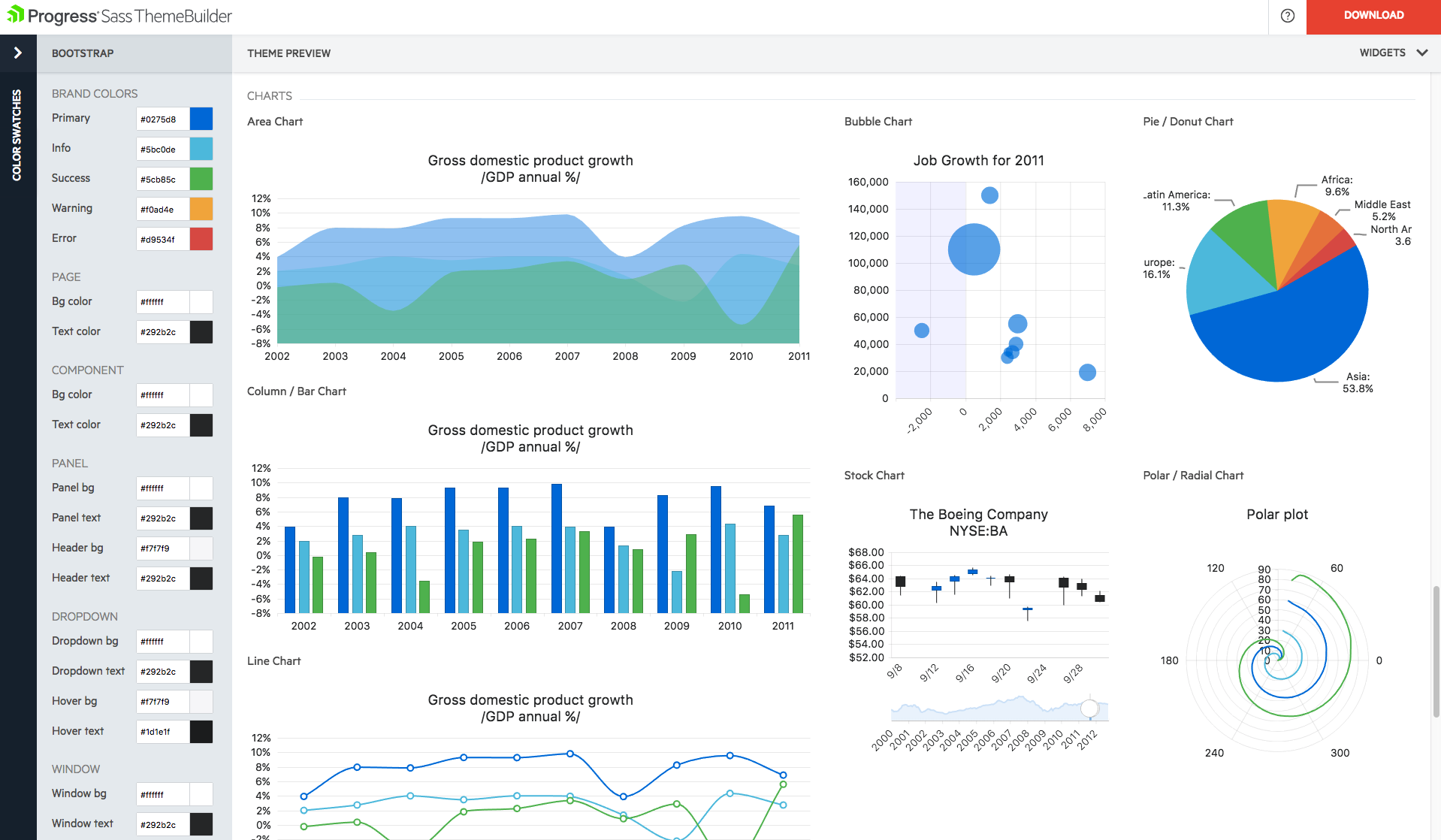
With Telerik UI libraries, Progress aims to equip .NET ninjas with a full arsenal of weapons, helping to create beautiful, modern and future-proof applications quickly and intuitively. The vendor states that with its over 1,250 UI components for all .NET platforms, as well as various themes, skins and customization options, Telerik users report cutting development time by up to 50 percent. Web
If you're looking for a high-security environment, then Domino is great. The built-in cybersecurity features are seamless, unlike those in the Microsoft or Google environments. Large databases are easily managed, and Domino enables us to automate many of our business workflows. It's easier to use than Microsoft PowerApps, for example. It doesn't integrate easily with other systems, which can be problematic at times. And because of the long-term lack of support from when IBM owned it, the user community has dwindled somewhat, making it hard to reach out for help.
A de minimis incentive was given to thank the reviewer for their time. The incentive was not used to bias or drive a particular response, nor was the incentive contingent on a positive endorsement. More Info
We have used the Telerik UI controls for our Admin user experience. We found that this lead to consistent user experience, with feature rich functions already provided. Effectively this meant that hour for hour, using the Telerik UI improved productivity in creating screens with more functions than using the default controls in ASP.NET. At this point most of our focus with the Telerik controls is User Interface oriented.
A de minimis incentive was given to thank the reviewer for their time. The incentive was not used to bias or drive a particular response, nor was the incentive contingent on a positive endorsement. More Info
A de minimis incentive was given to thank the reviewer for their time. The incentive was not used to bias or drive a particular response, nor was the incentive contingent on a positive endorsement. More Info
I am not a fan of the Domino ID for authentication purposes. Some Admins appreciate this feature, but ID aging, updating and management issues are burdensome.
Integrations with current available software applications as a result of lower Domino adoption rates.
Administration tools are somewhat dated and clunky. Even with updates and patches, the Domino administrator console hasn't changed in years.
A de minimis incentive was given to thank the reviewer for their time. The incentive was not used to bias or drive a particular response, nor was the incentive contingent on a positive endorsement. More Info
A de minimis incentive was given to thank the reviewer for their time. The incentive was not used to bias or drive a particular response, nor was the incentive contingent on a positive endorsement. More Info
The Telerik UI has become part of our staple development tools. We can not be as productive without the feature set available to us in the Telerik UI ASP.NET AJAX control package.
The UI is somewhat dated, and the email experience is not at all like Outlook, but we love the versatility and functionality of Domino. I would absolutely hate to give it up for anything else. We've tried to replicate some of Domino's functionality in SharePoint and found that Domino is considerably better.
A de minimis incentive was given to thank the reviewer for their time. The incentive was not used to bias or drive a particular response, nor was the incentive contingent on a positive endorsement. More Info
Progress Telerik UI is very usable and one of the best tools to use by the front-end development engineers in our team. It has helped us to improve the overall design of our existing and new applications. Also, the time to build applications has also been reduced effectively and we are able to focus on other areas of improvement to deliver a better user experience for our customers.
A de minimis incentive was given to thank the reviewer for their time. The incentive was not used to bias or drive a particular response, nor was the incentive contingent on a positive endorsement. More Info
Telerik UI support is what you are paying for. If something does not work you ask them for an example of how to solve your use case. The SEO on their sites is awesome and so well bedded into Google. The videos are good, [they're] not used much but their examples and DoJo examples make all the difference.
A de minimis incentive was given to thank the reviewer for their time. The incentive was not used to bias or drive a particular response, nor was the incentive contingent on a positive endorsement. More Info
We use SharePoint, SQL and Teams but only for the things that they excel in. For example, we use teams for small team interactions (including external participants). We use teams for meetings too. We've discovered that Teams collaboration is not as full-functional as Domino and more importantly, that our members (financial services) do not trust the Open Office365 cloud. SharePoint and Team collaborative features are often blocked in our member organizations. Domino is much easier to identify and unblock at the firewall level. It's much easier to restrict collaboration to approved options in Domino.
A de minimis incentive was given to thank the reviewer for their time. The incentive was not used to bias or drive a particular response, nor was the incentive contingent on a positive endorsement. More Info
Progress Telerik UI provides a large amount of language support, demos, and documentation. While the competition is still great in their own right, Progress Telerik UI has provided enough resources to cover a number of current and future projects without having to expand to other libraries.
A de minimis incentive was given to thank the reviewer for their time. The incentive was not used to bias or drive a particular response, nor was the incentive contingent on a positive endorsement. More Info
A de minimis incentive was given to thank the reviewer for their time. The incentive was not used to bias or drive a particular response, nor was the incentive contingent on a positive endorsement. More Info
A de minimis incentive was given to thank the reviewer for their time. The incentive was not used to bias or drive a particular response, nor was the incentive contingent on a positive endorsement. More Info