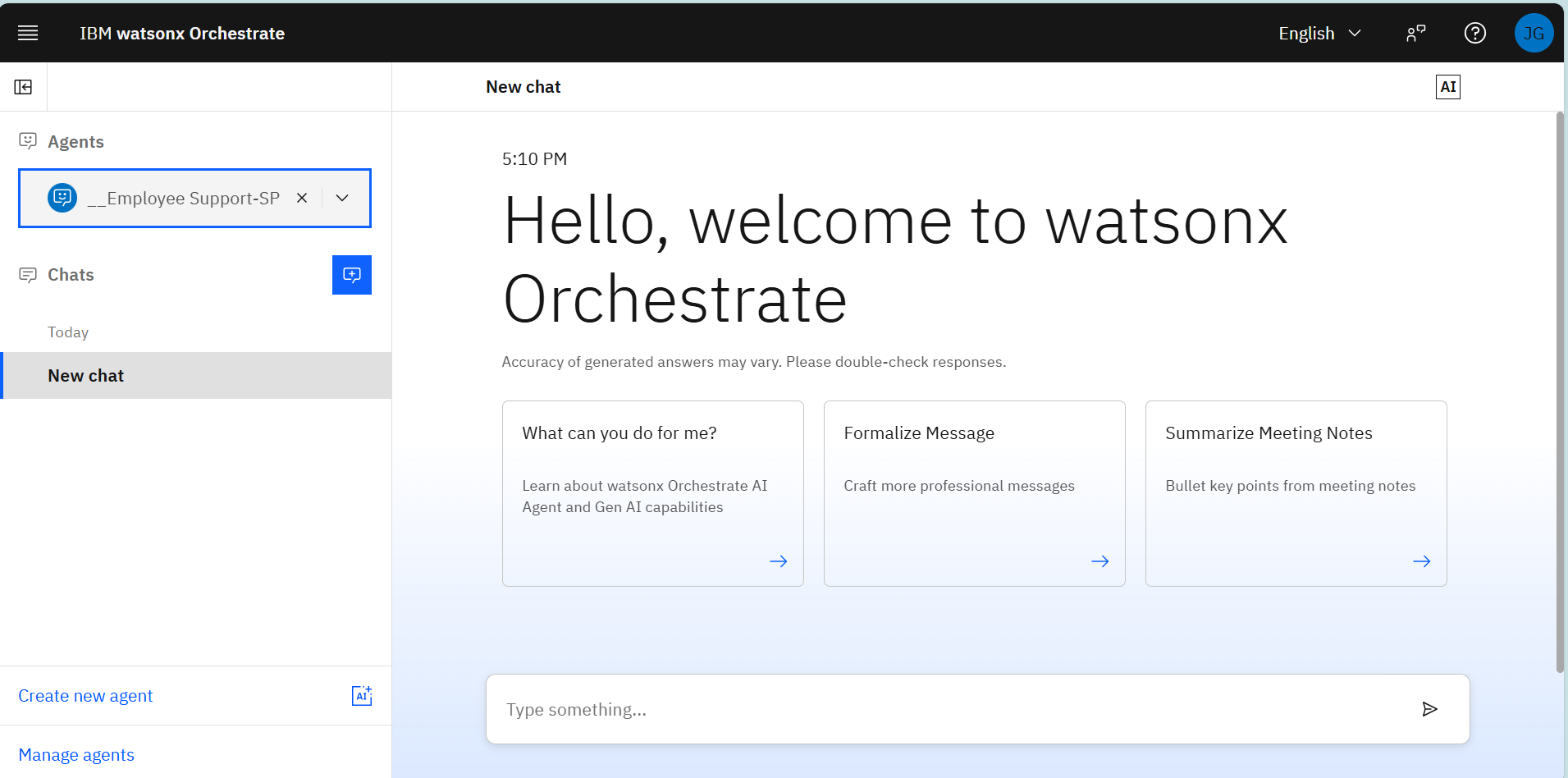
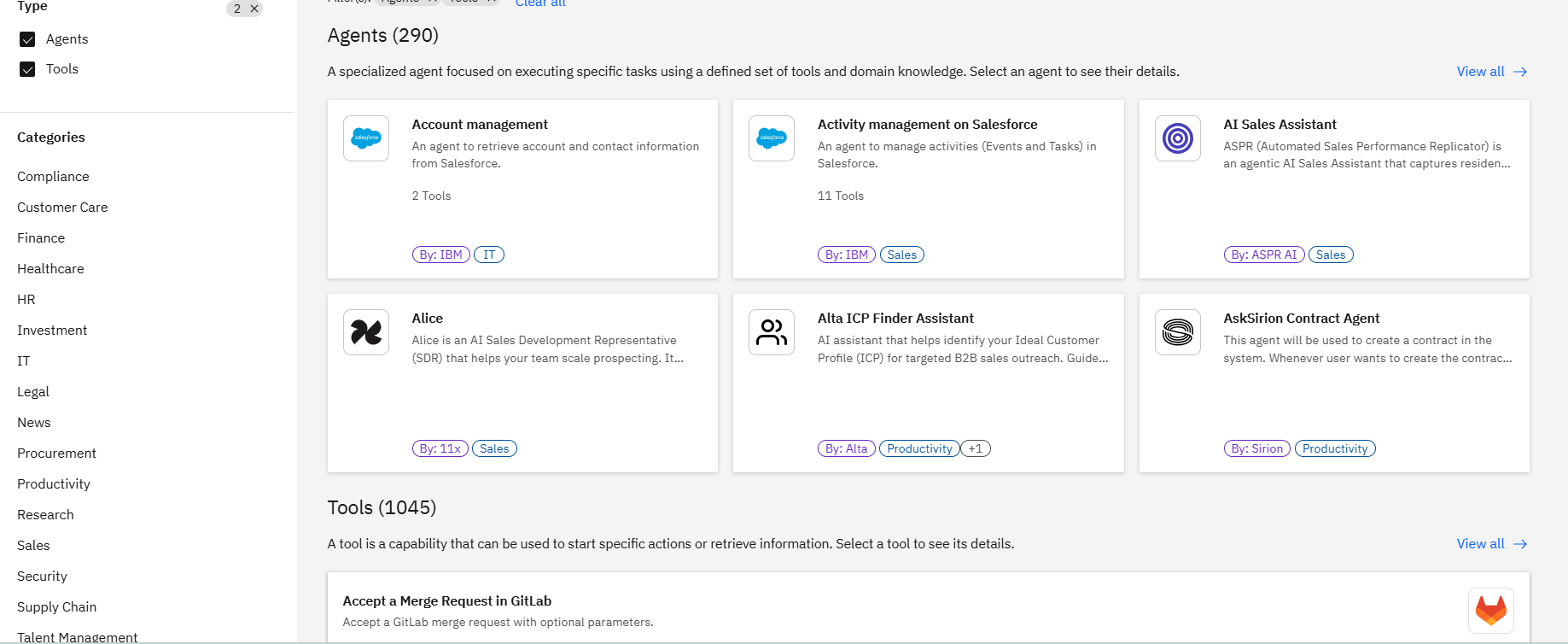
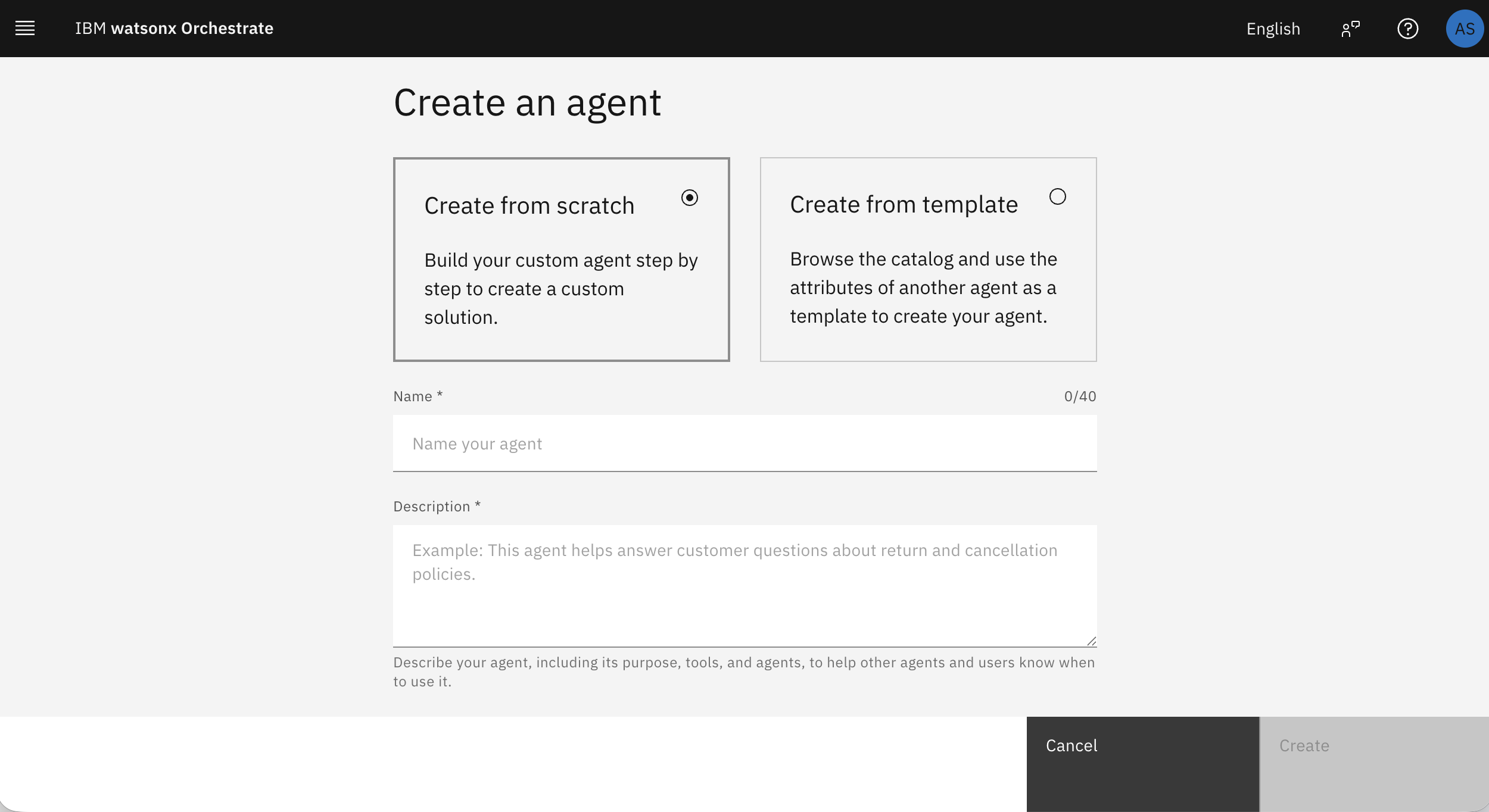
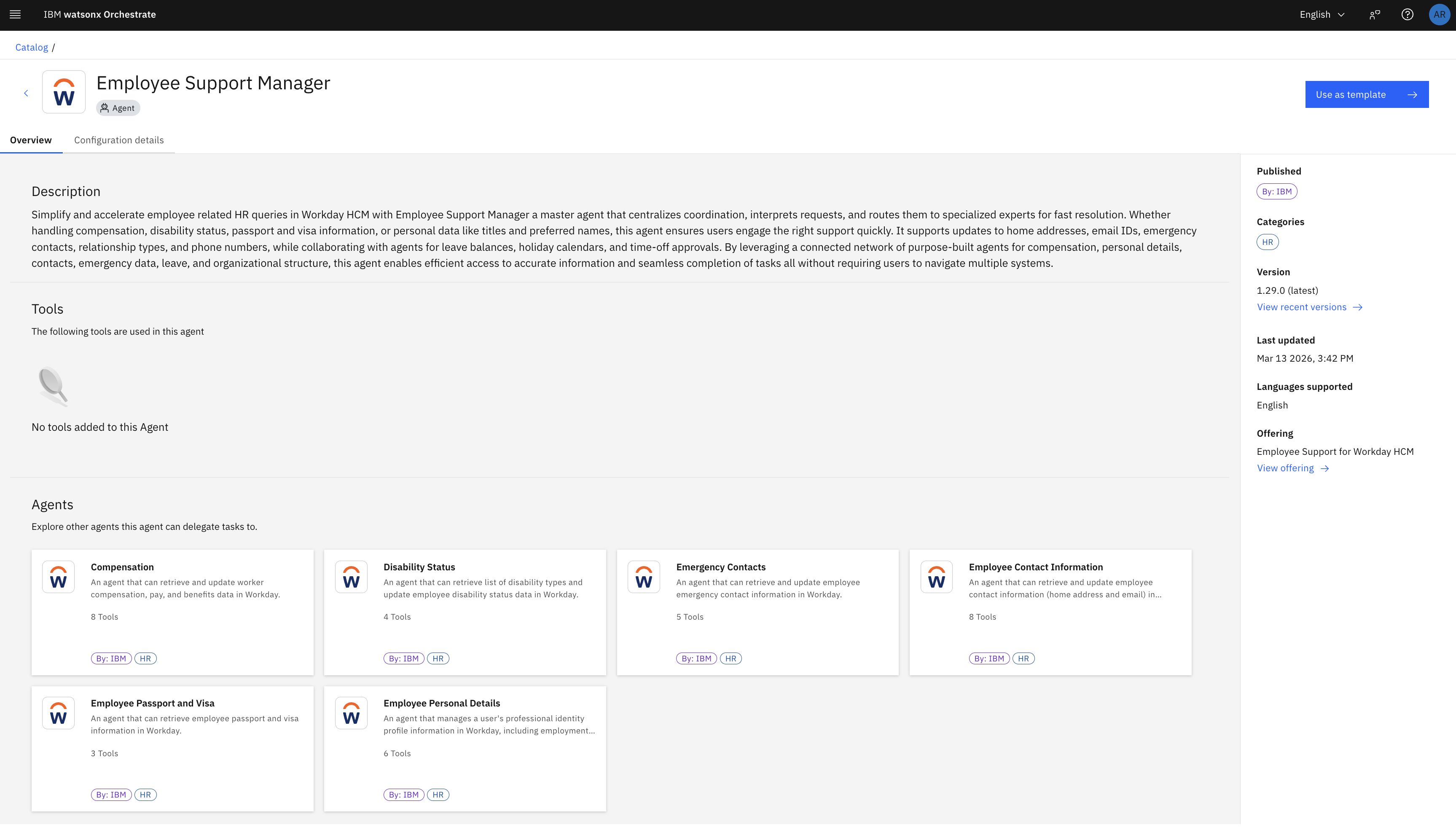
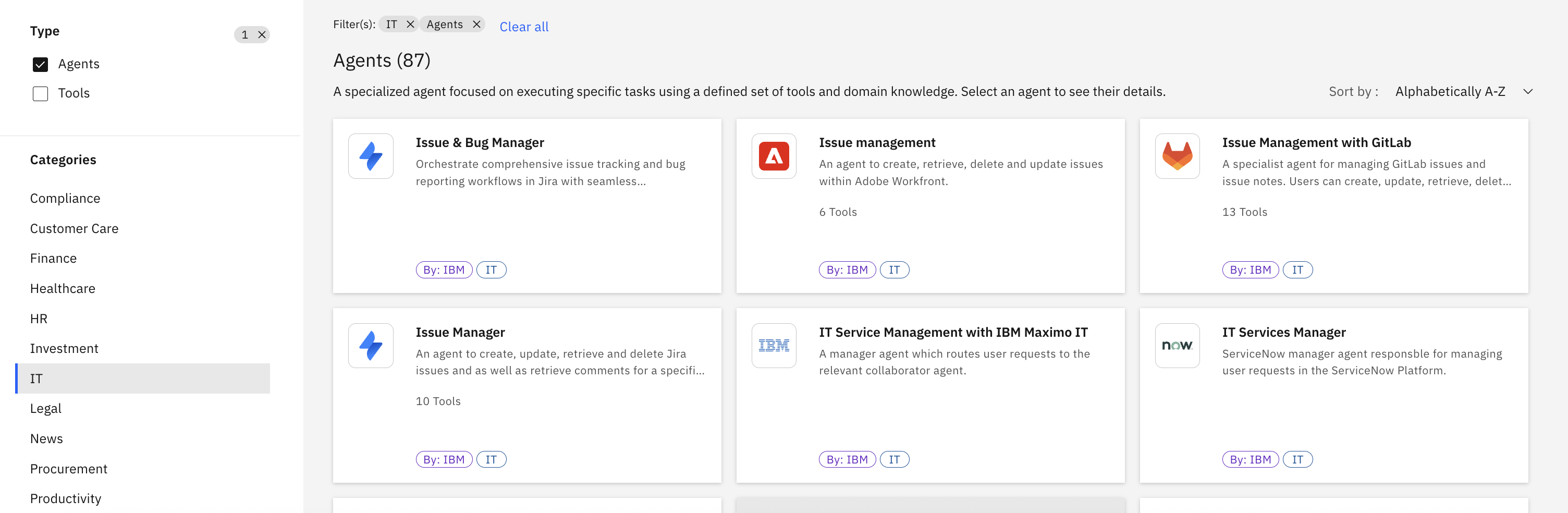
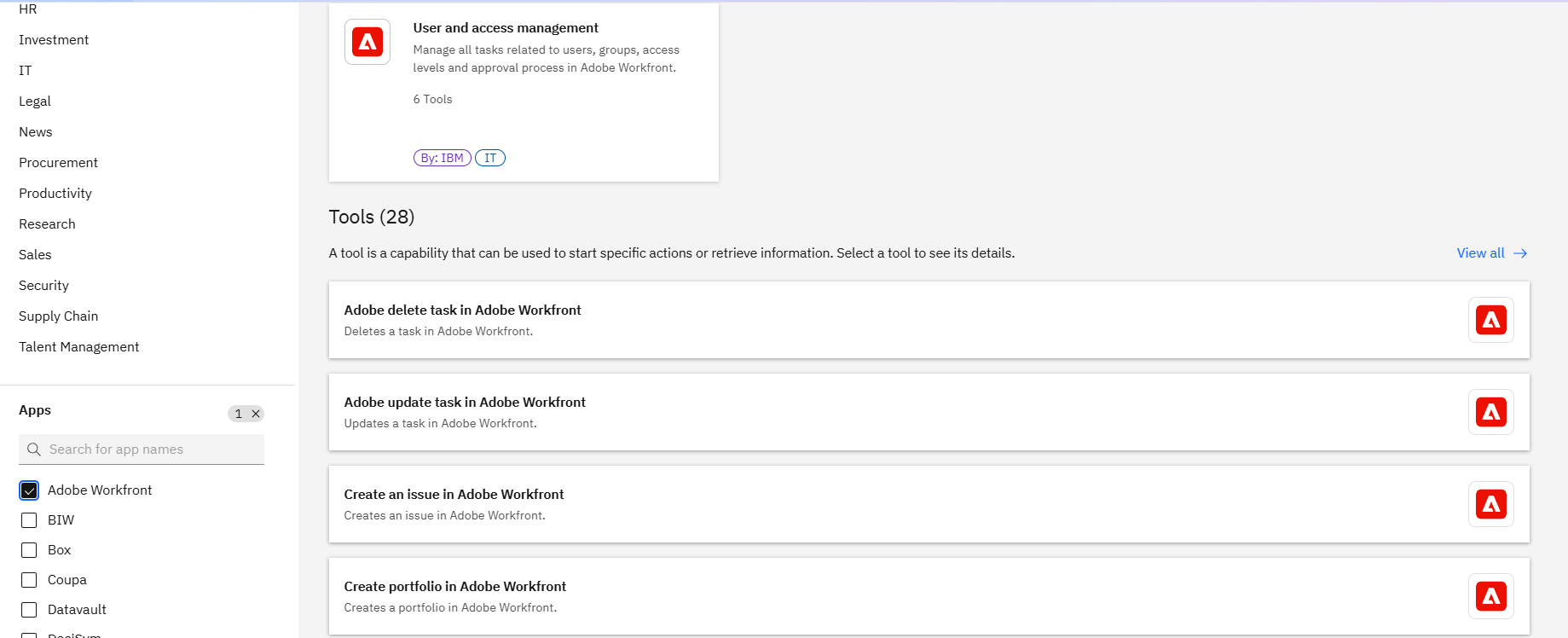
IBM® watsonx™ Orchestrate® leverages AI to automate complex workflows. The solution helps build, deploy, and manage AI assistants and agents. It offers a catalogue of pre-built agents and tools, low-code agent builder, multi-agent collaboration capabilities, and integrations with enterprise apps.
$530
per month
Fin by Intercom
Score 8.7 out of 10
N/A
Fin is Intercom’s AI Agent for customer service, designed to deliver high-quality answers, even for complex queries. It works with any helpdesk, or it can be paired with Intercom’s next-generation Helpdesk to get the full Intercom Customer Service Suite.
$0.99
one-time fee per outcome
Sembly.AI
Score 9.0 out of 10
N/A
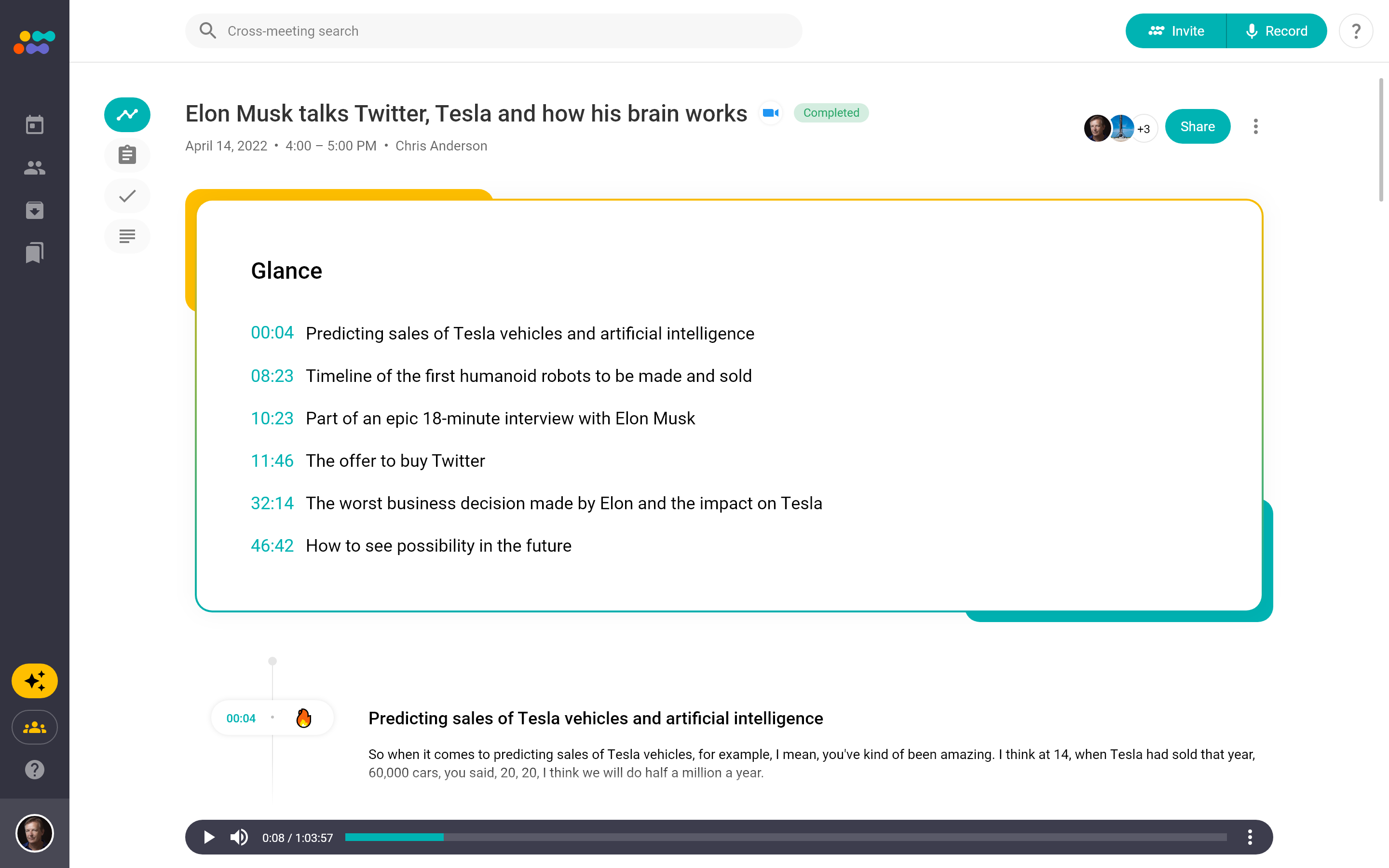
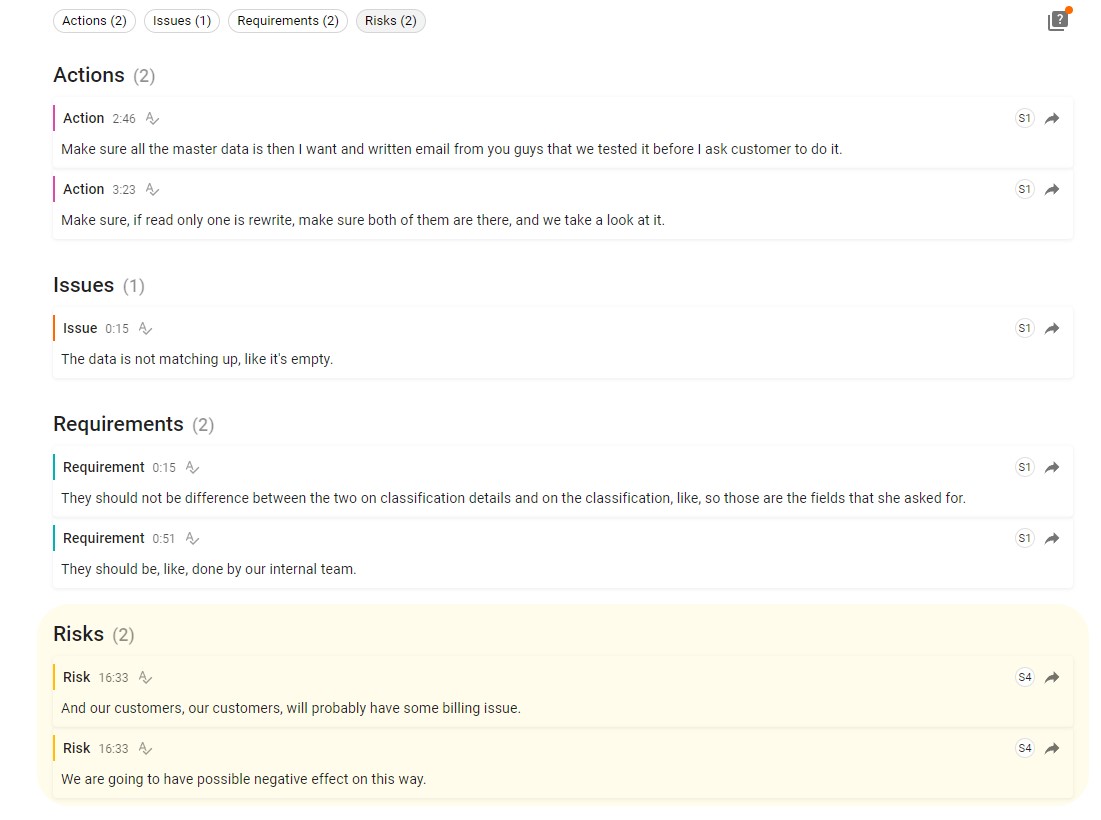
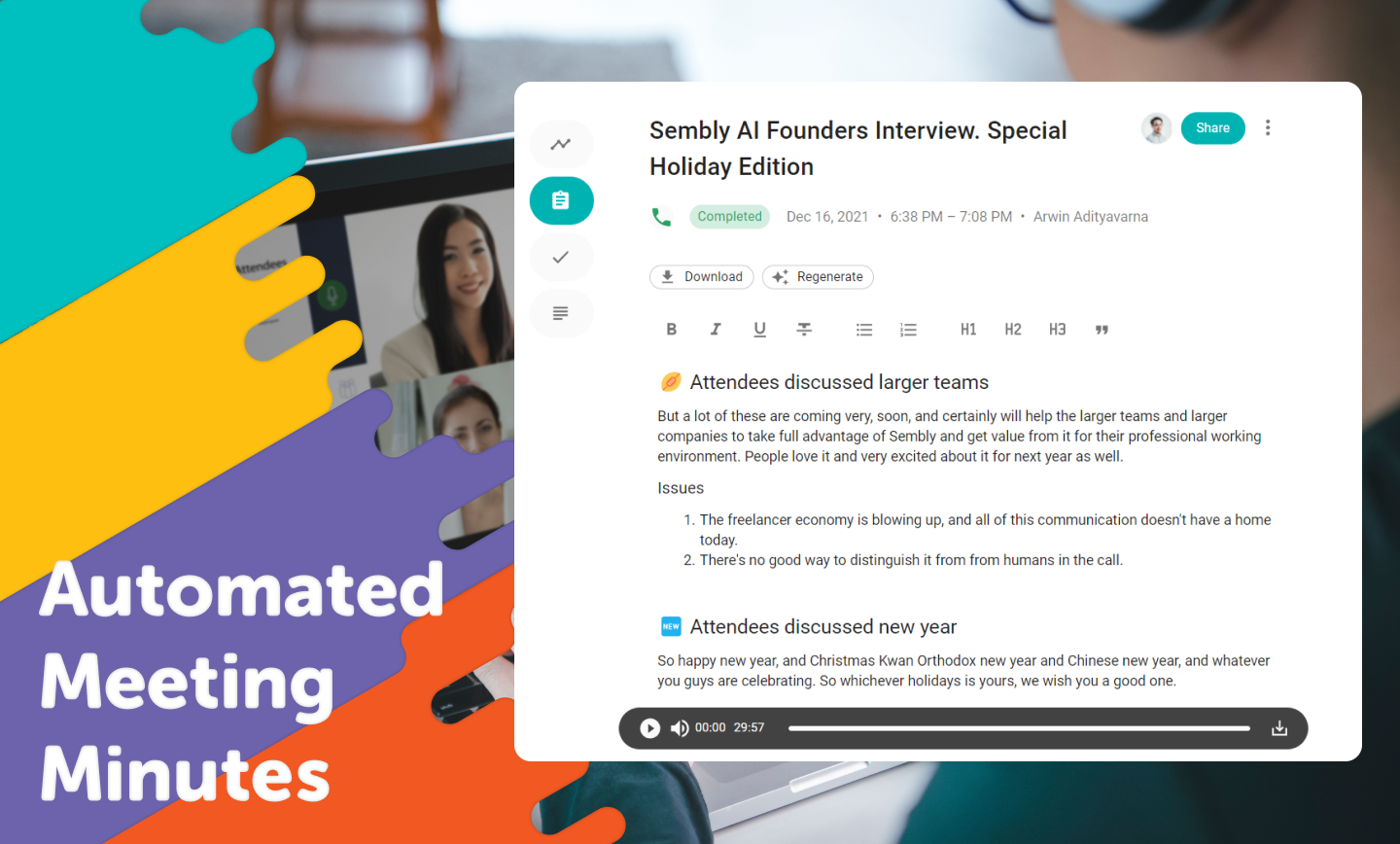
Sembly (formerly Powow) is a SaaS platform from the company of the same name in New York City, that helps to make meetings more effective by using proprietary AI algorithms to transcribe and analyze meetings, transforming them into actionable insights.
$0
per month per user
Pricing
IBM watsonx Orchestrate
Fin by Intercom
Sembly.AI
Editions & Modules
Essential
$500
per month per subscription
Essentials
$500
per month Per subscription
Standard
Enterprise
Standard
Enterprise
per month Per subscription
Fin with your current helpdesk
$0.99
one-time fee per outcome
Copilot add-on
$35
per month per user
Pro
$99
per month For analysis of 1,000 conversations
Fin with Intercom’s Helpdesk
from $39 + $0.99 per Fin outcome
per month per seat
Sembly Personal
$0
per month per user
Sembly Professional
$10
per month per user
Sembly Team
$20
per month per user
Offerings
Pricing Offerings
IBM watsonx Orchestrate
Fin by Intercom
Sembly.AI
Free Trial
Yes
Yes
Yes
Free/Freemium Version
No
No
Yes
Premium Consulting/Integration Services
Yes
No
Yes
Entry-level Setup Fee
Optional
No setup fee
Optional
Additional Details
IBM watsonx Orchestrate can be deployed and run on IBM Cloud, AWS, or on-premises. Prices shown are indicative, may vary by country, exclude any applicable taxes and duties, and are subject to product offering availability in a locale.
Fin comes with a 90-day money-back guarantee. Here's how it works:
Intercom states that users who sign up for the Fin Guarantee Success Program and do not achieve at least a resolution rate of 65% will be paid $1M. This program is designed for high volume customers.
Eligibility criteria:
High volume customers (over 250k monthly conversions) in North America and Europe. Intercom states that phase one of this program will admit customers on Intercom Helpdesk or Zendesk.
The only reason is that we have been using some other products of IBM, and the trust on their company, so we chose to use IBM Watsonx Assistant, that's it.
Verified User
Project Manager
Chose IBM watsonx Orchestrate
IBM Watson Assistant has a competitive cost structure, is easy to integrate with Intercom, and is more scalable as we look to future enhancements such as speech-to-text, document upload/analytics, and natural language processing across multiple languages.
In our case, it is well-suited for workday integration, which allows us to automate the entire workflow. However, we are still working on the O9 platform integration, which we feel is less appropriate, and integrating the workflow into the platform.
It's excellent when users often have trouble understanding certain aspects of your product, so you don't have to manually share the same information every time. It's less appropriate if your user problems are user-specific, as then you probably don't have every expected case covered in your documentation, which then requires Fin to have access to your codebase, at which point you might want to consider building your own agent.
Powow is well suited for meetings, multi-meetings, and having everyone in the team involved. It simplifies the process of decision-making and any process within our business that needs multiple people working at the same time. It allows people to focus on the meeting instead of taking notes as Powow uses audio transcription to create summaries about everything said. It also allows getting relevant insights and analytics that are really helpful for the business. In my own case, being a fashion and design store requires hand on meetings and work that can't be done thru the internet. Also, for very important meetings or information, you can't really rely on the transcripts as they are not perfect. Even though Powow is relatively new, it has mainly positive aspects.
New and improved natural language processing yielding better results helps the assistants understand the intention behind the query.
Preserves context of communication, allowing the customers to establish inquiries on the website and continue on the mobile app without having extra informational input.
Intelligent conversations mean that complex paths that are branched based on the user's inputs allow for a much more natural flow of the conversation than fixed scripts.
I think that it needs to be able to integrate better with the knowledge catalogs. It currently provides a default database, which isn't quite large enough for enterprise use. We can connect that then to an external source, but it'd be nice if we could able just to instantiate one straight away.
It seems some users really struggle to figure out how to escalate to a human (especially through email).
Not excited about how "soft" resolutions still count as resolutions and are paid for. Though some abandoned cases appear to be able to be concluded as "the user got the answer they needed", there are others where they clearly didn't, because they just open up another chat (or even more), trying to get more info. This pads the resolution stats and makes it seem more effective than it actually is.
Cost -- Fin is quite expensive. It helps us with scaling coverage, but we're not really saving money.
Currently we are using to develop chatbots based on client provided flow what kind chatbot required for client either button or free text chatbots. we will decided accordingly flow and develop chatbot using IBM Watson. We will integrated custom components if required which is not present in library. Action flow and dialog flow we are currently in chatbot.
We have been and will be continuing our journey with Intercom and nothing too concerning has happened that I have experienced or heard of that has us on the edge yet. If it ever happens it will be something along the lines of "Outgrowing" the use of need of the platform.
With the growing use of AI and chatbots, it's very easy to use, and the conversational language makes it easier than keyword searches in a document. The contextual language processing is impressive. It's easy to integrate into our internal portal. The use of this tool would depend on each company's security and data sensitivity.
FIN is easy to set up and pretty quick to get everything the way you need (some things could be handled better), and you can preview how it's going to work before it's available to everyone. Since you can use FIN on multiple channels, you can save a lot of time by not having your team work on multiple chat platforms as well.
To develop chatbots based on client provided flow what kind chatbot required for client either button or free text chatbots. we will decided accordingly flow and develop chatbot using IBM Watson. We will integrated custom components if required which is not present in library. IBM Watson library anyone can easily learn and develop chatbots.
We've rarely had to engage support, but they've always been prompt in responding and very attentive. Support experiences have been extremely positive (but we're mostly happy that we just don't have any cause to routinely need support in the first place!).
I can get help by asking Fin questions about itself. It answers accurately, citing its own Help Center resources with visuals. It can reason and dialogue well. But when it comes to getting human support for Fin, it is not as quick. It can sometimes take a few days. They are polite and well-meaning. Some things aren't their fault (product limitations), but there was one occasion where something took a long time to resolve with lots of back and forth but it was I who found out the error in the end that they missed, so they didn't really help resolve it.
Make has more community of workflows to follow that have been redeveloped and are available for download. Selecting WxO is based on our trust level with IBM and the propositions of the Granite model being less biased, more business trained, and the ecosystem allowing for expansion with Assistant and Discovery.
There are so many AI platforms available, and you could theoretically build a system using the available AI API's from any of the big platforms. However, I dont think it's as easy as this. Intercom is deliberately built for customer service, the features they are releasing a based on providing the best customer experience. If we were to build this ourselves or to use another platform we would be taking on the upkeep, using Fin is just much simpler as it's also our chosen ticketing platform so anything that Fin is not able to answer yet and escalated directly to our team with no extra effort required from our side.
Even though all of the mentioned platforms are helpful for meetings and teamwork, Powow is so much better. First, it allows multi-meetings, facilitating the job of the managers and heads of every team to be involved in all the work done. Also, it has audio transcripts that avoid the need for note-taking, making people pay full attention to the meeting. Provides as well insights and analysis related to the business and meeting content that are really helpful for the business. The AI component to extract patterns and sentiments across multiple meetings is a huge tool for managers and heads of teams to identify key issues and mitigate risks.
From past 3+ years I am using IBM Watson in our current project easily can implement and manage and monitor user how their using. Is there and update also just update dialog is just enough to change no need to touch any other templates. Multiple language will support, and action and dialog speak recognize chatbot we can create as per client requirement. Overall, as of now good experience with IBM Watson.
By automating tasks that would otherwise require human intervention, organizations may achieve cost savings in terms of labor, especially for handling large volumes of routine inquiries.
Virtual assistants can handle a large number of simultaneous interactions, making them scalable to accommodate growing customer bases and increasing workloads without a linear increase in staffing.
New role opportunities — Using the “Fin-first” approach has reduced the workload for our Tier 1 team, giving them more time to focus on their own career growth. It’s also opened the door to a dedicated, AI-focused role, where a team member regularly reviews Fin’s answers and makes updates to help it perform even better.
Enabling Fin has also reduced our response time and allowed us to meet SLA's.