
IDERA SQL Diagnostic Manager vs. Fin by Intercom
IDERA SQL Diagnostic Manager vs. Fin by Intercom
| Product | Rating | Most Used By | Product Summary | Starting Price |
|---|---|---|---|---|
 IDERA SQL Diagnostic Manager | N/A | SQL Diagnostic Manager for Microsoft SQL Server helps database administrators to find and fix Microsoft SQL Server performance problems in physical, virtual, and cloud environments. Unlike its competition, it provides effective scalability, advanced SQL query analysis and optimization, prescriptive analysis with corrective SQL scripts, powerful automated alert responses, broad PowerShell integration, complete customization, and extensive support for current and legacy Microsoft SQL Server and… | $1,996 per instance with first year maintenance included | |
 Fin by Intercom | N/A | Fin is Intercom’s AI Agent for customer service, designed to deliver high-quality answers, even for complex queries. It works with any helpdesk, or it can be paired with Intercom’s next-generation Helpdesk to get the full Intercom Customer Service Suite. | $0.99 one-time fee per outcome |
| IDERA SQL Diagnostic Manager | Fin by Intercom | |||||||||||||||
|---|---|---|---|---|---|---|---|---|---|---|---|---|---|---|---|---|
| Editions & Modules |
|
| ||||||||||||||
| Offerings |
| |||||||||||||||
| Entry-level Setup Fee | No setup fee | No setup fee | ||||||||||||||
| Additional Details | — | Fin comes with a 90-day money-back guarantee. Here's how it works: Intercom states that users who sign up for the Fin Guarantee Success Program and do not achieve at least a resolution rate of 65% will be paid $1M. This program is designed for high volume customers. Eligibility criteria: High volume customers (over 250k monthly conversions) in North America and Europe. Intercom states that phase one of this program will admit customers on Intercom Helpdesk or Zendesk. | ||||||||||||||
| More Pricing Information | ||||||||||||||||
| IDERA SQL Diagnostic Manager | Fin by Intercom |
|---|
| IDERA SQL Diagnostic Manager | Fin by Intercom | ||||||||||||||||||
|---|---|---|---|---|---|---|---|---|---|---|---|---|---|---|---|---|---|---|---|
| SQL Performance Monitoring |
|
| IDERA SQL Diagnostic Manager | Fin by Intercom | |
|---|---|---|
| Small Businesses | No answers on this topic |  LocaliQ Score 8.8 out of 10 |
| Medium-sized Companies |  Redgate Monitor Score 8.0 out of 10 |  Piper the AI SDR by Qualified Score 9.2 out of 10 |
| Enterprises | Redgate Monitor Score 8.0 out of 10 |  Conversica Score 4.0 out of 10 |
| All Alternatives | View all alternatives | View all alternatives |
| IDERA SQL Diagnostic Manager | Fin by Intercom | |
|---|---|---|
| Likelihood to Recommend | 9.0 (8 ratings) | 8.7 (383 ratings) |
| Likelihood to Renew | - (0 ratings) | 10.0 (21 ratings) |
| Usability | - (0 ratings) | 8.7 (294 ratings) |
| Availability | - (0 ratings) | 9.1 (1 ratings) |
| Performance | - (0 ratings) | 9.1 (1 ratings) |
| Support Rating | - (0 ratings) | 5.7 (10 ratings) |
| Online Training | - (0 ratings) | 7.4 (2 ratings) |
| Implementation Rating | - (0 ratings) | 6.6 (5 ratings) |
| Product Scalability | - (0 ratings) | 9.1 (1 ratings) |
| IDERA SQL Diagnostic Manager | Fin by Intercom | |
|---|---|---|
| Likelihood to Recommend | Idera, Inc.
|  Intercom
|
| Pros | Idera, Inc.
 Greg Goss SQL Database and Business Intelligence Manager | Intercom
|
| Cons | Idera, Inc.
 Steven Gockley, MBA, MCSA DBA / Sr. Data Analyst | Intercom
|
| Likelihood to Renew | Idera, Inc. No answers on this topic | Intercom
|
| Usability | Idera, Inc. No answers on this topic | Intercom
|
| Reliability and Availability | Idera, Inc. No answers on this topic | Intercom
|
| Performance | Idera, Inc. No answers on this topic | Intercom
|
| Support Rating | Idera, Inc. No answers on this topic | Intercom
|
| Online Training | Idera, Inc. No answers on this topic | Intercom
|
| Implementation Rating | Idera, Inc. No answers on this topic | Intercom
|
| Alternatives Considered | Idera, Inc.
 José Javier Dominguez Reina Jefe de Proyecto | Intercom
|
| Return on Investment | Idera, Inc.
| Intercom
|
| ScreenShots | IDERA SQL Diagnostic Manager Screenshots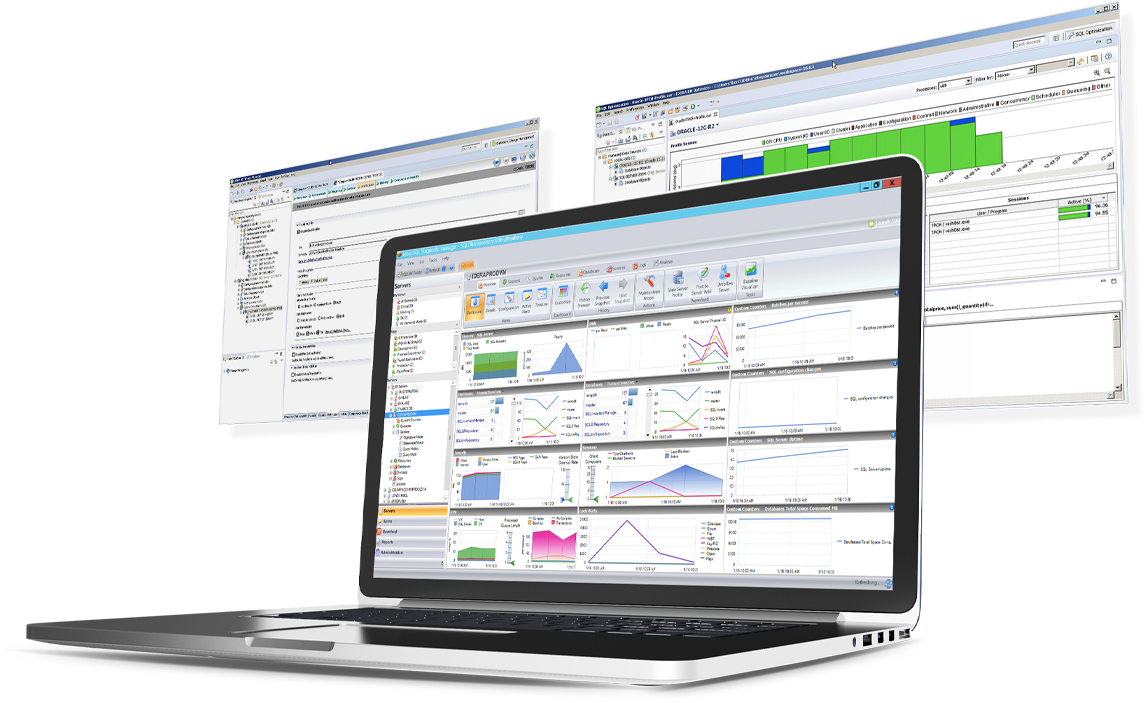 | Fin by Intercom Screenshots     |