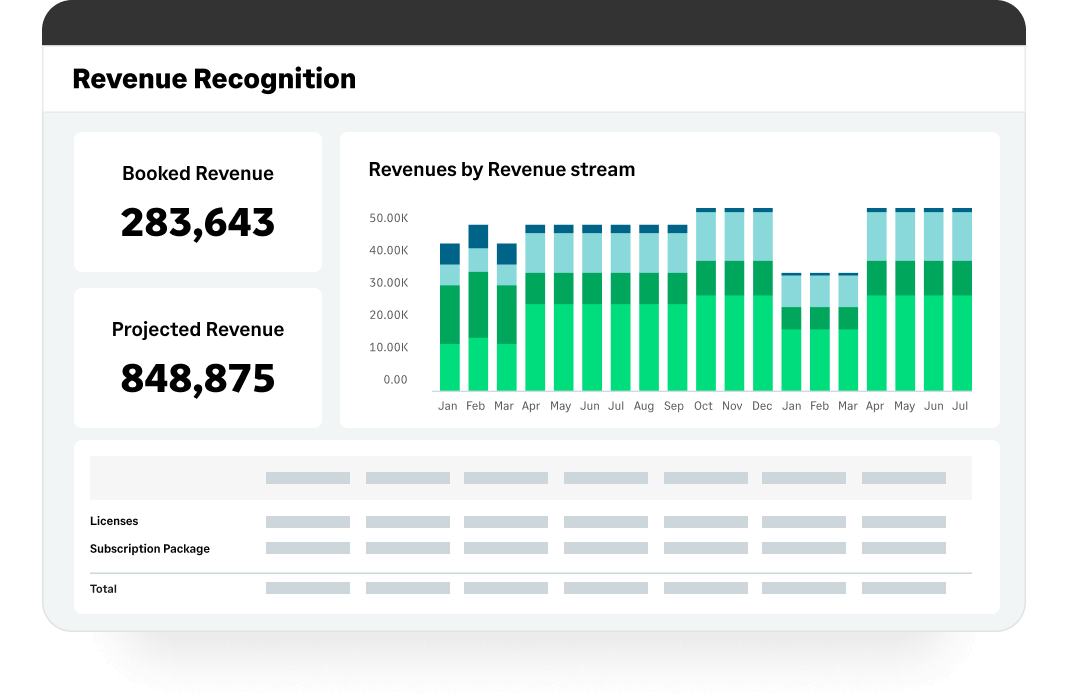
Sage Intacct is a cloud ERP system targeted at high-growth small and medium-sized businesses. Intacct includes applications for core financials and accounting, purchasing, order management, and financial reporting and business intelligence. It also integrates with 3rd party software like Salesforce.
N/A
Oracle Hyperion (legacy)
Score7.5 out of 10
N/A
Oracle's Corporate Performance Management suite was acquired from Hyperion in 2007. Hyperion customers are encouraged to migrate to Oracle Fusion Cloud EPM.
A de minimis incentive was given to thank the reviewer for their time. The incentive was not used to bias or drive a particular response, nor was the incentive contingent on a positive endorsement. More Info
FCAS Controller in Finance and Accounting at RH2 CPAs (Financial Services, 11-50 employees)
Chose Sage Intacct
Sage Intacct has most of the best features but doesn't have things integrated that I don't need/use. It's very module based so you can add/remove modules as you need to. It's very scalable as well so as I add entities, there's not an incremental software cost like there would …
A de minimis incentive was given to thank the reviewer for their time. The incentive was not used to bias or drive a particular response, nor was the incentive contingent on a positive endorsement. More Info
Verified User
Chose Sage Intacct
Our selection choice came down to Netsuite and Intacct. Netsuite - quite frankly - was just too expensive to take the leap for similar functionality. We also determined that the Netsuite setup would require significantly more outside help to configure and migrate data.
A de minimis incentive was given to thank the reviewer for their time. The incentive was not used to bias or drive a particular response, nor was the incentive contingent on a positive endorsement. More Info
Assistant Controller in Finance and Accounting at The Joint Chiropractic (Health, Wellness and Fitness, 201-500 employees)
Chose Sage Intacct
Out of all the above and against Sage, Sage is by far my favorite. It was easy to learn as it was quite intuitive like QB Online, but it also had depth with its capabilities of allowing to be more than just a GL system and more an enterprise system if needed, or at the least …
A de minimis incentive was given to thank the reviewer for their time. The incentive was not used to bias or drive a particular response, nor was the incentive contingent on a positive endorsement. TR verified that a representative sample of customers was invited. More Info
Verified User
Chose Sage Intacct
Intact is comparable to eCMS, and better than the others.
A de minimis incentive was given to thank the reviewer for their time. The incentive was not used to bias or drive a particular response, nor was the incentive contingent on a positive endorsement. More Info
Verified User
Chose Sage Intacct
Intacct offers a lean, responsive system that, as a cloud-based solution, doesn't require a hefty outlay of capital for servers and administration of same. The ERP has a very user-friendly interface and offers an incredible amount of customization.
A de minimis incentive was given to thank the reviewer for their time. The incentive was not used to bias or drive a particular response, nor was the incentive contingent on a positive endorsement. More Info
Director, Financial Planning Analysis in Finance and Accounting at Teachscape (Computer Software, 51-200 employees)
Chose Sage Intacct
Intacct provided the most functionality for the price. We did not need an inventory module or a large ERP, we needed a package built for high tech companies. Intacct has a very good revenue module that is easy to understand and manipulate when needed. The system had decent …
A de minimis incentive was given to thank the reviewer for their time. The incentive was not used to bias or drive a particular response, nor was the incentive contingent on a positive endorsement. More Info
VP of Business Development in Sales at FinPro Solutions (Computer Software, 11-50 employees)
Chose Oracle Hyperion (legacy)
Oracle has led the charge on the development of true EPM reporting. The development of rudimentary KPIs to much more complex models all can be housed and managed by Hyperion. Integrates with Office through Smartview, which provides flexibility in creating Word documents, board …
A de minimis incentive was given to thank the reviewer for their time. The incentive was not used to bias or drive a particular response, nor was the incentive contingent on a positive endorsement. More Info
It depends on the scale and nature of the organisation, but for a business like ours, i.e. a medium sized business with several entities operating in more than one location with different currencies, I think it is a very good fit. It is relatively easy to get to grips with and provides a good level of functionality.
A de minimis incentive was given to thank the reviewer for their time. The incentive was not used to bias or drive a particular response, nor was the incentive contingent on a positive endorsement. More Info
Well suited: For use in multiple offices around the world. I was able to obtain financial reporting data from 5 foreign offices and then consolidate their data with 3 domestic USA offices to prepare a consolidated financial statement. Less Appropriate: Translating the financial value for consulting services could be a bit challenging because that required human interaction and judgement. It would have been great to be able to set up some software to be able to interpret this and let it run for all future project work revenue projection.
A de minimis incentive was given to thank the reviewer for their time. The incentive was not used to bias or drive a particular response, nor was the incentive contingent on a positive endorsement. TR verified that a representative sample of customers was invited. More Info
Excellent roll-up reporting of various categories of expenses across multiple depts. Data is not siloed when we want to find all revenue sources across business entities, for example, or even down to details such as what is spent on "discretionary" expense elements.
Coding nomenclature is flexible and makes sense across business areas. Again, this allows for both more effective capture of data and with reporting slices and iterations.
Sage Intacct's open architecture (availability of APIs and already existing hooks) has made integration with other system tool-sets easier than we would ever have thought.
A de minimis incentive was given to thank the reviewer for their time. The incentive was not used to bias or drive a particular response, nor was the incentive contingent on a positive endorsement. TR verified that a representative sample of customers was invited. More Info
This product handles budgeting by Employee and/or Position very well. It is highly flexible and allows Hyperion administrators the ability to develop a planning application that fits a variety of different business needs.
It is great at calculating benefits using business rules to automate the population of these fringe costs in the overall budget planning process. This greatly reduces user error.
It allows you to seed the operating budget based on changes to key drivers, such as percentage increases, flat dollar increases and more detailed changes using business rules.
Allows visibility into the plans for each unit across the organization, rolled up into an overall budget for the campus.
It handles the creation of budgets with multiple chartfield segments or dimensions, which most other budgeting systems cannot handle well. It can aggregate these very quickly.
A de minimis incentive was given to thank the reviewer for their time. The incentive was not used to bias or drive a particular response, nor was the incentive contingent on a positive endorsement. More Info
A de minimis incentive was given to thank the reviewer for their time. The incentive was not used to bias or drive a particular response, nor was the incentive contingent on a positive endorsement. TR verified that a representative sample of customers was invited. More Info
One pain point for us is the consolidation and translation process. Needing to translate the data over and over again is frustrating and there is no visibility into how many users are running a translation. If multiple users attempt to translate the same data set, say goodbye to your performance but you have no way of knowing! (Unless you want to pull up a task audit which is not a very realistic expectation). It has the been the quickest way for us to bring the system to it's knees. The consolidation process performs in direct correlation to the complexity of the calculation/consolidation rules. So, while the product is extremely flexible, you still have to be careful how you design your rules and calculations to make sure that you do it on the smallest subset of data as possible to avoid large processing times. This makes sense, but requires some significant expertise that most organizations do not have in-house.
The Hyperion Financial Reporting product is ridiculously outdated and clunky to use. The interface for designing reports is not intuitive, and not easy to modify once a report is built. I think there must be a strategic decision to move away from it and go to something more like Oracle BI because I just can't understand why in the world they don't update the reporting product. It also requires a significant level of expertise to be able to use. Not a great solution at all if you want multiple end-users to create reports in something other than Excel. Nobody except the HFM admin (which I used to be) in our company even touches this module.
Another pain point is the amount of IT support that is required to run this thing, and again, specialized knowledge of Hyperion products and how they work is required for IT to adequately support it. This goes for application servers and the Oracle database that the applications are running on.
Sage Intacct is continuously evolving and increasing it's functionalities. I am excited to attend conferences to learn what is in the roadmap for future releases. Additionally, using Sage Intacct allows me grow as a professional, I am really enjoy the knowledge that I have within the product to be able to share my experiences.
A de minimis incentive was given to thank the reviewer for their time. The incentive was not used to bias or drive a particular response, nor was the incentive contingent on a positive endorsement. More Info
We're in the middle of the road because we are not sure that other products on the market fit the bill for what we need yet. Hyperion is expensive and burdensome from an administrator and maintenance standpoint, but it still seems to be the best solution for what we need. Show us an equally capable SaaS consolidation product and we'll talk again.
The ease of use as a seasoned user is wonderful; however, new users struggle to adapt to the program efficiently. Better training videos--all in one location--would be beneficial. The use of a "sandbox" environment is a great tool for new employees or for the fiscal department to test certain journal entries or other transactions to verify accuracy of data.
A de minimis incentive was given to thank the reviewer for their time. The incentive was not used to bias or drive a particular response, nor was the incentive contingent on a positive endorsement. TR verified that a representative sample of customers was invited. More Info
There has only been one occurrence where Sage Intacct was not available to me, however I had already been working a number of hours trying to get a project completed. It honestly allowed me to step back and take a much needed break.
A de minimis incentive was given to thank the reviewer for their time. The incentive was not used to bias or drive a particular response, nor was the incentive contingent on a positive endorsement. More Info
As fas as integration is concerned I don't feel this slows Sage Intacct down at all. However, sometimes I do feel it takes some larger reports more time to load due to all the detail. As well as, I "move very fast" in my motions so sometimes I double click on fuctions too quickly and the system seems to think that I have a duplicate request.
A de minimis incentive was given to thank the reviewer for their time. The incentive was not used to bias or drive a particular response, nor was the incentive contingent on a positive endorsement. More Info
Only a few times have we had to reach out to support, and every time we did, we received a relatively quick response and a solution was found fairly quickly. Only once was there an issue that took longer than a week to resolve, but it still did eventually get solved.
A de minimis incentive was given to thank the reviewer for their time. The incentive was not used to bias or drive a particular response, nor was the incentive contingent on a positive endorsement. TR verified that a representative sample of customers was invited. More Info
The premium support team provides much needed dedicated customer service which we are after for what we have paid for this service. We are satisfied with the service and support and do not have any instance where there was an issue that requires escalation to get the right support team. Though the incidence of major issues that requires the premium support are less, we prefer to keep this as a safety net.
A de minimis incentive was given to thank the reviewer for their time. The incentive was not used to bias or drive a particular response, nor was the incentive contingent on a positive endorsement. More Info
I have taken in person training classes at several of the annual Sage Intacct user conferences. It is very interactive and the trainers are very easy to follow and understand. They are great at getting everyone in the class involved. They also make sure everyone has learned to task before moving to a new one.
A de minimis incentive was given to thank the reviewer for their time. The incentive was not used to bias or drive a particular response, nor was the incentive contingent on a positive endorsement. More Info
The free training is very minimal. For what we pay for the service, I would like more training. We end up training new users in-house because the provided free training is not nearly comprehensive enough. That being said, the training provided, for the material covered, was adequate and relevant for the given topics.
A de minimis incentive was given to thank the reviewer for their time. The incentive was not used to bias or drive a particular response, nor was the incentive contingent on a positive endorsement. TR verified that a representative sample of customers was invited. More Info
I would not use a thrid party administrator to implement your system, especially if you are going to be modifying the system at all. Use Intacct implementors as they will be able to better support you on any issues that come up after you go live.
A de minimis incentive was given to thank the reviewer for their time. The incentive was not used to bias or drive a particular response, nor was the incentive contingent on a positive endorsement. More Info
We evaluated Sage Intacct alongside many other options, but Blackbaud and NetSuite were the frontrunners. They all were cloud-based and capable systems, but for our team, Sage Intacct was the clearer choice for a few reasons. First, usability. Our team has varying levels of accounting experience, and Sage felt more intuitive across those different levels. The others could be powerful, but it also felt like it required more technical depth to navigate day-to-day, which was a concern for a small team. Second, functionality out of the box. Sage Intacct had more of what we needed built in without requiring a significant number of add-ons, which kept the solution simpler and the pricing more predictable. Third, nonprofit fit. Sage Intacct is purpose-built for organizations like ours, and that showed in the functionality available and the system's overall design. And finally, our implementation partner, RSM, was well-versed in Sage Intacct and gave us confidence that we would have the right support behind us. That partnership was part of the overall value of choosing Sage.
A de minimis incentive was given to thank the reviewer for their time. The incentive was not used to bias or drive a particular response, nor was the incentive contingent on a positive endorsement. More Info
I use Oracle Hyperion Enterprise Performance Mangement because the company I work at requires me to use it in the Financial Planning sector as most of their data is stored in it. I am open minded and ready to use other performance management tools created by Oracle if my work permits.
A de minimis incentive was given to thank the reviewer for their time. The incentive was not used to bias or drive a particular response, nor was the incentive contingent on a positive endorsement. TR verified that a representative sample of customers was invited. More Info
A de minimis incentive was given to thank the reviewer for their time. The incentive was not used to bias or drive a particular response, nor was the incentive contingent on a positive endorsement. More Info
Positive - It runs better than our old software when we all work together, rather than having to sign off on each other and deal with syncing issues.
Negative - It's not as easy to go back to fix an amount, a date, etc. Sometimes, a very small mistake needs to be corrected by voiding and redoing the entire transaction.
We can successfully sync other software we use with Intacct! It reduces workload when things are automated.
A de minimis incentive was given to thank the reviewer for their time. The incentive was not used to bias or drive a particular response, nor was the incentive contingent on a positive endorsement. TR verified that a representative sample of customers was invited. More Info
Oracle Hyperion allows us to automate and consolidate financial data that used to be performed manually in spreadsheets. From that perspective the ROI is huge.
Oracle Hyperion functionality is extensive and allows us to perform most functions for planning, consolidating and reporting on our financial data.
One negative with Oracle Hyperion is that it is complicated to implement and maintain. It takes expertise at all levels (infrastructure and management) to realize the benefits from it.
A de minimis incentive was given to thank the reviewer for their time. The incentive was not used to bias or drive a particular response, nor was the incentive contingent on a positive endorsement. More Info