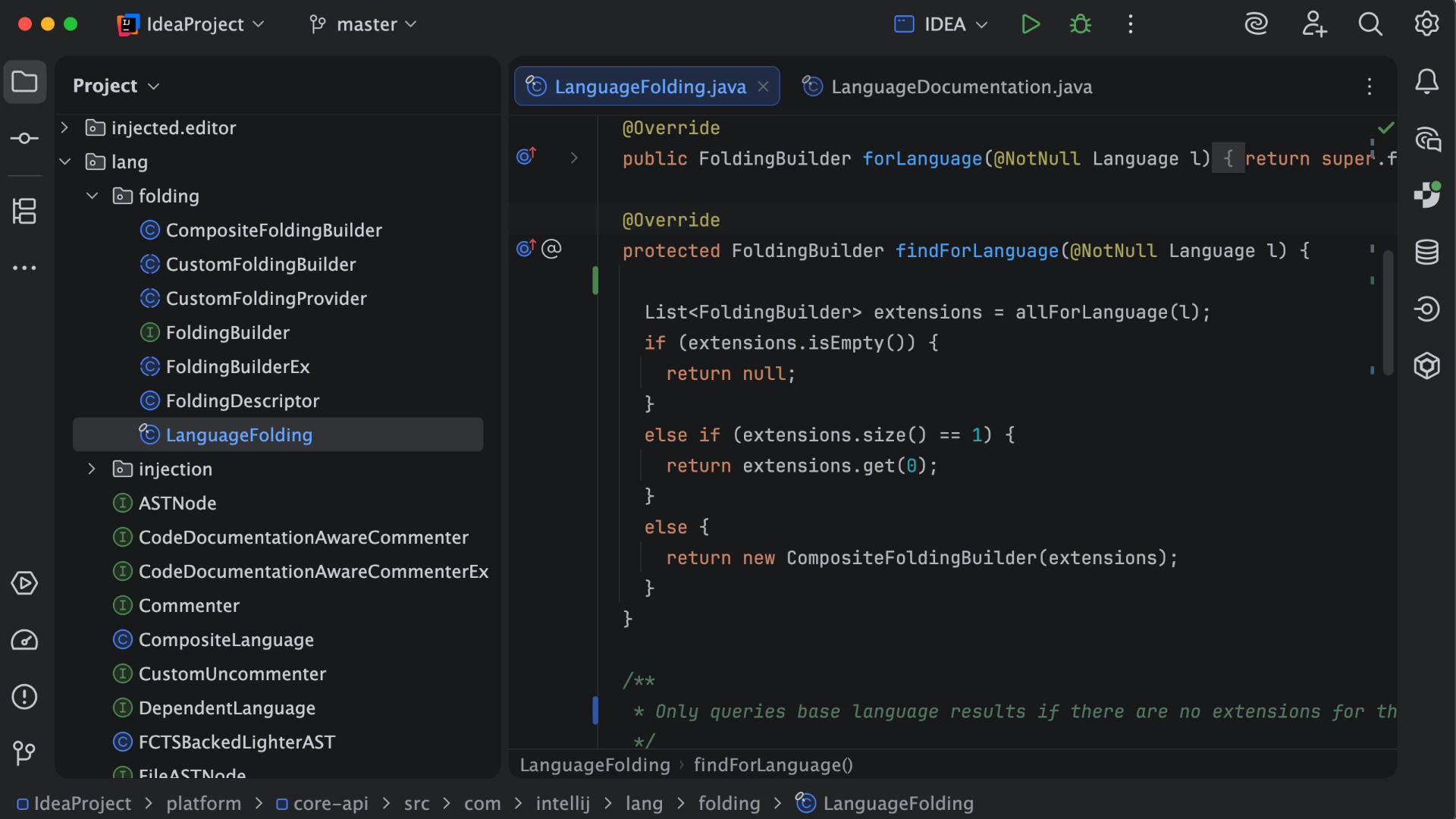
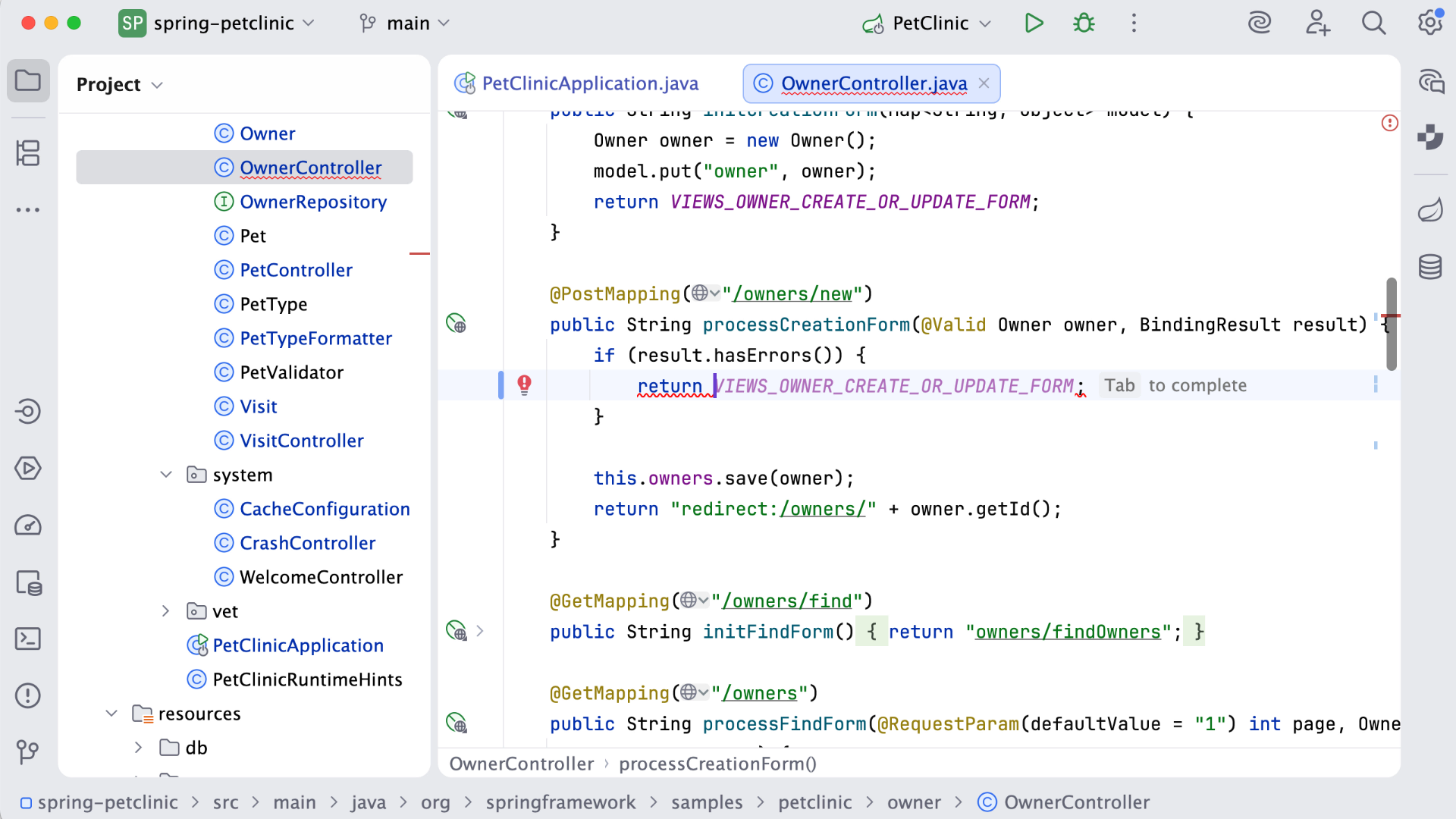
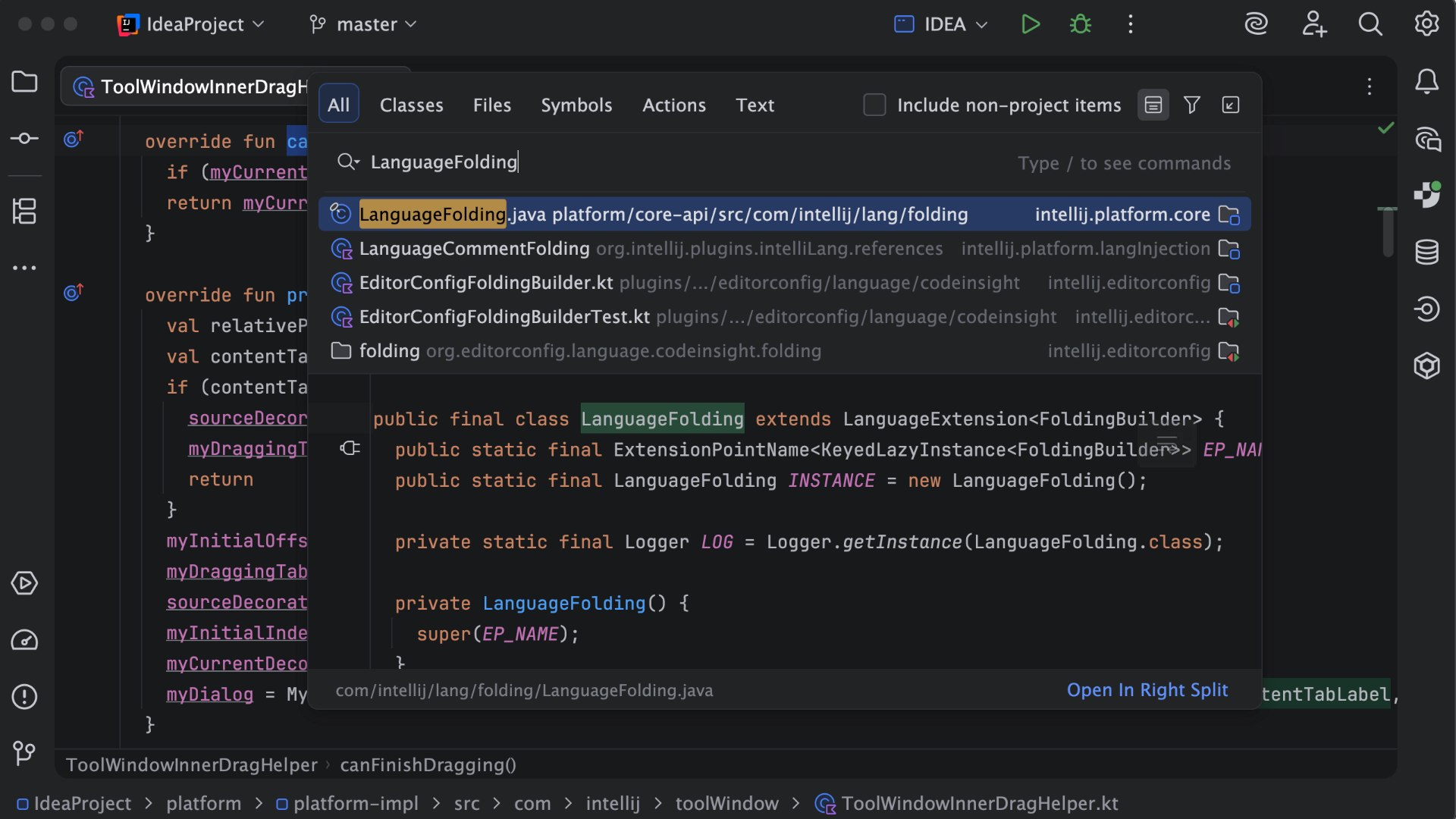
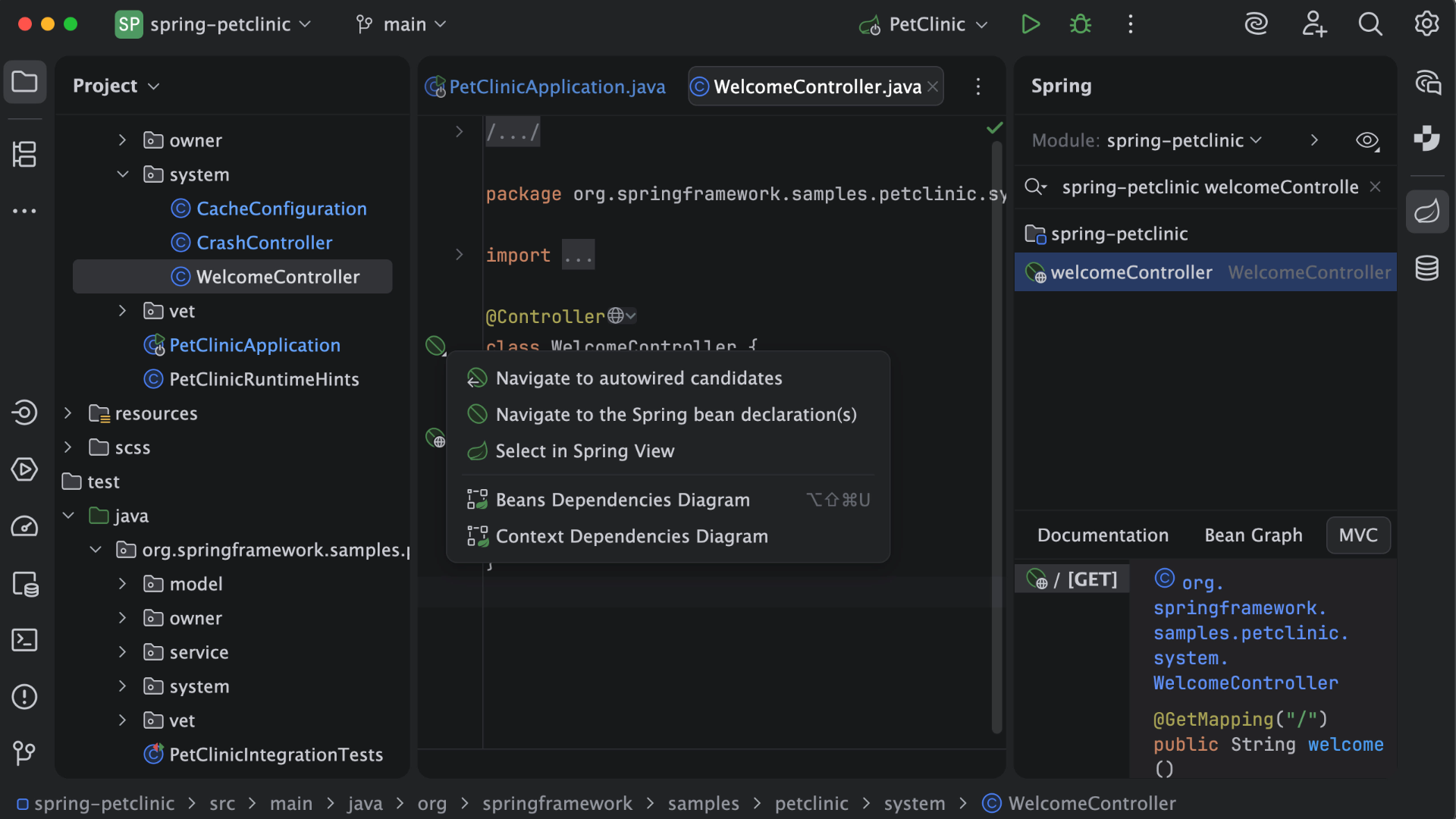
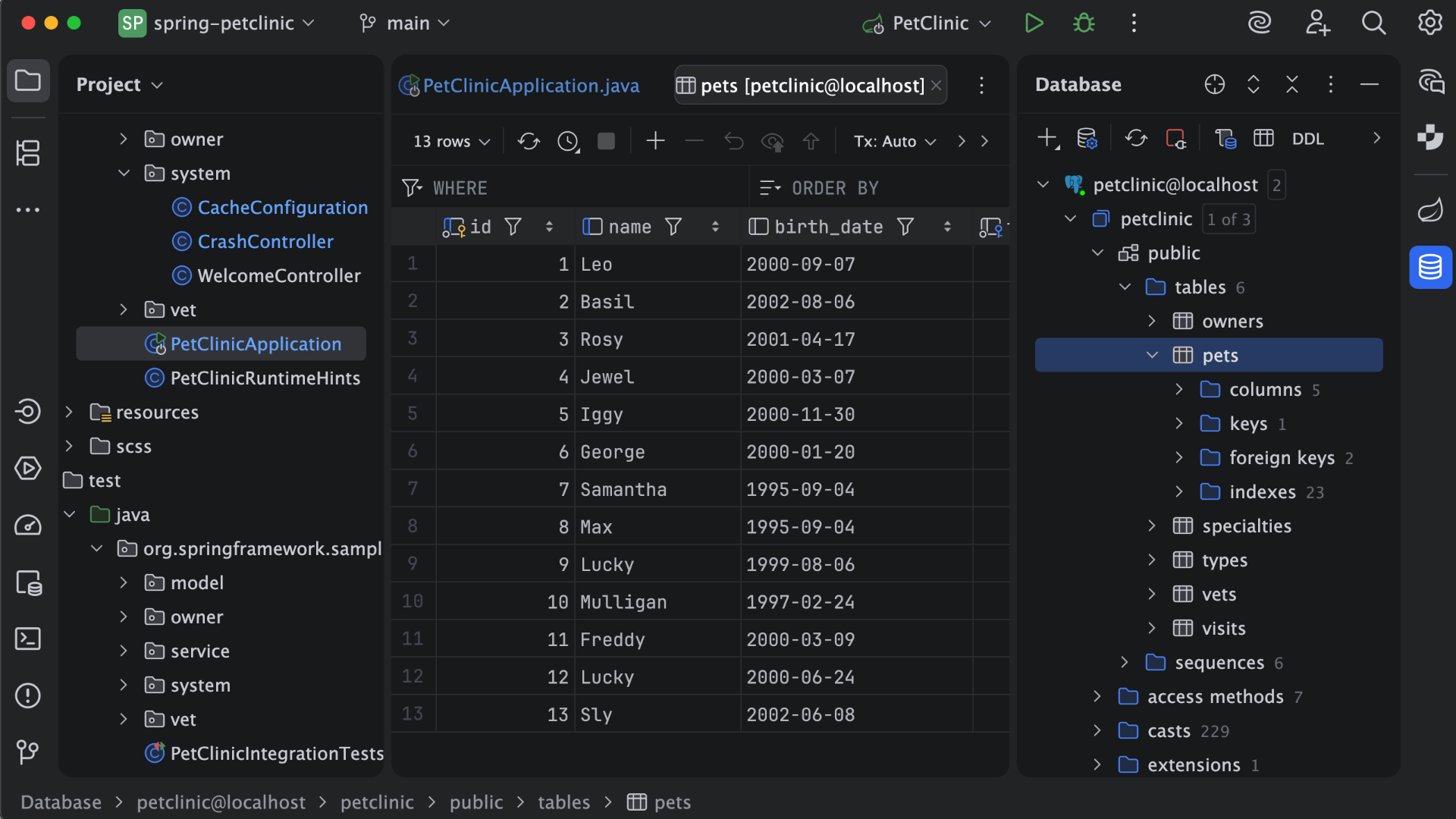
IntelliJ IDEA is an IDE that aims to give Java and Kotlin developers everything they need out of the box, including a smart code editor, built-in developer tools, framework support, database support, web development support, and much more.
$19.90
per month
PyCharm
Score 9.2 out of 10
N/A
PyCharm is an extensive Integrated
Development Environment (IDE) for Python developers. Its
arsenal includes intelligent code completion, error detection, and rapid
problem-solving features, all of which aim to bolster efficiency. The product supports programmers in composing orderly and maintainable
code by offering PEP8 checks, testing assistance, intelligent refactorings, and
inspections. Moreover, it caters to web development frameworks like Django and
Flask by providing framework…
$99
per year per user
Spyder
Score 8.6 out of 10
N/A
Spyder is a free and open source scientific environment for Python. It combines advanced editing, analysis, debugging, and profiling, with data exploration, interactive execution, deep inspection, and visualization capabilities. Spyder is sponsored by open source supporters QuanSight, and NumFOCUS, as well as individual donors.
N/A
Pricing
IntelliJ IDEA
PyCharm
Spyder
Editions & Modules
For Individual Use (Monthly billing)
$19.90
per month
For Organizations (Monthly billing)
$71.90
per month
For Individual Use (Yearly billing)
$199
per year
For Organizations (Yearly billing)
$719
per year
For Individuals
$99
per year per user
All Products Pack for Organizations
$249
per year per user
All Products Pack for Individuals
$289
per year per user
For Organizations
$779
per year per user
No answers on this topic
Offerings
Pricing Offerings
IntelliJ IDEA
PyCharm
Spyder
Free Trial
Yes
Yes
No
Free/Freemium Version
Yes
No
Yes
Premium Consulting/Integration Services
No
No
No
Entry-level Setup Fee
No setup fee
No setup fee
No setup fee
Additional Details
All Products Pack (For Individual Use) – $299 /1st year, $ 239 /2nd year and $ 179 /3d year onwards
All Products Pack (For Organizations) – $979 / year
In summary, IntelliJ is more polished and feature-rich out of the box, especially for Java development. Eclipse is extensible but can be rougher around the edges. IntelliJ costs money for advanced features, while Eclipse is free. IntelliJ offers many developers a better …
Back in the day, there weren't too many PHP IDEs with proper syntax and code checks, but PHPStorm and IDEA worked great. So great that when I needed a Java IDE the next time, I gave it a go and have never looked back since (okay, I did keep checking the competition and …
IntelliJ stacks better against Eclipse or VS Code because it provides better code suggestions, out-of-the-box SonarLint integration, and built-in support for version control with git. It also has a vast collection of plugins that can increase developer productivity, reduce …
IntelliJ IDEA is the most specific and oriented towards my line of work, however, after using it for years - it's also my preferred IDE that I use for personal projects as well. Jetbrains other IDE offerings are almost as good and I do use them from time to time but IntelliJ …
IntelliJ IDEA has several benefits over VS Code when it comes to Java applications, including in-built Java compilers, Maven lifecycle support, Lombok preprocessing, and sonar integration. While VS Code is largely generic, IntelliJ IDEA has focused primarily on Java …
It is much more friendly to use and has more features in terms of leading to more efficient and productive software engineers. I prefer the interface as well as the code Completion/code refactoring and error suggestions
PyCharm is for Python, but otherwise similar to IntelliJ IDEA. Both IDEs are great for their intended languages. I selected Intellij IDEA because of its support for Scala. I selected Intellij IDEA over Spark SBT because it is faster and more convenient.
Eclipse is just so old, like a dinosaur, compared to IntelliJ. There are still formats that Eclipse supports better, especially old and/or propriety ones. Still, most of the modern software development needs can be done on IntelliJ, & in a much better way, some of them are not …
Previously we were using Eclipse but due to the ease of understanding and easy to navigate user interface with drop downs, wizards they are better in IntelliJ moreover for experienced developers migrating to IntelliJ as compared to Eclipse. It has an easy to understand UI and …
IntelliJ has the richest and most complete set of features out of all the IDEs I've tried. There is the most compatibility across different languages and caters to different compilation strategies. The updates come very regularly, so we know that the product is constantly …
Microsoft Visual Studio Code (VS) requires a lot of textual configuration, where IntelliJ IDEA provides a graphical interface with configuration options displayed. This matters a lot to me as I don't want to hunt around the internet to remember how to set different parameters …
UI--IntelliJ IDEA is the winner. IntelliSense--Again, IntelliJ IDEA is the winner. Performance and CPU usage - IntelliJ IDEA has a lot of room to improve on this. Eclipse handle the large projects more effectively than IntelliJ IDEA.
IntelliJ IDEA includes FTP deployment which is ideal for legacy web applications and simple projects that don't use CI/CD. The outline view which lists methods within a class (ColdFusion component) is the easiest to use out of any other IDE and makes navigating large files a …
Jdeveloper: So slow, crashes many time, leak Spring framework developer productivity support. Best performance with recommended Oracle SDK Distributions and not comparable in terms of debugging.
Eclipse: More J2ee oriented cant act as Intellij IDEA cloud native development with …
I have used Eclipse also in the past. But it is slow compared to IntelliJ, it does not offer as many features as IntelliJ offers, and the integrations with third-party tools is not great. But they are open-source and they don't charge anything whereas IntelliJ charges $500 per …
They are memory friendly. The boot-up really fast as compared to IntelliJ IDE. Open-source and freely available to use is one of the major reasons if someone can switch from IntelliJ. Vast community support is available in case of any issue. They occupy less space as compared …
IntelliJ is a full featured IDES and has the most advanced set of features for developing web and desktop applications. It supports integration of the Spring framework which is necessary for web development. It supports web app scripting languages and web development …
It is more complete and can handle more projects at the same time. On the other hand, Visual Studio Code has better integration with LMS to help you code. PyCharm allows you to integrate with many external tools and external servers that Visual Studio Code has difficulties with.
For dedicated python projects, I don't need any other IDE than Pycharm becaus of its perfect UI, suggestions and plugins for PYthon. For other code or small scripts I would go with VS Code.
I feel PyCharm is better fit for Python web development as it's a full platform that is designed by developers for developers. While VSCode is free and does basically the same things, I always feel that it's less robust. Also, while I enjoy Vim as a simple text editor, I prefer …
PyCharm is the best IDE for python development. PyCharm offers various features: source code completion, support for unit testing, integration with Docker/GitLab/Git, ability to manage and configure virtual environments, auto-indentation, and re-factoring code with ease. …
When it comes to development and debugging PyCharm is better than Spyder as it provides good debugging support and top-quality code completion suggestions. Compared to Jupiter notebook it's easy to install required packages in PyCharm, also PyChram is a good option when we want …
First of all, PyCharm is easy to install for beginners whose parent organization is JetBrains. It can be installed on any operating system with ease. It provides Python Django Framework for FrontEnd Developers which others do not provide. The UI is also simpler as compared to …
PyCharm provided a more focused environment where it was much clearer how the different components of software development workflow came together. I have much more limited experience with Visual Studio Code and Atom, but found those environments to be more confusing, as they …
I think we can use Visual Studio Code or IntelliJ to do the same. When I do not care about packages and pure data science programs on python, I use Jupyter notebooks on anaconda distribution.
I preferred PyCharm because of its debugging capabilities, plus it has a built-in git versioning tool that helps teams to collaborate. I like the UI of this IDE, and it makes development very simple and enjoyable. PyCharm has helped in reducing development time because of its …
PyCharm is probably the best IDE for Python, whether it is Web or Machine Learning as in the cases I witnessed so far. It has much variety in terms of functionality, such as auto code completion, data type illustration, git visualization, package management (pip), code history …
PyCharm is the best tool to switch between different projects. One can connect to various technologies at a time. Package and plugin installation is easy. Dark and light mode helps in working according to the mood. One can extend it to IntelliJ, depending on the need for custom …
I've used Sublime, VSCode, Wing IDE, Visual Studio, IntelliJ, WebStorm. For Java development, Intellij is best - being built by the same company as PyCharm it provides a helpful familiarity. The same can be said for WebStorm, although more lightweight IDEs are usually …
Eclipse was a bit boggy compared to using PyCharm. Eclipse has way more features for product and we wanted something more tuned for Python programming. We never turned back once we started using PyCharm.
Simply one of the best IDE's of our time. It has a lot of features, a big user base, and a professional developer team behind it. It simply surpasses most of its competitors, as there are not too many Python-specialized IDEs anyway.
PyCharm has all the features that ACIM software has, such as version control, real-time coding correction, misuse, and documentation. Now what has determined is the integration of this IDE with features that we would normally have to perform in external applications like BD …
All other IDEs do not have as many tools and practicalities as PyCharm has. To run code or manage your virtual environments sometimes you need to have multiple terminals or other applications open, when with PyCharm all this integration is present in itself.
Pycharm works great for multi-file projects that span across directories thanks to its intuitive UI and easy navigation. It has many integrated features like built-in support for github etc. that let users do multiple related tasks from within the IDE itself. This acts as a …
Debugging, code execution, package installation, standard following, and giving hints for better and more efficient code. All of these are my observations and differences between the two.
Compared to bare bones editors like Sublime and Notepad++, Pycharm is a full-service IDE with all the bells and whistles that makes python coding easy and convenient. There is no need to use the terminal or Mac finder to navigate to different files or use CMD+F to find where a …
There were generic code editors and I use to have coding error and sometimes it was difficult to manage interpreter with these IDEs. With Ms VS code, there were lot of plugins available that we need to configure before starting writing code. With Spyder no base is supposed to …
Everyone advised me at first to use Spyder because it is very easy to use and because it has a simple and easy user interface, and it is easy through it to learn the basics, also because it does not take up much space on the device, and the CPU remains in a normal state
I have chosen Spyder because it's free and open-source that comes with properly documented comments in the code. I have been using Spyder for more than 2 years and it always feels good to work with Spyder every time start my work. In Spyder, we have three windows one for man …
I think Spyder doesn't stack up as well as other IDEs due to its many limitations. But it is available for free and that is one advantage it has over its competitors.
For PyCharm, if you choose the professional edition, you will have to pay an annual fee for it. Even your company is allowing those expenses. You might find it is still not worth it to pay for that since you can get a free community version for free or the Spyder for free.
First of all, for PyCharm, the layout is better than Spyder from my own experience and interaction. However, Spyder can allow you to arrange the layout by yourself but the layout for PyCharm is fixed. Second, if you choose PyCharm Professional, you need to pay an annual fee to …
IntelliJ IDEA is very well suited for developers working on Java, Javascript, and related technologies. It is the best IDE I've found so far for software development in Java. IntelliJ IDEA is specifically well suited for web software development using Java as it provides default configurations for web frameworks like Spring and Spring Boot. For other use cases, I feel it is more than good enough.
It's easy to create virtual environments and install packages for different projects as we may need project-specific packages for doing our experiments, also it's easy to see what changes we have made and create pull requests faster. But sometimes we want some light python editor like Jupiter notebook as PyCharm is relatively heavier, also Jupiter notebooks are a good option when we need to run remote code on local machines.
Spyder is well suited if you're limited on hardware. You have to work with single code file. You need to quickly write some code and test it. Apart from this if you want to have a look at your variables then you can make use of Spyder. If you're working with Anaconda navigator then this can be the best to start with as it can be installed with single click there.
Compared to Eclipse, basically it is a easier to learn which results in faster learning curve. Good for small or mid-sized projects. Generally speaking developers can be productive in a short training and use.
Very rich plug-in capability, such as out of the box support for version control systems.
User friendly interface. Responsive and interactive than other IDE tools.
Git integration is really essential as it allows anyone to visually see the local and remote changes, compare revisions without the need for complex commands.
Complex debugging tools are basked into the IDE. Controls like break on exception are sometimes very helpful to identify errors quickly.
Multiple runtimes - Python, Flask, Django, Docker are native the to IDE. This makes development and debugging and even more seamless.
Integrates with Jupyter and Markdown files as well. Side by side rendering and editing makes it simple to develop such files.
VS Code is maturing and has a Scala plugin now. The overall experience with VS Code - for web development at least - is very snappy/fast. IntelliJ feels a bit sluggish in comparison. If that Scala plugin for VS Code is deemed mature enough - we may not bother renewing and resort to the Community Edition if we need it.
There is always room for improvement, but I haven't met any IDE that I liked more so far. Even if it did not fit a use case right out of the box, there is always a way to configure how it works to do just that.
It's pretty easy to use, but if it's your first time using it, you need time to adapt. Nevertheless, it has a lot of options, and everything is pretty easy to find. The console has a lot of advantages and lets you accelerate your development from the first day.
It is fairly straightforward to use. Pretty much good to go as soon as you install it. The IDE itself is very user friendly, and it is only limited by whatever limitations Python has as a language. Great for those who want to run their scripts quickly or do some Python programming without fussing.
Customer support is really good in the case of IntelliJ. If you are paying for this product then, the company makes sure that you will get all the services adequately. Regular update patches are provided to improve the IDE. An online bug report makes it easier for the developers to find the solution as fast as possible. The large online community also helps to find the various solutions to the issues.
I rate 10/10 because I have never needed a direct customer support from the JetBrains so far. Whenever and for whatever kind of problems I came across, I have been able to resolve it within the internet community, simply by Googling because turns out most of the time, it was me who lacked the proper information to use the IDE or simply make the proper configuration. I have never came across a bug in PyCharm either so it deserves 10/10 for overall support
Most of data scientists or data engineers are either using ec2 on the cloud or Atom or PyCharm locally. It is a bit hard to find people who are still using Spyder and have the sight of the IDE and can help you to answer your question.
This installs just like any other application - its pretty straight forward. Perhaps licensing could be more challenging - but if you use the cloud licensing they offer its as simple as having engineers login to the application and it just works.
In summary, IntelliJ is more polished and feature-rich out of the box, especially for Java development. Eclipse is extensible but can be rougher around the edges. IntelliJ costs money for advanced features, while Eclipse is free. IntelliJ offers many developers a better experience, but Eclipse remains a viable open-source alternative.
It is more complete and can handle more projects at the same time. On the other hand, Visual Studio Code has better integration with LMS to help you code. PyCharm allows you to integrate with many external tools and external servers that Visual Studio Code has difficulties with.
I have chosen Spyder because it's free and open-source that comes with properly documented comments in the code. I have been using Spyder for more than 2 years and it always feels good to work with Spyder every time start my work. In Spyder, we have three windows one for man code window, idle window, and the other is for running your code and analyze. So to test a particular code I use the idle window to see what is going to be the result when I use this set of codes. That the main reason, I use Spyder.
Boosts productivity: IntelliJ IDEA is efficient to operate, and with its shortcuts and customization, the possibilities to improve your productivity are endless.
Clean code: IntelliJ IDEA will catch or syntax errors, or even suggest a way something could be written better, or call our your duplicated code or unused imports.
An easy learning curve for new guys: It's much easier to use than some of the competition, so it helps the new guys hit the ground running by being easy to operate and understand.
Improved efficiency with coding assistance (templates, code completion, documentation), which helps us avoid 'reinventing the wheel' with new projects.
Extensive support for other packages/integrations: Docker support to test code, Git repo creation (for version control), and integration with different database systems (Postgres, MySQL).