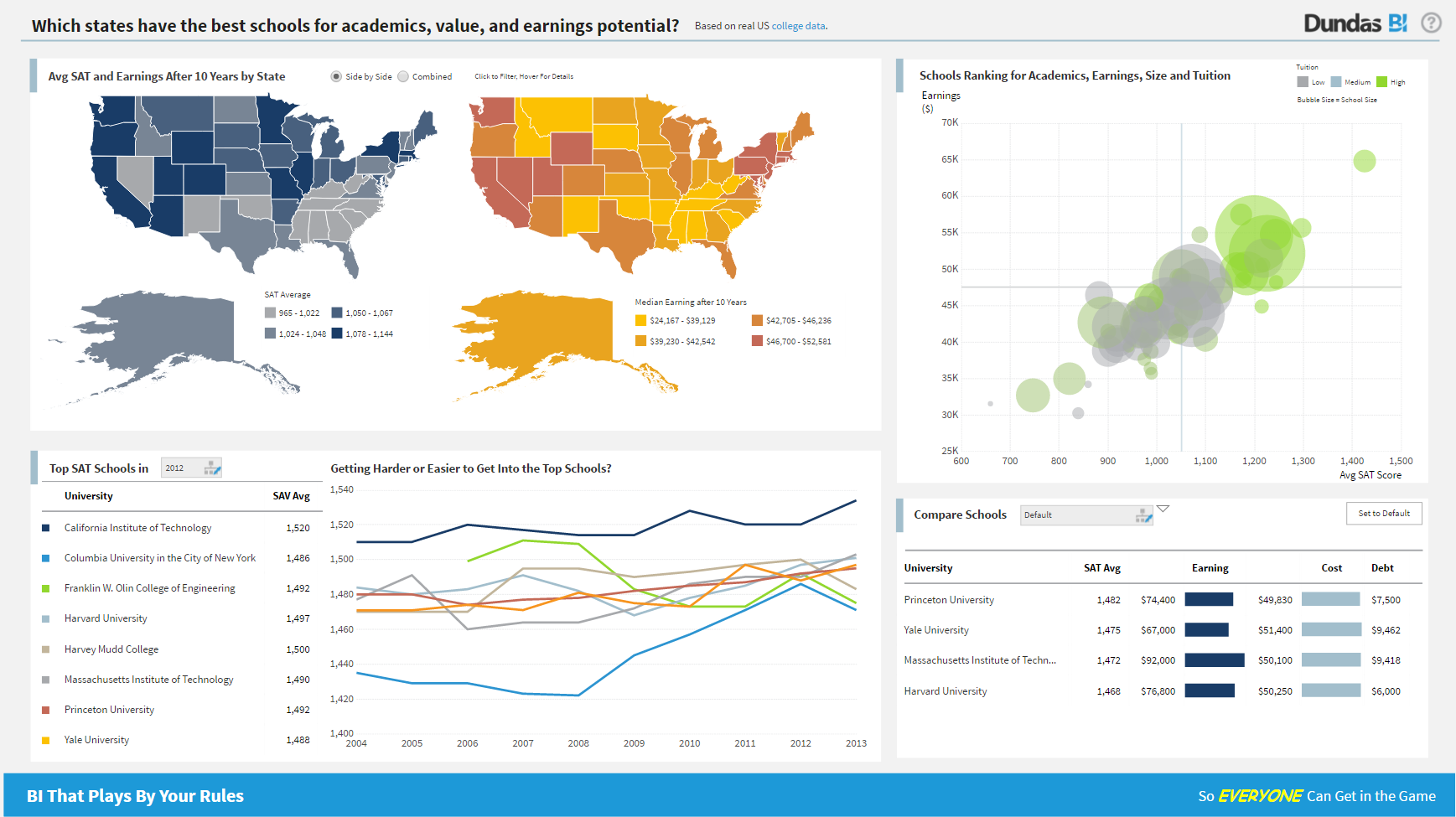
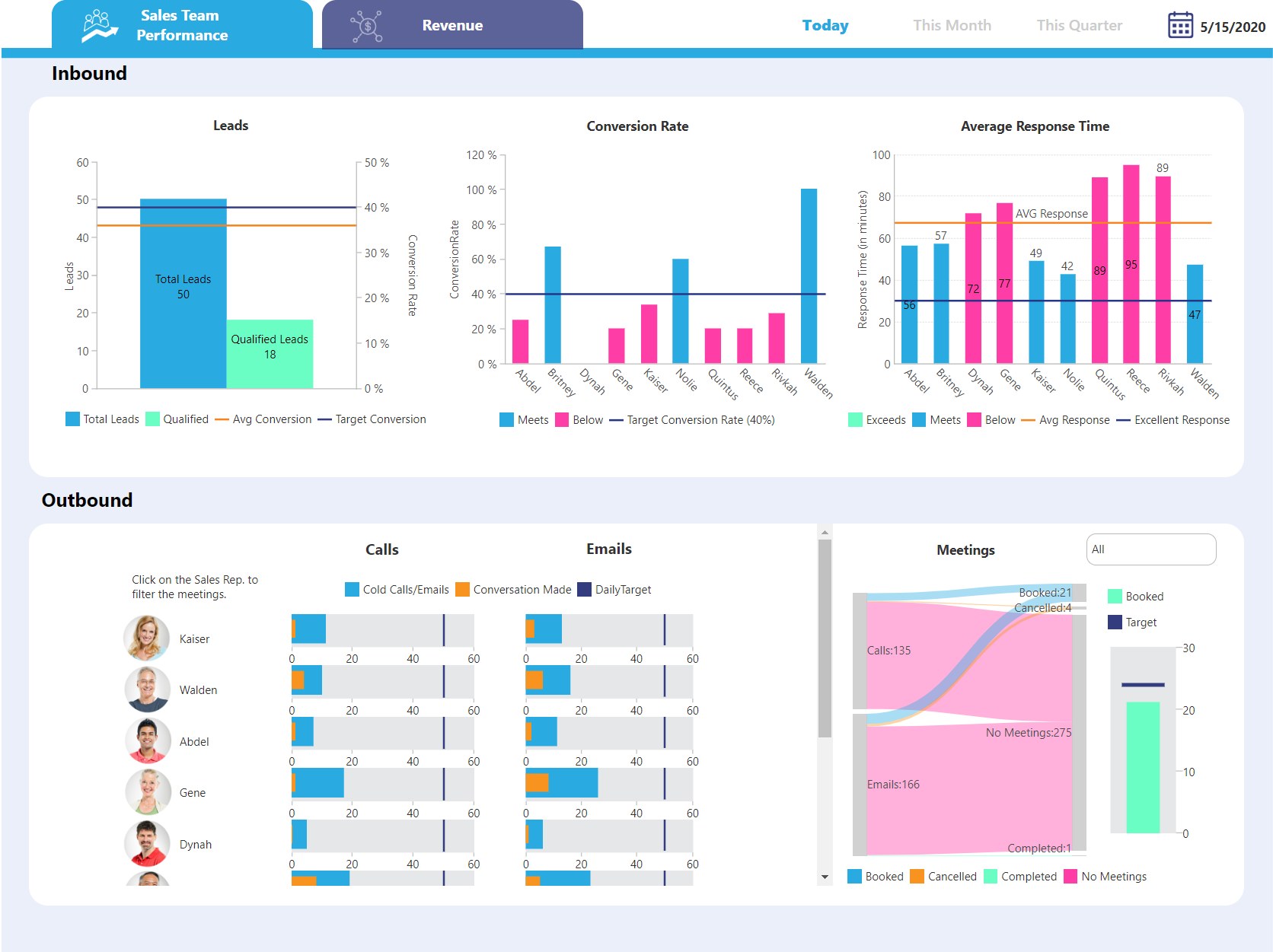
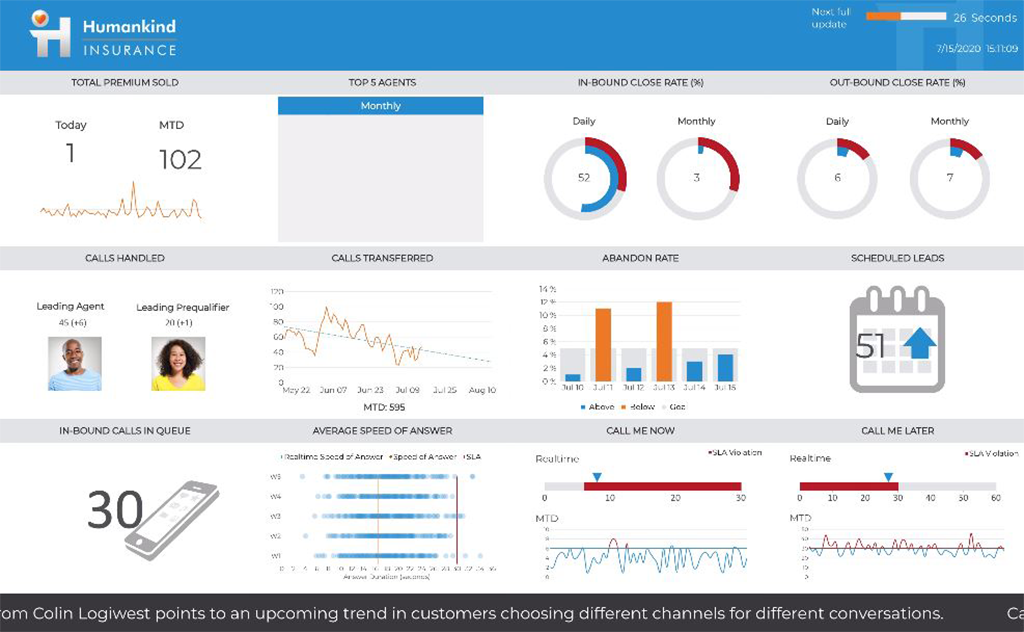
Logi Symphony is a business intelligence and data visualization software that includes customizable dashboards, reporting, and visual data analytics. It can be integrated into users’ existing business applications and its visualization and reporting tools can be customized.
N/A
Oracle Analytics
Score 7.5 out of 10
N/A
Oracle Analytics is a solution used to visually explore data to create and share compelling stories. Oracle Analytics Cloud is a cloud native service, and Oracle Analytics Server is the on-premise option.
N/A
SAS Visual Analytics
Score 7.6 out of 10
Enterprise companies (1,001+ employees)
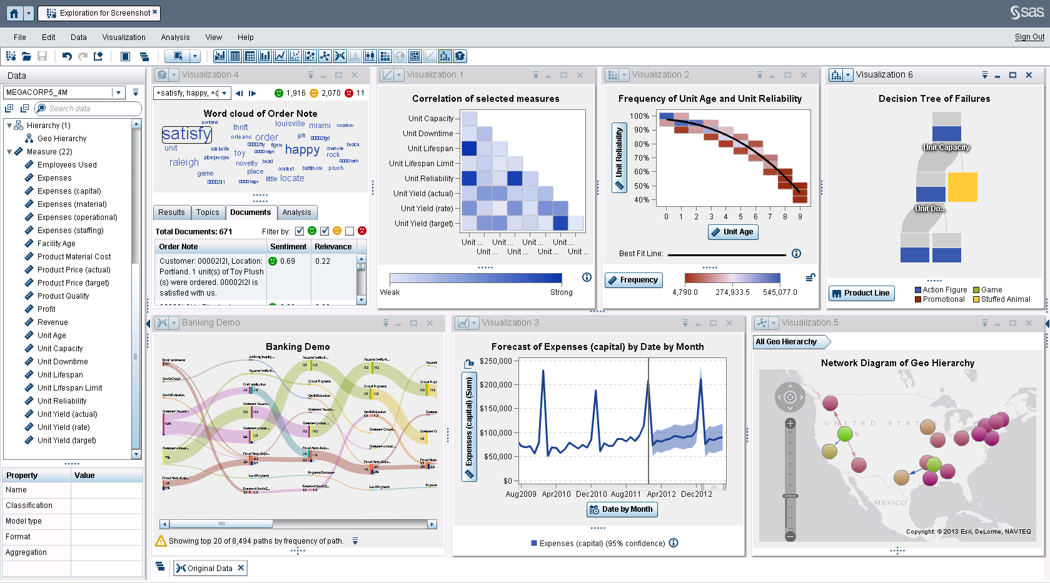
SAS Visual Analytics provides a complete platform for analytics visualization, enabling users to identify patterns and relationships in data that weren't initially evident. Interactive, self-service BI and reporting capabilities are combined with out-of-the-box advanced analytics so everyone can discover insights from any size and type of data, including text.
$0
Annual By Users: 5, 10, 20
Pricing
Logi Symphony
Oracle Analytics
SAS Visual Analytics
Editions & Modules
No answers on this topic
No answers on this topic
SAS Visual Analytics for SAS Cloud
Annual By Users: 5, 10, 20
Offerings
Pricing Offerings
Logi Symphony
Oracle Analytics
SAS Visual Analytics
Free Trial
Yes
No
Yes
Free/Freemium Version
No
No
No
Premium Consulting/Integration Services
Yes
No
Yes
Entry-level Setup Fee
No setup fee
No setup fee
No setup fee
Additional Details
—
Must contact sales team for pricing.
SAS Visual Statistics and SAS Office Analytics are also available as add-ons.
Per dollar spent, it offers the widest range of features of the tools that we evaluated. It offers lots of options for how to configure your environment, though they are not always intuitive to figure out. Having an ETL layer was a must have for us, as well as the ability to …
We were comparing Dundas BI against several other programs and eventually decided to go with Oracle as we were already using a host of their other products. Dundas was just as robust, we were just using more Oracle products and they all fit together very smoothly.
For all the scenarios I have so far worked on or I am currently working on, Dundas BI has proved to be more than adequate and apt to handle all of those. It is a very easy-to-use tool with quick shortcuts enabling you to prepare ad-hoc reports or dashboards in a matter of minutes.
Oracle Data Visualization is very effective if used in an enterprise context with huge volumes of data coming from different systems. It supports dashboard and reporting capabilities and is easy to scale. It also allows you to leverage machine learning capabilities to extract hidden data trends. Visualization capabilities are powerful but not so various if compared to other solutions on the market. If you want to present a dashboard to an executive audience and you want to make your dashboards beautiful you must adapt them through PowerPoint.
I was in a meeting with the client and there I have to show them some analytic data to them. But I was confused about how I will manage to show big data to clients with accuracy. But then the SAS Visual Analytics software helps me in presenting accurate data at the moment and it was very presentable and through that, I got the deal for that business.
Project organization from Development to Production, you get a production and development license but I think the best way to do it is with DEV and Prod project in the Production box. Use the development box for testing updates and really crazy things. With the Dev and Prod projects on the same box, you just publish from Dev to Prod and you are done. Users only have access to the Prod projects so no one can mess up what you are working on.
Security - If you have a hierarchy (subsidiaries, divisions, department, teams) and you want each group to see only their data, then Security hierarchies are for you!
Dependent filters! What's this you ask? Here is an example of how it can be used, in your company you have departments and who works for what department is in your database. You make a dashboard that has a department filter (only show these departments), a managers filter, and employee filter. Not every manager or employee is in multiple departments usually only one. With dependent filters you can say that the manager and employee filter are dependent on what is selected in the departments filter so when you go to filter them they only show the managers or employees that are part of that department, and you can even it do so employees are not only dependent on department but on manager as well. Then it gets even better as it can be done in reverse as well so when you select a manager then go to the department it only shows the departments he works for (there are better situations where this is more useful).
It is scriptable! From calculate columns, null replacements, button actions, load actions, hover over events there a way to do what you want.
They are constantly improving and listens to your suggestions.
Available without of the box connectors for Salesforce and oracle Saas Cloud. This is a huge plus for our business since we don't need another middleware solution just for this sake.
We are able to connect to our on-prem SQL Server database where we have our RMA database and other applications seamlessly without writing custom APIs.
OAC writes directly into ADW which is another advantage for loading Excel files into ADW after dataflow transformations.
OAC allows replication of the database from fusion ERP and lets us create subject areas using the data modeler.
Provides the flexibility to the end user to slice and dice the data.
Anyone can make predictive models with the help of in-built algorithms without the need to write a single line of code or knowledge of what's under the hood of algorithms.
The feature to simply ask a question related to data and getting a response in form of text, chart or graph is amazing.
Not too many cons for how we use the application. It really is easy and powerful. Very powerful.
Licensing is one thing that could be looked into. It is simple, but a little confusing. For example, if I get a license today, but a new release comes out tomorrow, it seems that the license doesn't work with the new release. Maybe that is by design, but it would be nice to clearly understand.
SAS is relatively expensive when compared to other BI tools and requires a large amount of upfront fee which becomes an issue for smaller organizations.
UI for the dashboards looks a little date in comparison to competitors like Tableau and Microstrategy.
Integration with other open source software like Python needs to be built in.
Scalability and rich integration capabilities. In the future, if we go with Hyperion for the Financial Consolidation and planning purposes -BI integration with Hyperion is going to be much simpler as it has native interface connectivity and even integration capabilities with well known CRM products (Siebel) and ERP Products (Oracle EBS, Peoplesoft, SAP) is going to be easy and straight forward.
SAS really is the cutting edge in Business Intelligence. That is all they do! They are constantly coming out with new products, product upgrades, and their tech support is second to none. In addition, their support of Education has made our ability to acquire their product possible.
We are still in the implementation phase, but so far we are finding it to be easy to use and learn. The eLearning courses that they have made available for free, as well as User Forums and other training videos have made even difficult concepts easier to understand.
Great, if you are limited to using it along with other Oracle products; sadly, not if you are integrating with other products, which can be a challenge. It is a great product with tons of functionality and great integration with other in-house platforms. Great visuals and customization for data and analytics to provide decision-making data and analysis.
SAS BI is good for creating reports and dashboards and then sharing it with the users. It also has ability to manage access to the reports and dashboards but somehow with most of the world moving to open source languages R, Python and Julia, SAS BI feels to be archaic in terms of feature set and integrations it allow[s]. Also, comparing it with other Business Intelligence tools like Tableau and Microsoft BI, the functionality of SAS BI is very limited and doesn't justify the pricing.
We have bi-weekly calls with our Success Manager, as well as access to support as needed. Any question that I have had, multiple people have been willing and able to jump on a call to talk me through it, or send an email with the solution
Oracle Analytics Support team is very proactive and I have never had a situation where I had to wait for more than a day or two to get my issues resolved. This is a very big help for us and we appreciate Oracle and its team for guaranteeing that experience.
When you call tech support, you are immediately routed to a person who can answer your question. Often they can answer on the spot. However, if they cannot, you are given a track number and then followed up with. There have been times when I have had multiple track numbers open and they will actually TRACK YOU DOWN to ensure that your problem has been resolved. Issues do not fall into black holes with SAS. They are also willing to do a WebEx with you to diagnose the problem by seeing your environment, which is always helpful.
A properly implemented Endeca solution performs extremely well on the largest of datasets and it positions your organization to immediately achieve your ROI.
Per dollar spent, it offers the widest range of features of the tools that we evaluated. It offers lots of options for how to configure your environment, though they are not always intuitive to figure out. Having an ETL layer was a must have for us, as well as the ability to host to secure HIPAA compliance. It is not a replacement for ad hoc reporting, but does a great job of creating parameterized reports and dashboards that look great.
Oracle Analytics Cloud, is one of the most agile and secure data analysis platforms that according to the budget and the amount of use, you can use the resources you need under the cloud. The Oracle brand is also very well known in this field and can meet all the needs of an organization or industry in any sector.
I have used Crystal Reports, Jaspersoft and SQL Server Reporting Services (SSRS). I would recommended Business Intelligence over SSRS and Crystal Reports. SSRS is very SQL-centric and Crystal Reports is more of an end-user tool. I would recommend Jaspersoft over Business Intelligence for developing a seamless web-based reporting interface but I highly recommend Business Intelligence for end-user ad-hoc reporting.
We have seen the results of this in our initial research and are not surprised that Oracle does this like it does soo many other things in this area, so well.
We've used OBIEE (or it's previous named product) for over 13 years and it's still the most used tool for BI by the business.
We moved our largest business system off of Business Object into OBI so we could gain improved performance, reliability, and easier management of metadata.