
Microsoft Application Server (deprecated) vs. Red Hat JBoss Enterprise Application Platform vs. Splunk Observability Cloud
Microsoft Application Server (deprecated) vs. Red Hat JBoss Enterprise Application Platform vs. Splunk Observability Cloud
| Product | Rating | Most Used By | Product Summary | Starting Price |
|---|---|---|---|---|
 Microsoft Application Server (deprecated) | N/A | Application Server is an expanded server role in the Windows Server® 2008 operating system. It provided an integrated environment for deploying and running custom, server-based business applications. These applications respond to requests that arrive over the network from remote client computers or from other applications. Application Server is deprecated. | N/A | |
 Red Hat JBoss EAP | N/A | N/A | N/A | |
 Splunk Observability Cloud | N/A | Splunk Observability Cloud aims to enable operational agility and better customer experience through real-time AI-driven streaming analytics allowing accurate alerts in seconds. It is designed to shorten MTTD and MTTR by providing real-time visibility into cloud infrastructure and services. | $180 per year per host |
| Microsoft Application Server (deprecated) | Red Hat JBoss Enterprise Application Platform | Splunk Observability Cloud | ||||||||||||||||||||||
|---|---|---|---|---|---|---|---|---|---|---|---|---|---|---|---|---|---|---|---|---|---|---|---|---|
| Editions & Modules | No answers on this topic | No answers on this topic |
| |||||||||||||||||||||
| Offerings |
| |||||||||||||||||||||||
| Entry-level Setup Fee | No setup fee | No setup fee | No setup fee | |||||||||||||||||||||
| Additional Details | — | — | — | |||||||||||||||||||||
| More Pricing Information | ||||||||||||||||||||||||
| Microsoft Application Server (deprecated) | Red Hat JBoss Enterprise Application Platform | Splunk Observability Cloud |
|---|
| Microsoft Application Server (deprecated) | Red Hat JBoss Enterprise Application Platform | Splunk Observability Cloud | |||||||||||||||||||||||||||
|---|---|---|---|---|---|---|---|---|---|---|---|---|---|---|---|---|---|---|---|---|---|---|---|---|---|---|---|---|---|
| Application Servers |
|
| Microsoft Application Server (deprecated) | Red Hat JBoss Enterprise Application Platform | Splunk Observability Cloud | |
|---|---|---|---|
| Small Businesses |  NGINX Score 9.2 out of 10 | NGINX Score 9.2 out of 10 |  InfluxDB Score 8.8 out of 10 |
| Medium-sized Companies | NGINX Score 9.2 out of 10 | NGINX Score 9.2 out of 10 |  Sumo Logic Score 8.8 out of 10 |
| Enterprises | NGINX Score 9.2 out of 10 | NGINX Score 9.2 out of 10 |  NetBrain Technologies Score 9.2 out of 10 |
| All Alternatives | View all alternatives | View all alternatives | View all alternatives |
| Microsoft Application Server (deprecated) | Red Hat JBoss Enterprise Application Platform | Splunk Observability Cloud | |
|---|---|---|---|
| Likelihood to Recommend | 9.0 (9 ratings) | 8.1 (8 ratings) | 7.7 (57 ratings) |
| Likelihood to Renew | - (0 ratings) | 5.0 (1 ratings) | 7.0 (2 ratings) |
| Usability | 10.0 (1 ratings) | 8.5 (3 ratings) | 7.6 (16 ratings) |
| Performance | - (0 ratings) | 8.7 (3 ratings) | - (0 ratings) |
| Support Rating | 9.0 (5 ratings) | 5.2 (2 ratings) | 10.0 (1 ratings) |
| Implementation Rating | - (0 ratings) | - (0 ratings) | 10.0 (1 ratings) |
| Ease of integration | - (0 ratings) | 8.5 (3 ratings) | - (0 ratings) |
| Microsoft Application Server (deprecated) | Red Hat JBoss Enterprise Application Platform | Splunk Observability Cloud | |
|---|---|---|---|
| Likelihood to Recommend | Discontinued Products
|  Red Hat
 Amanda Decker Development Coordinator, Advancement Services |  Cisco
|
| Pros | Discontinued Products
 Aurpa Fiza Mapple Ltd | Red Hat
| Cisco
|
| Cons | Discontinued Products
| Red Hat
| Cisco
|
| Likelihood to Renew | Discontinued Products No answers on this topic | Red Hat
 sameer vaidya Software Developer IV | Cisco
|
| Usability | Discontinued Products
| Red Hat
| Cisco
|
| Performance | Discontinued Products No answers on this topic | Red Hat
Amanda Decker Development Coordinator, Advancement Services | Cisco No answers on this topic |
| Support Rating | Discontinued Products
| Red Hat
 Holman Cárdenas, M.Eng, TOGAF®, ITIL® CIO (Chief Information Officer) | Cisco
 Giuseppe Cusello GRC Director |
| Implementation Rating | Discontinued Products No answers on this topic | Red Hat No answers on this topic | Cisco
Giuseppe Cusello GRC Director |
| Alternatives Considered | Discontinued Products
| Red Hat
| Cisco
 David Williams CIO (Chief Information Officer) |
| Return on Investment | Discontinued Products
| Red Hat
Amanda Decker Development Coordinator, Advancement Services | Cisco
|
| ScreenShots | Splunk Observability Cloud Screenshots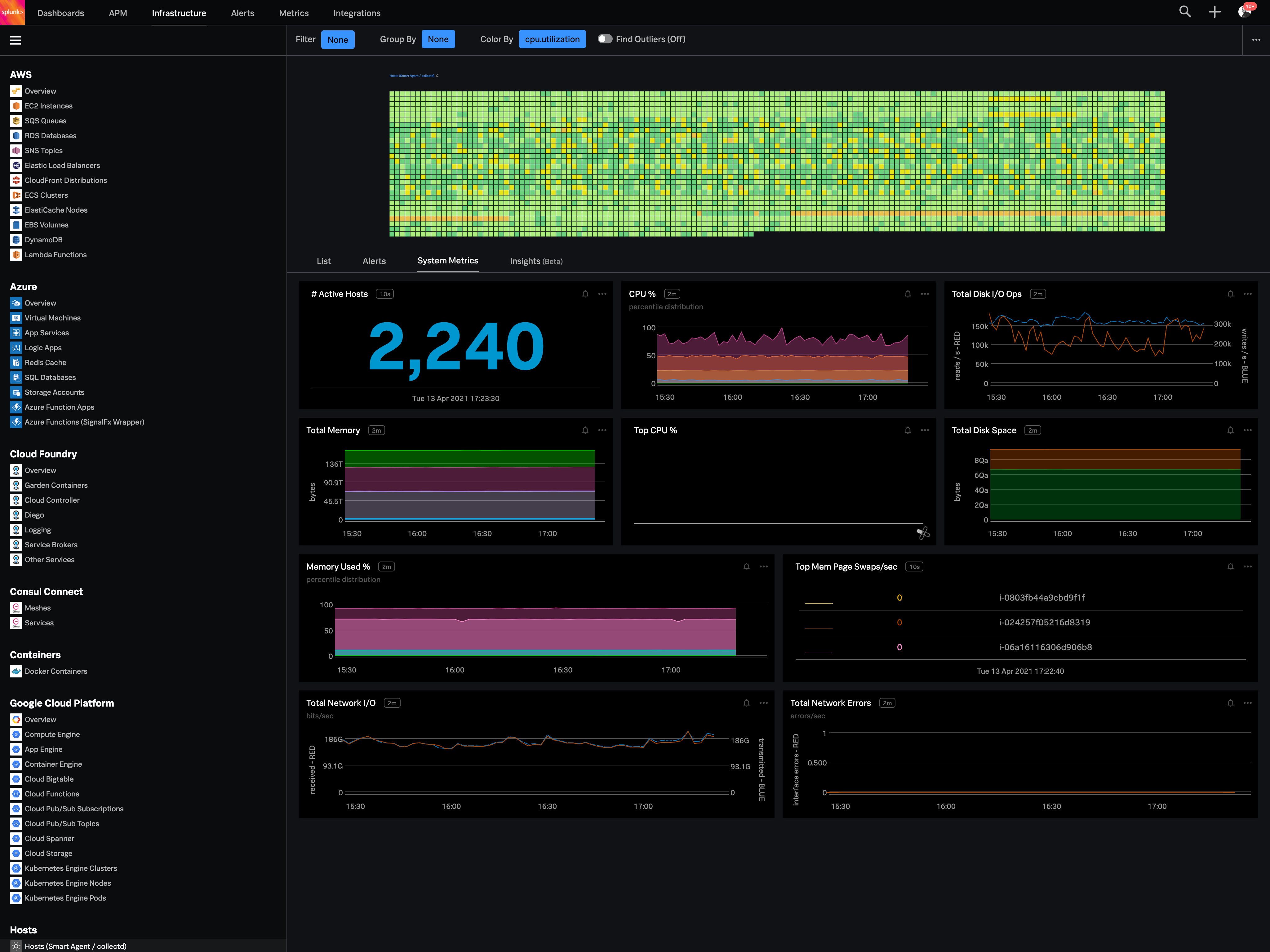 |