Microsoft Power BI is a visualization and data discovery tool from Microsoft. It allows users to convert data into visuals and graphics, visually explore and analyze data, collaborate on interactive dashboards and reports, and scale across their organization with built-in governance and security.
$168
per year per user
QlikView
Score 8.2 out of 10
N/A
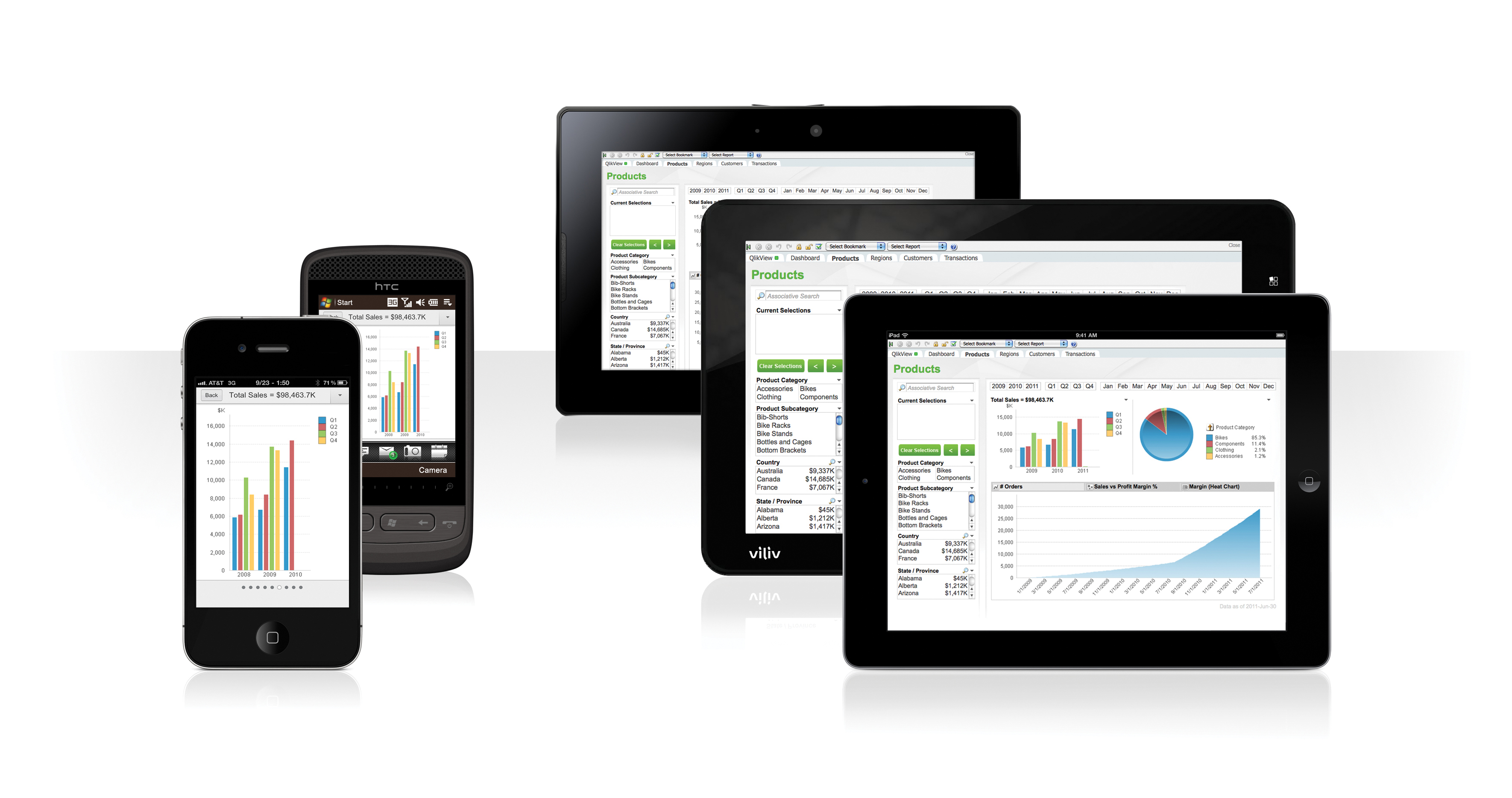
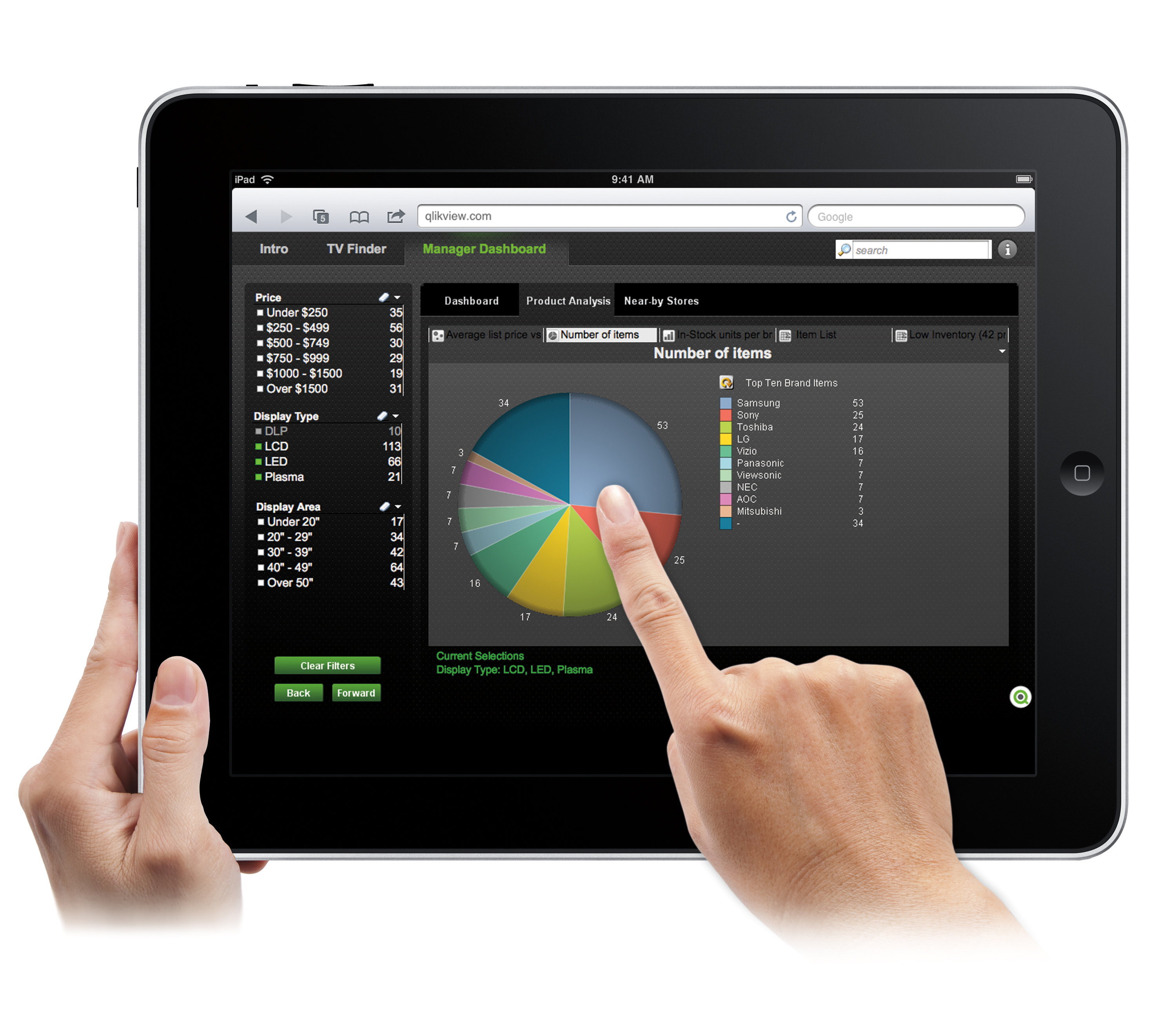
QlikView® is Qlik®’s original BI offering designed primarily for shared business intelligence reports and data visualizations. It offers guided exploration and discovery, collaborative analytics for sharing insight, and agile development and deployment.
N/A
Spotfire
Score 8.1 out of 10
N/A
Spotfire, formerly known as TIBCO Spotfire, is a visual data science platform that combines visual analytics, data science, and data wrangling, so users can analyze data at-rest and at-scale to solve complex industry-specific problems.
N/A
Pricing
Microsoft Power BI
QlikView
Spotfire
Editions & Modules
Power BI Pro
$14
per month (billed annually) per user
Power BI Premium
$24
per month (billed annually) per user
QlikView
Custom
per user
No answers on this topic
Offerings
Pricing Offerings
Microsoft Power BI
QlikView
Spotfire
Free Trial
Yes
Yes
Yes
Free/Freemium Version
Yes
No
No
Premium Consulting/Integration Services
No
Yes
Yes
Entry-level Setup Fee
No setup fee
Optional
No setup fee
Additional Details
Power BI Desktop is the data exploration and report authoring experience for Power BI, and is available as a free download.
On an perpetual license basis, based on server plus number of users.
Contact vendor for pricing.
For Enterprise engagements, contact Spotfire directly for a custom price quote.
As mentioned earlier, Power BI is not as mature as QlikView or Tableau and, as a result, is more limited in the kinds of things it's capable of. That said, it's still highly capable of fulfilling most typical BI dashboard requirements. We chose Power BI partly because of a very …
Power BI, Tableau, and QlikView are the market leaders when analyzed on Gartner`s magic quadrant for business intelligence tool. One of the critical drawbacks of all these visionary tools is the absence or expensive back end that are needed to support the infrastructure. …
Director, eCommerce Analytics and Digital Marketing
Chose Microsoft Power BI
Power BI from a price perspective is the lowest cost (probably even from a total cost of ownership perspective) of all the offerings I have ever evaluated. The piece that really stands out for Power BI is the data transformation layer called Power Query. This section allows you …
It has more than 200 plus visuals in-store and is very easy to access. It has a great user community to help each other with an ample amount of responses. Almost all kinds of data sources are available to use and develop the reports Easy to use and learn with a lot of training …
Global Digital Operations Manager - BA Electrification
Chose Microsoft Power BI
Power BI was perfectly integrated in our Microsoft ecosystem what makes everything easier also, the fast evolution that has happened over the last years and their reaction to our needs is something that makes the differents. They listen to the customer and as they do a lot of …
Power BI is, in my opinion, the overall best visualization tool on the market today. While there are niche areas where others may have small advantages, the overall feature/functionality, approachability, and value proposition that Power BI provides give it the edge. Cost is …
Microsoft Power BI has better pricing, better features in the trial version. Power BI is also integrated with other Microsoft products, so you can publish dashboards to SharePoint pages and to Teams. Power BI is also the easiest to use. It has more wizards and all the pop-ups …
Power BI has the advantage that it works well with other Microsoft products. The software is nowhere near as strong on speed and advances in modeling capabilities. The user base also seems less knowledgeable about optimal data practices and cutting edge data visualization. …
Microsoft Power BI was a little more expensive when comparing it to the competition, but it also offers a lot more options and is more flexible as well. Also, the quality and appearance of the reports and charts was more good looking and aesthetically pleasing than the other …
Power BI does not have the feel of a fully independent and robust BI Solution. It tackles smaller functional or department-level analytic needs and can operate in a small or solo roll-out environment. But scaling up to enterprise would be better suited for Qlik or Tableau. Same …
R is very well integrated with Power BI. Also, Power BI is very well integrated with other Microsoft applications as compared to other applications which gives an edge to the application.
We selected Microsoft Power BI because it has the best GUI and easy-to-use interface. As part of Microsoft suite, it has the same structure as Office 365 solutions, therefore making it easier to get onboard. At the same time, having backend solutions from Microsoft such as …
Microsoft BI tool does a better job than most of the other software. The reason is excellent visualizations and its capability to connect with various other software and data sources. Tableau does a better job when it comes to tutorials and being more user-friendly. Also …
Power BI takes it to another level with the report and dashboard designing for a wide variety of purposes, and always gives you the option to be collaborative within their native sync features, that is also an advantage to set things up, for example, to promote reports into …
Much easier learning curve and integration with Microsoft Office gives it a leg up. People not knowing they have it, believe it or not, is limiting it's usage. Microsoft really needs to market it!
Based on the latest reviews from Magic Quadrant, Tableau is rated high among all the applications in this category with its rich features in terms of connectivity, visualizations, and various other features. But the cost of using the application is bit high from my personal …
Power BI is a lot easier to use. The designs are also much nicer. Costs to implement Power BI (minus the existing data infrastructure) is much lower than other tools commercially available. However, the tool is still relatively new and still lacks many common features that …
As mentioned earlier it is free of cost and easy to learn as it is part of the Microsoft suite product. It blends well with ETL package tools such as SSRS and SSIS. It is also easy to distribute the dashboard to users of Office 365. It is a a complete Microsoft product which …
QlikView seems somewhat legacy compared to Microsoft Power BI, with more options to customize and format dashboards with a more enhanced look and feel. QlikView was already widely used in our organization before I came on board and was widely adopted as the single source of …
Each tool has their own pros and cons; QlikView works well for our needs at this time.
Verified User
Executive
Chose QlikView
I think it all comes down to personal preference and integration compatibility with the existing systems in the organization. However, I would argue that Qlik and PowerBI are the top-tier available solutions due to robust features and capabilities, and I would put solutions …
MS Power BI and other BI tools have similar functions to QlikView and some of them also have much cheaper price. However, the strength of QlikView is that it is much easier to use and to learn. If you need to train a new person to learn the tool, it costs around 1-2 days.
QlikView has its own data warehouse, which is the most important reason why would I choose QlikView over any other tools. Apart from that, the feature options are good for the ones who know the tool well but created a steeper learning curve in the beginning. Once you went …
Qlik was less intuitive than Paxata, but less expensive than either microstrategy or PowerBI. Qlik has enough breadth to accommodate most use cases without breaking the bank.
Power BI is cheaper, but more basic. Tableau is more expensive, but with greater capabilities. I feel like the other two are a little more intuitive. My company had Qlikview when I arrived.
TIBCO Spotfire and Tableau were other systems considered. Both of these products are very good and they all have different strengths. QlikView best met our business needs because of its ability to load multiple data sources directly, handle ETL logic on the data load, delivers …
Spotfire is much more powerful in terms of data visualization and data connections compared to Microsoft Power BI. Mapping and geographic analysis is another area where Spotfire is strong. Perhaps Power BI is the cost effective option. I see both being equally easy to use to …
I find both Microsoft Power BI and Spotfire very easy to use. I would rate them on par with each other. There isn’t much to differentiate them. Maybe the learning curve on Spotfire is a bit steeper than Microsoft Power BI.
Spotfire is stronger than other tools to built complex metrics within the tool, without needs of etl updates and query changing. It has lots of useful visualizations to deep dive data and give interesting analysis to business users. Moreover, with some studies and tests, you …
Because of Spotfire's robust features and capabilities, I chose it as my
preferred software. Spotfire's greater overall performance and
scalability set it apart from other software solutions. It can handle
Spotfire is more suited for manufacturing industries with regards the huge data to process to make relevant decision that use big data for making decisions, besides this Spotfire supports more and excels at Availability & Scalability, Data Sources Connectivity and Deployment …
I have been using Spotfire; it is free and I was able to play around a lot more with the features. The best part of using Spotfire is the heat map signatures for my data. It provides a better visualization of your target demographic.
I choose Spotfire because of the following - custom visual using JavaScript - on the fly chart property update using iron python - easy report Deployment and update -easy to manage user access via so or ldap - best report data Extraction -mix data sources -custom data load …
Spotfire's key strength les in extent of customization possible and it's inherent Data Analytics capabilities. With in-memory and in-database analysis capabilities, it comes out as a high performance and high efficiency BI solution. Adding to it, Spotfire integrates the …
Spotfire is significantly ahead of both products from an ETL and data ingestion capability. Spotfire also has substantially better visualizations than Power BI, and although the native visualizations aren't as flexible in Tableau, Spotfire enables users to create completely …
Verified User
Engineer
Chose Spotfire
I have used Tableau & Qlikview. I felt QlikView is very IT & Developer friendly with great customizable options and a great scope of scalability. Tableau with the limited use i did, I felt was very easy to use for simpler operations but for a larger complex operations I felt …
It provides all tools along with in-built apps for analysis and generating reports, metrics, charts, and graphs. Comes with appropriate costing model at least for an average size organization
Spotfire is the best application for power users by virtue of its wide variety of visualizations, incorporated analytics, superior data canvas, and ability to integrate code such as R or Python. The learning curve is steeper and the menus are Windows 7 once you are past some …
I have only briefly used Power BI and I found the interface more familiar as it leverages a lot of familiar aspects that come from Excel. However, I did not find it was a clean an interface for visualizations as Spotfire was.
The latest version of Spotfire enables users to join data without any friction. For example, if the column in one table has different prefixes and/or postfixes, the tool would automatically join the two tables together without causing any potential debugging alarm or issues …
Spotfire is a very good product and stacks up well against the competition for creating customized dashboards. It also has intuitive capabilities to create visualizations that could help the user see their data. Moreover, it also has a lot of options for customization in terms …
We evaluated Power BI and Tableau 4 years ago. Power BI at that time was in its infancy, but over the last 4 years have made huge leaps of improvements. At that time, the two products weren't comparable. Tableau 4 years ago was a very strong product and the acquisition from …
Spotfire is much user-friendly and able to handle many million rows seamlessly. Automation is so easy. Connecting to various data sources is easy. Upgrade from one version to the latest version is easy.
A few that are not listed are Metabase and ReDash--they are both open source. I like Spotfire the best by far. I was surprised how far behind it Tableau is. I could just never get the feel for Tableau, while I really enjoyed working in Spotfire. The open-source ones are nice …
Within our use cases Spotfire is preferred due to the ability to manage live data as well as big data in an appropriate time. It is also much better in statistics and advanced analytics.
This tool was selected in my organization around 10 years back. It was suggested to be one of the best and it proved to be. My users are also satisfied with the performance of the tool, but we had some setbacks with SharePoint online and the Azure SQL database. Hopefully, if …
We are dealing with and evaluate as many data analytics and BI tools as it is feasible for us in order to be able to suggest the best tool to our clients. Spotfire is strong in intuitive and easy to learn analytics, plus it has built-in functionality to work with R, which is a …
Has significantly improved collation of data and visualisation especially with business across Europe. Has given me the ability to see the Site availability at the click of a button to see which Site is in the "money" and seize opportunities based on Market data
Sales data validations have helped manage our justifications in the past, especially with regard to new product development and new business introduction. It has also been helpful in identifying trends with business impact and direction specific to quarter and monthly sales from ERP data as well as decisions to purchase equipment of staffing based on run rates and product demand.
One thing that can get out of hand is data output - if you aren't careful in your query, you may be overloaded with data dumps and drown in the amount of info you have to filter through. This is a user caution, not a comment on the software itself.
A high level of data integration is available here it supports various data sources and so on. Collaborating features allow users to give access to the dashboard and merge data analytics with other team members. It can meet the demands of both small and large size business enterprises. A customized dashboard and reports are provided to meet the specific needs and get support of extensibility through APIs and customized scripts.
Options for data source connections are immense. Not just which sources, but your options for *how* the data is brought in.
Constant updates (this is both good and bad at times).
User friendliness. I can get the data connections set up and draft some quick visuals, then release to the target audience and let them expand on it how they want to.
We found that QlikView can be a bit slow in supporting some forms of encryption. It is web-based and we needed to upgrade all of our server to not support the older SSL and TLS 1 protocols, only support TLS 1.2 and TLS 1.3. However, QlikView could not run with TLS 1.2 and TLS 1.3. We had to wait over six months to get a version that would handle the newer TLS versions.
There are so many options with QlikView that you can get lost when developing a visualization. There are still items I have not yet figured out, such as labeling a graph with the name of a selected detail item.
QlikView works by pulling the data it is going to use for visualization into its database. I am a security reviewer and I need to make certain that PII and PHI is not pulled by QlikView for a visualization, otherwise this could become a reportable indecent.
The donut chart is I guess a powerful illustrations but I hope it should be done quite simple in Spotfire. But in Spotfire there are lots of steps involve just to build a simple donut chart.
Table calculation (like Row or Column Differences) should be made simple or there should be drag and drop function for Table Calculation. No need for scripting.
Information Link should be changed. If new columns are added to the table just refreshing the data should be able to capture the new column. No need extra step to add column
Microsoft Power BI is an excellent and scalable tool. It has a learning curve, but once you get past that, the sky is the limit and you can build from the most simple to the most complex dashboards. I have built everything from simple reports with only a few data points to complex reports with many pages and advanced filtering.
Ease of use, ability to load from pretty much any data source. today I created an application that loaded time sheets from excel that are not in a table format. With Qlik's "enable transformation steps" I was able to automate loads of multiple spreadsheets and multiple tabs easily. Could not do that with any other tool.
-Easy to distribute information throughout the enterprise using the webplayer. -Ad hoc analysis is possible throughout the enterprise using business author in the webplayer or the thick client. -Low level of support needed by IT team. Access interfaces with LDAP and numerous other authentication methods. -Possible to continually extend the platform with JavaScript, R scripts, HTML, and custom extensions. -Ability to standardize data logic through pre-built queries in the Information Designer. Everyone in the enterprise is using the same logic -Tagging and bookmarking data allows for quick sharing of insights. -Integration with numerous data sources... flat files, data bases, big data, images, etc. -Much improved mapping capability. Also includes the ability to apply data points over any image.
Automating reporting has reduced manual data processing by 50-70%, freeing up analysts for higher-value tasks. A finance team that previously spent 20+ hours per week on Excel-based reports now does it in minutes with Microsoft Power BI's automated Real-time dashboards have shortened decision cycles by 30-40%, enabling leadership to react quickly to sales trends, operational bottlenecks, and customer behavior.
QlikView is very easy to implement. The installation is very straight forward. QlikView has several different data connectors that can connect to different data sources very smoothly. The user interface to build the reports is very easy to understand. This helps to have a smaller learning curve. Something very helpful is that QlikView is a browser application for the end users. So, you don't need to install any applications on the user's computer.
Basic tasks like generating meaningful information from large sets of raw data are very easy. The next step of linking to multiple live data sources and linking those tables and performing on the fly analysis of the imported data is understandably more difficult.
Even though, it's a rather stable and predictable tool that's also fast, it does have some bugs and inconsistencies that shut down the system. Depending on the details, it could happen as often as 2-3 times a week, especially during the development period.
Generally, the Spotfire client runs with very good performance. There are factors that could affect performance, but normally has to do with loading large analysis files from the library if the database is located some distance away and your global network is not optimal. Once you have your data table(s) loaded in the client application, usually the application is quite good performance-wise.
It is a fantastic tool, you can do almost everything related with data and reports, it is a perfect substitutive of Power Point and Excel with a high evolution and flexibility, and also it is very friendly and easy to share. I think all companies should have Power BI (or other BI tool) in their software package and if they are in the MS Suite, for sure Power BI should be the one due to all the benefits of the MS ecosystem.
My experience with the Qlik support team has been somewhat limited, but every interaction I have had with them has been very professional and I received a response quickly. Typically if there is a technical issue, our IT team will follow up. My inquiries are specific to product functionality, and Qlik has been very helpful in clarifying any questions I might have.
Support has been helpful with issues. Support seems to know their product and its capabilities. It would also seem that they have a good sense of the context of the problem; where we are going with this issue and what we want the end outcome to be.
My team attended, but I cannot myself rate, but I think it was good as they've successfully launched a training program at our company themselves for users. It was 3-4 day training.
The instructor was very in depth and provided relevant training to business users on how to create visualizations. They showed us how to alter settings and filter views, and provided resources for future questions. However, the instructor failed to cover data sources, connecting to data, etc. While it was helpful to see how users can use the data to create reports, they failed to properly instruct us on how to get the dataset in to begin with. We are still trying to figure out connections to certain databases (we have multiple different types).
Training was as expected. The demo environments tend to be more fully featured that our own environment, but the training was clear and well delivered.
The online training is good, provides a good base of knowledge. The video demonstrations were well-done and easy to follow along. Provided exercises are good as well, but I think there could be more challenging exercises. The training has also gone up in price significantly in the last 3 years (in USD, which hurts us even more in Canada), and I'm not sure it is worth the money it now costs (it is worth how much it cost 3 years ago, but not double that.)
"Implementation" can mean a few things... so I'm not sure that this is the answer you want.... but here it goes: To me, implementation means: "Is the user interface intuitive and can I produce meaningful reports with ease?" On that score, I'd say YES. The amount of training required was minimal and the results were powerful. The desktop implementation is a simple, "blank" interface just waiting for your creativity. The pre-populated templates give you a reasonable start to any project -- and a good set of objects to "play around with" if you're just getting started. Finally, note that the "implementation" I used was baked into QuickBooks 2016 Enterprise -- called "Advanced Reporting"..... That integration makes it ultra useful and simple.
The original architecture I created for our implementation had only a particular set of internal business units in mind. Over the years, Spotfire gained in popularity in our company and was being utilized across many more business units. Soon, its usage went beyond what the original architectural implementation could provide. We've since learned about how the product is used by the different teams and are currently in the middle of rolling out a new architecture. I suggest:
Have clearly defined service level agreements with all the teams that will use Spotfire. Your business intelligence group might only need availability during normal working hours, but your production support group might need 24/7 availability. If these groups share one Spotfire server, maintenance of that server might be a problem.
Know the different types of data you will be working with. One group might be working with "public" data while another group might work with sensitive data. Design your Library accordingly and with the proper permissions.
Know the roles of the users of Spotfire. Will there only be a small set of report writers or does everyone have write access to the Library?
ALWAYS add a timestamp prompt to your reports. You don't want multiple users opening a report that will try and pull down millions of rows of data to their local workstations. Another option, of course, is to just hard code a time range in the backing database view (i.e. where activity_date >= sysdate - 90, etc.), but I'd rather educate/train the user base if possible.
This probably goes without saying, but if possible, point to a separate reporting database or a logical standby database. You don't want the company pounding on your primaries and take down your order system.
Microsoft Power BI is free. If I didn't want to create a custom platform (i.e. my organization insisted on an existing platform that I *had* to use), I'd use Microsoft Power BI. For any start-up or SMB, I'd just use Claude & Grok to build it quickly, also for free. Would not pay for Tableau or Sigma anymore. Not worth it at all.
The only other vendor product that I have worked with that provides a similar experience to Qlikview is Tableau. I would recommend Tableau if your use case is to build a fixed dashboard. You can share reports for free without needing to buy additional licenses. I would recommend Qlikview if your users are looking for a more interactive experience. They can create new objects to represent the data which can't be accomplished as easily in Tableau
Spotfire is significantly ahead of both products from an ETL and data ingestion capability. Spotfire also has substantially better visualizations than Power BI, and although the native visualizations aren't as flexible in Tableau, Spotfire enables users to create completely custom javascript visaualizations, which neither Tableau or Power BI has. Tableau and Power BI are likely only superior to Spotfire with respect to embedded analysis on a website.
In an enterprise architecture, if Spotfire Advanced Data services(Composite Studio),data marts can be managed optimally and scalability in a data perspective is great. As the web player/consumer is directly proportional to RAM, if the enterprise can handle RAM requirement accomodating fail over mechanisms appropraitely, it is definitely scalable,
You can use the free desktop version to do a lot of reporting and analysis work more quickly so the ROI is huge
QlikView is great at finding outliers such as data entry errors
QlikView is great at helping you quickly discover new insights about your business that can prompt you to take action that can immediately affect your cash flow.