Chose Remote Desktop Services
Mainly licensing optimization, as Remote Desktop Services CALs are needed anyway for other products.

| Product | Rating | Most Used By | Product Summary | Starting Price |
|---|---|---|---|---|
 Remote Desktop Services | N/A | Remote Desktop Services from Microsoft is virtual desktop and remote user session technology. | N/A | |
 Parallels RAS | N/A | Parallels Remote Application Server (Parallels RAS, formerly 2X RAS), is application virtualization technology, billed as a solution to extend the life of legacy OS (like Windows XP) with its virtual desktop for any device. Maltese company 2X Software developed the technology, but was acquired by Parallels (in Seattle, WA) in February, 2015 to extend their cross-platform support solutions. | $120 per year per user | |
 Red Hat Virtualization (discontinued) | N/A | Red Hat Virtualization (formerly Red Hat Enterprise Virtualization, broadly known as RHEV) is an enterprise level server and desktop virtualization solution. Red Hat Virtualization also contains the functionality of Red Hat Enterprise Virtualization for Desktop in later editions of the platform. | $999 Per Year Per Hypervisor |
| Remote Desktop Services | Parallels Remote Application Server (Parallels RAS) | Red Hat Virtualization (discontinued) | ||||||||||||||||||||||
|---|---|---|---|---|---|---|---|---|---|---|---|---|---|---|---|---|---|---|---|---|---|---|---|---|
| Editions & Modules | No answers on this topic | No answers on this topic |
| |||||||||||||||||||||
| Offerings |
| |||||||||||||||||||||||
| Entry-level Setup Fee | No setup fee | No setup fee | No setup fee | |||||||||||||||||||||
| Additional Details | — | — | — | |||||||||||||||||||||
| More Pricing Information | ||||||||||||||||||||||||
| Remote Desktop Services | Parallels Remote Application Server (Parallels RAS) | Red Hat Virtualization (discontinued) | |
|---|---|---|---|
| Considered Multiple Products |  Remote Desktop Services |  Parallels RAS  Brandon Barrett VP of Operations Chose Parallels Remote Application Server (Parallels RAS) Parallels Remote Application Server has been easier and less expensive to implement for our clients than VMware Horizon and offers a better experience than Microsoft Remote Desktop Services. All three of these can accomplish similar end results, but when looking at the overall …  Tom Robertson Owner Chose Parallels Remote Application Server (Parallels RAS) Parallels is far superior to basic RDS and is comparable to Citrix at less cost and hassle.  Donny McIver President Chose Parallels Remote Application Server (Parallels RAS) First and foremost, Parallels Remote Application Server is a game changer in price performance compared to Citrix. In addition, the security and flexibility compared to a traditional Microsoft RDS solution is night and day better both in terms of security and configuration … | Red Hat Virtualization (discontinued) No answer on this topic |
| Remote Desktop Services | Parallels Remote Application Server (Parallels RAS) | Red Hat Virtualization (discontinued) | |||||||||||||||||||||||||||||||||||||||||||||||||||
|---|---|---|---|---|---|---|---|---|---|---|---|---|---|---|---|---|---|---|---|---|---|---|---|---|---|---|---|---|---|---|---|---|---|---|---|---|---|---|---|---|---|---|---|---|---|---|---|---|---|---|---|---|---|
| Remote Administration |
| ||||||||||||||||||||||||||||||||||||||||||||||||||||
| Server Virtualization |
|
| Remote Desktop Services | Parallels Remote Application Server (Parallels RAS) | Red Hat Virtualization (discontinued) | |
|---|---|---|---|
| Small Businesses |  Getscreen.me Score 9.6 out of 10 |  VMware Fusion Score 7.0 out of 10 |  DigitalOcean Droplets Score 9.4 out of 10 |
| Medium-sized Companies |  Remote Desktop Manager Score 9.5 out of 10 | VMware Fusion Score 7.0 out of 10 |  VMware vSOM (discontinued) Score 10.0 out of 10 |
| Enterprises | Remote Desktop Manager Score 9.5 out of 10 | VMware Fusion Score 7.0 out of 10 | VMware vSOM (discontinued) Score 10.0 out of 10 |
| All Alternatives | View all alternatives | View all alternatives | View all alternatives |
| Remote Desktop Services | Parallels Remote Application Server (Parallels RAS) | Red Hat Virtualization (discontinued) | |
|---|---|---|---|
| Likelihood to Recommend | 7.6 (19 ratings) | 9.7 (152 ratings) | 6.6 (11 ratings) |
| Likelihood to Renew | 6.0 (1 ratings) | 8.4 (22 ratings) | - (0 ratings) |
| Usability | 7.1 (4 ratings) | 8.4 (31 ratings) | - (0 ratings) |
| Availability | - (0 ratings) | 9.1 (4 ratings) | - (0 ratings) |
| Performance | 5.0 (1 ratings) | 4.5 (4 ratings) | - (0 ratings) |
| Support Rating | 3.0 (1 ratings) | 7.8 (129 ratings) | - (0 ratings) |
| Online Training | - (0 ratings) | 7.3 (2 ratings) | - (0 ratings) |
| Implementation Rating | - (0 ratings) | 7.4 (12 ratings) | - (0 ratings) |
| Configurability | - (0 ratings) | 7.3 (4 ratings) | - (0 ratings) |
| Ease of integration | 5.0 (1 ratings) | 4.5 (3 ratings) | - (0 ratings) |
| Product Scalability | - (0 ratings) | 7.3 (3 ratings) | - (0 ratings) |
| Vendor post-sale | - (0 ratings) | 9.1 (4 ratings) | - (0 ratings) |
| Vendor pre-sale | - (0 ratings) | 9.1 (4 ratings) | - (0 ratings) |
| Remote Desktop Services | Parallels Remote Application Server (Parallels RAS) | Red Hat Virtualization (discontinued) | |
|---|---|---|---|
| Likelihood to Recommend | Microsoft
 Scott Strader North America IT Support Manager | Parallels
| Discontinued Products
|
| Pros | Microsoft
 Ho'omana Nathan Horton IT Professional | Parallels
| Discontinued Products
|
| Cons | Microsoft
 Paul Li Senior Associate | Parallels
| Discontinued Products
|
| Likelihood to Renew | Microsoft No answers on this topic | Parallels
 iain Stephen Information Systems Manager | Discontinued Products No answers on this topic |
| Usability | Microsoft
| Parallels
| Discontinued Products No answers on this topic |
| Reliability and Availability | Microsoft No answers on this topic | Parallels
iain Stephen Information Systems Manager | Discontinued Products No answers on this topic |
| Performance | Microsoft
| Parallels
iain Stephen Information Systems Manager | Discontinued Products No answers on this topic |
| Support Rating | Microsoft
| Parallels
| Discontinued Products No answers on this topic |
| Online Training | Microsoft No answers on this topic | Parallels
 Craig Cormier IT Manager | Discontinued Products No answers on this topic |
| Implementation Rating | Microsoft No answers on this topic | Parallels
iain Stephen Information Systems Manager | Discontinued Products No answers on this topic |
| Alternatives Considered | Microsoft
 Nathan Ziehnert Desktop Applications Engineer | Parallels
| Discontinued Products
 Matthew J. Fitzpatrick President/CEO |
| Scalability | Microsoft No answers on this topic | Parallels
iain Stephen Information Systems Manager | Discontinued Products No answers on this topic |
| Return on Investment | Microsoft
| Parallels
| Discontinued Products
|
| ScreenShots | Parallels RAS Screenshots  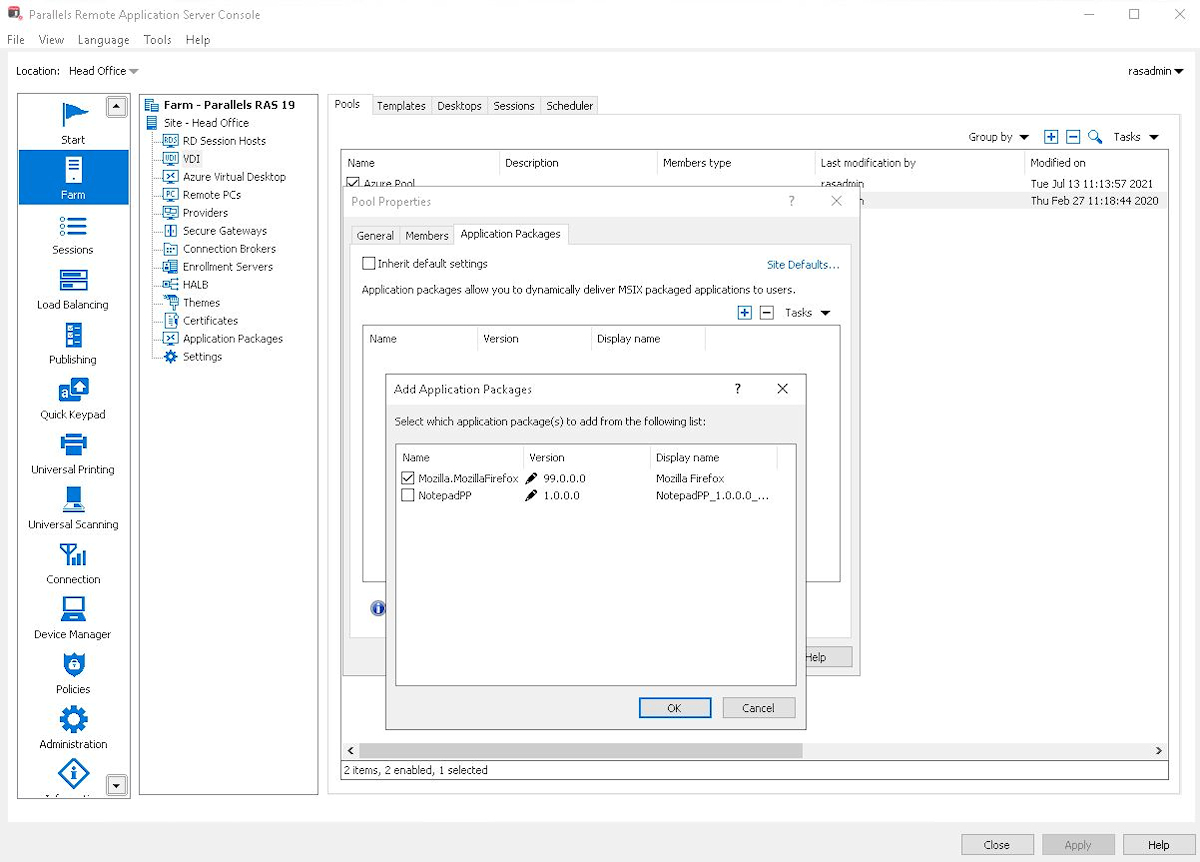    |