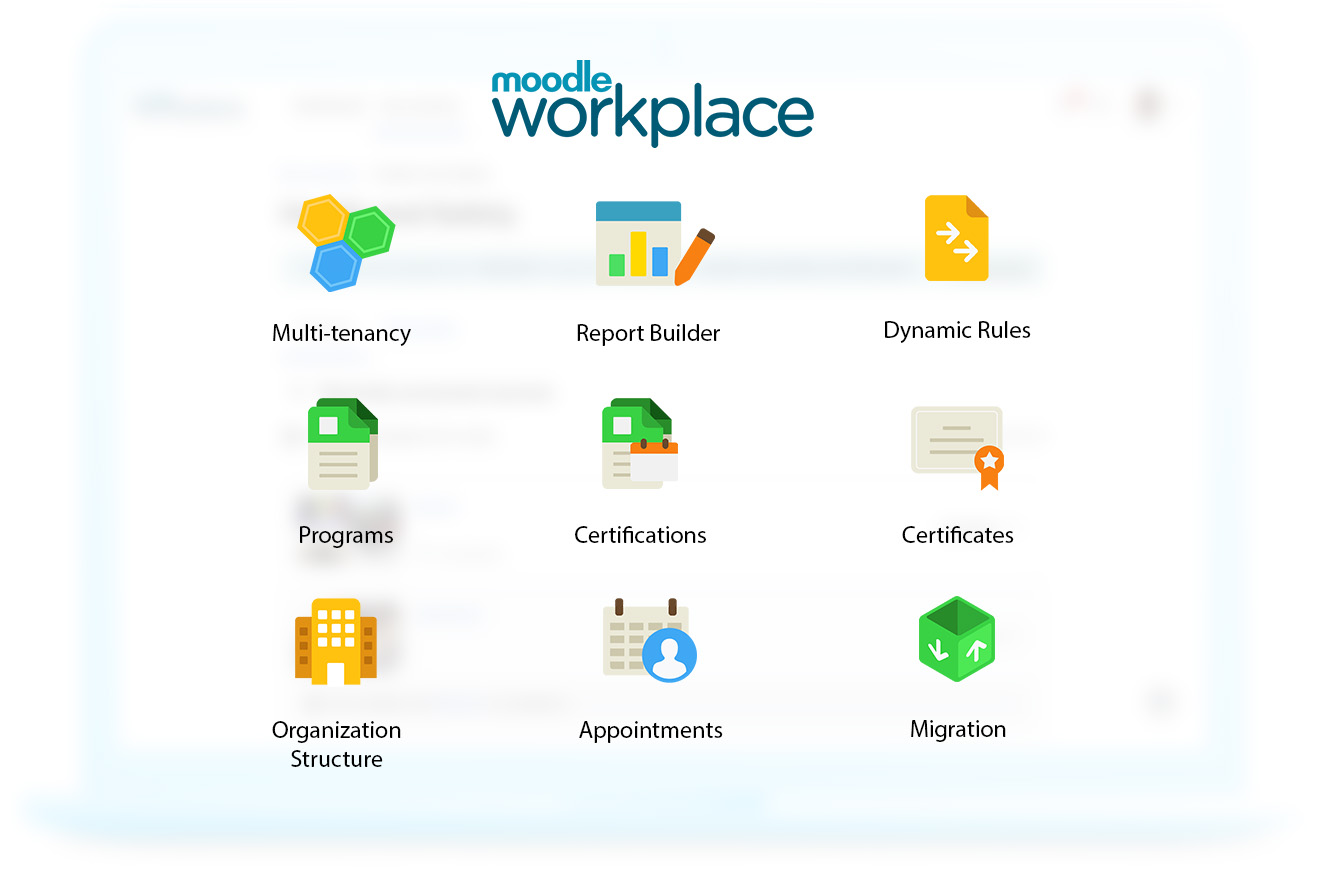
Moodle is an open source learning management system with hundreds of millions of users around the globe and translated into over 100 languages, used by organizations to support their education and training needs.
N/A
Slack
Score9 out of 10
N/A
Slack is a group messaging or team collaboration app that aims to simplify communication for businesses. Features include open discussions, private groups, and direct messaging, as well as deep contextual search and message archiving, and file sharing. Slack integrates with a number of other tools, such as MailChimp, Dropbox, and Google Drive. Slack was acquired by Salesforce in December 2020.
The product is free to use, and also has paid plans with more features and greater controls.
The…
$8.75
per month per user
Pricing
Moodle
Slack
Editions & Modules
No answers on this topic
Free
$0
Pro
$7.25*
per month per user
Business+
$12.50*
per month per user
Enterprise
Contact Sales
Offerings
Pricing Offerings
Moodle
Slack
Free Trial
Yes
Yes
Free/Freemium Version
Yes
Yes
Premium Consulting/Integration Services
Yes
No
Entry-level Setup Fee
Optional
No setup fee
Additional Details
—
*Per active user, per month, when paying once a year.
Pro is $8.75 USD per active user when paying month to month. Business+ is $15.00 USD per active user when paying month to month.
ISR in Sales at Setschedule (Real Estate, 51-200 employees)
Chose Moodle
It is hard to compare them with each other as they are so different. They really can't compare as they are two completely different platforms. But Moodle is great in all aspects, I like Slack for communication as well. But when it comes to tasks, Moodle handles it better …
A de minimis incentive was given to thank the reviewer for their time. The incentive was not used to bias or drive a particular response, nor was the incentive contingent on a positive endorsement. More Info
Phd, Researcher at Universität Klagenfurt (Research, 5001-10,000 employees)
Chose Moodle
Compared to Google Classroom, Moodle is more flexible and more comprehensive. But the interface is a bit outdated and not very mobile-friendly. Additionally, Google Classroom has nice integration with other Google's workspace tools. Google lack tools such as CodeRunner to be …
A de minimis incentive was given to thank the reviewer for their time. The incentive was not used to bias or drive a particular response, nor was the incentive contingent on a positive endorsement. More Info
Verified User
Chose Moodle
Being completely free, Moodle comes out on top for any situation where the school is small or the budget it tight. Most of these other tools have paid services where there are professionals to assist with set-up or problem-solving. However, there is tons of information online …
A de minimis incentive was given to thank the reviewer for their time. The incentive was not used to bias or drive a particular response, nor was the incentive contingent on a positive endorsement. More Info
Verified User
Chose Moodle
Moodle is a bit better than Collaborate; our organization no longer uses Collaborate. Collaborate was good for webinars.
A de minimis incentive was given to thank the reviewer for their time. The incentive was not used to bias or drive a particular response, nor was the incentive contingent on a positive endorsement. More Info
A de minimis incentive was given to thank the reviewer for their time. The incentive was not used to bias or drive a particular response, nor was the incentive contingent on a positive endorsement. More Info
Verified User
Chose Moodle
Moodle doesn't compare well with Canvas. We chose Moodle because it was a cheaper option that met our basic needs; however, it isn't as clean, intuitive, or developed as other notable Learning Management Systems, especially Canvas. If your institution offers fully online …
A de minimis incentive was given to thank the reviewer for their time. The incentive was not used to bias or drive a particular response, nor was the incentive contingent on a positive endorsement. More Info
Moodle is great for any environment where a class or other learning activity needs to be completed in an asynchronous manner. It can be used to post information, create interactive threads for discussion, issue quiz and exam work with grading, track and grade progress, and keep track of attendance. It is an overall wonderful solution for managing asynchronous learning.
Slack is ideal for Scrum and agile teams that need continuous communication during sprint planning, daily stand-ups, backlog refinement, testing, and retrospectives. Slack is well-suited for maintaining team knowledge through searchable conversations and dedicated channels, where experienced team members help onboard new QA analysts.
A de minimis incentive was given to thank the reviewer for their time. The incentive was not used to bias or drive a particular response, nor was the incentive contingent on a positive endorsement. More Info
Customer issues: Threads feature allows us to group a particular issue in a single thread and discuss within that thread. I can use the thread link to embed in JIRA ticket for tracking progress in JIRA (which is our details engineering tracking system).
Ability to add folder to Slack channel helps keep important information, documents easily accessible. e.g., we use this to keep a "ramp up" folder that can be used by any new joiner.
Global search is effective when I forget which group a particular message was in.
The interface is not very intuitive. You must know what you are looking for in order to navigate effectively.
Although installation of Moodle is easy, it is a little more difficult to configure it with your other Learning tools. As an example, LDAP synchronization is a little difficult.
The interface is a little dated, even though new releases keep coming out (which is great!) none of them really add value to the appearance of the platform.
A de minimis incentive was given to thank the reviewer for their time. The incentive was not used to bias or drive a particular response, nor was the incentive contingent on a positive endorsement. More Info
Would love a better integration with GitHub. For example, notifications when your PR is updated, when review is requested, @-mention in comments, etc.
Improved "Later" tab, for example the ability to create to-do lists or making the "Later" tab into a more powerful to-do list (annotate items with notes)
More powerful integrations, e.g. Google Calendar could render a calendar view within Slack, rather than sending the daily schedule
A de minimis incentive was given to thank the reviewer for their time. The incentive was not used to bias or drive a particular response, nor was the incentive contingent on a positive endorsement. TR verified that a representative sample of customers was invited. More Info
We use it because it is what have committed to back in 2011. Perhaps Moodle will evolve and advance in a positive way that will alleviate most of our user-based gripes? Perhaps it will not appear to be as cost effective given the need for a certain level of engineering and support staff to maintain it at a future level of sustainability? It's hard to say. As an enterprise scale critical application, we like it, but don't love it. Our instructors don't particularly like it at all.
To be more transparent, I give 10 because Slack serves our collaboration needs. It provide us a good platform for team communication relaying important update within the company, it has even mobile app where you can install in your phone to monitor any updates within that team that needs your immediate attention and intervention.
A de minimis incentive was given to thank the reviewer for their time. The incentive was not used to bias or drive a particular response, nor was the incentive contingent on a positive endorsement. More Info
Moodle can be used on a tablet, on a mobile phone, and on a PC. It is easy to navigate for learners and figure out for administrators. The learners can easily complete tasks and the administrators can easily track completion. The last thing about Moodle that one may not realize is that it somewhat resembles Facebook in its layout. This means that users are already familiar with the interface and therefore they are more comfortable using it.
A de minimis incentive was given to thank the reviewer for their time. The incentive was not used to bias or drive a particular response, nor was the incentive contingent on a positive endorsement. More Info
Slack has good usability. Devs that are not familiar with the platform are able to jump into conversations and start sharing code and links within just minutes. Non developers are also able to understand the layout such as the Project Managers that are keeping the projects on track. We have not seen any tickets where employees are having trouble understanding Slack.
A de minimis incentive was given to thank the reviewer for their time. The incentive was not used to bias or drive a particular response, nor was the incentive contingent on a positive endorsement. TR verified that a representative sample of customers was invited. More Info
Yes, Moodle is always available. We are self-hosted and Moodle is always up and available. The only time that it is not available is when we are upgrading it each semester. It is then down for just a few planned hours. That is in-between semesters and we let the faculty and students know. We do it on a Friday evening and it is back up within a few hours.
A de minimis incentive was given to thank the reviewer for their time. The incentive was not used to bias or drive a particular response, nor was the incentive contingent on a positive endorsement. More Info
Yes, the app works 24/7. I don't even recall having any period that we could not use since the implementation. Even the maintenance periods are barely noticeable and our work is not impacted by it when it happens.
A de minimis incentive was given to thank the reviewer for their time. The incentive was not used to bias or drive a particular response, nor was the incentive contingent on a positive endorsement. TR verified that a representative sample of customers was invited. More Info
Moodle is an excellent LMS in relationship to any other one that I have seen or used. The pages load quickly and the reports complete in a reasonable time frame. Moodle has taken on Respondus, StudyMate, BigBlueButton, Turning Tech, Turnitin2, Certificates, Attendance, Tegrity, Questionnaire, Virtual Programming Lab, and Badges. All of these programs work right in with Moodle and do not cause any issues. Instructors may also use Camtasia and Snagit software as well as using webcams, downloading videos from the Internet, adding into books, or any of the many other areas within Moodle. Our instructors use the grade books without many problems and really don't ask questions much anymore. We upgrade Moodle every semester and are currently on 2.9+. Our instructors have basically learned to use most of the resources and activities.
A de minimis incentive was given to thank the reviewer for their time. The incentive was not used to bias or drive a particular response, nor was the incentive contingent on a positive endorsement. More Info
Slack is a soft app, we don't have many issues with it. I recall one or two people complaining about something during our usage period, but I didn't have a bad experience. When the app is slow, usually the problem is with my computer or my internet. The app works just fine.
A de minimis incentive was given to thank the reviewer for their time. The incentive was not used to bias or drive a particular response, nor was the incentive contingent on a positive endorsement. TR verified that a representative sample of customers was invited. More Info
Moodle is open source, and must be evaluated in that context, but one also has to provide a fair comparison to competing products with commercial backing. Support varies depending on the component of Moodle. Bug reports in Moodle Core that affect security or stability are dealt with promptly. Functionality requests or features not working smoothly may or may not be addressed, depending on whether the functionality desired matches the "vision" of Moodle HQ. The user community provides excellent support for initial installation and configuration, but more complex questions may go unanswered, unless they are noticed by someone who happens to know the answer. The support forum feature at the Moodle site (the same feature used within Moodle itself) does not provide granular subscription to topic discussions, apparently by design, and Moodle HQ seems resistant to changing this feature.
A de minimis incentive was given to thank the reviewer for their time. The incentive was not used to bias or drive a particular response, nor was the incentive contingent on a positive endorsement. More Info
Whenever I've had to troubleshoot an issue with Slack (which, to be honest, has not happened very often), their online documentation has been easy to locate, easy to understand, and effective in resolving my issue. Slack's ever-growing popularity also means that there's a large community of practice out there that can be depended upon.
A de minimis incentive was given to thank the reviewer for their time. The incentive was not used to bias or drive a particular response, nor was the incentive contingent on a positive endorsement. More Info
A de minimis incentive was given to thank the reviewer for their time. The incentive was not used to bias or drive a particular response, nor was the incentive contingent on a positive endorsement. More Info
Find a partner who will work with you during the implementation process. Be sure to provide ample training for veteran users on the changes and for newbies on the overall product.
A de minimis incentive was given to thank the reviewer for their time. The incentive was not used to bias or drive a particular response, nor was the incentive contingent on a positive endorsement. More Info
A de minimis incentive was given to thank the reviewer for their time. The incentive was not used to bias or drive a particular response, nor was the incentive contingent on a positive endorsement. TR verified that a representative sample of customers was invited. More Info
Blackboard has clear advantages in rubric management, and offers a content management system of its own. The largest barrier is cost for smaller or financially-disadvantaged organizations. However, as in any IT project, adequate resources must be made for even "free" software.
A de minimis incentive was given to thank the reviewer for their time. The incentive was not used to bias or drive a particular response, nor was the incentive contingent on a positive endorsement. More Info
I like Slack better than ClickUp, because I would spend 30-60 minutes a day updating my ClickUp tasks. The way ClickUp was used was very micromanaging. I billed by the hour, so I was willing to put in the time to alert the boss what tasks I was working on.
One of my jobs used Hive - I mostly just ran it in the background in case anyone messaged me. I did not use it often.
A de minimis incentive was given to thank the reviewer for their time. The incentive was not used to bias or drive a particular response, nor was the incentive contingent on a positive endorsement. TR verified that a representative sample of customers was invited. More Info
Well, I administer Moodle for a dozen of our divisions and there is a wide range of flexibility between offerings. I have course instructors who use every module i their course, chock full of videos, pictures, links to web tools for synchronous sessions within the asynchronous course. I also have others who are content with a syllabus, a few pdfs, links to podcast lectures and a few simple assignments. No matter if your organization is big or small, or if your requirements are strict for credentialing or non-existent (for internal know-how), Moodle can accommodate you.
A de minimis incentive was given to thank the reviewer for their time. The incentive was not used to bias or drive a particular response, nor was the incentive contingent on a positive endorsement. More Info
While it certainly takes more time to develop an online training vs a face-to-face we can offer the same content over and over again and meet a larger audience. There's no way we could have offered these trainings face-to-face to the same size audience. Economically it's just not feasible. Moodle allows us to share multiple trainings on a variety of topics over extended periods of time in a cost effective way.
The impact on early interventionists is still being evaluated, but we do know that early interventionist now have more ways to access professional development than in the past. The ability to customize the registration page has allowed us to track which agencies in Virginia are having their staff participate and we can see which topics are favored above others.
Other LMS's were far too costly. Aside from the monthly hosting fees (less than $200 a year), and the time it took to do the initial install and setup, Moodle is free. Once it's setup the only elearning costs are related to the development and creation of each training and then the setup of training on Moodle. This allows us to devote more time and money to the development and creation of more courses vs. the management of the system.
Minimal tech support for the users is required and most requests are limited to lost/userid passwords. The course designer is able to manage tech support needs for the users because so few requests are received.
A de minimis incentive was given to thank the reviewer for their time. The incentive was not used to bias or drive a particular response, nor was the incentive contingent on a positive endorsement. More Info
Slack has been incredibly helpful in connecting various tech apps and ecosystems, creating a more streamlined and responsive process.
Slack has made it significantly easier to communicate with our team members across multiple time zones, creating a more engaging environment for our all-remote team.
A de minimis incentive was given to thank the reviewer for their time. The incentive was not used to bias or drive a particular response, nor was the incentive contingent on a positive endorsement. TR verified that a representative sample of customers was invited. More Info