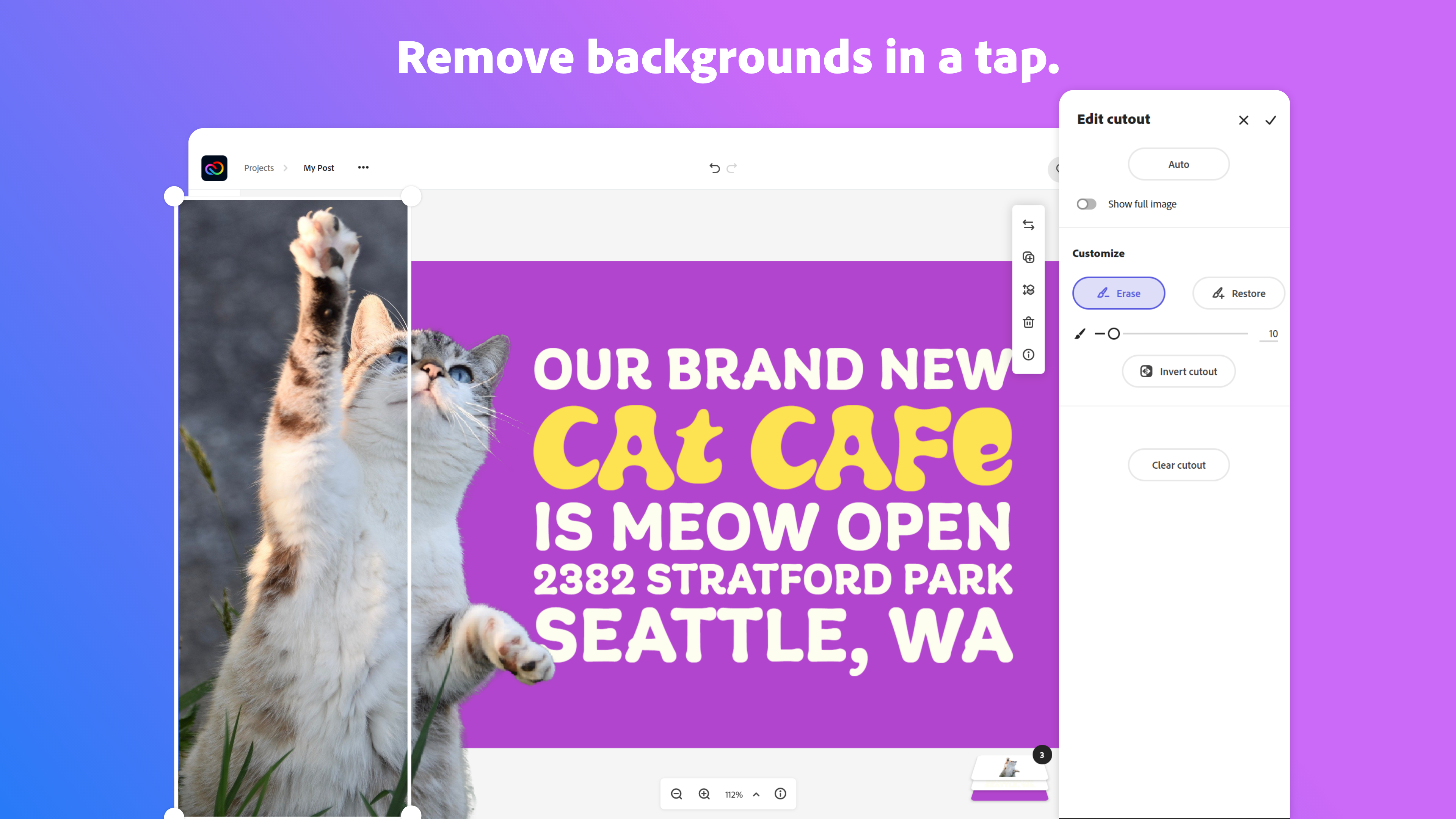
Adobe Creative Cloud Express (formerly Adobe Spark) is a task-based, web and mobile product used to create and share rich multimedia content – from social media posts and stories to invitations to marketing materials like logos, flyers and banners.
$0
Google BigQuery
Score 8.8 out of 10
N/A
Google's BigQuery is part of the Google Cloud Platform, a database-as-a-service (DBaaS) supporting the querying and rapid analysis of enterprise data.
$6.25
per TiB (after the 1st 1 TiB per month, which is free)
Snowflake
Score 8.7 out of 10
N/A
The Snowflake Cloud Data Platform is the eponymous data warehouse with, from the company in San Mateo, a cloud and SQL based DW that aims to allow users to unify, integrate, analyze, and share previously siloed data in secure, governed, and compliant ways. With it, users can securely access the Data Cloud to share live data with customers and business partners, and connect with other organizations doing business as data consumers, data providers, and data service providers.
N/A
Pricing
Adobe Express
Google BigQuery
Snowflake
Editions & Modules
Free
$0.00
Premium
$9.99 / $99.99
per month
Teams
$9.99
per month per user
Standard edition
$0.04 / slot hour
Enterprise edition
$0.06 / slot hour
Enterprise Plus edition
$0.10 / slot hour
No answers on this topic
Offerings
Pricing Offerings
Adobe Express
Google BigQuery
Snowflake
Free Trial
Yes
Yes
Yes
Free/Freemium Version
Yes
Yes
No
Premium Consulting/Integration Services
No
No
No
Entry-level Setup Fee
No setup fee
No setup fee
No setup fee
Additional Details
Contact Adobe directly for Enterprise pricing plan details.
I have used Snowflake and DataGrip for data retrieval as well as Google BigQuery and can say that all these tools compete for head to head. It is very difficult to say which is better than the other but some features provided by Google BigQuery give it an edge over the others. …
Google BigQuery is less expensive to run and offers free storage of up to the first 10 GB of data. Google BigQuery is also easier (and faster) to get up and running. Unlike Snowflake, Google BigQuery does not require any manual scaling or performance tuning. Scaling is …
Google BigQuery is cheaper and much faster as compared to both. While as compared to Snowflake , we tested it was faster and cheaper by 30%, that is after Snowflake tweaked their environment, if not for that it would have been 90% cheaper than Snowflake. Redshift is not easy …
We actually use Snowflake and BigQuery in tandem because they both currently meet various needs. Redshift, however, has barely been used since our migration away from it. In the case of both Snowflake and BigQuery, they beat Redshift by a long shot. The main reasons are their …
Fully serverless. We don’t manage clusters or warehouses. Requires us to manage virtual warehouses. BigQuery is cheaper for exploratory heavy queries; Snowflake is more predictable for sustained workloads. BigQuery is unbeatable if you’re deep in Google’s ecosystem; Snowflake …
Google BigQuery of course collects a much much larger array of raw data and can handle (practically) an unlimited amount of data. For a large enterprise like ours that relies on large-scale analytics, this is absolutely imperative. Google BigQuery can also combine GA4 data with …
Compared to every other analytics DB solution I've used, Google BigQuery was by far the easiest to set up and maintain, and scale. The price was also much lower for our use case (internal data analysis).
First and foremost, Google BigQuery's pricing structure, based on data processing and storage, is more cost-effective for our needs. Secondly, since we already use other Google Cloud services, its tight integration with them especially, with Cloud Storage and Dataflow was a big …
At my previous organization we used server based SQL server. There were days when the server was down and we couldn't work or access the data. This caused multiple reports and processes which were fed from the server to fail. Google BigQuery doesn't have such problems.
Both BigQuery and Redshift are two comparable fully managed petabyte-scale cloud data warehouses. They’re similar in many ways, but you should consider their unique features and how they can contribute to an organization’s data analytics infrastructure. When considering which …
BigQuery by far the best solution in all angles compared to other ones: Especially scalability, ease of use, performance and there is no need to manage any cluster of servers. Also it's ABSOLUTELY pay as you go! No one in market currently provide such service that can compete …
We particularly liked Snowflake's security model as well as its unique storage (whereby everything is essentially a pointer to immutable micro-partitions, which is the key behind its zero-copy cloning, its secure sharing, its time travel, etc.). and also how it separates …
These are comparable products that can make sense depending on the specific needs of your organization. All are certainly serviceable and have varying pros and cons. Snowflake seems to provide the greatest degree of flexibility and easy scalability as new data gets brought into …
Snowflake has an attractive pricing model with auto-suspend and auto-resume and pay per use. AWS Redshift requires higher administrative efforts to maintain and scale the platform whereas with Snowflake those admin tasks are not needed or automatically taken care of.
Each of the other solutions were cloud vendor specific, Snowflake can ride on either Amazon Web Services, Microsoft Azure, or Google Cloud. The fact that they are ANSI-sql compliant and have an effective means of offloading data makes them portable and easy to sell to teams …
Snowflake has won the match because it is giving an excellent performance with its efficient features and reliable results. This is a totally secure program for our precious and important data.
In my experience running the data management practice at InterWorks, we believe that cloud data warehouse products will eventually serve the majority of data warehousing use cases and power data analytics at most companies. Of this cohort, we believe that Snowflake is the best …
Our issue with Redshift was that it was very expensive. On top of that, queries were still slow and if we used more of Redshift's memory, then it would have cost even more. Snowflake is not cheap, but less costly for us. Plus, the performance was much better. Also, we got to …
More flexible and faster compared to Redshift, more functionality compared to BigQuery e.g. - per minute billing, instant spin up of warehouse. Overall, the cost and time savings swayed us in favor of Snowflake.
Every team I work with gets the Express welcome and walkthrough and becomes a permanent Adobe Express user. I have my own workflow when creating content for social, and it is great when others I am working with can hop on and follow the same workflow. We can collaborate on projects, schedule posts, and manage brand assets easily from our own devices. As long as we have access to the same files, we can build campaigns faster and more easily, onboard new designers, and scale our impact on social media.
Event-based data can be captured seamlessly from our data layers (and exported to Google BigQuery). When events like page-views, clicks, add-to-cart are tracked, Google BigQuery can help efficiently with running queries to observe patterns in user behaviour. That intermediate step of trying to "untangle" event data is resolved by Google BigQuery. A scenario where it could possibly be less appropriate is when analysing "granular" details (like small changes to a database happening very frequently).
Snowflake is well suited when you have to store your data and you want easy scalability and increase or decrease the storage per your requirement. You can also control the computing cost, and if your computing cost is less than or equal to 10% of your storage cost, then you don't have to pay for computing, which makes it cost-effective as well.
I have used Adobe Express to help maintain my creative catalogs and files, brand management by saving my color scheme palettes, to have full access to its free assets and huge template library.
The main business issue is brand consistency and accessibility, and Adobe Express helps greatly with both of those by providing an option to create brand libraries for various projects, and it has a huge Adobe font catalog to accommodate basically every brand and project scope.
I like how I am able to create a project folder for storing various iterations of a graphic or logo, and being able to view thumbnails of each iteration below the current graphic that I am working on. Plus, it also allows for easy thumbnail rearrangement for exporting selected images in the order of my choice. And it has many editing tools such as a generative AI tool using prompts to help create original art, and both the Effects and Animation tools have many options for colorations and animations. Plus other awesome and easy to use tools such as the Quick Action tool that easily removes backgrounds, and other tools like the Resizing, Quick Replace, Translate, Bulk Create.
Another feature of Adobe Express that I like is its ability for video creation and editing which is available via a mobile device or desktop computer. The footage editing process is very easy and allows for only one track for both video and audio.
Adobe Express allows for the project assets to be either imported via ones on file systems or straight from the Adobe Royalty-Free assets which includes; videos, audio/music, graphics, photos and even a voice overs capability using a "Text-to-Voice" option. And after the video has been created Adobe offers its very easy "Download" option, where you can select what file type that you want the project to export as.
GSheet data can be linked to a BigQuery table and the data in that sheet is ingested in realtime into BigQuery. It's a live 'sync' which means it supports insertions, deletions, and alterations. The only limitation here is the schema'; this remains static once the table is created.
Seamless integration with other GCP products.
A simple pipeline might look like this:-
GForms -> GSheets -> BigQuery -> Looker
It all links up really well and with ease.
One instance holds many projects.
Separating data into datamarts or datameshes is really easy in BigQuery, since one BigQuery instance can hold multiple projects; which are isolated collections of datasets.
Snowflake scales appropriately allowing you to manage expense for peak and off peak times for pulling and data retrieval and data centric processing jobs
Snowflake offers a marketplace solution that allows you to sell and subscribe to different data sources
Snowflake manages concurrency better in our trials than other premium competitors
Snowflake has little to no setup and ramp up time
Snowflake offers online training for various employee types
Please expand the availability of documentation, tutorials, and community forums to provide developers with comprehensive support and guidance on using Google BigQuery effectively for their projects.
If possible, simplify the pricing model and provide clearer cost breakdowns to help users understand and plan for expenses when using Google BigQuery. Also, some cost reduction is welcome.
It still misses the process of importing data into Google BigQuery. Probably, by improving compatibility with different data formats and sources and reducing the complexity of data ingestion workflows, it can be made to work.
Do not force customers to renew for same or higher amount to avoid loosing unused credits. Already paid credits should not expire (at least within a reasonable time frame), independent of renewal deal size.
I foresee Adobe Express becoming the "go-to" platform for everyone except professional, high-level designers. It is a relatively easy-to-use tool that allows users to create a wide variety of visuals quickly. Because it is a template-driven tool, the in-house design team has the ability to make brand kit available to keep visuals on point
We have to use this product as its a 3rd party supplier choice to utilise this product for their data side backend so will not be likely we will move away from this product in the future unless the 3rd party supplier decides to change data vendors.
SnowFlake is very cost effective and we also like the fact we can stop, start and spin up additional processing engines as we need to. We also like the fact that it's easy to connect our SQL IDEs to Snowflake and write our queries in the environment that we are used to
The user interface is pretty straightforward to use. It has easy to navigate navigations, and the canvas UX is also pretty good. One thing i would like to add it to use shortcuts to add elements on canvas. Like if I am on canvas and I press 'T' on my keyboard the text box should be added automatically
I think overall it is easy to use. I haven't done anything from the development side but an more of an end user of reporting tables built in Google BigQuery. I connect data visualization tools like Tableau or Power BI to the BigQuery reporting tables to analyze trends and create complex dashboards.
Because the fact that you can query tons of data in a few seconds is incredible, it also gives you a lot of functions to format and transform data right in your query, which is ideal when building data models in BI tools like Power BI, it is available as a connector in the most used BI tools worldwide.
I have never had any significant issues with Google Big Query. It always seems to be up and running properly when I need it. I cannot recall any times where I received any kind of application errors or unplanned outages. If there were any they were resolved quickly by my IT team so I didn't notice them.
I think Google Big Query's performance is in the acceptable range. Sometimes larger datasets are somewhat sluggish to load but for most of our applications it performs at a reasonable speed. We do have some reports that include a lot of complex calculations and others that run on granular store level data that so sometimes take a bit longer to load which can be frustrating.
Overall, the Adobe Creative Cloud Express is worth a try and may be a good fit for many organizations and businesses. At a monthly rate, the cost is not prohibitive, but the tools are somewhat limited and not necessarily worthwhile when compared to standard applications and software that are often available free or through a package of services commonly found on workplace computers.
BigQuery can be difficult to support because it is so solid as a product. Many of the issues you will see are related to your own data sets, however you may see issues importing data and managing jobs. If this occurs, it can be a challenge to get to speak to the correct person who can help you.
We have had terrific experiences with Snowflake support. They have drilled into queries and given us tremendous detail and helpful answers. In one case they even figured out how a particular product was interacting with Snowflake, via its queries, and gave us detail to go back to that product's vendor because the Snowflake support team identified a fault in its operation. We got it solved without lots of back-and-forth or finger-pointing because the Snowflake team gave such detailed information.
I think Adobe Express is a bit behind Canva, but as an Adobe Community Expert, I try to provide as much feedback as I can to help improve Adobe Express. ADobe Express does a better job than InShot and a few other apps, but isn't quite there against Canva, I'm sorry to say!
PowerBI can connect to GA4 for example but the data processing is more complicated and it takes longer to create dashboards. Azure is great once the data import has been configured but it's not an easy task for small businesses as it is with BigQuery.
I have had the experience of using one more database management system at my previous workplace. What Snowflake provides is better user-friendly consoles, suggestions while writing a query, ease of access to connect to various BI platforms to analyze, [and a] more robust system to store a large amount of data. All these functionalities give the better edge to Snowflake.
Adobe Creative Cloud Express is included with an Adobe Creative Cloud account. Our company has a corporate team membership so it is nice to have a professional and powerful tool that anyone on our team can use for free. The pricing structure of giving the tool away for free will be fundamental to users utilizing the tool. Similar tools, such as Canva, cost significantly more but do not offer the same features
We have continued to expand out use of Google Big Query over the years. I'd say its flexibility and scalability is actually quite good. It also integrates well with other tools like Tableau and Power BI. It has served the needs of multiple data sources across multiple departments within my company.
The professional services for Adobe Creative Cloud Express is top notch and should be highly commended. I am thoroughly impressed with how far Adobe has come. In the past, I had several issues with how something were handled, but in the past few years things have been better than ever and they get no complaints from me
Google Support has kindly provide individual support and consultants to assist with the integration work. In the circumstance where the consultants are not present to support with the work, Google Support Helpline will always be available to answer to the queries without having to wait for more than 3 days.
Previously, running complex queries on our on-premise data warehouse could take hours. Google BigQuery processes the same queries in minutes. We estimate it saves our team at least 25% of their time.
We can target our marketing campaigns very easily and understand our customer behaviour. It lets us personalize marketing campaigns and product recommendations and experience at least a 20% improvement in overall campaign performance.
Now, we only pay for the resources we use. Saved $1 million annually on data infrastructure and data storage costs compared to our previous solution.