AWS offers the Amazon API Gateway supports the creation and publication of an API for web applications, as well as its monitoring and maintenance. The Amazon API Gateway is able to support thousands of API calls concurrently and provides traffic management, as well as monitoring and access control.
$0.90
Per Million
NGINX
Score 9.1 out of 10
Mid-Size Companies (51-1,000 employees)
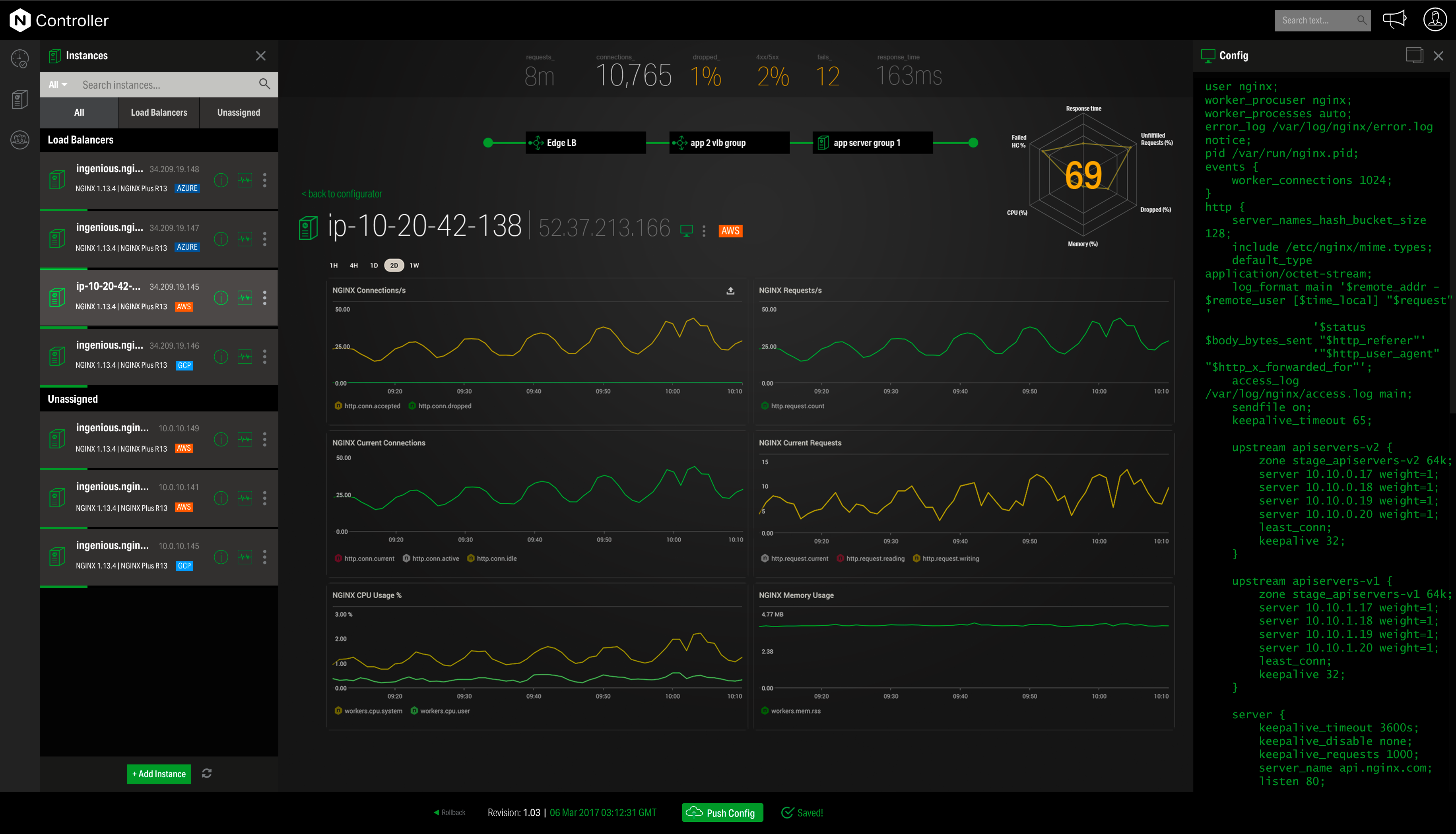
NGINX, a business unit of F5 Networks, powers over 65% of the world's busiest websites and web applications. NGINX started out as an open source web server and reverse proxy, built to be faster and more efficient than Apache. Over the years, NGINX has built a suite of infrastructure software products o tackle some of the biggest challenges in managing high-transaction applications. NGINX offers a suite of products to form the core of what organizations need to create…
N/A
SAP Integration Suite
Score 8.5 out of 10
N/A
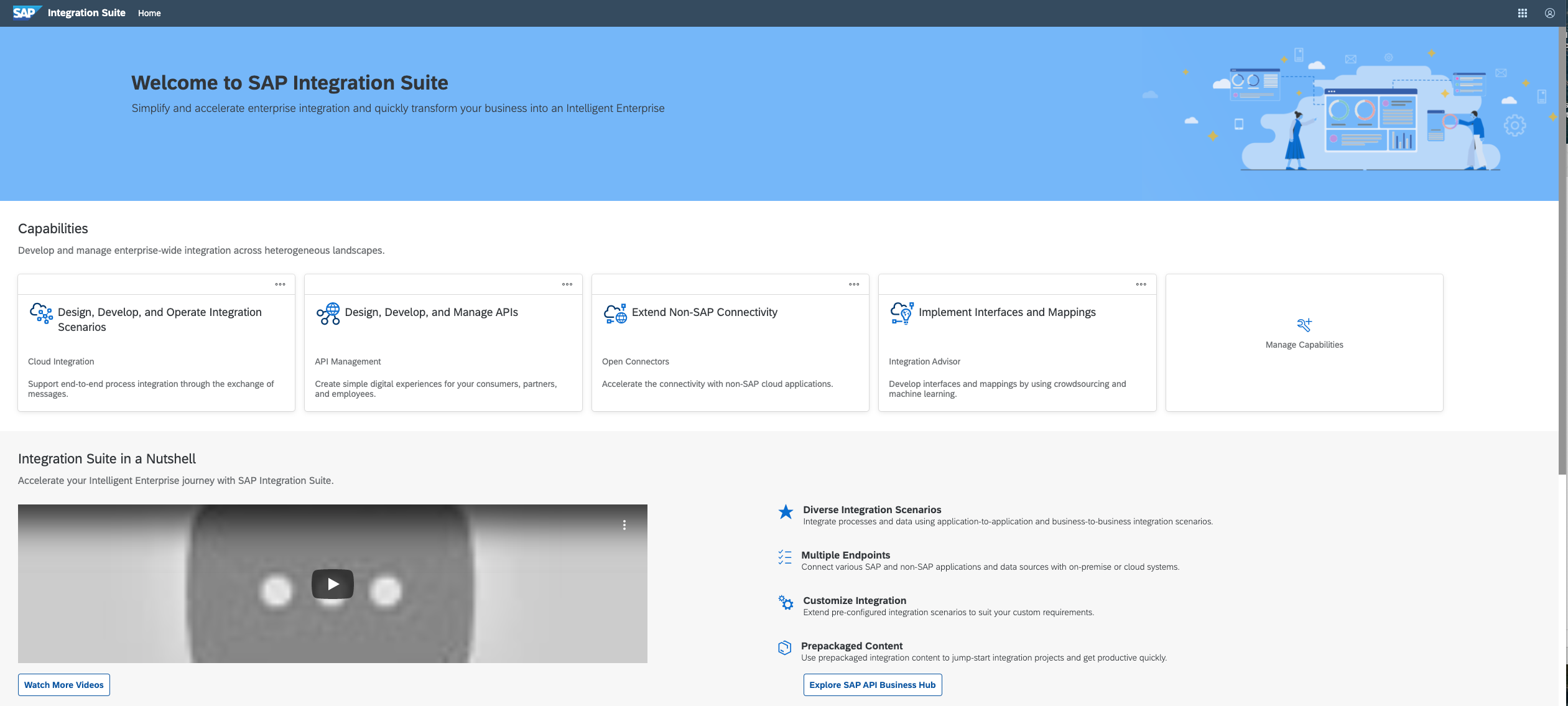
SAP Integration Suite is an integration platform as a service (iPaaS) that connects applications, data, processes, and AI agents across SAP and non-SAP environments.
$11,199
per year
Pricing
Amazon API Gateway
NGINX
SAP Integration Suite
Editions & Modules
Past 300 Million
$0.90
Per Million
First 300 Million
$1.00
Per Million
No answers on this topic
No answers on this topic
Offerings
Pricing Offerings
Amazon API Gateway
NGINX
SAP Integration Suite
Free Trial
No
Yes
Yes
Free/Freemium Version
No
Yes
No
Premium Consulting/Integration Services
No
Yes
No
Entry-level Setup Fee
No setup fee
Optional
No setup fee
Additional Details
—
—
Access to free tier services does not expire while there is an active Pay-As-You-Go or CPEA account with SAP. Once a free tier service limit has been reached users have the option to update from a free to a paid service plan in the same account.
Nginx is a powerful tool but configuring, running and maintaining but Nginx will never be a competitive advantage for our business. API Gateway is powerful because it is managed and does what we need out-of-the-box. Nginx is used more widely in the community; it may be easier …
Great services and integrating features that make it easy to use and implement. Given the risk of cyber attacks in order to protect customer data SAP cloud platform is better respective to other competitors. It helps in reducing the cost of duplicating the hardware, and …
Experienced a lack of available programming languages while working on a minor project. I had to halt the project and wait for it to be added later. It took ages and had a hit on our productivity. It has a centralized management system which helps and an easy interface which helps to manage multiple tasks in case of large-scale operations and projects.
Nginx is well-suited for any web server scenarios, such as web applications, backend or reverse proxy for both application and HTTP requests, and distribution. It is less appropriate for Windows-based applications that run directly on a Windows Server host. In any case, it is very easy to manage, through separate conf files for each application or site you want to host with it.
In our case to have a such a poweful middleware in the cloud, give us a lot of benefits such as maintenance and support. In the integration part to be able to connect SAP and Non SAP applications makes SAP Integration Suite a good investment when our master data in this case is in S4HANA. Less appropriate is that sometimes the updates in production tenant failed and they have to downgrade or repair the issues. Affecting the usage of the tool. I guess SAP team have to be more aware of performing the changes and tested well on development environments and then when they know for sure that is the correct way to go with the update put it in production.
API Gateway integrates well with AWS Lambda. This allows us to build a web server in the language and framework of our choice, deploy it as a Lambda function, and expose it through API Gateway.
API Gateway manages API keys. Building rate limiting and request quota features are not trivial (or interesting).
API Gateway's pricing can be very attractive for services that are accessed infrequently.
Customer support can be strangely condescending, perhaps it's a language issue?
I find it a little weird how the release versions used for Nginx+ aren't the same as for open source version. It can be very confusing to determine the cross-compatibility of modules, etc., because of this.
It seems like some (most?) modules on their own site are ancient and no longer supported, so their documentation in this area needs work.
It's difficult to navigate between nginx.com commercial site and customer support. They need to be integrated together.
I'd love to see more work done on nginx+ monitoring without requiring logging every request. I understand that many statistics can only be derived from logs, but plenty should work without that. Logging is not an option in many environments.
Provide more pre-built integrations to use within SuccessFactors or other modules instead of everything having to be custom built
Support is unable to provide advice on custom builds so you often have to engage a 3rd party partner
Works best when you have the functional and technical teams working together. Otherwise, the system is too technical for a functional user to create integration and a technical user not always understand the functional perspective
It is in place, our system integrators are familiar with it, and it fits into the ecosystem. A better user interface, flow build and debugging experience would see it grow, many technical staff do not enjoy using it for this reason, however it is quite capable and powerful behind this one shortcoming.
It is a great product very reliable and stable for connecting various aws services like we connected with lambda function and it is working very well, never faced any issue after the setup. It also saves out lots of money as well as time after we implemented the automatic ec2 server recovery system
This tool is really easy to use and configure. Consumes very less system resources. It is highly modular and configurable. You can easily use it with other tools like certbot for SSLs. You can configure basic security with configuration and headers
The user interface is messy and not intuitive. It has a steep learning curve, and flows developed around are easy to make a mess with layout and can be difficult to follow. The debugging is also quite difficult, it takes some time to figure out how to follow the flow and examine data. Error handling is also difficult and not intuitive, it is better to let some errors leak and monitor through ALM.
We always had a great experience with the AWS support team. They were always on time and very dependable. It was a good partnership while we worked to resolve our issues.
Community support is great, and they've also had a presence at conferences. Overall, there is no shortage of documentation and community support. We're currently using it to serve up some WordPress sites, and configuring NGINX for this purpose is well documented.
The support for SAP Integration Suite is satisfactory. We leverage SAP support through our manage services partner. So far, we have not had many major issues. One concern, to make our rating a ten, would be turnaround time on high priority incidents. SAP Integration Suite drives our key business functions forward. Without a reasonable service level agreement on turnaround, we sometimes find us running into issues running pay, etc.
When we tested Azure API Management at the time, it had serious connectivity issues, it was very unstable, and it needed to do a lot using the command line. Comparing with the AWS solution, which was more mature, and the fact that we have services in use on AWS, we ended up choosing to continue using AWS products. This so as not to run the risk of increasing latency in accesses, and of some functionality not working, due to being developed yet.
I have found that [NGINX] seems to perform better throughout the years with less issues although I've used Apache more. I would definitely recommend [NGINX] for any high volume site and I've seen this to usually be the case from most provided web hosts who will pick [NGINX] over alternatives
SAP Integration Suite was already part of our SAP stack, part of Business Technology Platform, with out-of-the-box integration with S/4 HANA transactional and ERP system that we are using as our main back-end. Thus, we are achieving significant Total Cost Optimization benefits or running both solutions on the same platform, hosted on Azure cloud.
By using Nginx, we can host multiple web services on a single server, keeping our infrastructure costs lower.
Nginx maintains our HTTPS connections, allowing us to keep our promise to our customers that their data is safe in transit.
Due to Nginx's extremely low failure rate, our web addresses always return something meaningful, even when individual services go down. In sense, this means we are "always online" and allows us to maintain brand and support our customers even in the face of catastrophe.