Amazon Web Services (AWS) is a subsidiary of Amazon that provides on-demand cloud computing services. With over 165 services offered, AWS services can provide users with a comprehensive suite of infrastructure and computing building blocks and tools.
$100
per month
IBM watsonx Orchestrate
Score 8.3 out of 10
N/A
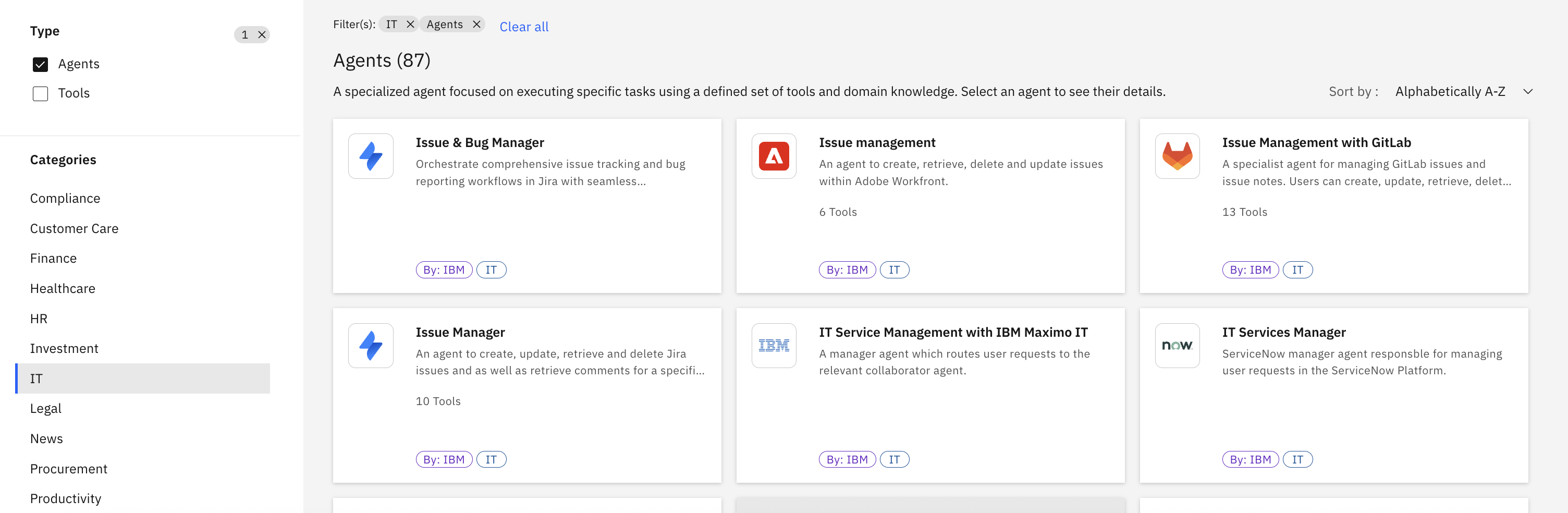
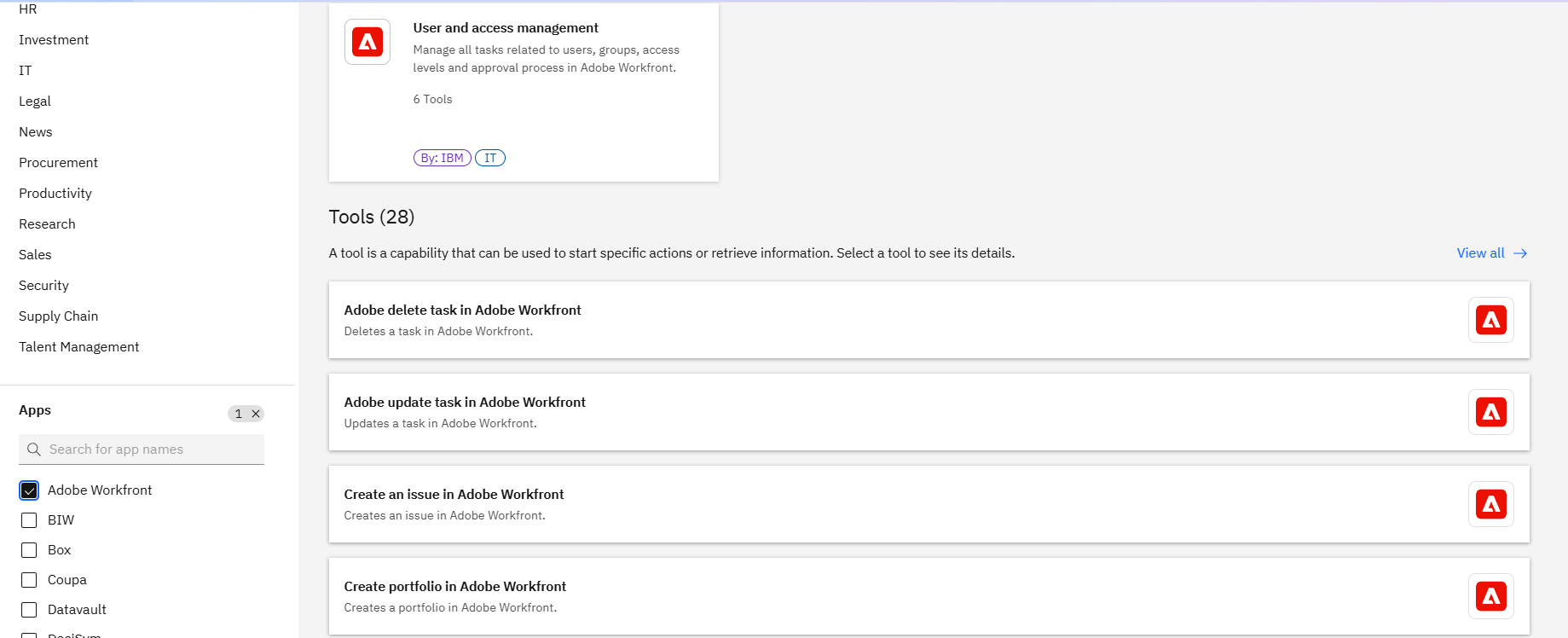
IBM® watsonx™ Orchestrate® leverages AI to automate complex workflows. The solution helps build, deploy, and manage AI assistants and agents. It offers a catalogue of pre-built agents and tools, low-code agent builder, multi-agent collaboration capabilities, and integrations with enterprise apps.
$530
per month
Pricing
Amazon Web Services
IBM watsonx Orchestrate
Editions & Modules
Free Tier
$0
per month
Basic Environment
$100 - $200
per month
Intermediate Environment
$250 - $600
per month
Advanced Environment
$600-$2500
per month
Essential
$500
per month per subscription
Essentials
$500
per month Per subscription
Standard
Enterprise
Standard
Enterprise
per month Per subscription
Offerings
Pricing Offerings
Amazon Web Services
IBM watsonx Orchestrate
Free Trial
Yes
Yes
Free/Freemium Version
Yes
No
Premium Consulting/Integration Services
No
Yes
Entry-level Setup Fee
No setup fee
Optional
Additional Details
AWS allows a “save when you commit” option that offers lower prices when you sign up for a 1- or 3- year term that includes an AWS service or category of services.
IBM watsonx Orchestrate can be deployed and run on IBM Cloud, AWS, or on-premises. Prices shown are indicative, may vary by country, exclude any applicable taxes and duties, and are subject to product offering availability in a locale.
IBM Watson Assistant is quite advanced as compared to most AI bases Customer contact management solutions available today. Where it does faces good completion from AWS based solutions plus emerging platforms by Verint and newcomers like Dragonfly, it is much better than most …
This is something that is actually common across most cloud providers. A comprehensive understanding of one's use cases, constraints and future directions is key to determining if you even need a cloud solution. If you are a 2-person startup developing something with a best-scenario audience of 1k DAU in a year, you would very likely best served by a dirt-cheap dedicated Linux server somewhere (and your options to graduate to a cloud solution will still be open). If, however, you are a bigger fish, and/or you are actively considering build-vs-buy decisions for complicated, highly-loaded, six-figure requests per minute systems, global loadbalancing, extreme growth projections - then MAYBE you solve all or part of it with a cloud provider. And depending on your taste for risk, reliability, flexibility, track record - it might be AWS.
For starters, most enterprise-grade organizations and Customers struggle to align their current IT estate and landscape with fast-moving, agile, AI-driven automation and development initiatives. All tooling, governance, structure, and frameworks available to support and facilitate the incorporation of this new but still cross-system technology layer are essential to minimize the risks of data leaks, unauthorized access, unbridled token consumption, and other issues. For some businesses and organizations with a handful of systems or a smaller footprint, the platform could be a bit too complex.
New and improved natural language processing yielding better results helps the assistants understand the intention behind the query.
Preserves context of communication, allowing the customers to establish inquiries on the website and continue on the mobile app without having extra informational input.
Intelligent conversations mean that complex paths that are branched based on the user's inputs allow for a much more natural flow of the conversation than fixed scripts.
I think that it needs to be able to integrate better with the knowledge catalogs. It currently provides a default database, which isn't quite large enough for enterprise use. We can connect that then to an external source, but it'd be nice if we could able just to instantiate one straight away.
We are almost entirely satisfied with the service. In order to move off it, we'd have to build for ourselves many of the services that AWS provides and the cost would be prohibitive. Although there are cost savings and security benefits to returning to the colo facility, we could never afford to do it, and we'd hate to give up the innovation and constant cycle of new features that AWS gives us.
Currently we are using to develop chatbots based on client provided flow what kind chatbot required for client either button or free text chatbots. we will decided accordingly flow and develop chatbot using IBM Watson. We will integrated custom components if required which is not present in library. Action flow and dialog flow we are currently in chatbot.
AWS offers a wide range of powerful services that cater to various business needs which is significant strength. The ability to scale resources on-demand is a major advantage making it suitable for businesses of all sizes. The sheer volume of options and configurations can be overwhelming for new users leading to a steep learning curve. While functional the AWS management console can feel cluttered and less intuitive compared to some competitors which can hinder navigation. Although some documentation lacks clarity and practical examples which can frustrate users trying to implement specific solutions.
With the growing use of AI and chatbots, it's very easy to use, and the conversational language makes it easier than keyword searches in a document. The contextual language processing is impressive. It's easy to integrate into our internal portal. The use of this tool would depend on each company's security and data sensitivity.
AWS does not provide the raw performance that you can get by building your own custom infrastructure. However, it is often the case that the benefits of specialized, high-performance hardware do not necessarily outweigh the significant extra cost and risk. Performance as perceived by the user is very different from raw throughput.
To develop chatbots based on client provided flow what kind chatbot required for client either button or free text chatbots. we will decided accordingly flow and develop chatbot using IBM Watson. We will integrated custom components if required which is not present in library. IBM Watson library anyone can easily learn and develop chatbots.
The customer support of Amazon Web Services are quick in their responses. I appreciate its entire team, which works amazingly, and provides professional support. AWS is a great tool, indeed, to provide customers a suitable way to immediately search for their compatible software's and also to guide them in a good direction. Moreover, this product is a good suggestion for every type of company because of its affordability and ease of use.
We've rarely had to engage support, but they've always been prompt in responding and very attentive. Support experiences have been extremely positive (but we're mostly happy that we just don't have any cause to routinely need support in the first place!).
Amazon Web Services fits best for all levels of organisations like startup, mid level or enterprise. The services are easy to use and doesn't require a high level of understanding as you can learn via blogs or youtube videos. AWS is Reasonable in cost as the plan is pay as you use.
Strong ITSM and HR workflow automation with governance, ServiceNow excels in IT/HR but lacks flexibility for cross-departmental use cases such as demand planning, finance close, or procurement analytics. Orchestrate supports a broader set of enterprise functions beyond IT service automation. So, watsonx is a better approach than any other available tool in the market as of now, based on the use cases I've encountered and my efforts to understand the essence of the service.
From past 3+ years I am using IBM Watson in our current project easily can implement and manage and monitor user how their using. Is there and update also just update dialog is just enough to change no need to touch any other templates. Multiple language will support, and action and dialog speak recognize chatbot we can create as per client requirement. Overall, as of now good experience with IBM Watson.
Using Amazon Web Services has allowed us to develop and deploy new SAAS solutions quicker than we did when we used traditional web hosting. This has allowed us to grow our service offerings to clients and also add more value to our existing services.
Having AWS deployed has also allowed our development team to focus on delivering high-quality software without worrying about whether our servers will be able to handle the demand. Since AWS allows you to adjust your server needs based on demand, we can easily assign a faster server instance to ease and improve service without the client even knowing what we did.