Apache Subversion is a version control option that is free to download and open source under the Apache 2.0 license.
N/A
Git
Score 10.0 out of 10
N/A
N/A
N/A
Veeam Data Platform
Score 9.1 out of 10
Mid-Size Companies (51-1,000 employees)
Veeam’s® premier product, Veeam Backup & Replication™, delivers availability for all cloud, virtual, Kubernetes and physical workloads. Through a management console, the software provides backup, archival, recovery and replication capabilities.
$428
per year per 5 instances
Pricing
Apache Subversion
Git
Veeam Data Platform
Editions & Modules
No answers on this topic
Veeam Data Platform Essentials
$428
per year per 5 instances
Veeam Data Platform
Contact sales team
Offerings
Pricing Offerings
Apache Subversion
Git
Veeam Data Platform
Free Trial
No
No
Yes
Free/Freemium Version
No
No
Yes
Premium Consulting/Integration Services
No
No
Yes
Entry-level Setup Fee
No setup fee
No setup fee
No setup fee
Additional Details
—
—
Veeam sells through channel partners. Contact a partner for detailed pricing and quotes. Resellers or sales personnel are available for assistance.
Git is a newer version control system compared to that of svn. I think that svn is more stable, easy to learn/use, and not-so-complex as Git. Also, svn has very good client applications which provide extremely user-friendly user interfaces. Apache Subversion is also open source …
Git is probably the biggest open source rival to Subversion. It's designed for distributed development, an environment I'm not very familiar with. I've only got some experience with it, and only as a user, and even that is limited. I had some trouble wrapping my mind around the …
We used Visual SourceSafe before SVN many years ago and we chose SVN at that time mainly because it allowed us to do collaborative work on the same source code. It also had improved conflict resolution when doing code merges, blaming changes etc, which improved the speed of …
Git has become the new standard of version control, with its support for distributed design. As a tool to manage and control versions, Subversion does it well, but Git is the future.
Git is better than Subversion in every aspect except that is not free . But since our company has bought Git licenses and I would not go back to using Subversion .
Git
Verified User
Engineer
Chose Git
I've used both Apache Subversion & Git over the years and have maintained my allegiance to Git. Git is not objectively better than Subversion. It's different.
The key difference is that it is decentralized. With Subversion, you have a problem here: The SVN Repository may be in …
Front-End Web Developer, Office of Mediated Education
Chose Git
The two main alternatives to Git that I know about are Mercurial and Subversion. I've never used either one, but I know a bit about Subversion. From what I remember, Subversion requires a server. I don't anyone using any other source control other than Git, it seems to have …
Git is more advanced and easier to use. It has a very simple UI and a very efficient command-line tool. Git gives you flexibility and performance for the price, and has greatly increased the complexity of workflow. The overall performance is good. It caches information locally …
GIT being a widely used tool have better reliability than its peers and have stands out when we compare it on operational performance criteria. GIT with speedy and extensive branching capabilities have helped developers to use check in their code quickly and space efficient way. G…
Compared to SVN, Git has a decentralized approach which increases collaboration in the team by enabling the local stored branches. There is no need to be connected to the repository(via an internet link) to work and commit code. Besides the fact that the performance of Git is …
I do not have much experience with other version control tools. Git is highly used everywhere and it is hard to find a development team that isn't using it. One thing I know is that with Git each developer has their own copy of a repository so they could technically work …
Git is the best Source Control Management Tool I've used. Every company, team, and project I've worked on professionally either used Git 100%, or was moving to Git, away from the alternatives like SVN. Git has all the features necessary, as well as a very large community of …
Git is by far the best version control system out there. It's open source, free, and fast. No other version control system I've ever used has had all three features.
Git is a distributed version control system. There is more flexibility to work with a bigger team. You can modify the same file and later merge all changes into a single file.
After using Subversion previously for a number of years, Git comes across as the new and improved source control approach. Git seems very suited to working with Agile:- branches can be created easily, allowing multiple developers to switch to them quickly, and having local …
Git is my favorite among all of the version control systems out there. It follows the Linux software philosophy of being built by many loosely coupled and small components that do one thing well. It's incredibly open, and its adoption in the open source community seems to be …
It's a relatively simple version control system so it works great for an individual or small team (less than 10 people). But if you have a medium to large team, especially one with members distributed over a large geographic area, or one where individuals need to be able to work "offline" without access to a central server, Apache Subversion will likely not be the best choice.
Also, if you're maintaining an open-source project where outside people will be interacting with your code repository, git is probably a better choice because it's becoming the de-facto standard these days and what most developers are familiar with.
GIT is good to be used for faster and high availability operations during code release cycle. Git provides a complete replica of the repository on the developer's local system which is why every developer will have complete repository available for quick access on his system and they can merge the specific branches that they have worked on back to the centralized repository. The limitations with GIT are seen when checking in large files.
When backing up an entire machine, it does so very effectively. I believe this feature has a lot of experience when it comes to backups, as it clearly specifies—during the restoration process—which days you can restore the machine, with specific dates down to the hour. And the restoration time is quite fast compared to other applications
The ease of use in creating jobs and adding clients enables our new and less skilled administrators to work efficiently, quickly, and accurately.
The same ease of use is essential for junior admins as well. Backups are quickly and accurately restored, allowing our networking team to bring clients back to production within expected times.
The ability to create a restore for testing and to remove it quickly has proven to be an excellent asset for our production and DB teams.
Distributed development - I've never worked in an environment where distributed development (developers widely scattered geographically) was a factor, but that's why git exists.
Merging - Merging of code from one branch to another can be painful, especially if it's not done frequently. (On the other hand, doing merges is one of the reasons I get a nice salary, so I can't complain too much!)
Acceptance - Let's face it, git is what "all the cool kids are using." If you've got a bunch of developers fresh out of school, they'll probably know git and not Subversion.
On occasion, the 'reason' for a failed backup can be a little hard to understand. It would be nice if it were a bit more straightforward.
I would love to run the platform natively on Linux, but I don't think it's an option.
Sometimes, locating the correct update file for the platform software can be a bit confusing. If they had an option to download the correct update file from within the console, that would take some of the guesswork out of it.
While there are interesting alternatives, such a GIT, Subversion has been a breath of fresh air compared to its predecessors like CVS or Microsoft Source Safe (now called Team Foundation Server). Its ease of use and high adoption rate is going to keep me using this product for years to come.
Git has met all standards for a source control tool and even exceeded those standards. Git is so integrated with our work that I can't imagine a day without it.
I really have no complaints about Veeam Backup & Replication. Their service has been excellent and the cost is minimal in comparison to other services I checked out. Implementation wasn't simple and the Veeam Support team was there to help each step of the way.
It is a very robust solution that has never failed. It also has perfect integration with Windows server volume shadow copies. The processing load is moved from the backup server to the backup proxy. Increased fault tolerance: you can store data on a separate machine, the backup repository. Can perform a bare metal restore.
I give Veeam Data Platform a rating of 9 for availability because it consistently performs reliably in critical data protection and recovery tasks. The platform is designed to minimize downtime, ensuring that backup and recovery processes are accessible when needed.While there may be rare instances of maintenance or minor application errors, these do not significantly affect the overall reliability of the system. Veeam’s strong architecture and features like high availability configurations further enhance its performance, allowing us to trust it in crucial situations. Overall, it has proven to be a dependable solution that meets our organization's needs effectively.
Veeam does a good job with backing up our servers in a timely manner. We are still at the beginning of our Veeam use and are pleased with the speed at which we can access the system as well as the backups and restore points. Veeam is definitely superior to our previous backup system in terms of speed and accessibility
I am not sure what the official Git support channels are like as I have never needed to use any official support. Because Git is so popular among all developers now, it is pretty easy to find the answer to almost any Git question with a quick Google search. I've never had trouble finding what I'm looking for.
The support team has never asked me to jump through silly hoops or waste time on pointless exercises. They seem to truly have a handle on what may be wrong. In fact, when we were having trouble getting our license renewal setup (because of yet another license migration at Veeam) a support incident got us connected to the right people to get our renewal done in time.
I rated the in-person training an 8 because it was generally effective and provided a solid foundation for understanding the Veeam Data Platform. The instructors were knowledgeable and engaged, making the sessions interactive. However, I felt that some topics could have been covered in more depth, and additional hands-on exercises would have further reinforced the learning experience. Overall, it was a positive training session that adequately prepared attendees for using the product, but there's room for improvement.
I gave it a rating of 7 because, although the online training offered valuable content and covered the essential aspects of the Veeam Data Platform, it lacked interactivity and opportunities for direct engagement with instructors. This made it challenging to ask questions or delve deeper into specific topics. Additionally, some sections felt a bit rushed, which could hinder a comprehensive understanding of more complex features. Overall, while the training was useful, improvements in interactivity and pacing could elevate the experience significantly.
Plan the process and then work through your plan, i know this should go without saying but its easy to get sidetracked. You tend to want to just get up and running so you can have that sigh of relief, spend the time to talk to your business stakeholder to see what goals they are trying to accomplish and how that may impact your plans first.
Git has become the new standard of version control, with its support for distributed design. As a tool to manage and control versions, Subversion does it well, but Git is the future.
I've used both Apache Subversion & Git over the years and have maintained my allegiance to Git. Git is not objectively better than Subversion. It's different. The key difference is that it is decentralized. With Subversion, you have a problem here: The SVN Repository may be in a location you can't reach (behind a VPN, intranet - etc), you cannot commit. If you want to make a copy of your code, you have to literally copy/paste it. With Git, you do not have this problem. Your local copy is a repository, and you can commit to it and get all benefits of source control. When you regain connectivity to the main repository, you can commit against it. Another thing for consideration is that Git tracks content rather than files. Branches are lightweight and merging is easy, and I mean really easy. It's distributed, basically every repository is a branch. It's much easier to develop concurrently and collaboratively than with Subversion, in my opinion. It also makes offline development possible. It doesn't impose any workflow, as seen on the above linked website, there are many workflows possible with Git. A Subversion-style workflow is easily mimicked.
We had used products like HP VSA, DoubleTake, and Unitrends, but due to the amount of data our file server housed, they were just either too slow or too expensive to maintain. Veeam is cheaper, faster, and better run than any of the others we have experience with. Would never look at going back.
In terms of scalability for our company, Veeam was able to cover our backup needs with ease. They have options for even more individualized backup if we were to need them; i.e. if a specific workstation needs its own independent backup. We have not used these resources yet, but I am confident they will be beneficial to our company in the near future.
Git has saved our organization countless hours having to manually trace code to a breaking change or manage conflicting changes. It has no equal when it comes to scalability or manageability.
Git has allowed our engineering team to build code reviews into its workflow by preventing a developer from approving or merging in their own code; instead, all proposed changes are reviewed by another engineer to assess the impact of the code and whether or not it should be merged in first. This greatly reduces the likelihood of breaking changes getting into production.
Git has at times created some confusion among developers about what to do if they accidentally commit a change they decide later they want to roll back. There are multiple ways to address this problem and the best available option may not be obvious in all cases.
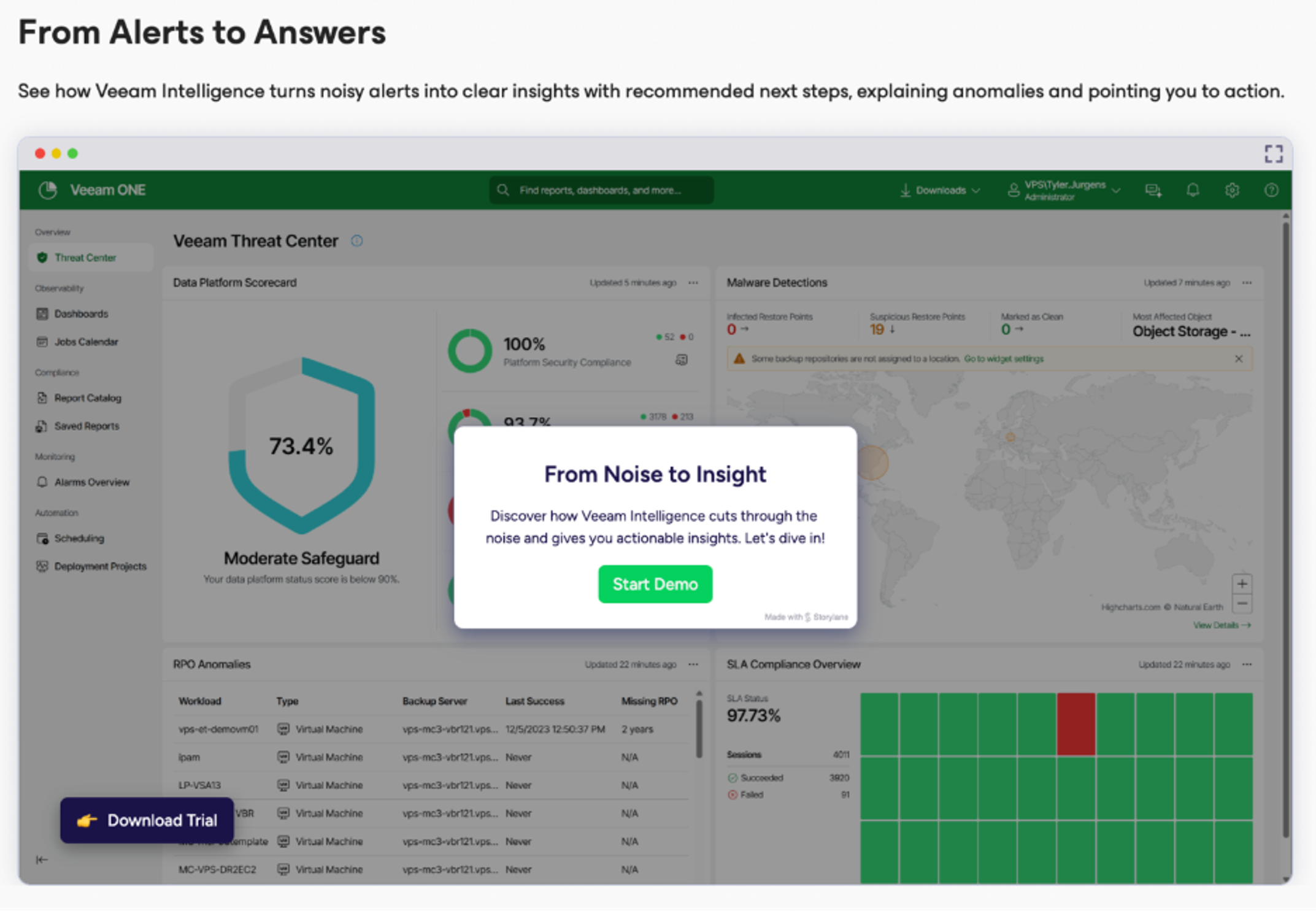
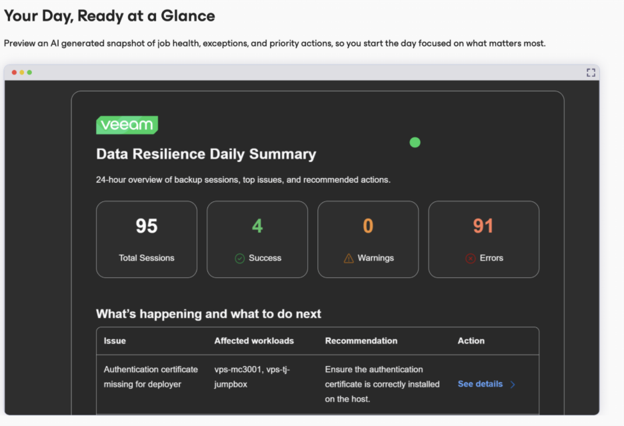
Nightly backups, plus fast restore capabilities, significantly reduce the risk that a hardware failure or ransomware incident will cause extended outages of identity, build, or engineering systems.
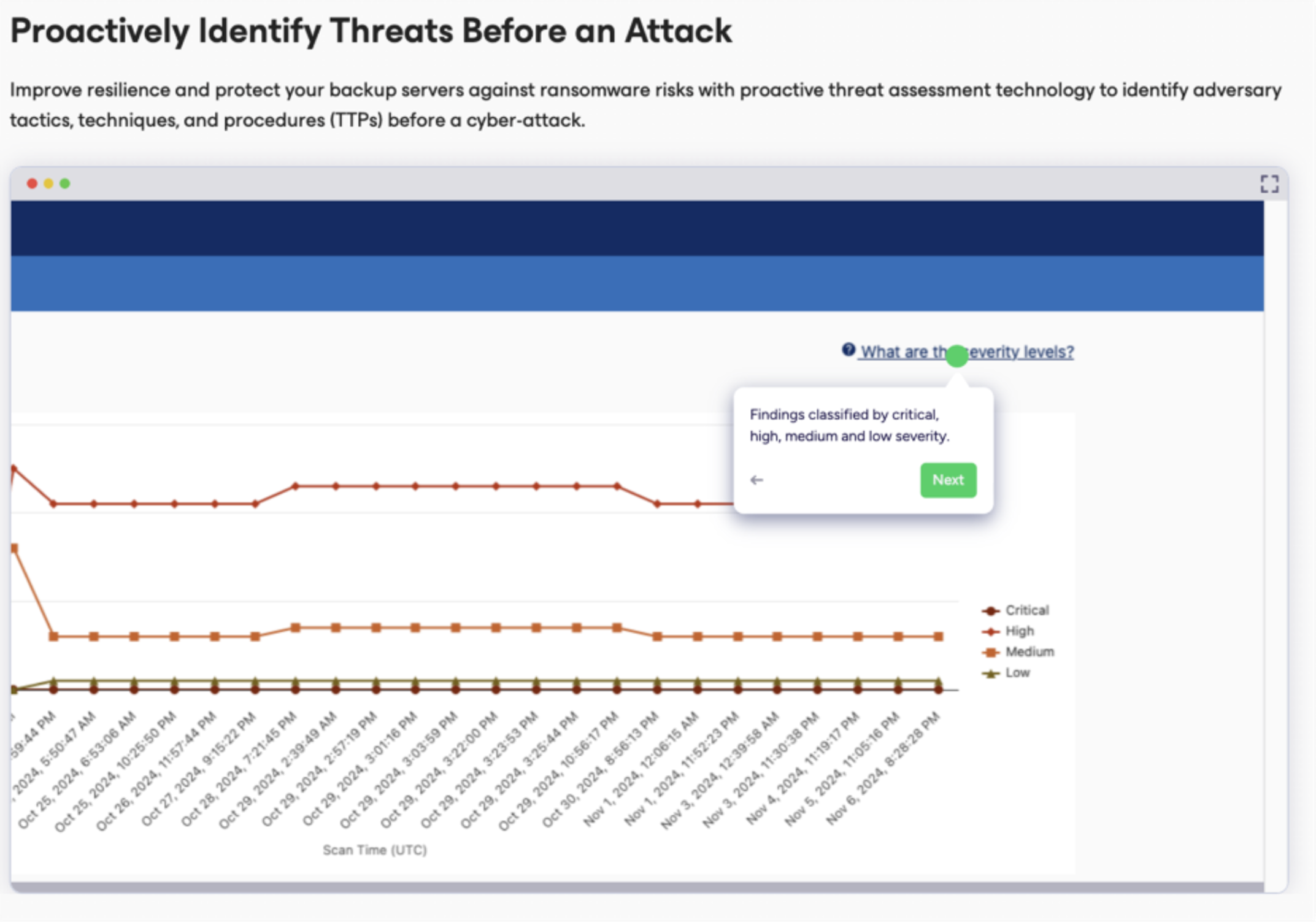
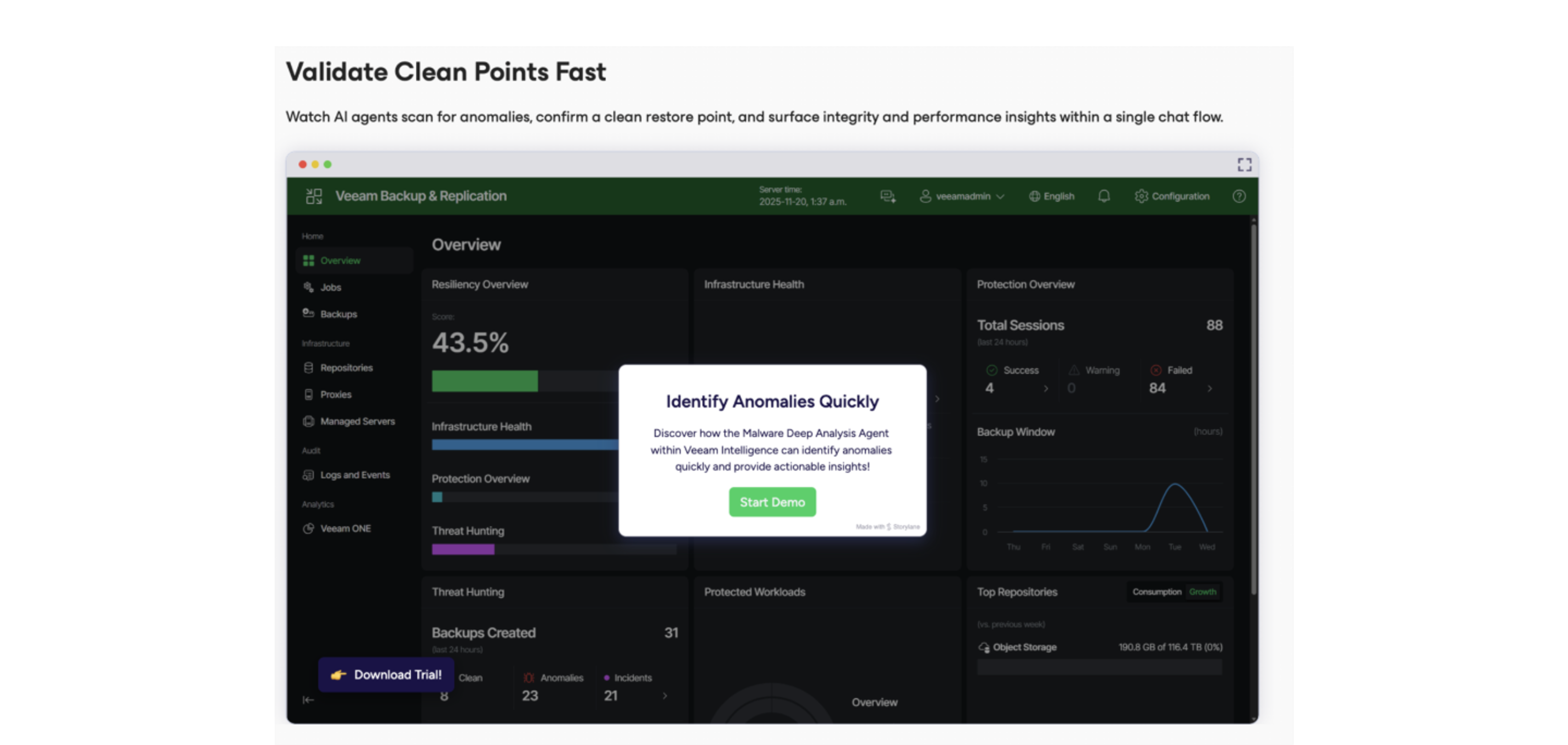
Features like immutable backups, AI-powered “clean backup” verification, and threat-focused tooling such as Recon Scanner help detect suspicious activity earlier and ensure that restore points are trustworthy, improving cyber-resilience overall.