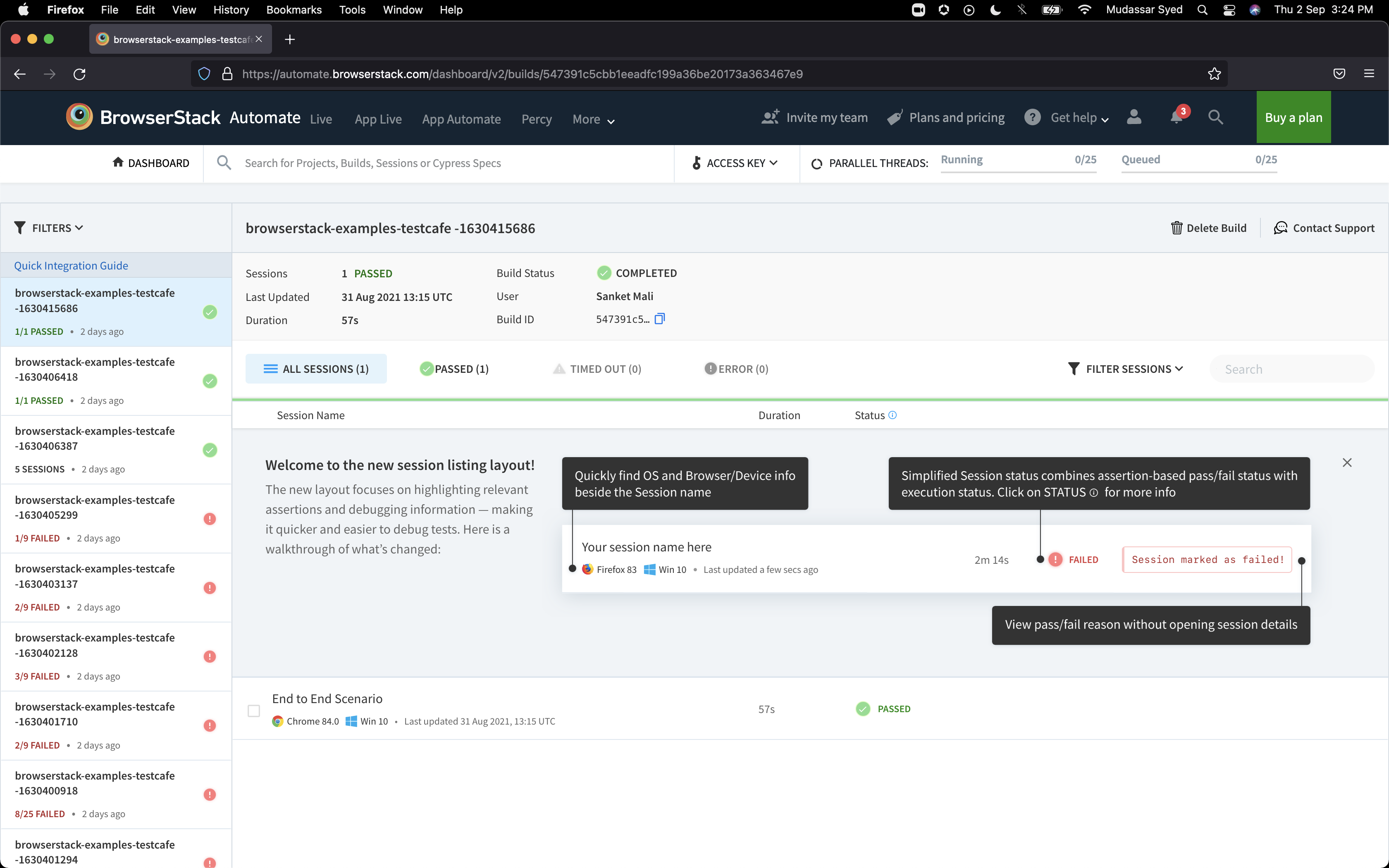
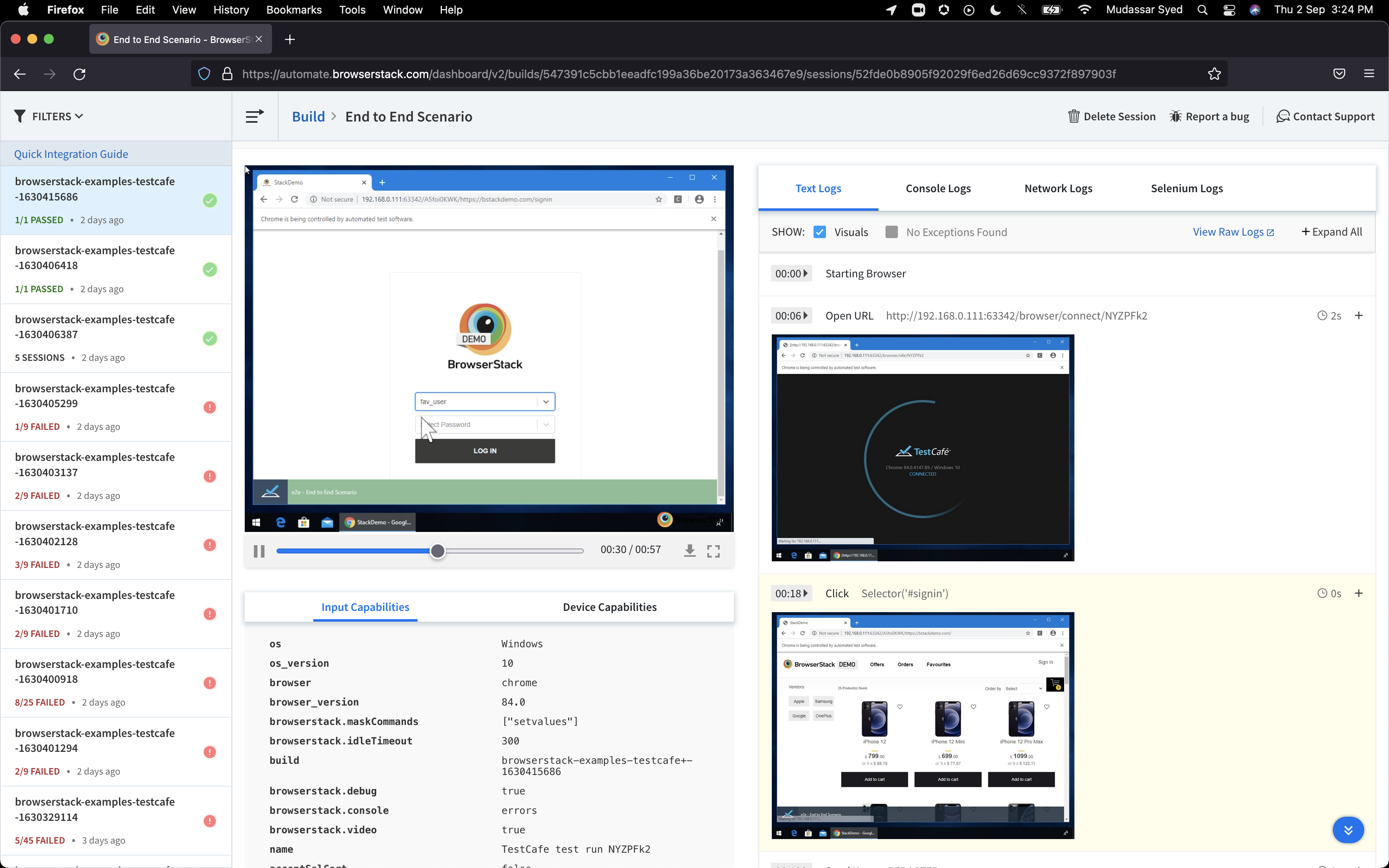
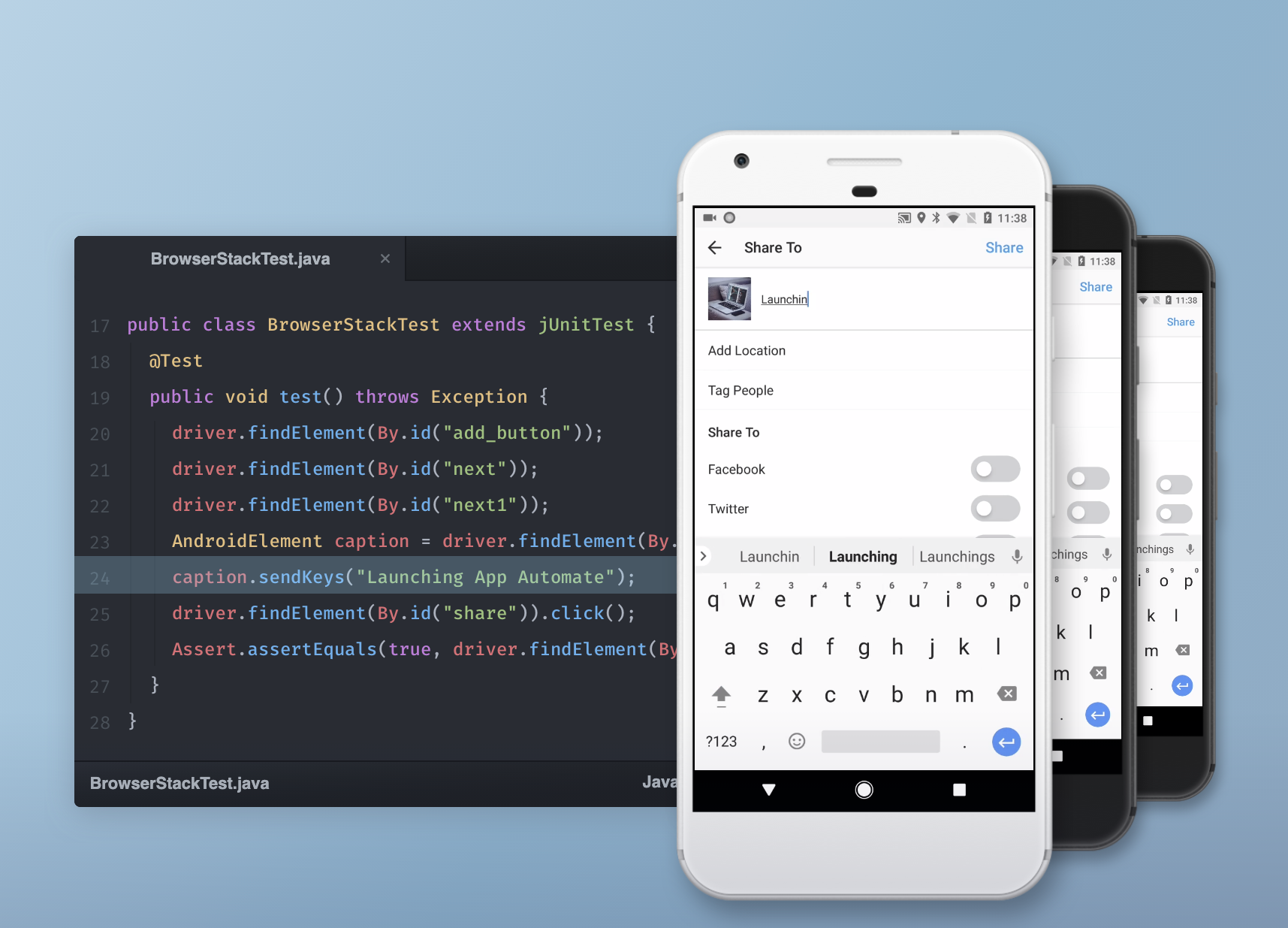
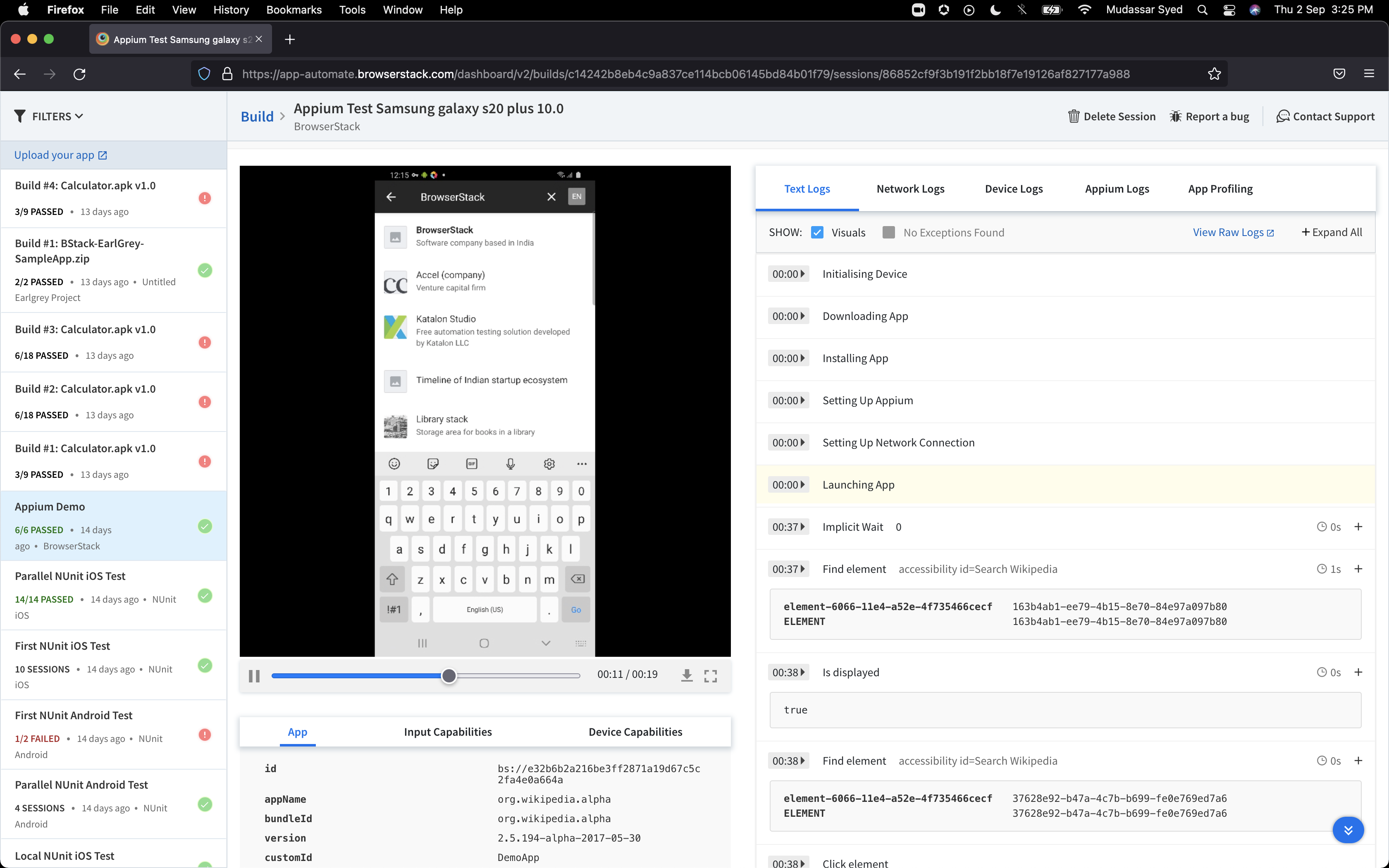
BrowserStack is a test platform built for developers and QAs to expand test coverage, scale and optimize testing with cross-browser, real device cloud, accessibility, visual testing, test management, and test observability. BrowserStack states it currently powers over a billion tests a year for customers who include Amazon, Paypal, Well Fargo Bank, Nvidia, MongoDB, Pfizer, GE, Discovery, React JS, Apache, JQuery and several others rely on BrowserStack to test their web and mobile apps.
$0
per month Unlimited users and 5000 free screenshots
Temenos Quantum
Score 10.0 out of 10
N/A
Temenos Quantum is a mobile app development tool based on technology acquired by Temenos with Kony and the Kony development platform in late 2019. They state with it, businesses can deliver a multiexperience digital journey for customers. The platform supports the development of web and native mobile applications incorporating wearables, chatbots, augmented reality, and conversational apps.
N/A
Pricing
Appium
BrowserStack
Temenos Quantum
Editions & Modules
No answers on this topic
Percy - Free
$0
per month Unlimited users and 5000 free screenshots
App Percy - Free
$0
per month 5000 free screenshots and 100 minutes of infrastructure
Appium is a wrapper of selenium and is available for mobile based applications. It has also the similar features as selenium has for website automation. Together both provide a combined solution for automating web and mobile apps. Can provide end to end automation with a …
I'm using the app automate feature for Automation of mobile application. So, we are add Jenkins for CI process to use on BrowserStack. For mobile application testing, We are using Appium with java client in our framework and also integrate with BrowserStack capabilities.
When it comes to cross-device testing, or what can be said as Live testing, BrowserStack is the best tool for testing with different devices with different OSs at a time. It gives users the liberty to test on iPhone, iPad, or Android devices and check the UI on all different …
Verified User
Contributor
Chose BrowserStack
BrowserStack has better Customer Support, better Community backup, more range of devices, and better Return on Investment than both of the above mentioned companies.
1. It's open source which supports range of languages, operating systems and languages. Well suited for Android and IOS mobile automation. Supports all kinds of apps, which makes it flexible and robust mobile testing tool 2. It is less appropriate where we need intercept network call to verify the API calls. Extensive coding experience is required to work Appium
If you need immediate testing (for example, from Azure pipelines agents), use BrowserStack instead of LambdaTest (which makes you wait in a "pool" until the device/platform combo you are querying is accessible). If you don't need your tests to be immediate and prefer a wider range of devices, then use Lambdatest.
Cross-platform mobile development - we used this for developing the app on a native platform (which could be iOS, Android). Kony offers tools that are useful because they decrease costs and increase the speed at which apps are developed. In addition, cross-platform mobile development tools are generally quite simple to use as they are based off of the common languages for scripting, including CSS, HTML, and JavaScript. It has become easy to find resources with the skill set especially because this is based out of common languages.
In Kony mobility platform Visualizer makes app development quick and easy. Tons of documentation online.
Used Kony to develop an amazing app that serves our customers well. WYSIWYG interface is great for building interfaces quickly. Build and test quickly for many different targets.
It's almost the 3rd year for us and it's renewal time for us. So yes, we are already discussing how many licenses we need to increase as users are increasing internally. So it's 100% sure that we are already planning renewal this year as well BrowserStack with live and app automate.
I would like to give 9/10 rating to Appium because of it can easily integrate with popular frameworks and CI/CD tools, as well as it is reliable, flexible and easy to use. The setup can bit complex in initial step, but once on configured it's very easy to use and enables stable and scalable mobile automation for real and cloud devices.
So many options that it can be a little overwhelming, but the core functions are easy to find and use and it's usually not too hard to figure things out for the more complex tasks. Very easy to boot up a device and a specific browser from the dashboard to begin a manual website test.
I rated BrowserStack's availability a 10 because it is consistently reliable, with minimal to no downtime or unplanned outages. The platform is accessible whenever needed, ensuring uninterrupted testing. Its robust infrastructure and proactive monitoring ensure a seamless experience, allowing us to meet deadlines without delays caused by availability issues and all
The tests are fast considering the fact that they're Appium tests. I've seen tests reliably pass or fail when they're supposed to, with next to zero issues on the BrowserStack side of things. Tests launch only seconds after I kick off them off from my CLI.
I've not had much direct interaction with the BrowserStack support team. The help and community are great and we've not run into any issue that has really required us to reach out. I guess having a stable and easy to use system means you may never need to contact support.
Yes, it was online training on meet, and trainer looks like skilled and technical strong, he has covered end to end all the features and he has answers all the queries. because of this trainings we are able to implement it by our own in the organization, thank you for support and training.
It was a quick training from the support of browserstack, it was nice and easy to understand, thanks again for the support given by the team. and regularly I used to receive mails for training from support for any new feature they launch, I was able to spread same training to all my team and dev.
I rated the implementation satisfaction an 8 because while it went smoothly overall, there were some challenges during the initial learning phase and integration with existing tools. Key insights include the importance of providing sufficient training upfront and ensuring seamless integration with other systems to minimize disruptions and improve adoption speed.
If you're an Apple developer, you use Xcode. It's practically a forced necessity. For system testing though, it doesn't have to be. You can have your development team focus on unit and integration tests in their platform and another team automate acceptance tests with a language they are more familiar with.
BrowserStack products has been found better for low code automations and visual regression techniques. We have been struggling to maintain the API endpoint sanity tests and writing a lot of code for them while releasing the builds, while we chose BrowserStack accessibility solutions, we found it a way easier than we thought and worked it up.
We evaluated variety of platforms like Xamarin, Sencha, PhoneGap. When we were initially evaluating Xamarin, it was not Microsoft and so the releases and features were not very streamlined. Also licensing was a issue with that. Sencha was a very attractive cross mobile platform but was expensive. Just for handful of developers price was high. Ours is big enterprise so licensing costs became huge. PhoneGap is based out of open source Apache Cordova project and is completely free to use, which goes some way to explain its popularity. The enterprise version boasts marketing features via Adobe’s Marketing Cloud, so when it launches it will probably be monetized. Comparing with the features platform has to offer and the price tag attached to it, we narrowed down to using Kony.
I may not be the best person to answer this as I am only using it for 1 department and at 1 site but will still try my best As far as Scalability for Devices for Mobile Automation is concerned, it gets a Solid 10, as the users can run cases on upto 10 device parallel and also have the best choices of devices to choose
Positive on ROI. I'm constantly utilizing Kony since it's a robust tool capable of publishing.
It also shares prototype creations of apps in a highly intuitive and customizable environment. It provides a preview of apps in real-time. Collaboration is seamless. Important functionality includes smartphone features (without any written code involved) and accessibility to a browser, maps, and SMS.
Trying to understand the user manual can be challenging since there are way too many features available. All of them aren't really necessary for beginners. And they've yet to offer them in a "phased" approach.