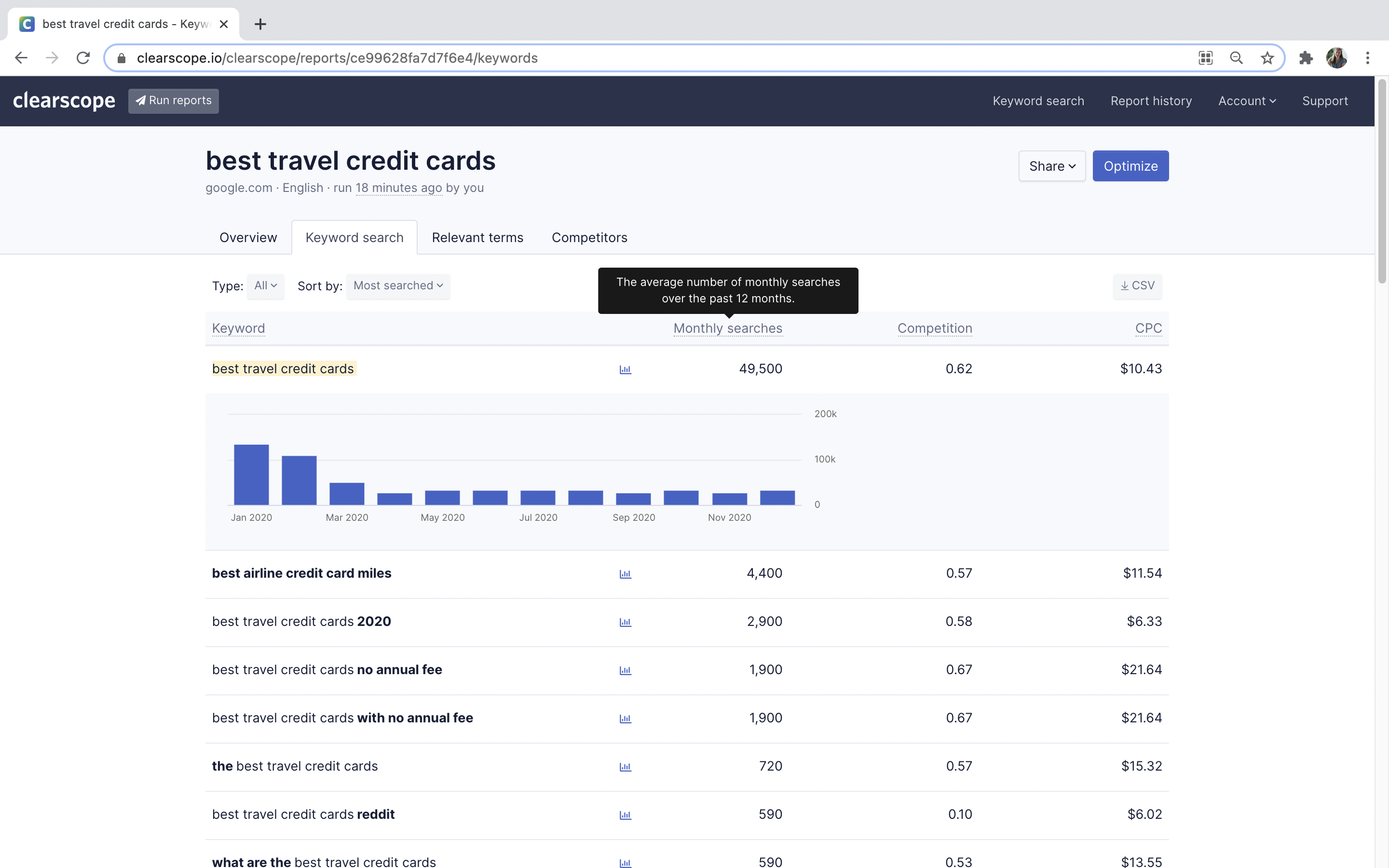
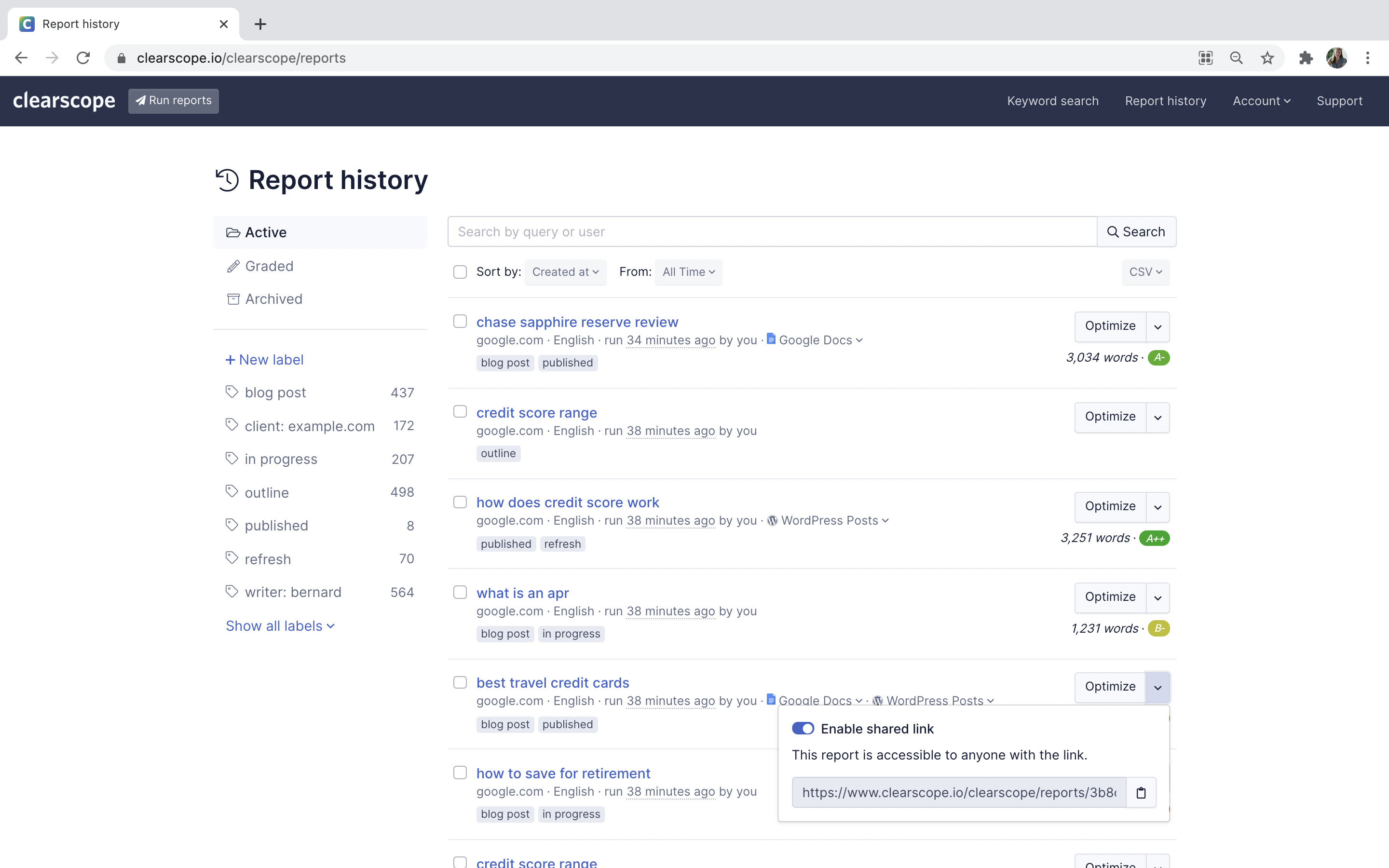
Clearscope, from the company of the same name (also known as Mushi Labs) is an AI-powered SEO platform designed to make it easy to get more out of content.
$129
per month
Google Trends
Score8.6 out of 10
N/A
Google Trends is a search engine optimization software solution offered by .
Clearscope shines if you're using freelance writers or even just need a way to easily keyword optimize long-form content. While it can be used for marketing pages, I've found it does best with longer-form blog content in the hands of writers. So, if you have inexperienced writers or those less savvy/comfortable about SEO optimization, I'd recommend only using it for blogs. articles or other long-form content. Have some SEO experience under your belt? Use it for EVERYTHING that needs keyword optimization and is over 300 words. It'll help give you ideas and give you a better idea of how to work in that semantic SEO.
A de minimis incentive was given to thank the reviewer for their time. The incentive was not used to bias or drive a particular response, nor was the incentive contingent on a positive endorsement. More Info
Google Trends is great for research and planning, to analyse keyword demand and associated costs. It really does help plan to capture consumer demand. It can be a little tricky to use, as the UX design isn't brilliant, so you'll need to learn how to navigate the website.
A de minimis incentive was given to thank the reviewer for their time. The incentive was not used to bias or drive a particular response, nor was the incentive contingent on a positive endorsement. More Info
A de minimis incentive was given to thank the reviewer for their time. The incentive was not used to bias or drive a particular response, nor was the incentive contingent on a positive endorsement. More Info
I love how Google Trends presents the popularity of a specific query by location. For example, my product may be more popular or more "searched" in a specific state or city. This helps a lot for direct mail campaigns or any sort of in-person marketing efforts like events or pop-ups. You could use the information from Google Trends to decide what locations will be more receptive of your product/industry or you could see where people have little to no interest and build a brand awareness campaign focusing on those areas.
Another great feature within Google Trends is that it shows "Related Queries", which are basically suggestions of better keywords or phrases to incorporate into your content. If you search for data on a keyword you're using that's too broad (your content won't stand out among other web pages) or too narrow (not many potential customers are searching that keyword or phrase), Google Trends will suggest a related keyword or phrase that is more appropriate or trending at the moment. You could go back and incorporate these phrases into your content so that it's more likely to be found on search engines.
Within the Google Trends "Related Topics" section, you can choose whether you want to see topics that are "Top" or "Rising". I like this feature because looking at a "Rising" topic can help you create content that's more likely to be seen - especially if you're a beginner. Most topics that are in the "Top" category can have thousands of web pages that you're competing against and you can feel like your content is drowning. But the topics in the "rising" category can be great for newer sites that haven't developed authority online yet. You can write on one of these topics and be one of the first sites to create content on that topic, which gives you a head start over other sites.
Google Trends "Categories" is also a great feature. If you don't have any content ideas for your website, you can easily find inspiration by selecting a category that's relevant to your industry. The top keywords or topics will come up and you can create content on those topics to increase your number of web visitors. For example, if you work in the fashion industry and you don't have content ideas, you can have Google Trends generate data for the "Beauty & Fitness" or "Shopping" categories to see what's trending. Google will tell you if a specific brand, person, or event is trending and you could write an article based on one of those trends. Since people are searching for that topic, your content will be seen. This is a great way to create timely content even if you're new to an industry or simply haven't kept up with it.
A de minimis incentive was given to thank the reviewer for their time. The incentive was not used to bias or drive a particular response, nor was the incentive contingent on a positive endorsement. More Info
A de minimis incentive was given to thank the reviewer for their time. The incentive was not used to bias or drive a particular response, nor was the incentive contingent on a positive endorsement. More Info
It would be nice to have breadcrumbs available so that I can go backward in a particular search. One I click a topic and then click the related terms two or three times, I find that I'm so far down the rabbit hole that the "Back" button in my browser is a really inconvenient way to find my way back to a certain stage of my search. If there were breadcrumbs I could jump directly back to a particular stage and chase another rabbit from there.
It's easy to get lost searching in here for an extended period of time. I would be nice to be able to print a report of my whole session when I have finished.
It would be nice to have a Top Tends board of job searches or other information related to jobs that are currently popular Google searches.
A de minimis incentive was given to thank the reviewer for their time. The incentive was not used to bias or drive a particular response, nor was the incentive contingent on a positive endorsement. More Info
Google Trends is very easy to use. you just search for a certain keyword or phrase, and it tells you how often that keyword or phrase is searched, where in the world it is searched, and over the last decade, how often it is per year.
A de minimis incentive was given to thank the reviewer for their time. The incentive was not used to bias or drive a particular response, nor was the incentive contingent on a positive endorsement. More Info
I haven't needed to use any support for Google Trends. However, I've used Google's support in general and it's a hit or miss. Usually, there's a long wait or they don't understand my problem. They are the only ones that can help, so sometimes I feel stuck. They prioritize paying customers for sure.
A de minimis incentive was given to thank the reviewer for their time. The incentive was not used to bias or drive a particular response, nor was the incentive contingent on a positive endorsement. More Info
They're all similar but different. We use Frase and MarketMuse during other parts of our content creation process. I have used Surfer when clients supply reports and think it's also a solid tool. But nothing beats Clearscope when it comes to content optimization as you finish drafting.
A de minimis incentive was given to thank the reviewer for their time. The incentive was not used to bias or drive a particular response, nor was the incentive contingent on a positive endorsement. More Info
Google Trends is a great place to start in the content curation, content research, blog post writing, and resource page creation process. It is not, however, a place to do serious SEO optimization. Tools like Moz, or Analytics SEO would be a better place to go after you do initial research on Google Trends to dial in your keywords, and optimize content for search engines.
A de minimis incentive was given to thank the reviewer for their time. The incentive was not used to bias or drive a particular response, nor was the incentive contingent on a positive endorsement. More Info
A de minimis incentive was given to thank the reviewer for their time. The incentive was not used to bias or drive a particular response, nor was the incentive contingent on a positive endorsement. More Info
A de minimis incentive was given to thank the reviewer for their time. The incentive was not used to bias or drive a particular response, nor was the incentive contingent on a positive endorsement. More Info