Adobe Commerce delivers personalized shopping at scale. Delivered as Adobe Commerce as a Cloud Service (ACCS), it boosts conversion with an AI-powered storefront, built-in merchandising, and GenAI-driven content. ACCS supports rapid expansion through multi-site, multi-language, and multi-brand capabilities, handling millions of SKUs, complex catalogs, and custom pricing. Always-on SaaS innovation lowers total cost of ownership by removing upgrade overhead and minimizing…
N/A
CS-Cart Multi-Vendor
Score8.6 out of 10
Mid-Size Companies (51-1,000 employees)
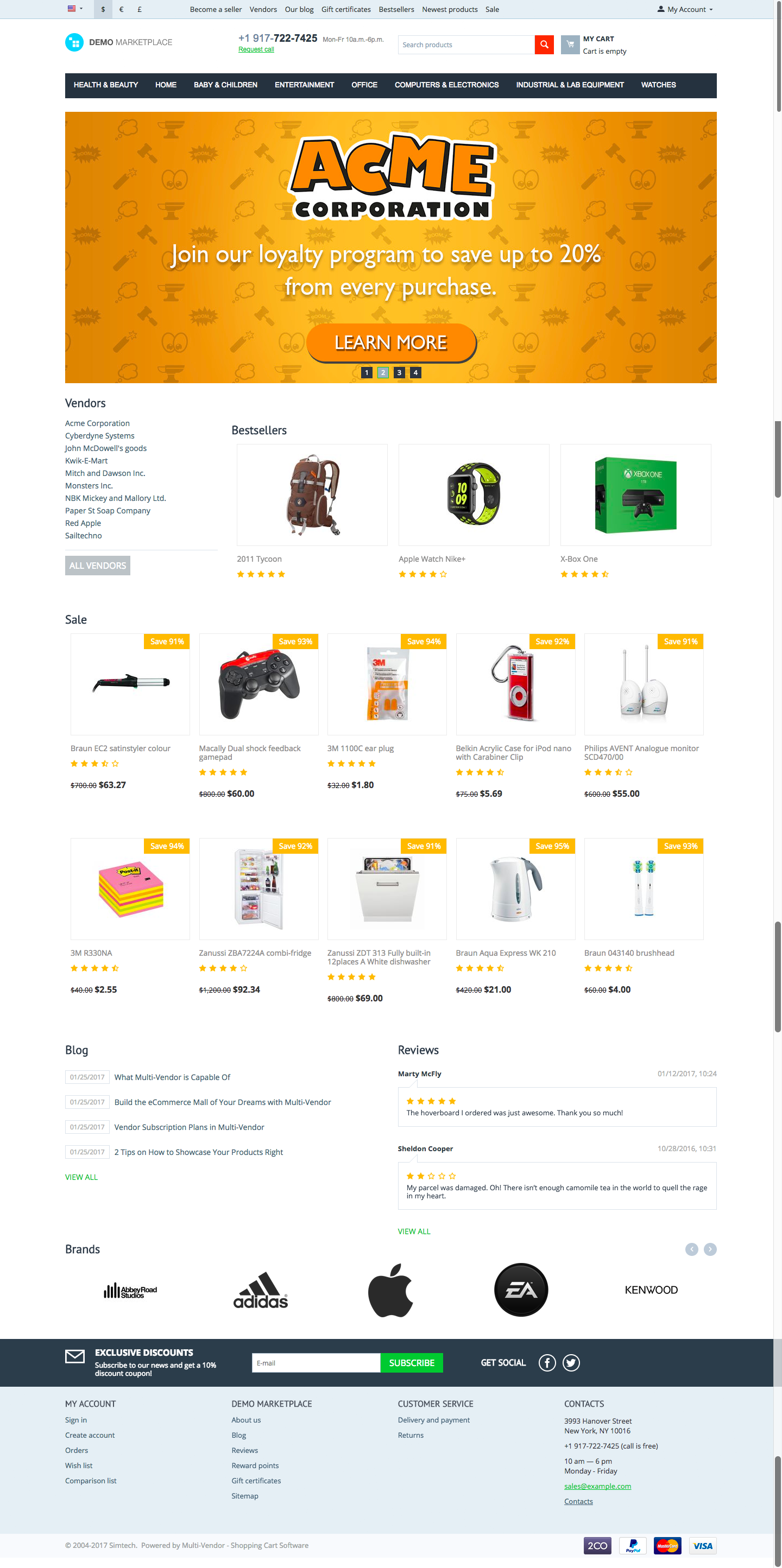
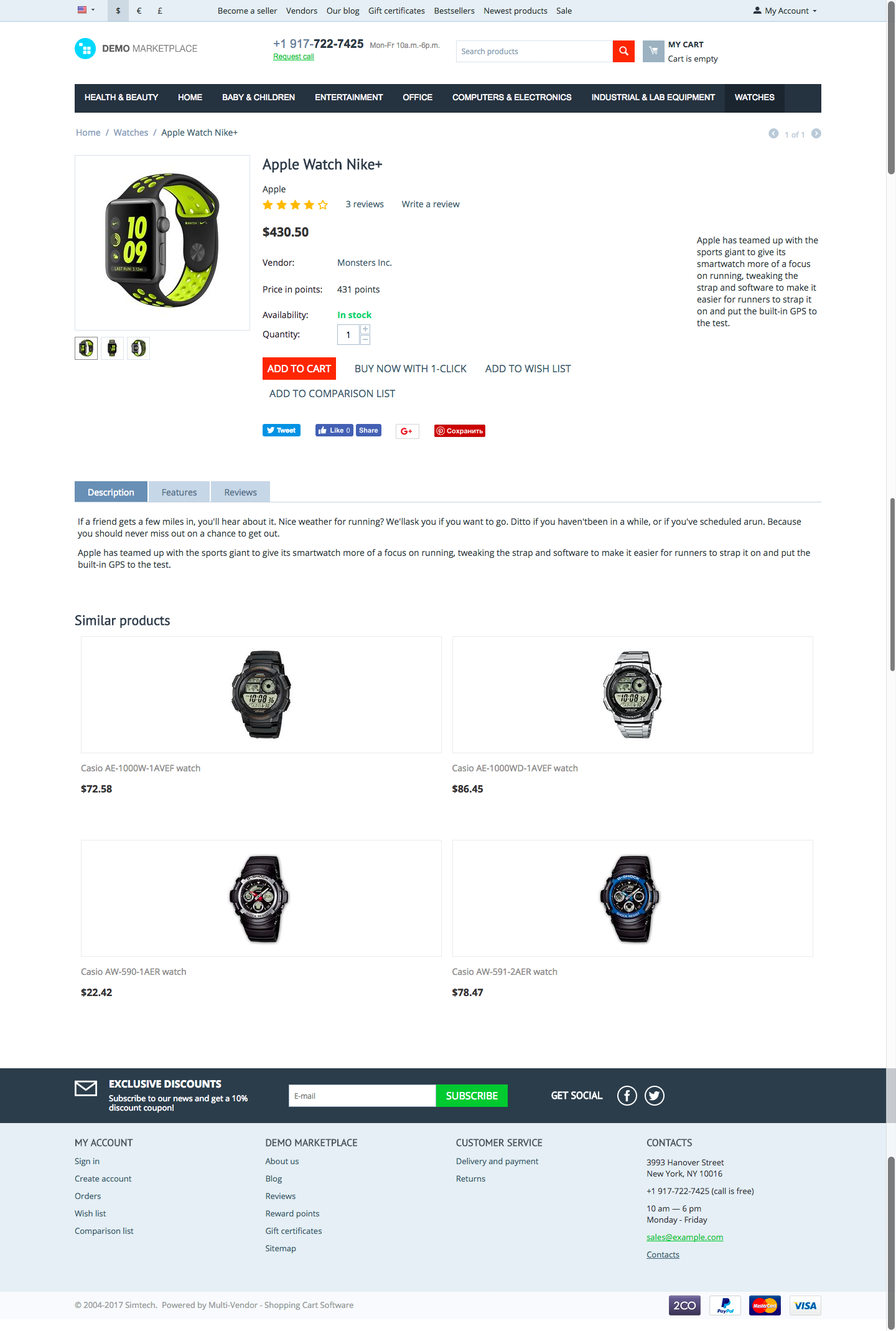
CS-Cart Multi-Vendor is an eCommerce marketplace software for SMBs available in cloud (No-Code) and self-hosted (On-Premises) versions. It allows users to open an online marketplace, where the user is the admin, and all the others—invited sellers. Each seller has his or her own micro-store with a customizable storefront, categories, filters, and search. Just like in Amazon. In the CS-Cart Multi-Vendor marketplace platform, managing vendors is designed to be simple:…
Founder at M Dot Media (Marketing & Advertising, 1-10 employees)
Chose CS-Cart Multi-Vendor
For big vision in doing something in online marketplace, I think CS-Cart can help to scale up and run business smoothly. CS-Cart started their business in 2005 and since [then has been] running successfully worldwide. It means they have a large scale of experience in …
A de minimis incentive was given to thank the reviewer for their time. The incentive was not used to bias or drive a particular response, nor was the incentive contingent on a positive endorsement. More Info
Verified User
Chose CS-Cart Multi-Vendor
Shopify is less expensive than Mirakl and probably more feature-rich. Shopify is probably the cheapest upfront to get started and the best user experience (at least the easiest to get to a point where customers like it). MultiVendor is still an excellent product but it's tricky …
A de minimis incentive was given to thank the reviewer for their time. The incentive was not used to bias or drive a particular response, nor was the incentive contingent on a positive endorsement. More Info
Verified User
Chose CS-Cart Multi-Vendor
The software has been on the market for years and is therefore mature.
A de minimis incentive was given to thank the reviewer for their time. The incentive was not used to bias or drive a particular response, nor was the incentive contingent on a positive endorsement. More Info
Primarily B2C focused, I think that the B2B features are increasing but the core focus of the platform (and Magento) is really consumer-based. That said, if you are looking for the fastest time to market with minimal investment option then Adobe Commerce is likely not the option that 9 out of 10 people would opt for nowadays.
A de minimis incentive was given to thank the reviewer for their time. The incentive was not used to bias or drive a particular response, nor was the incentive contingent on a positive endorsement. TR verified that a representative sample of customers was invited. More Info
For quickly setting up a most intuitive online marketplace, CS-Cart Multi-Vendor is the best one. The software is very well suited for those who have some basic knowledge about backend customization, installation, server setup, proper server configuration etc. Though I'm sure the support team will get you up and running. Only few third-party service providers are very professional, provide honest service and will help you to run your business smoothly. I would highly recommend to use CS-Cart Multi-Vendor.
A de minimis incentive was given to thank the reviewer for their time. The incentive was not used to bias or drive a particular response, nor was the incentive contingent on a positive endorsement. More Info
A de minimis incentive was given to thank the reviewer for their time. The incentive was not used to bias or drive a particular response, nor was the incentive contingent on a positive endorsement. TR verified that a representative sample of customers was invited. More Info
A de minimis incentive was given to thank the reviewer for their time. The incentive was not used to bias or drive a particular response, nor was the incentive contingent on a positive endorsement. More Info
Magento Commerce Cloud can be complicated to develop for. In our field, it has been a struggle at times to find qualified developers.
Our merchandising team sees performance issues from time to time. Updating a product and waiting for the change to clear the queue can take up to an hour in some situations.
Because of the incredible amount of features that Magento Commerce Cloud offers, training new employees to use Magento takes a long time.
A de minimis incentive was given to thank the reviewer for their time. The incentive was not used to bias or drive a particular response, nor was the incentive contingent on a positive endorsement. More Info
It has the best overall price point. It is super cheap and the connection between our ERP system is unmatched by any other Ecommerce sites we have talked with. We honestly can't get this level of complex customization without having to spend a fortune somewhere else. It is able to do everything we need it to do for the right price.
A de minimis incentive was given to thank the reviewer for their time. The incentive was not used to bias or drive a particular response, nor was the incentive contingent on a positive endorsement. TR verified that a representative sample of customers was invited. More Info
Being unable to store quotes for later was annoying. People called up expecting to pay there and then, and having to place them on hold whilst you added items to the basket and input all their customer information in was annoying for them and us, making us look unprofessional.
A de minimis incentive was given to thank the reviewer for their time. The incentive was not used to bias or drive a particular response, nor was the incentive contingent on a positive endorsement. More Info
The software consists of most of all e-commerce related features. Also, there are plenty of third party addons are available in the market which can improve our business. There are a lot of powerful themes available in the cs cart market which improve the look and feel on the front store. If CS-cart adjusted the price on their software license cost, controlling the third party addon cost and provide more freelancers with cheaper hourly rate for the customization on the cs-cart multi vendor software, the cs-cart company can be a master among other e-commerce software companies in the world.
inside of the support subscription, they give me all the time a fast answer and you can ask in a community forum also other users. But i miss a free support/chat like other solutions.
A de minimis incentive was given to thank the reviewer for their time. The incentive was not used to bias or drive a particular response, nor was the incentive contingent on a positive endorsement. More Info
A de minimis incentive was given to thank the reviewer for their time. The incentive was not used to bias or drive a particular response, nor was the incentive contingent on a positive endorsement. More Info
Magento Commerce was previously put into place and used right when I came onboard. We used it for quite some time, but ultimately the need for our company's specific customizations became too difficult to manage during core updates. We specifically needed a more specialized way of calculating shipping, connecting with our 3PL's inventory API, managing specialized discounts and codes, and even the way we showcased information on the product pages.
A de minimis incentive was given to thank the reviewer for their time. The incentive was not used to bias or drive a particular response, nor was the incentive contingent on a positive endorsement. More Info
It's a one-time payment and the entire CMS is in your control, can list unlimited products and vendors. no need to depend on an e-commerce platform to pay huge commissions. promote your own brand globally. change the looks of your listing with multiple themes, there are vast add on and page themes to enhance look and controls.
Great for SEO. We have been able to build out a huge number of highly targeted pages on the site that have propelled our SEO to the next level
Magento plugs in with many third party tools including ERP's, CRM's, shipping tools. It is a core part of our tech stacks and has allowed us to improve our capabilities as a business.
Has enabled us to provide a best in class web experience for our customers. We are constantly expanding the capabilities of Magento and to improve sales and grow our business.
A de minimis incentive was given to thank the reviewer for their time. The incentive was not used to bias or drive a particular response, nor was the incentive contingent on a positive endorsement. More Info
A de minimis incentive was given to thank the reviewer for their time. The incentive was not used to bias or drive a particular response, nor was the incentive contingent on a positive endorsement. More Info