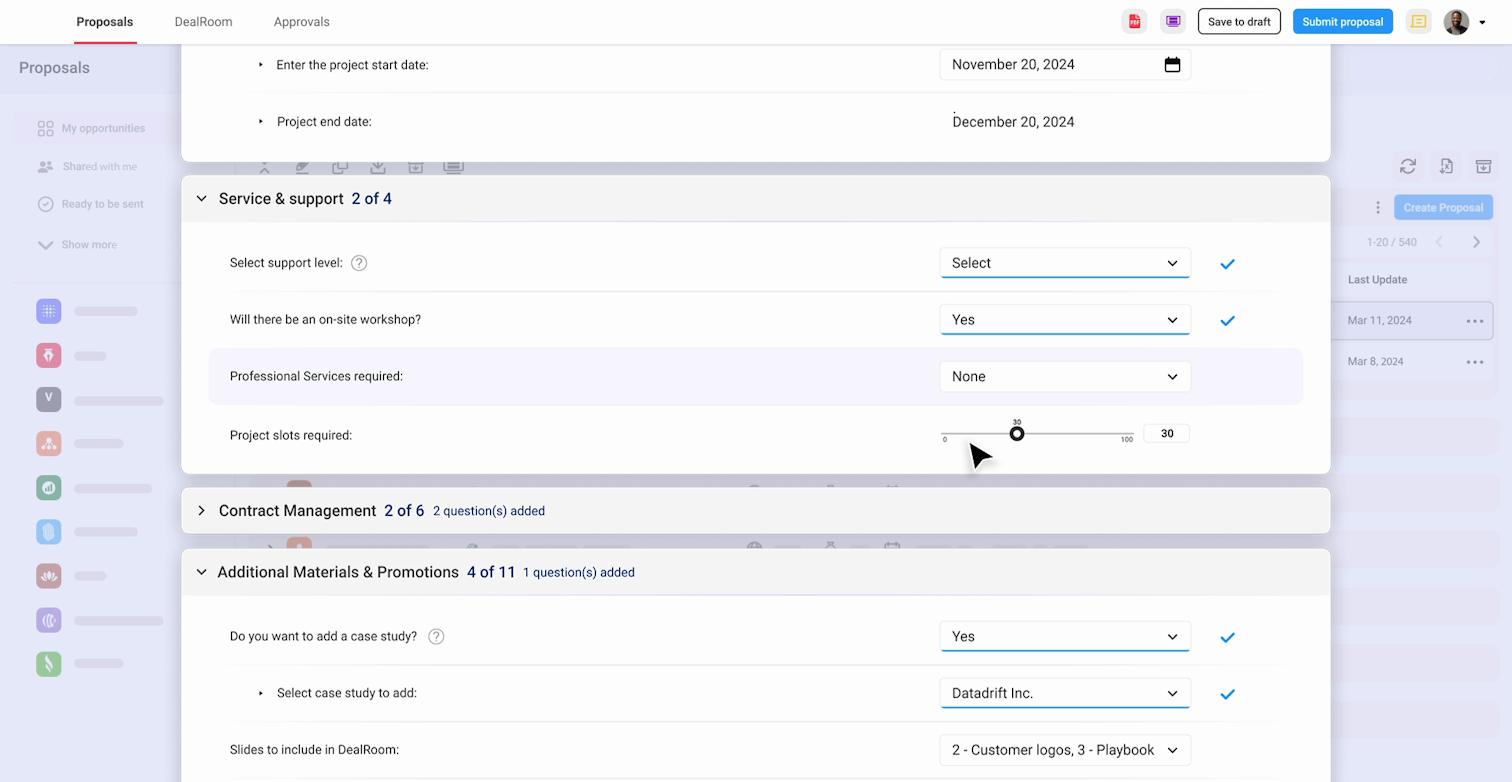
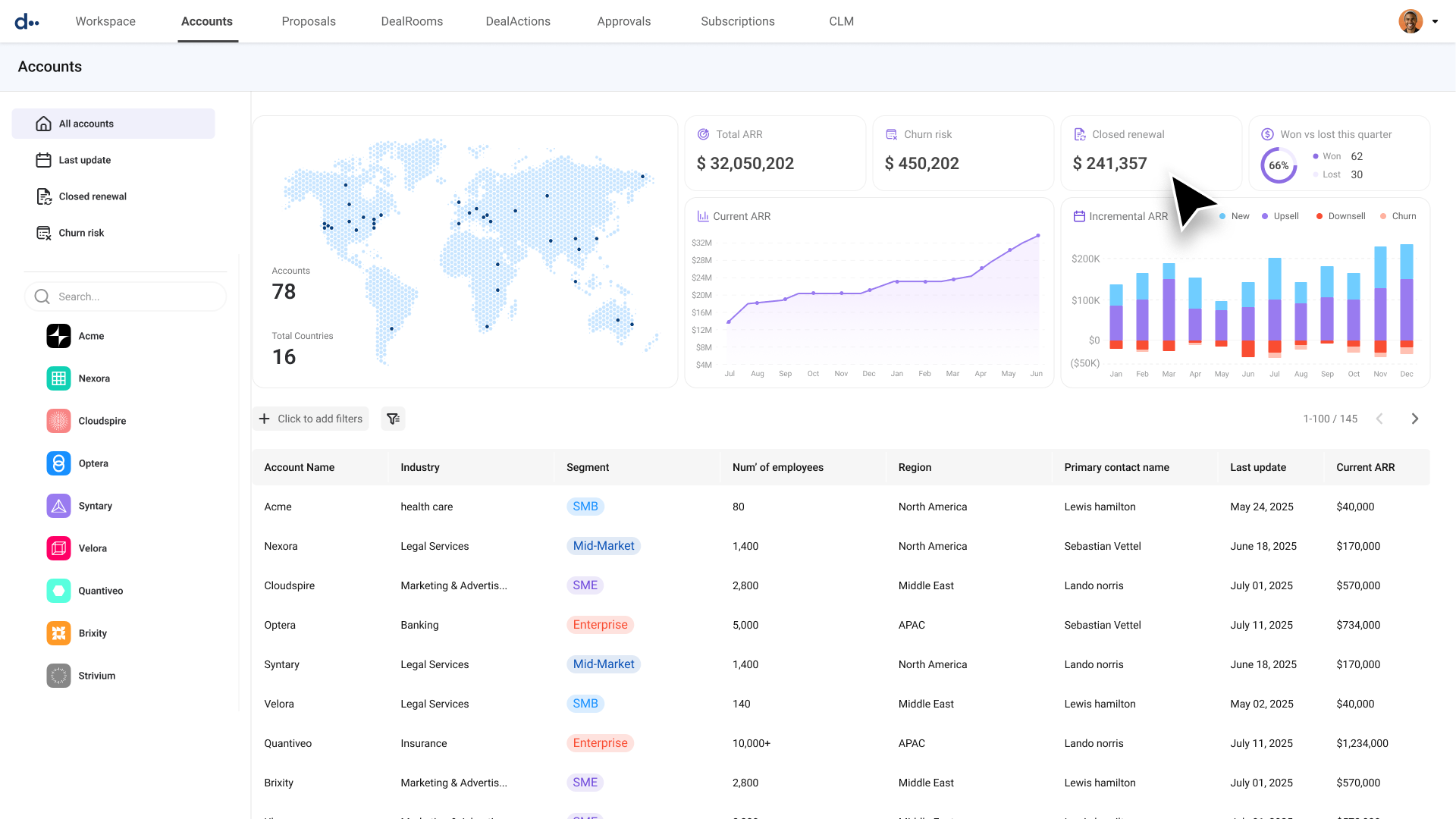
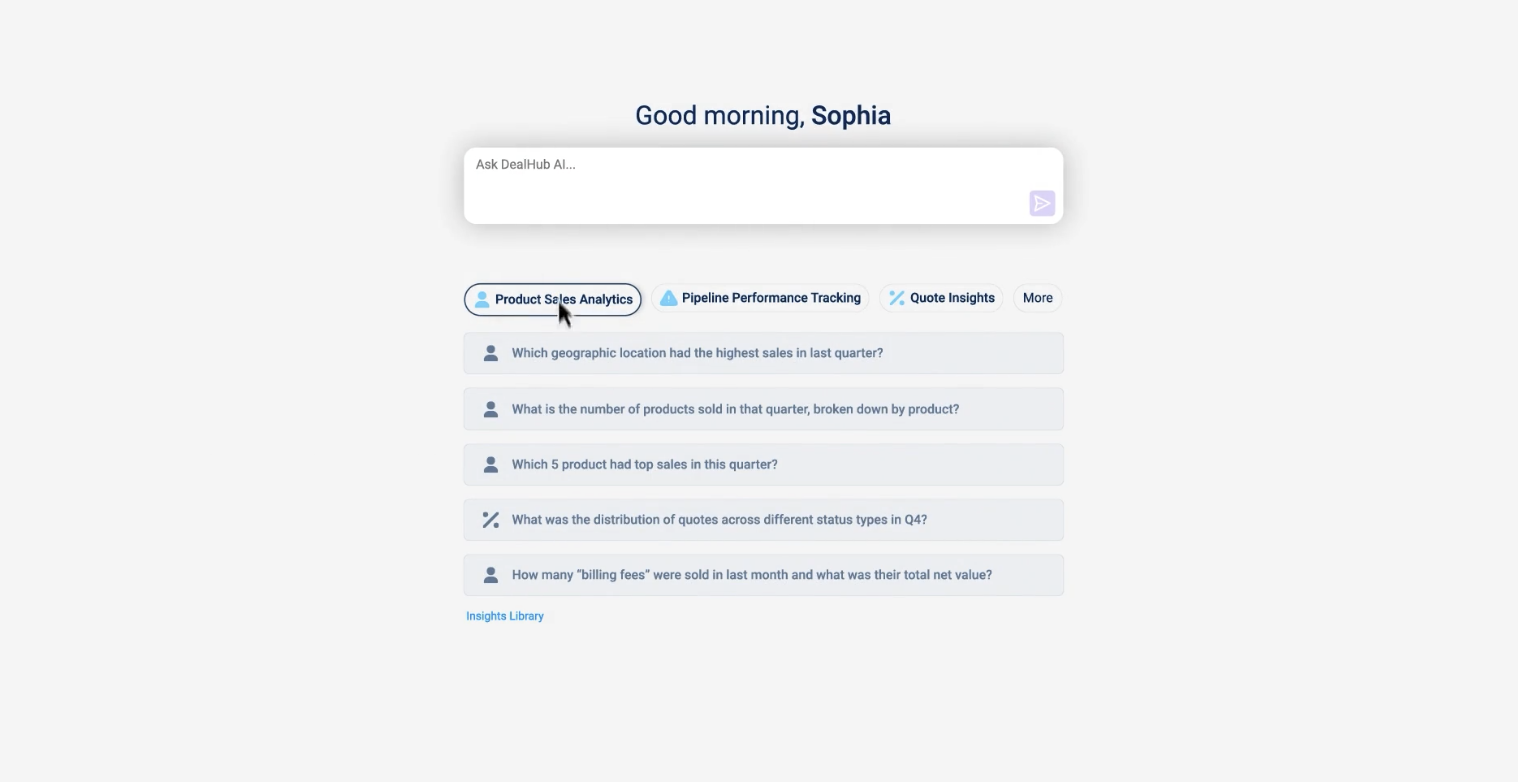
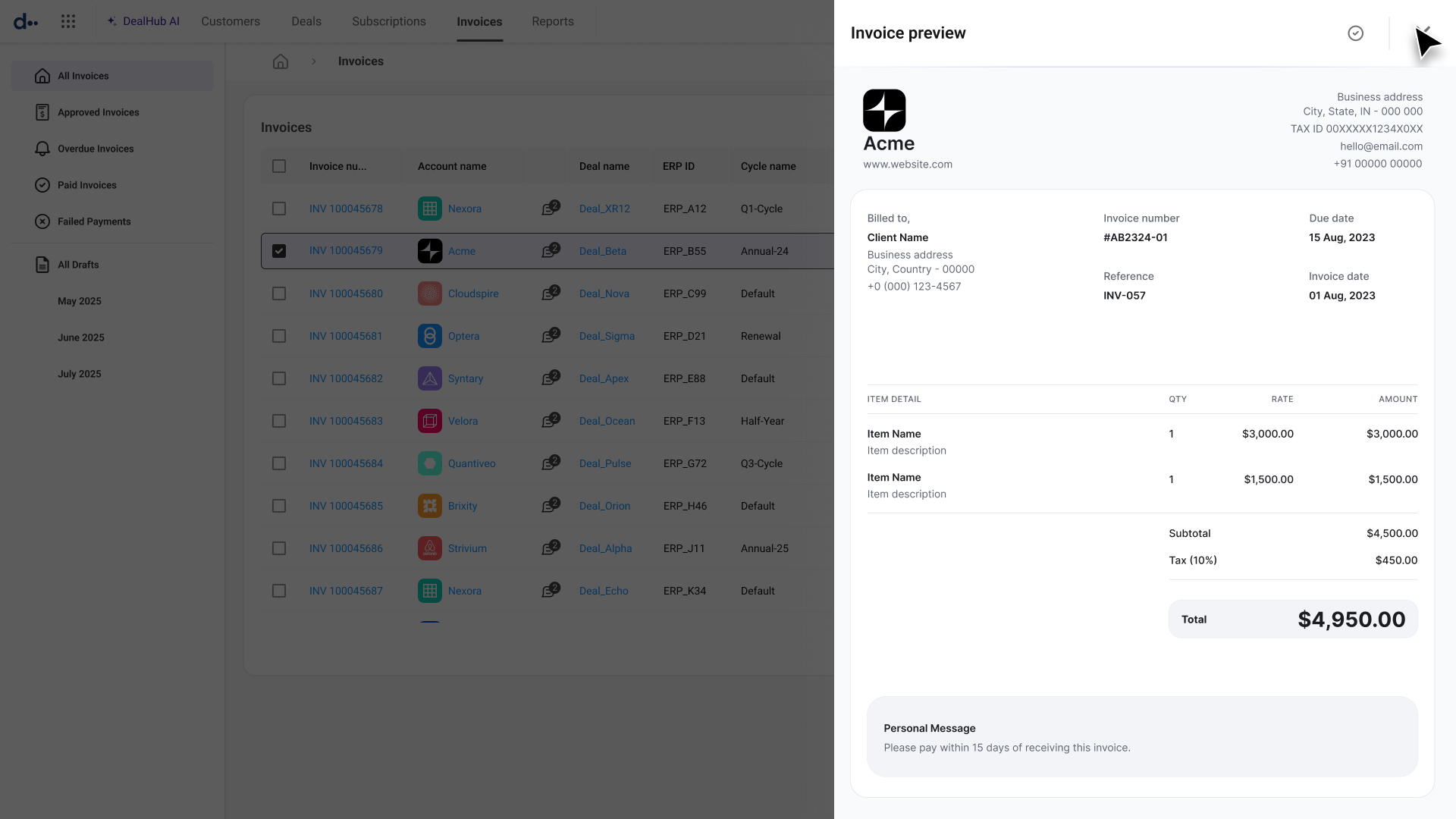
DealHub is an agentic Quote-to-Revenue platform that operates natively within Salesforce and other cloud-based CRMs to streamline quoting and revenue processes.
DealHub is well suited to put controls on the contracting process. You are able to create price books in DealHub and run all calculations through their system to then push back to Salesforce opportunity/opportunity line items. The system can handle everything from the first meeting pipeline (We require all pipeline $$ to originate from a DealHub Proposal sync) to signature within Dealroom -- Their electronic signing tool. Where DealHub may not be appropriate is if you have a very complex selling motion or have very different selling operations within multiple regions. We have two core regions and each one is essentially set up as its own entity, requiring double work to update.
A de minimis incentive was given to thank the reviewer for their time. The incentive was not used to bias or drive a particular response, nor was the incentive contingent on a positive endorsement. More Info
If you have a highly bureaucratic organization that is heavily focused on procurement, Emptoris can provide some value. It seemed to be very good at linking the contract information to procurement for better spend control. If you are trying to implement a standalone contract management solution that allows you to easily create contracts and store them in a central location, this isn't the tool for you. There doesn't appear to be a simplified implementation. In general, when a SaaS solution has a complicated and expensive implementation, I am very skeptical. This does not show that the vendor is trying to move customers forward on a single code base. If that many things need to be done during implementation, you are starting to customize the solution for every customer. This hurts the vendor's ability to scale and make improvements in the future.
A de minimis incentive was given to thank the reviewer for their time. The incentive was not used to bias or drive a particular response, nor was the incentive contingent on a positive endorsement. More Info
A de minimis incentive was given to thank the reviewer for their time. The incentive was not used to bias or drive a particular response, nor was the incentive contingent on a positive endorsement. More Info
Document protection - the Check Out contract feature is a great way to allow external parties to make modifications to contract language without the ability to accept those changes. Those redlines can then be imported back into Emptoris and reviewed or further modified as needed.
Notifications & reminders - you can trigger an email manually from within the system, or you can configure automated notifications andreminders to alert users when a new task is received or has aged a given amount of days, etc.
Interview wizard - there is a lot of value in the interview wizard. Administrators can configure screens with selecting options via check boxes, radio buttons, or typed-in values. Variables and conditions can be used to selectively populate fields within the contract or apply other options, making for a quick and convenient method to generate contracts conforming to corporate standards.
Field customization - administrators can customize a list of options for various fields including contract substatus, address type, and user created business term variables.
Approvals - many different options are available to configure approvals to trigger automatically upon presenting and/or executing the contract including specific individuals, one or more approver groups, or based upon various criteria including terms within the contract, type of contract, or the contract's owning organization.
A de minimis incentive was given to thank the reviewer for their time. The incentive was not used to bias or drive a particular response, nor was the incentive contingent on a positive endorsement. More Info
Nothing too specific here since this is the first CPQ tool I've used; maybe the training around how the actual DealRoom presents to a customer would have been helpful, but I operate more in an old-school way and like to send my contracts directly to the people I'm working with via email or DocuSign... the whole DealRoom thing scares me a little.
A de minimis incentive was given to thank the reviewer for their time. The incentive was not used to bias or drive a particular response, nor was the incentive contingent on a positive endorsement. More Info
Reporting, Emptoris comes with standard reports which can not always can be fit into our business. This needs to be improved. I hope Emptoris is addressing this issue in their latest releases.
Though the feature of editing language in MS word is excellent, loading MS word takes time.
There are a lot of new, exciting products coming out in every field and I believe that there is always something better right over the horizon. If it was my choice, I would review my usage of Emptoris and other software periodically to make sure I'm using the most efficient software possible.
A de minimis incentive was given to thank the reviewer for their time. The incentive was not used to bias or drive a particular response, nor was the incentive contingent on a positive endorsement. More Info
Once it's configured it's relativley maintenance free. Our sales opps team effectively manages the tools It's easy to add new products to the CP-Q. It's flexible for product and service sales. It's security is robust. The approval workflow is easy to understand and use. The integration with CRM is essential for the business
A de minimis incentive was given to thank the reviewer for their time. The incentive was not used to bias or drive a particular response, nor was the incentive contingent on a positive endorsement. More Info
A de minimis incentive was given to thank the reviewer for their time. The incentive was not used to bias or drive a particular response, nor was the incentive contingent on a positive endorsement. More Info
I personally haven't had to reach out directly to the DealHub team, but they did a great job enabling our director of RevOps, who is basically our one-stop shop for all DealHub related questions. We've never had a question (in my experience) that needed to be raised to the actual DH support team.
A de minimis incentive was given to thank the reviewer for their time. The incentive was not used to bias or drive a particular response, nor was the incentive contingent on a positive endorsement. More Info
The above rating for the overall support from Emptoris is for their product / product support, roll out training and refresher training / ongoing training, which is not only good but superior. There is no major or reconizable bad review that can be given to Emptoris at this point in time, from where is stands.
A de minimis incentive was given to thank the reviewer for their time. The incentive was not used to bias or drive a particular response, nor was the incentive contingent on a positive endorsement. More Info
We had the basic quoting functionality within Salesforce but were quickly outgrowing that as our deals grew in size, structure and complexity. The primary competitor we evaluated against Valooto was SteelBrick and we chose Valooto due to the promised faster implementation, lower cost and it being a more streamlined solution.
A de minimis incentive was given to thank the reviewer for their time. The incentive was not used to bias or drive a particular response, nor was the incentive contingent on a positive endorsement. More Info
I am a fan of Ariba to be used for the entire lifecycle of Sourcing. From RFX's to cutting PO's. I feel Emptoris misses the boat on the idea of a "One Stop Shop" for all of your Sourcing/Purchasing needs
A de minimis incentive was given to thank the reviewer for their time. The incentive was not used to bias or drive a particular response, nor was the incentive contingent on a positive endorsement. More Info
DealHub has saved me at least 30 mins on each proposal/quote that I've created. Gone are the days of having to update a Google Sheet, double-check the math, and all the misc. terms or incentives that come along with driving a deal forward.
DealHub reduces my time in Salesforce each quote that's created by about 5 minutes.
DealHub makes the internal approval process much faster as well; Sales Director receives approval via email, if CRO approval is needed, the approval-needed notification is sent right to the CRO, following Director level approval. Clicks not emails.
A de minimis incentive was given to thank the reviewer for their time. The incentive was not used to bias or drive a particular response, nor was the incentive contingent on a positive endorsement. More Info
We won the 2005 Baseline Magazine Award for best ROI related to a technology implementation with an ROI 5544% (see 2005 Baseline ROI Awards, GlaxoSmithkline).
We always felt we could do "two times the work, with half the people and deliver double the savings".
A de minimis incentive was given to thank the reviewer for their time. The incentive was not used to bias or drive a particular response, nor was the incentive contingent on a positive endorsement. More Info