Overview
ProductRatingMost Used ByProduct SummaryStarting Price
GitLab
Score 8.8 out of 10
N/A
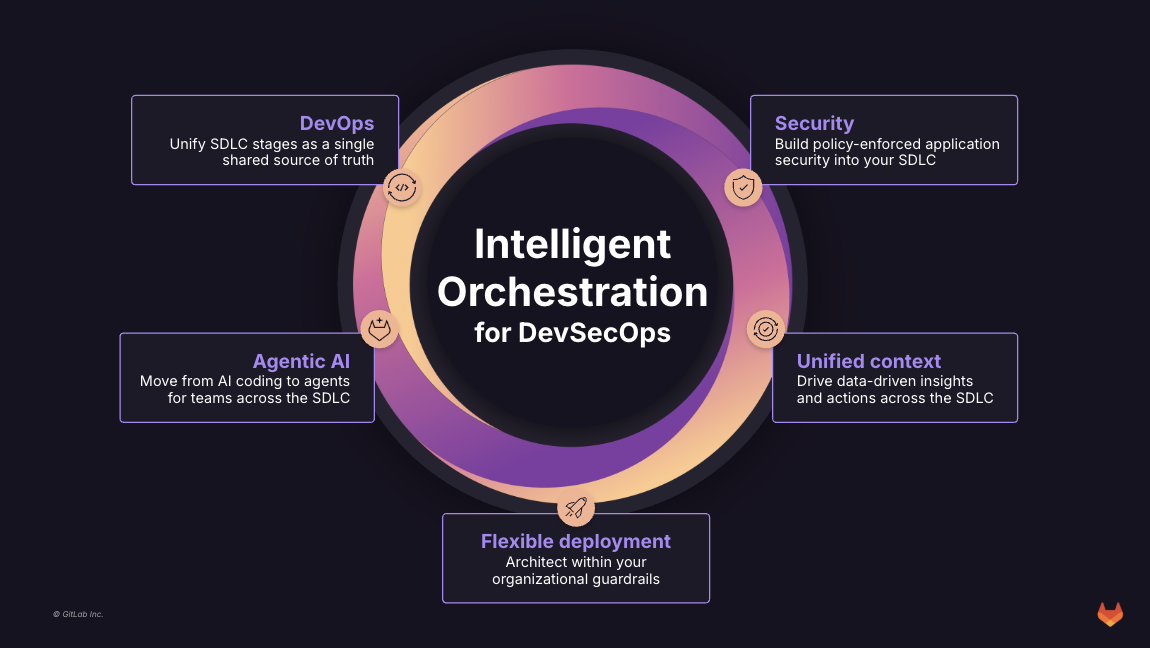
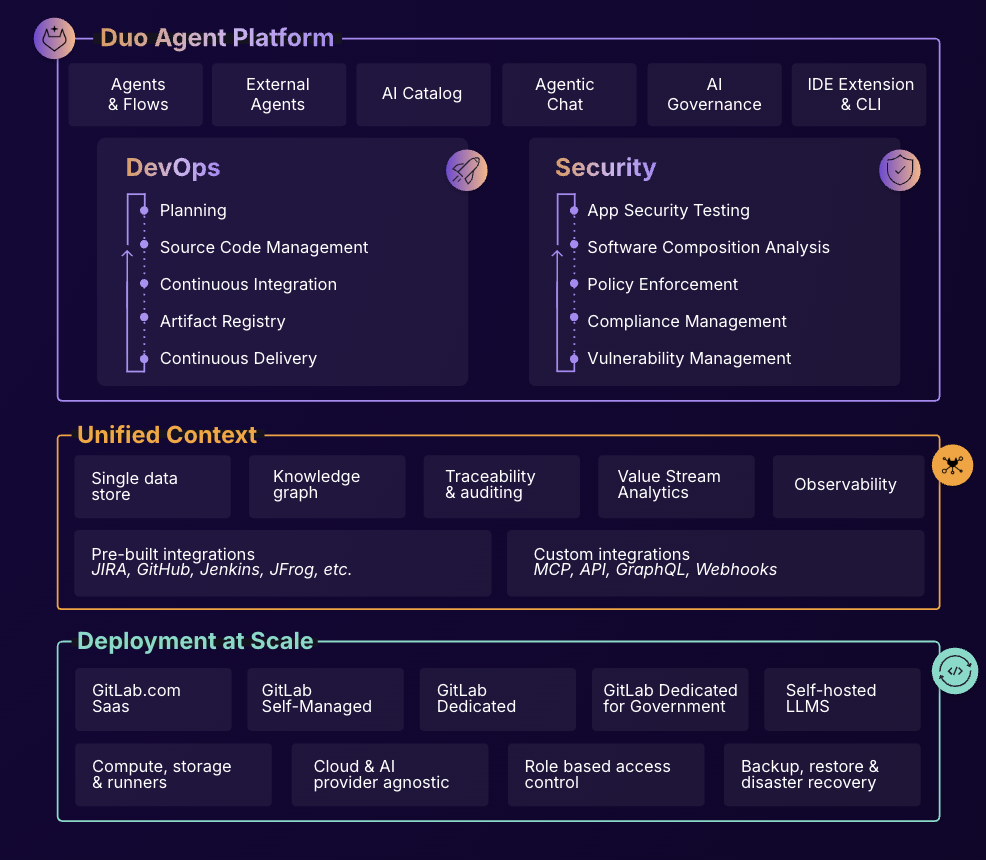
GitLab is an intelligent orchestration platform for DevSecOps, where software teams enable AI at every stage of the software lifecycle to ship faster. The platform enables teams to automate repetitive tasks across planning, building, securing, testing, deploying, and maintaining software.
$0
per month per user
Jenkins
Score 8.4 out of 10
N/A
Jenkins is an open source automation server. Jenkins provides hundreds of plugins to support building, deploying and automating any project. As an extensible automation server, Jenkins can be used as a simple CI server or turned into a continuous delivery hub for any project.N/A
PhpStorm
Score 9.5 out of 10
N/A
JetBrains supports PhpStorm, an integrated development environment (IDE).
$9.90
per month per user
Pricing
GitLabJenkinsPhpStorm
Editions & Modules
GitLab Free (self-managed)
$0
GitLab Free
$0
GitLab Premium
$29
per month per user
GitLab Premium (self-managed)
$29
per month per user
GitLab Ultimate
Contact Sales
GitLab Ultimate (self-managed)
Contact Sales
No answers on this topic
For Individuals
$99
per year per user
For Organizations
$249
per year per user
Offerings
Pricing Offerings
GitLabJenkinsPhpStorm
Free Trial
YesNoYes
Free/Freemium Version
YesYesNo
Premium Consulting/Integration Services
YesNoNo
Entry-level Setup FeeOptionalNo setup feeNo setup fee
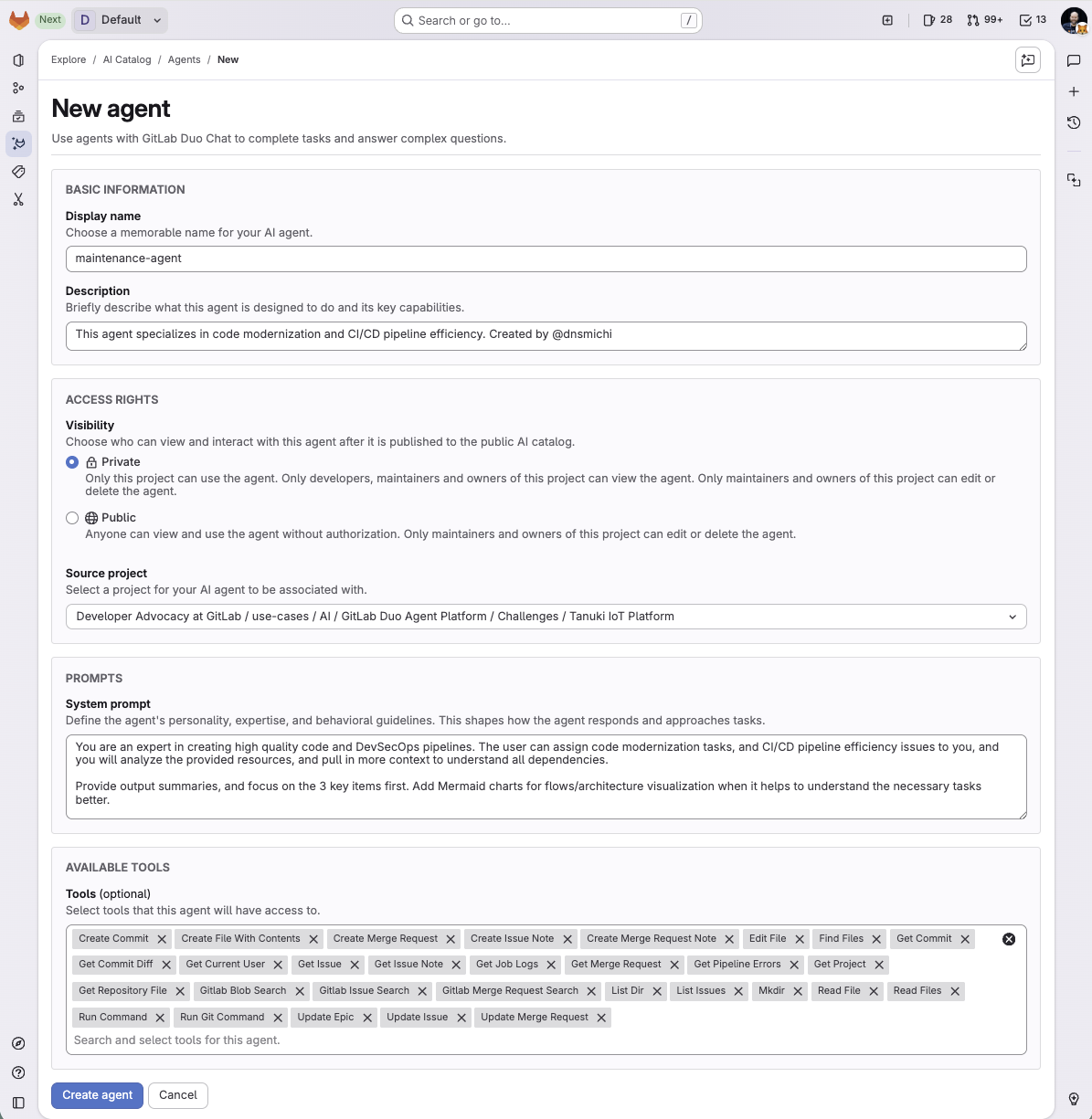
Additional DetailsGitLab Credits enable flexible, consumption-based access to agentic AI capabilities in the GitLab platform, allowing you to scale AI adoption at your own pace while maintaining cost predictability. Powered by Duo Agent Platform, GitLab’s agentic AI capabilities help software teams to collaborate at AI speed, without compromising quality and enterprise security. If usage exceeds monthly allocations and overage terms are accepted, automated on-demand billing activates without service interruption, so your developers never lose access to AI capabilities they need. Real-time dashboards provide transparency into AI consumption patterns. Software teams can see usage across users, projects, and groups with granular attribution for cost allocation. Automated threshold alerts facilitate proactive planning. Advanced analytics deliver trending, forecasting, and FinOps integration.
More Pricing Information
Community Pulse
GitLabJenkinsPhpStorm
Considered Multiple Products
GitLab
Chose GitLab
The company has had prior experience with Bamboo. GitLab has much more functionality than Bamboo and worked better with some of our legacy projects. While Jenkins is free, it really isn't free - the amount of work required to get something up and running would have been …
Chose GitLab
GitLab fits our needs much better because it is a all-in-one solution and is easier to learn. We have a wide range of users - senior software developers and people who only write small, easy scripts or just start pipelines. Jenkins is rather useful when e.g. more fine-grained …
Chose GitLab
GitLab is an all-in-one Git and CI/CD platform that also offers generous credits in its free plan. It allows both private and public projects. The pipelines can be fully defined in YAML files put under version control.
Chose GitLab
We have recently migrated from Bamboo to GitLab across our enterprise as part of our tech modernization roadmap. GitLab provides a all-in-one platform for integrated code management. The only advantage that Bamboo had over GitLab was the integration with JIRA. The streamlined …
Chose GitLab
i have more exoerence in GitLab rather than Bitbucket . As personally , it is good for me to understand how things is going on. i have used personally and also in organisation . It is great for developer to see there 3 months ago code and also can come up with new solution to …
Chose GitLab
It was a management decision to use GitLab over other tools. It integrates well with RBAC using Terraform. Runners are easy to setup. Almost all the features the organization used before are available in GitLab.
Chose GitLab
Software delivery is the key objective and GitLab made it much easier to hit the group quickly. It worked well with automation, and integrations with other SDLC tools used in the Organization and it is really easy to use. It's widely adopted and has the power to deliver what we …
Chose GitLab
We migrated from Gerrit to GitLab, and minus a few minor bumps during migration, GitLab has been hands down better. Our devs have faster time to code review with notifications, the UI is easy to navigate and, and our pipeline is integrated and automated, so once everything is …
Chose GitLab
Gitlab provided on par functionality and it provided a good option for us to self host which is very important for our business. We think the business continuity story is more solid with Gitlab.
Chose GitLab
GitLab is easily the preferred tool when it comes to versioning and source control. With other tools the UI often feels outdated and clunky leading to inefficiency and confusion. With some of the sleeker tools such as GitKraken, while the aesthetic is pleasing, the experience …
Chose GitLab
More friendly interface and very intuitive.
Chose GitLab
Git has a Distributed Model. SVN has a Centralized Model. In git every user has their own copy of code on their local like their own branch. In SVN there is central repository has working copy that also make changes and committed in central repository
Chose GitLab
I was not part of the decision for GitLab.
Chose GitLab
1) Good support from the community.
2) Easy to implement and understand
3) Easy to manage GitLab runners.
Chose GitLab
Sometimes it gets very slow and provides a problem to connect or update the servers. Search is difficult on some pages. Some features are missing that are available on GitHub.
Chose GitLab
Even though all three tools are also useful for their own merit, we found GitLab to be the best supported and most customizable for our needs. It is useful to know that the product today is what we need it to be and the community is there to keep it updated if we need more …
Chose GitLab
  • GitLab was chosen for the auto dev ops feature over GitHub, but then GitHub shortly then came out with GitHub Actions.
  • We also moved from GitHub enterprise to GitLab, so cost-wise was cheaper as we didn't have to host GitLab.
  • GoCD was too slow and restrictive for our liking.
Chose GitLab
GitLab is the best combination of all the other tools. They are still viable in their own sense, but for the projects we were using, GitLab proved to be an excellent alternative.
Jenkins
Chose Jenkins
GitLab CI and GitHub Actions are other powerful options in the market also with a rising popularity and high interoperability with their respective platform.
But Jenkins is still a good option for complex pipelines that require scripting and logic. Also, Jenkins uses as runtime …
Chose Jenkins
Overall, Jenkins is the easiest platform for someone who has no experience to come in and use effectively. We can get a junior engineer into Jenkins, give them access, and point them in the right direction with minimal hand-holding. The competing products I have used (TravisCI/G…
Chose Jenkins
Bitbucket building was very slow, in order to improve that you have to upgrade to spend double or more minutes per build minute. The GUI was also very slow in updating on the progress of the builds, making things rather confusing. GitLab worked a bit better in my opinion, but …
Chose Jenkins
Jenkins is highly customizable, making it ideal for complex pipelines that require scripting, conditional logic, and integration with a variety of tools.Jenkins offers thousands of plugins, giving it unmatched versatility.
Chose Jenkins
Jenkins is highly customizable and flexible, supporting a wide range of plugins and integrations. Jenkins works with any version control system (Git, Subversion, etc.). Jenkins has a more mature ecosystem, and it may be better for large-scale, complex environments, especially …
Chose Jenkins
It's mostly stable and well-known within the DevOps community.
Chose Jenkins
Both Jenkins and TeamCity do a good job of automating CI/CD. Jenkins runs much leaner than TeamCity - it only needs about a Gig of free memory, whereas TeamCity needs a fat 4 Gig free. Many tasks in Jenkins yml config can be very cumbersome, especially running local and …
Chose Jenkins
Originally Jenkins was selected because it was the best around, but it has since been outclassed by more specific services or cloud-based services and tools that will do all of the heavy lifting for you. Jenkins still has a use case - but it's hard to argue the additional …
Chose Jenkins
Jenkins immense flexibility and its large and impressive selection of available community-driven plugins makes it ideal choice for solving non-traditional problems.

However, for CI/CD - consider the benefit of modern tools that enforce reusable, infrastructure as code design …
Chose Jenkins
I would use TeamCity if Jenkins was not already in place. TeamCity seems a lot more stable when it comes to upgrading the software and job templates the way TeamCity handles them is an absolute killer feature. Jenkins is a bit of a wild animal, quite unpredictable but with the …
PhpStorm

No answer on this topic

Best Alternatives
GitLabJenkinsPhpStorm
Small Businesses
GitGuardian
GitGuardian
Score 9.0 out of 10
GitLab
GitLab
Score 8.8 out of 10
PyCharm
PyCharm
Score 9.2 out of 10
Medium-sized Companies
Veracode
Veracode
Score 8.8 out of 10
GitLab
GitLab
Score 8.8 out of 10
PyCharm
PyCharm
Score 9.2 out of 10
Enterprises
Veracode
Veracode
Score 8.8 out of 10
GitLab
GitLab
Score 8.8 out of 10
PyCharm
PyCharm
Score 9.2 out of 10
All AlternativesView all alternativesView all alternativesView all alternatives
User Ratings
GitLabJenkinsPhpStorm
Likelihood to Recommend
8.3
(152 ratings)
7.0
(74 ratings)
9.7
(20 ratings)
Likelihood to Renew
9.0
(5 ratings)
-
(0 ratings)
-
(0 ratings)
Usability
10.0
(6 ratings)
6.7
(8 ratings)
9.2
(5 ratings)
Performance
9.0
(1 ratings)
8.9
(6 ratings)
-
(0 ratings)
Support Rating
10.0
(12 ratings)
6.6
(6 ratings)
9.4
(3 ratings)
Implementation Rating
-
(0 ratings)
6.0
(1 ratings)
-
(0 ratings)
Product Scalability
10.0
(1 ratings)
-
(0 ratings)
-
(0 ratings)
User Testimonials
GitLabJenkinsPhpStorm
Likelihood to Recommend
GitLab
GitLab is good if you work a lot with code and do complex repository actions. It gives you a very good overview of what were the states of your branches and the files in them at different stages in time. It's also way easier and more efficient to write pipelines for CI\CD. It's easier to read and it's easier to write them. It takes fewer clicks to achieve the same things with GitLab than it does for competitor products.
Read full review
Open Source
Jenkins is a highly customizable CI/CD tool with excellent community support. One can use Jenkins to build and deploy monolith services to microservices with ease. It can handle multiple "builds" per agent simultaneously, but the process can be resource hungry, and you need some impressive specs server for that. With Jenkins, you can automate almost any task. Also, as it is an open source, we can save a load of money by not spending on enterprise CI/CD tools.
Read full review
JetBrains
PhpStorm is well suited for any project that utilizes PHP. I have used it on Windows, Ubuntu, and Mac OS and it works great on all those platforms. Having a solution that keeps the developer from having to constantly switch tools to do their job is invaluable. Whether you're a junior developer, front end engineer or a senior developer, PhpStorm is a great product that will help you get your work done.
Read full review
Pros
GitLab
  • GitLab excels in managing code versions, allowing easy tracking of changes, branch management, and merging contributions.
  • It helps maintain code stability and reliability, saving time and effort in the development or research workflow.
  • Powerful code review features, enabling collaboration and feedback among team members.
  • Robust project management features, including issue tracking, kanban boards, and milestones.
Read full review
Open Source
  • Automated Builds: Jenkins is configured to monitor the version control system for new pull requests. Once a pull request is created, Jenkins automatically triggers a build process. It checks out the code, compiles it, and performs any necessary build steps specified in the configuration.
  • Unit Testing: Jenkins runs the suite of unit tests defined for the project. These tests verify the functionality of individual components and catch any regressions or errors. If any unit tests fail, Jenkins marks the build as unsuccessful, and the developer is notified to fix the issues.
  • Code Analysis: Jenkins integrates with code analysis tools like SonarQube or Checkstyle. It analyzes the code for quality, adherence to coding standards, and potential bugs or vulnerabilities. The results are reported back to the developer and the product review team for further inspection.
Read full review
JetBrains
  • Database browsing, Remote host browsing, and all the deep seated customizations for both the UI and Technical feasability are the result of an amazing integrity and compatibility with most components and technologies.
  • The built-in shell is insanely helpful for traversing code in order to debug scripts with ease, and the plug-in system makes this software quite extensible.
  • Not to mention the variety of options and settings (divided into global settings and per-project settings) are both intuitive & easy to use, especially the fact that I can export and import them across my workstations while maintaining my spacing & indentation, highlighting, inspection patterns and syntax styling.
Read full review
Cons
GitLab
  • CI variables management is sometimes hard to use, for example, with File type variables. The scope of each variable is also hard to guess.
  • Access Token: there are too many types (Personal, Project, global..), and it is hard to identify the scope and where it comes from once created.
  • Runners: auto-scaled runners are for the moment hard to put in place, and monitoring is not easy.
Read full review
Open Source
  • The UI could be slightly better, it feels kind of like the 90s, but it works well.
  • An easier way to filter jobs other than views on the dashboard.
  • An easier way to read the console logs when tests do fail.
Read full review
JetBrains
  • Some of the newest github copilot features lag behind what's being done in vs code and would be nice if more of the newer features were brought over though this has greatly improved recently
  • Interface can be a little overwhelming for newcomers
  • Some features like rainbow brackets should be native rather than addon
Read full review
Likelihood to Renew
GitLab
I really feel the platform has matured quite faster than others, and it is always at the top of its game compared to the different vendors like GitHub, Azure pipelines, CircleCI, Travis, Jenkins. Since it provides, agents, CI/CD, repository hosting, Secrets management, user management, and Single Sign on; among other features
Read full review
Open Source
We have a certain buy-in as we have made a lot of integrations and useful tools around jenkins, so it would cost us quite some time to change to another tool. Besides that, it is very versatile, and once you have things set up, it feels unnecessary to change tool. It is also a plus that it is open source.
Read full review
JetBrains
No answers on this topic
Usability
GitLab
I find it easy to use, I haven't had to do the integration work, so that's why it is a 9/10, cause I can't speak to how easy that part was or the initial set up, but day to day use is great!
Read full review
Open Source
Jenkins streamlines development and provides end to end automated integration and deployment. It even supports Docker and Kubernetes using which container instances can be managed effectively. It is easy to add documentation and apply role based access to files and services using Jenkins giving full control to the users. Any deviation can be easily tracked using the audit logs.
Read full review
JetBrains
PhpStorm is very easy to use, once you get the hang of it. It can take a while to get the hang of it because there's so many options, some of which are buried in the imposing settings panel. It could use some help with multi-cursor, especially multi-file editing but that's a minor gripe.
Read full review
Reliability and Availability
GitLab
I've never had experienced outages from GItlab itself, but regarding the code I have deployed to Gitlab, the history helps a lot to trace the cause of the issue or performing a rollback to go back to a working version
Read full review
Open Source
No answers on this topic
JetBrains
No answers on this topic
Performance
GitLab
GItlab reponsiveness is amazing, has never left me IDLE. I've never had issues even with complex projects. I have not experienced any issues when integrating it with agents for example or SSO
Read full review
Open Source
No, when we integrated this with GitHub, it becomes more easy and smart to manage and control our workforce. Our distributed workforce is now streamlined to a single bucket. All of our codes and production outputs are now automatically synced with all the workers. There are many cases when our in-house team makes changes in the release, our remote workers make another release with other environment variables. So it is better to get all of the work in control.
Read full review
JetBrains
No answers on this topic
Support Rating
GitLab
At this point, I do not have much experience with Gitlab support as I have never had to engage them. They have documentation that is helpful, not quite as extensive as other documentation, but helpful nonetheless. They also seem to be relatively responsive on social media platforms (twitter) and really thrived when GitHub was acquired by Microsoft
Read full review
Open Source
As with all open source solutions, the support can be minimal and the information that you can find online can at times be misleading. Support may be one of the only real downsides to the overall software package. The user community can be helpful and is needed as the product is not the most user-friendly thing we have used.
Read full review
JetBrains
The JetBrains community is all about helping others succeed, even in the most obscure setups. I have never had a question go unanswered, or I have never been able to come up with empty results in searching for the answer. My questions or concerns are typically address from other users in the community, so timing is pretty quick for a response
Read full review
Implementation Rating
GitLab
No answers on this topic
Open Source
It is worth well the time to setup Jenkins in a docker container. It is also well worth to take the time to move any "Jenkins configuration" into Jenkinsfiles and not take shortcuts.
Read full review
JetBrains
No answers on this topic
Alternatives Considered
GitLab
Gitlab seems more cutting-edge than GitHub; however, its AI tools are not yet as mature as those of CoPilot. It feels like the next-generation product, so as we selected a tool for our startup, we decided to invest in the disruptor in the space. While there are fewer out-of-the-box templates for Gitlab, we have never discovered a lack of feature parity.
Read full review
Open Source
Overall, Jenkins is the easiest platform for someone who has no experience to come in and use effectively. We can get a junior engineer into Jenkins, give them access, and point them in the right direction with minimal hand-holding. The competing products I have used (TravisCI/GitLab/Azure) provide other options but can obfuscate the process due to the lack of straightforward simplicity. In other areas (capability, power, customization), Jenkins keeps up with the competition and, in some areas, like customization, exceeds others.
Read full review
JetBrains
Easier to use, more features, more reliable. Much more purpose built with specific integrations aimed directly at php code instead of the broad generic interfaces the other software have that are aiming to support many different languages.
Read full review
Scalability
GitLab
I think is very well designed, and like any VCS it works as intended
Read full review
Open Source
No answers on this topic
JetBrains
No answers on this topic
Return on Investment
GitLab
  • GitLab cut down our spent on container, package and infrastructure registry
  • Best thing is we can now have everything in single platform which cost effective too
  • Quality of support is really good and they do have emergency support team as well which is great
Read full review
Open Source
  • Faster Time-to-Market: Jenkins automate the build, testing, and deployment process, enabling faster feedback and continuous improvement.
  • Improved Quality: Jenkins automatically run unit tests and integration tests, ensuring that code changes meet the necessary quality standards.
  • Cost Savings: Jenkins is an open-source tool that is free to use
Read full review
JetBrains
  • PhpStorm decreased the time to market of new features - we are following the Agile SCRUM methodology with 2 weeks sprints. Using PhpStorm helped with releasing UI features even faster than 2 weeks.
  • Considering the price of the license and the cost of the server where we run it, the ROI is still high due to less time spent by developers with writing code, debugging, refactoring etc. Especially when you have highly paid developers.
  • Increased people's happiness - by using a modern tool with lots of features which has made their work easier.
Read full review
ScreenShots

GitLab Screenshots

Screenshot of What is Intelligent Orchestration for DevSecOps?Screenshot of an overview of GitLab Duo Agent PlatformScreenshot of a new agent creation screen