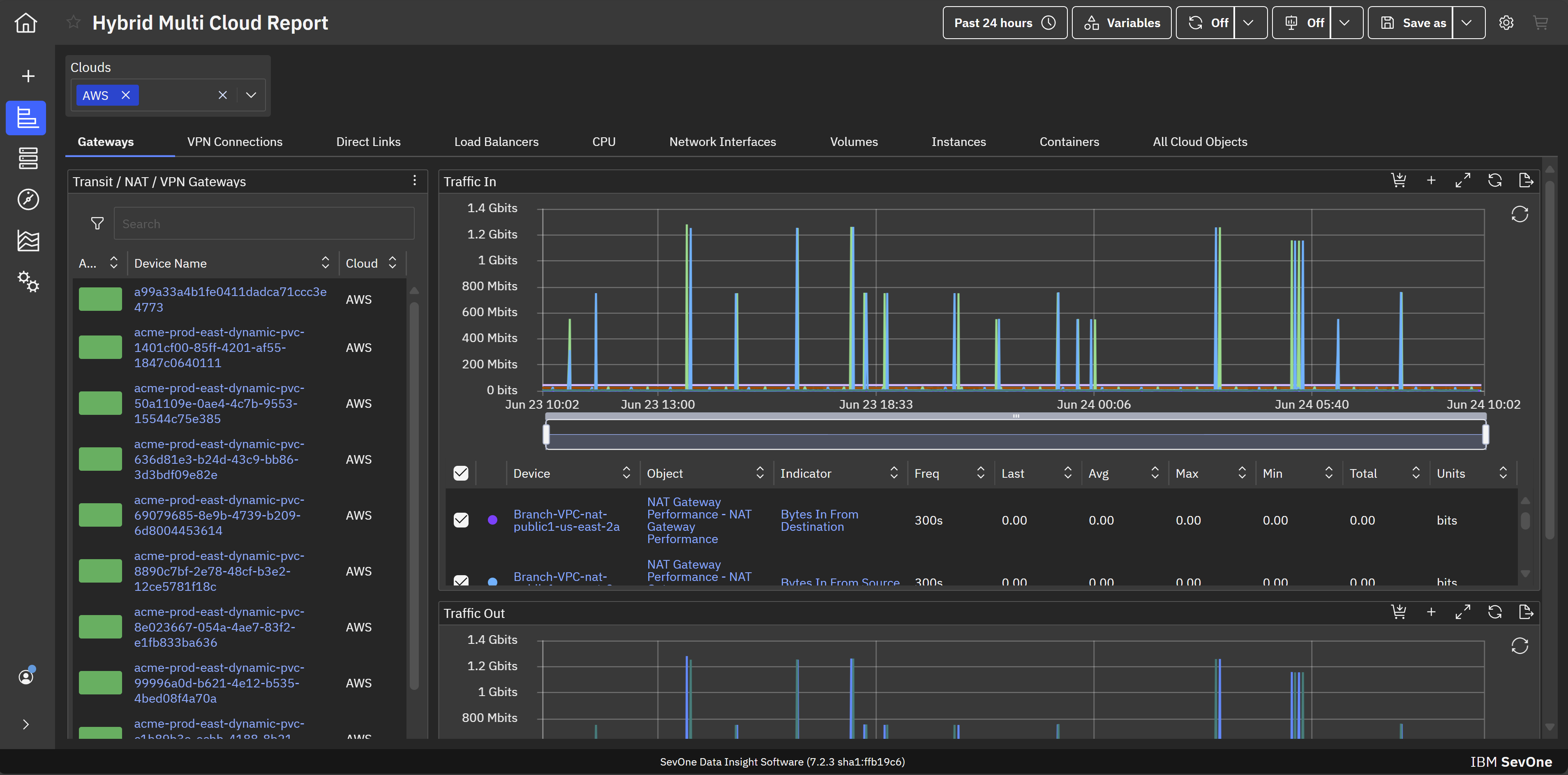
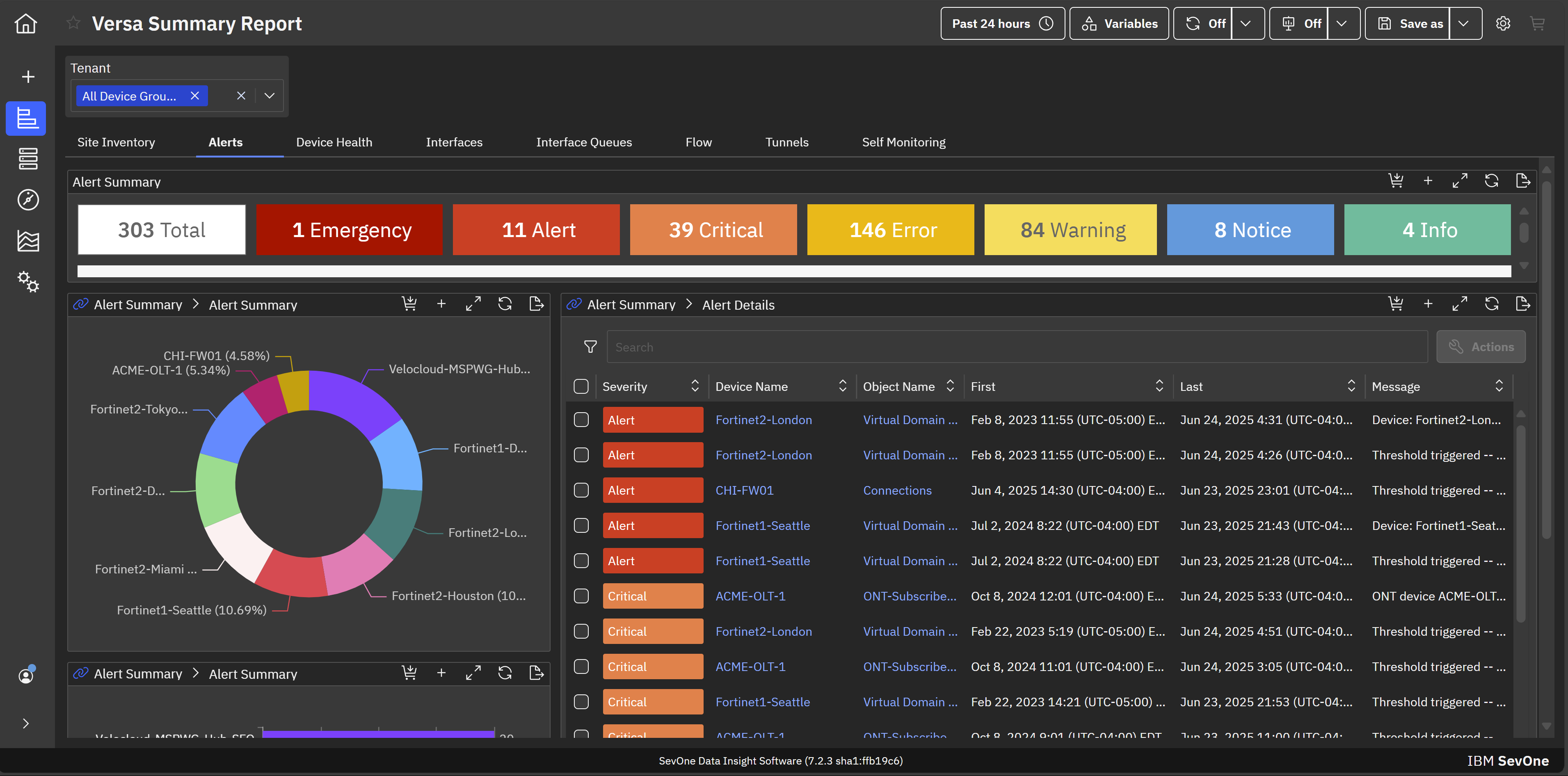
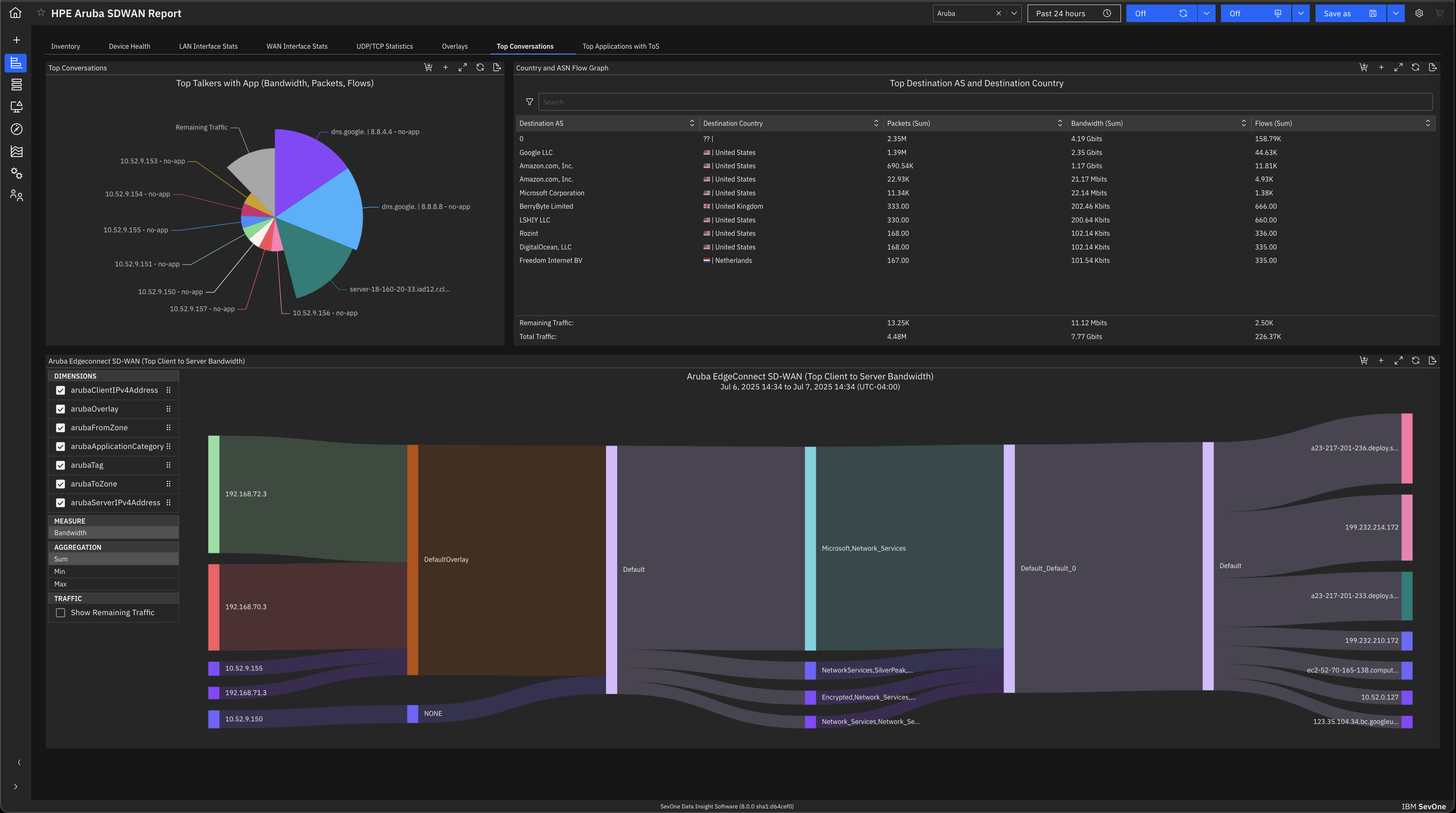
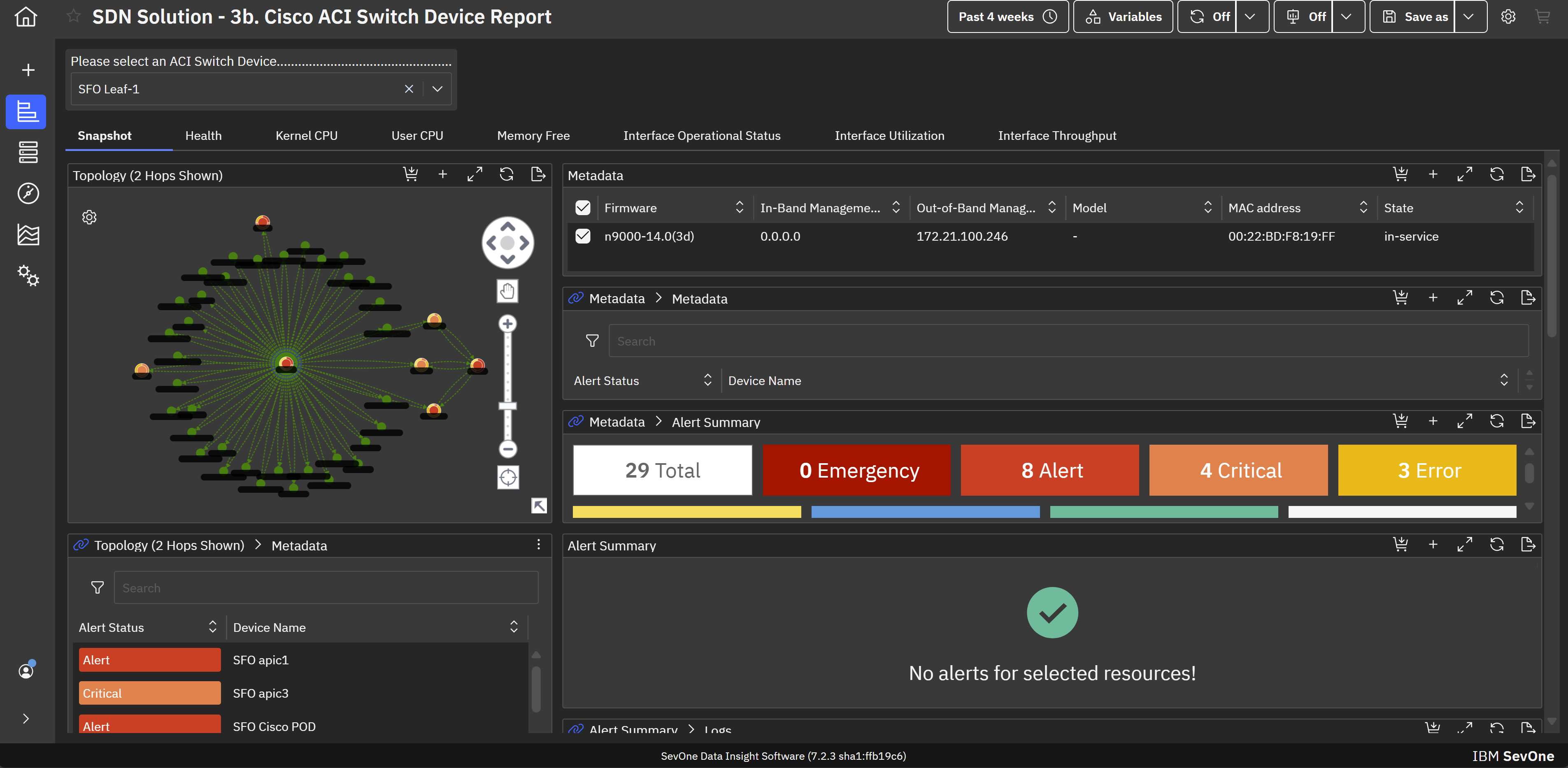
IBM SevOne’s app-centric, hybrid network observability empowers NetOps teams with ML-driven insights, enabling proactive issue prevention and resolution. With a single source of truth for network performance, it delivers visibility to optimize operations and support agility in complex, multi-cloud environments.
N/A
TruView
Score 8.0 out of 10
N/A
NETSCOUT TruView is a unified network monitoring and APM tool. TruView is deployed as hardware on-premises, and it can automate capacity planning and environment discovery and configuration.
N/A
Pricing
IBM SevOne
NETSCOUT TruView
Editions & Modules
No answers on this topic
No answers on this topic
Offerings
Pricing Offerings
IBM SevOne
TruView
Free Trial
No
No
Free/Freemium Version
No
No
Premium Consulting/Integration Services
Yes
No
Entry-level Setup Fee
No setup fee
No setup fee
Additional Details
IBM® SevOne® uses Managed Device (MD) and Managed Client Device (MCD) as pricing metrics. These can be mapped to managed devices for physical, virtualized and containerized functions in the managed environment.
—
More Pricing Information
Community Pulse
IBM SevOne
NETSCOUT TruView
Features
IBM SevOne
NETSCOUT TruView
Network Performance Monitoring
Comparison of Network Performance Monitoring features of Product A and Product B
IBM SevOne ensures deep performance and in depth monitoring and allows customization according to specific organisation or business needs. Availability of real-time alerts and unlimited customization. The software integrates freely with many third party applications and has reliable analytics and reporting systems. Ability of the software in automating routine network monitoring tasks which reduces operational costs. Software pricing is a major challenge towards smooth implementation of the software. It is expensive and not affordable to small businesses and organisations.
Netscout’s TruView monitoring system gives your IT department the perfect view of your network landscape. With the pulse hardware app, you can perform VoIP or HTTP network monitoring tests from specific remote locations and it will populate the analysis results into your console. This will give you perspective on how your sites are performing and detect any out of Service Level Agreement (SLA) performance even before users report it.
The app monitoring gives you the details to set different filters and do a quick identification of the root cause of the problem.
Remarkable ability to store details of performance to analyze baselining, run advance troubleshooting, error detection and catalog by trends.
The ability to sync with a device/interface whether is physical or virtual gives me the standpoint to set analysis upon network traffic across LAN or WAN and also get the insight of Cloud segments, setting the triggers to find out where the behavior changes to non-production traffic.
Documentation for the embedded help pages in NMS and more. In my opinion, these do not provide anything of any depth or maybe anything helpful at all. If anything it just seems to be a guide of what actually exists on the page. It is nicely searchable documentation though.
It is very surprising and disappointing for us to learn that it isn't until the latest version of IBM SevOne that bulk editing was introduced. I think this is such a basic and foundational feature that should have been a part of the original rollout. My team is still trying to configure the REST API.
It was disappointing for the webinar to start with a speaker who had a thick accent and simply read from slides. To me, it felt hopeless until the second speaker, who was engaging and easy to understand. It's as if this fact wasn't considered. I'm sure the first speaker lost a lot of viewers who didn't stick around to discover the 2nd speaker.
I asked three different questions during the webinar and none were answered.
Product features are sometimes overwhelming if the IT team is not used to this technology. For a small and mid-size company, the number of settings and work that is needed to implement the solution could be a long and exhausting process.
A "lite" version of Visual TruView could help a lot to small sized environments looking to develop the solution.
I would like to add some mitigation tools for simple/common problems that could be easily managed by a monitoring tool like Netscout TruView.
As mentioned before, our deployment success depended on their expertise. Recommendations and overall response from their support engineers was out of this world. We, as supporters ourselves, are very critical in regards to the response times and knowledge of support services representatives. Often they just want to resolve your ticket not caring about the result, or focus only on the performance review we could give them. That's a standard behavior in most overseas support centers. The TruView engineers and management cared about us, our needs, and how they delivered the help we needed.
IBM SevOne was selected instead of Datadog because it is perfect for large insurance networks and also connects trouble-free between the on-premise and cloud environments. Its alerts are in real-time, it offers comprehensive dashboards and it allows to gain a better grip on the network issues, thus helping to keep the downtime small and the operations well managed thanks to the good communication.
Visual TruView is a solid competitor with solutions such as SolarWinds NPM, Nagios, PRTG, or SolarWinds NTA. Why we chose TruView was because it goes straight to what we were looking for, no hidden modules or subscriptions to secondaries licensing terms, to get the results that we were expecting. TruView takes it to another level.
Tool consolidation, an amazing GUI that shows the most from the very beginning helping the IT Teams to set their own dashboards according to their needs.
When they meant one price tag, that's it! You won't get a headache after the purchase process is done.
Better be ready to set the scales your organization requires because if you miss something in the design you could get an application size that overrides your initial budget.