WebSphere Hybrid Edition from IBM is a collection of WebSphere application runtimes and modernization tools that provides support for on-premise and major public cloud deployments, in virtual machines, containers and Kubernetes. The user can choose any WebSphere edition and deploy Liberty and application modernization tools to help move to a cloud-native architecture, modernize existing applications and support an existing WebSphere estate.
$88.50
per month
Anypoint Platform
Score 7.8 out of 10
N/A
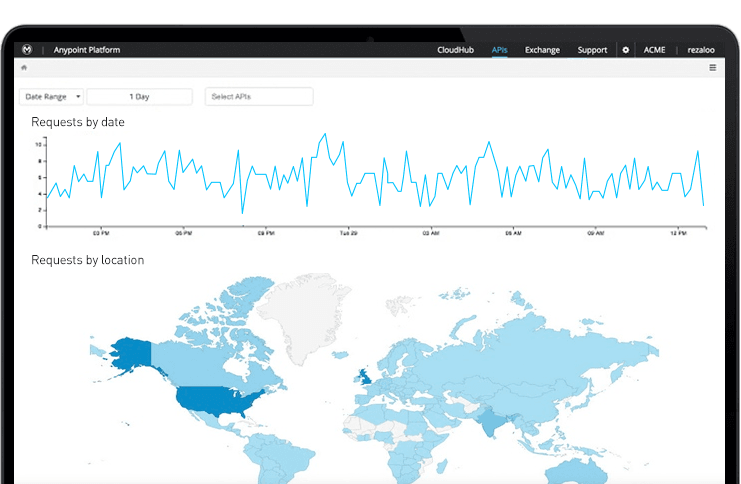
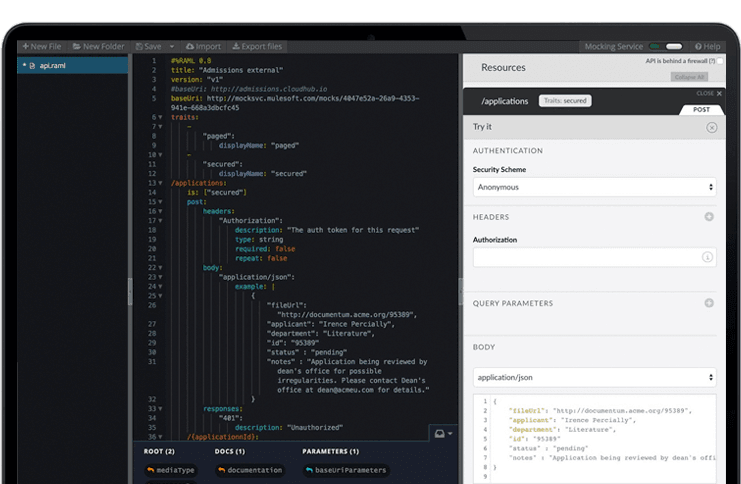
The Anypoint Platform developed by MuleSoft and acquired by Salesforce in early 2018 is designed to
connect apps, data, and devices anywhere, on-premises or in the cloud. This platform was built to
offer out-of-the-box connectors as well as tools that architects and developers can adopt quickly to
design, build and manage the entire lifecycle of their APIs, applications, and products.
N/A
SPS Commerce
Score 7.3 out of 10
N/A
SPS Commerce is a retail network, connecting trading partners around the globe to optimize supply chain operations for retail partners. SPS Commerce supports data-driven partnerships with cloud technology. Their retail cloud services platform features supplier onboarding, EDI compliance, ERP integration, product content management, and sales analytics.
N/A
Pricing
IBM WebSphere Hybrid Edition
MuleSoft Anypoint Platform
SPS Commerce
Editions & Modules
Application Server
$88.50
per month
No answers on this topic
No answers on this topic
Offerings
Pricing Offerings
IBM WebSphere Hybrid Edition
Anypoint Platform
SPS Commerce
Free Trial
No
Yes
No
Free/Freemium Version
No
Yes
No
Premium Consulting/Integration Services
No
No
No
Entry-level Setup Fee
No setup fee
No setup fee
No setup fee
Additional Details
—
—
—
More Pricing Information
Community Pulse
IBM WebSphere Hybrid Edition
MuleSoft Anypoint Platform
SPS Commerce
Features
IBM WebSphere Hybrid Edition
MuleSoft Anypoint Platform
SPS Commerce
Application Servers
Comparison of Application Servers features of Product A and Product B
IBM WebSphere Hybrid Edition
7.3
31 Ratings
9% below category average
MuleSoft Anypoint Platform
-
Ratings
SPS Commerce
-
Ratings
IDE support
5.626 Ratings
00 Ratings
00 Ratings
Security management
8.231 Ratings
00 Ratings
00 Ratings
Administration and management
7.731 Ratings
00 Ratings
00 Ratings
Application server performance
8.131 Ratings
00 Ratings
00 Ratings
Installation
7.530 Ratings
00 Ratings
00 Ratings
Open-source standards compliance
6.726 Ratings
00 Ratings
00 Ratings
Cloud Data Integration
Comparison of Cloud Data Integration features of Product A and Product B
IBM WebSphere Hybrid edition is well-suited for the development and deployment of large enterprise-level applications such as Electronic Health Records that are used in our organization. IBM WebSphere is appropriate for organizations that require strong security and compliance as it provides a high level of security and compliance features. This works well with organizations that are subject to strict regulatory requirements, such as hospitals.
MuleSoft Anypoint Platform is best tool in the market for developing APIs with complex structures communicating with various different types of applications including web applications as well as legacy applications. Also applications including database connectivity for fetching and updating data in the DB tables. I cant think of any scenario which MuleSoft Anypoint Platform could not be used for developing the integrations.
When you find yourself growing and finding success faster than you can keep up with, SPS Commerce will save your life and your reputation. The services they offer are easy to understand, they are available with suggestions and ideas for better ways, personalization is available to best suit your needs or the needs of your customers so that you can really shine and relieve the worries that come with growing pains. SPS also helps to keep information accurate with less human touching to cause errors.
Ease of use in terms of deployment, give simple interface to do simple stuff like Tomcat, JBoss or GlassFish.
Takes long time to start the server.
The Liferay wars need to be decorated and then deployed. Perhaps we could simplify that.
Some of the concepts are good for complexity that WAS can handle but could be simplified and better documented, like concepts of well and profile, context, etc.
A Liferay war file created using Liferay Developer studio runs fine in Tomcat, however that may not run in WAS 7.x because it needs to be decorated. I had one war for a Liferay portlet with a simple cron job, and had hard time running to WAS server. It was running on the latest free download done on my friends m/c. Other times I have seen that there are issues running a war file that runs on Tomcat but runs on WAS after lot of customization for WAS.
The corporations like this however, the product may need better vibrant community of users where issues can be discussed.
Has more features than what we really need so we're paying for more than we use. Sort of like paying for an Abrams tank when all we really need is a Toyota Corolla.
Not a value product, tends to be expensive.
Takes a while for developers to learn to use Mulesoft Anypoint.
We have quite a few people here who use this portal, and we have it set up to receive an email when an order is available to print. As of now, you can only add a few recipients to receive those emails; it limits you.
Invoicing is challenging at times as you have to remember to go in and invoice. If you forgot, it is hard to find the order to invoice, as it seems to disappear.
We still haven't figured out how to have some of the invoicing features auto-populate, so there isn't so much to fill out. I wish some of those features were easier to use, or find if you have them.
Mostly we will be renewing unless the strategic direction changes drastically or there are other complelling external circumstances. We've been on a multi year project to modernize our legacy applications and that effort will continue for the foreseeable future.
WebSphere Application Server is used across our organization. Most projects use this for Java products and applications. Being robust and scalable makes it even more usable. We love using WebSphere Application Server due to its configuration management ability made simple and vast across all java related parameters. It is dependent on the features and upgrades and IBM releases some great upgrades to WebSphere Application Server.
There’s a lot of learning curve at the beginning when it comes to building the code and everything. In terms of usability, I’d say once you get used to it, it’s fine — but it’s not very easy during the initial stages.
IBM was quick to respond when we had an issue with our specific infrastructure. We raised a PMR, which they picked up quickly and updated us about every step of the way. We had an appropriate fix for quite a business critical issue within a fortnight, which was impressive!
Anypoint Platform support is very responsive. There is also a huge knowledge base and an active online forum where answers to most questions can be found. When needed support engages the engineering group so adequate solutions or workarounds are always provided.
Phone support is generally very good and you can get a person on the phone within a few minutes. Their emailed customer support however is very poor and often goes several days or longer before receiving a response, if ever at all
Cleo Integration Clould has many bells and whistles; however, when we added more maps and trading partners, it really slowed down. We found that the Cleo support was very slow to respond and there was a language barrier. IBM Websphere had better customer support and its processing was much faster than Cleo Integration Cloud
Once we have moved all of our system integration APIs to the MuleSoft Anypoint Platform, we will need to communicate with a wide variety of external systems. All of our business and service logic is stored in the aforementioned core systems. Anypoint Platform (and all of our APIs) makes it easy to connect to various other platforms. In order to link to these many other systems, connectors and/or components are utilized, and they are simple to configure and integrate.
In my opinion, SPS Commerce is the bottom out of all three provided here. I think, essentially, if you are looking to be hands off and only oboard on setup and don't plan on growing your business and want to not understand anything about EDI and how it affects your company, SPS Commerce is a fine choice. Just if you want to do anything beyond that, I believe you are going to have the worst time.
Continuous uptime of the business applications we manage
It's now much simpler for me to build and deploy cloud-native applications.
Because it can offload for me management and maintenance of the application server to IBM I can focus on the development, deployment and testing of the applications which is more important
I enrolled in a product I ended up not using because the vendor that required it ended our working relationship and SPS refused to offer a refund. After I canceled it, they continued to charge our account for three more months of service.
The interface is simple and easy to understand and use, so it saved time when preparing shipments.