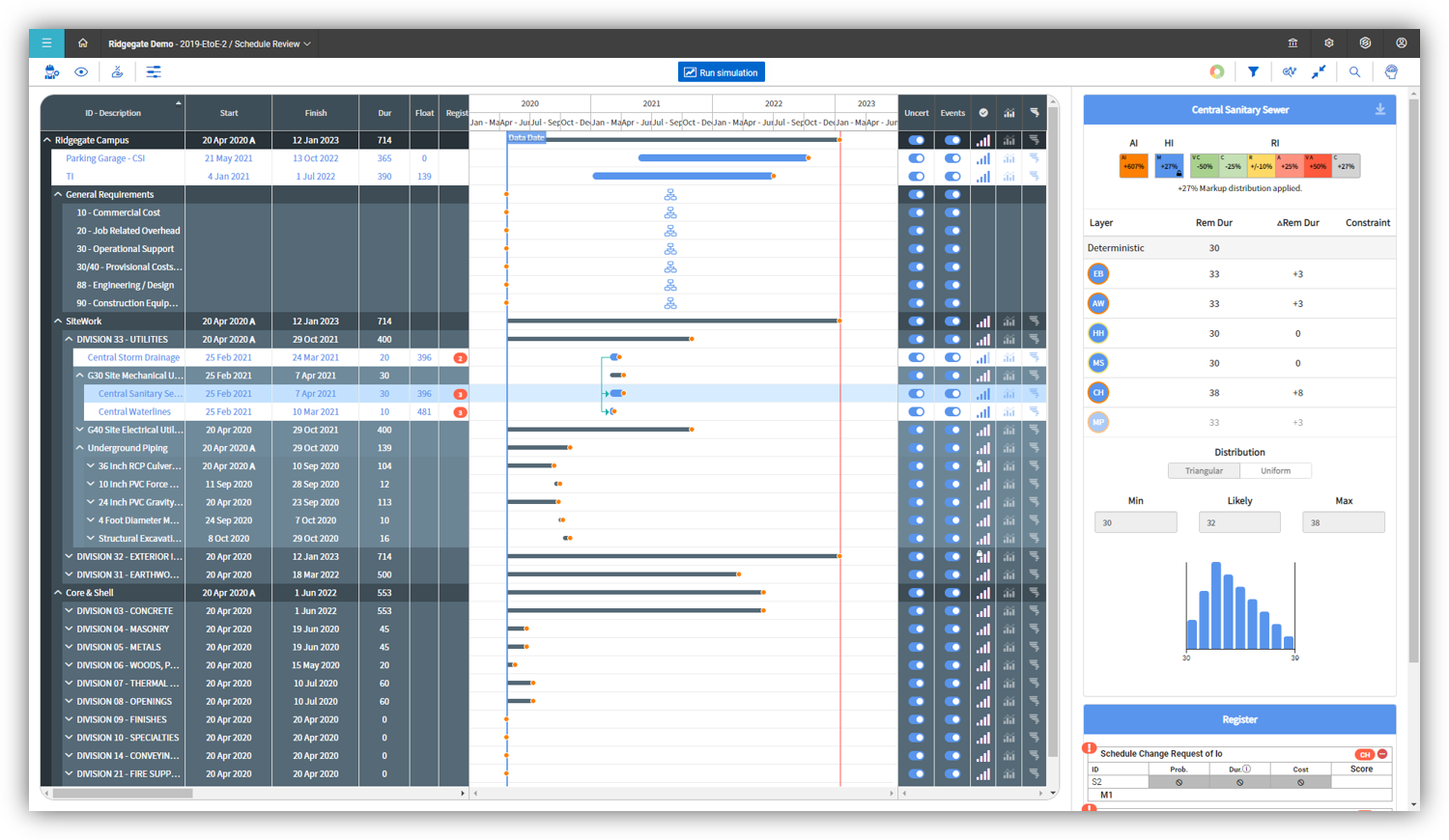
InEight's modular project controls software connects complex project data to improve visibility and delivery in capital construction.
N/A
Revit
Score8.9 out of 10
N/A
Autodesk’s Revit is a Building Information Modelling (BIM) tool. It enables architectural, MEP, structural, and engineering design, and provides analysis to support iterative workflows
$350
per month
Pricing
InEight
Revit
Editions & Modules
No answers on this topic
Monthly
$350
per month
1-Year
$2805
per year
3-Year
$8415
per 3 years
Offerings
Pricing Offerings
InEight
Revit
Free Trial
No
Yes
Free/Freemium Version
No
No
Premium Consulting/Integration Services
No
No
Entry-level Setup Fee
No setup fee
No setup fee
Additional Details
InEight offers a modular, integrated project controls platform. Because the InEight platform covers the entire construction lifecycle, customers purchase the software based on their specific needs – purchasing stand-alone products, a bundle of products, or the entire platform. As a result, the pricing will vary depending on the specific product, number of users and length of contract. Once InEight has identified the highest impact areas, they offer potential customers a custom proposal. The options they consider include:
Per user pricing: typically annual subscriptions.
Revenue-based: using a percentage of the customer’s revenue.
Project-based: software use dedicated to a specific project or program of work.
Pricing available for monthly, annual, or 3-year subscriptions. Longer subscriptions offer greater discounts.
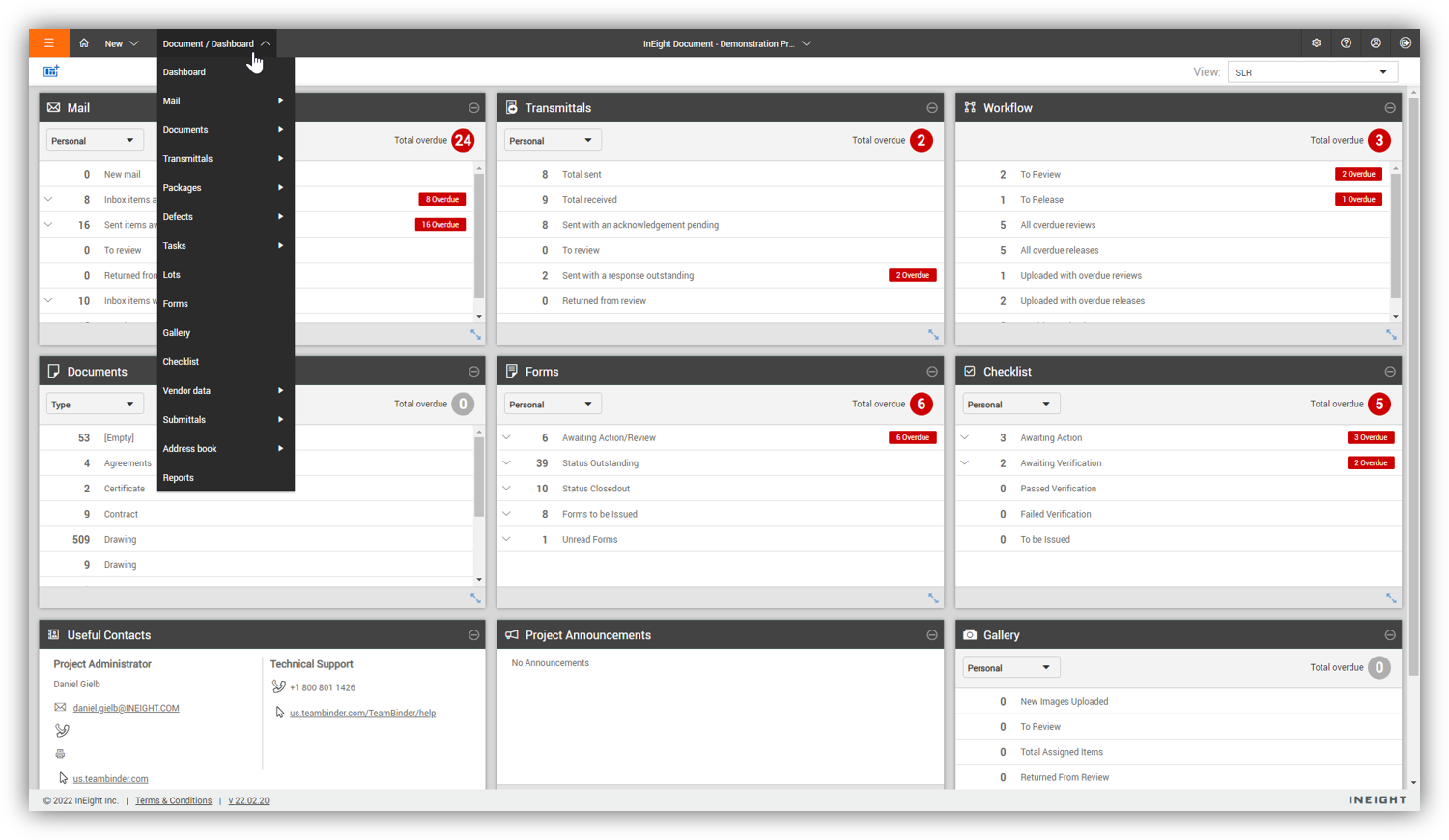
For engineering and constructions project, InEight Document is one of the best out there. It is flexible, end-user and admin friendly and has enough features for any size company. If you need to be able to track documentation and have good revision control, easy review workflows, and good transmittal workflows, InEight Document is great.
A de minimis incentive was given to thank the reviewer for their time. The incentive was not used to bias or drive a particular response, nor was the incentive contingent on a positive endorsement. More Info
Revit is very well suited to creating designs and construction documents for standard buildings. Buildings that need to utilize phasing in their construction process are also well suited to this software. Revit is not as well suited to buildings that have irregular shapes or components that need to be highly detailed.
A de minimis incentive was given to thank the reviewer for their time. The incentive was not used to bias or drive a particular response, nor was the incentive contingent on a positive endorsement. More Info
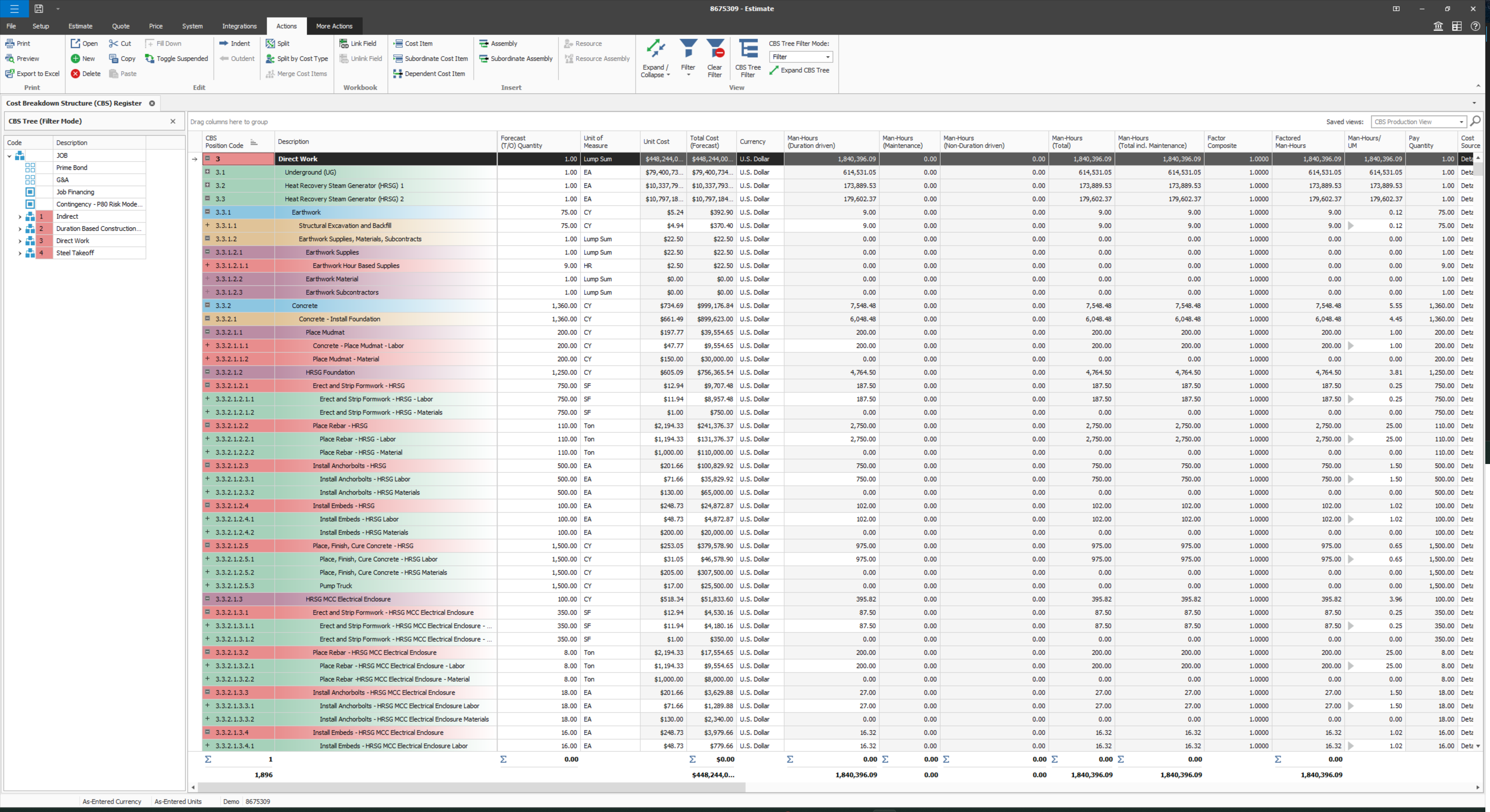
User defined views and descriptions for all screens.
Customizable ribbons to provide an efficient use of the software.
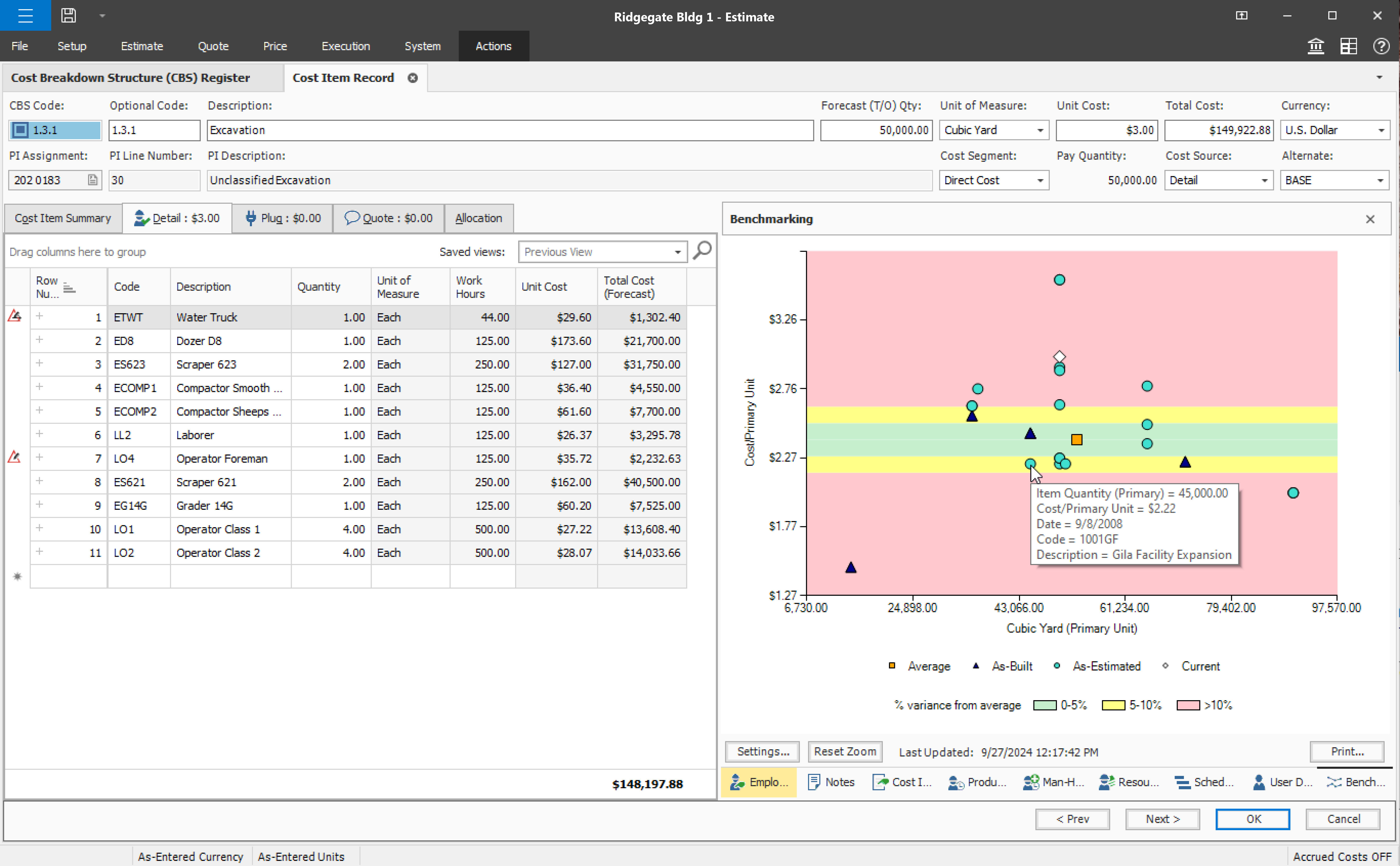
Multiple layers/dependents to allow for an extreme drill down of the work and the ability to roll up to a more useful level for upper management review.
You can bid the work as you would build it, in detail.
A de minimis incentive was given to thank the reviewer for their time. The incentive was not used to bias or drive a particular response, nor was the incentive contingent on a positive endorsement. More Info
Revit allows users to create real buildings and is very much rooted in making functional buildings.
Revit allows users to collaborate both within their own firms and with other types of firms as well. This is particularly useful for coordinating buildings between architecture and engineering firms.
Revit integrates fairly well with other programs such as AutoCAD and Sketchup. This allows us to bring in elements modeled in other programs into our revit models.
A de minimis incentive was given to thank the reviewer for their time. The incentive was not used to bias or drive a particular response, nor was the incentive contingent on a positive endorsement. More Info
Provide a simpler version (cliff notes) of the knowledge database
Offer versions of InEight for smaller companies, i.e. less than 20 emplyees, under $5M in revenue
When an estimate is complete, offer a dialog box to ask if the job was won, lost, or still in progress. We tend to leave most of our estimates in the bidding column. This is a user error, but the prompt would be helpful.
A de minimis incentive was given to thank the reviewer for their time. The incentive was not used to bias or drive a particular response, nor was the incentive contingent on a positive endorsement. More Info
Versioning - Revit is not backwards compatible. This creates issues if you are working with people who are using older versions as you cannot save to a previous version. I understand why this is and I do not see this ever changing, however, Its very annoying.
Autodesk - They are the 800 pound gorilla in the industry. The lack of competition inhibits development and it seems Autodesk has put more effort into its BIM 360 platform and Revit development has suffered because of it. I would like to see better competition so Autodesk would step up its game.
A de minimis incentive was given to thank the reviewer for their time. The incentive was not used to bias or drive a particular response, nor was the incentive contingent on a positive endorsement. More Info
Some features with InEight's TeamBinder are worthy of single use, however the review feature and subsequent revision and version numbering could be improved. We will be aiming to roll out the package to encompass our internal documentation in the near future and will be in a better position to judge the usability after that point in time.
A de minimis incentive was given to thank the reviewer for their time. The incentive was not used to bias or drive a particular response, nor was the incentive contingent on a positive endorsement. More Info
We will almost certainly be renewing all of our current seats of Revit and will likely be adding seats as we look to get more and more of our staff trained and using Revit. The software is starting to become the standard for our projects as we move forward as more and more of our clients are requesting or accepting use of it
A de minimis incentive was given to thank the reviewer for their time. The incentive was not used to bias or drive a particular response, nor was the incentive contingent on a positive endorsement. More Info
I would give it an 8 out of 10 because the software can be a bit cumbersome to new users. It also takes a long time to set up the library and input all of your companies needs so that the software will provide the level of service required to estimate projects. However, once the software is set up it is a powerful tool. We only use a portion of what the software is capable of delivering
A de minimis incentive was given to thank the reviewer for their time. The incentive was not used to bias or drive a particular response, nor was the incentive contingent on a positive endorsement. More Info
It is a professional environment, but far from easy and overly complex in many places. The system is often too deep in settings and overrides (see Visibility/Graphics in combination with linked files, filters, color overrides and view templates). I don't really like the dialog-in-dialog interface and its spartan looks. But it works well overall if you know what you are doing.
A de minimis incentive was given to thank the reviewer for their time. The incentive was not used to bias or drive a particular response, nor was the incentive contingent on a positive endorsement. More Info
A de minimis incentive was given to thank the reviewer for their time. The incentive was not used to bias or drive a particular response, nor was the incentive contingent on a positive endorsement. More Info
Revit seems to always be available when I need it. I have not experiences an outage. There are occasions where we need our internal IT department to trouble shoot a file on our Revit dedicated server and that sometimes causes a delay however that is not a software access issue
A de minimis incentive was given to thank the reviewer for their time. The incentive was not used to bias or drive a particular response, nor was the incentive contingent on a positive endorsement. More Info
A de minimis incentive was given to thank the reviewer for their time. The incentive was not used to bias or drive a particular response, nor was the incentive contingent on a positive endorsement. More Info
Revit is a fairly graphics heavy piece of software. It is powerful in its capabilities but as a result it takes a lot of the graphics card, the memory, etc. For all that it can do and the specs of my computer I find it pretty good from a performance standpoint
A de minimis incentive was given to thank the reviewer for their time. The incentive was not used to bias or drive a particular response, nor was the incentive contingent on a positive endorsement. More Info
Why do we call support? Always because some things got broken, right? And when it happens, the likelihood of us getting in troubles waiting the support to fix it, it's tremendously high, almost certain. Through my experience with InEight, I'm really concerned whenever I see an update message in the screen, we got really used to see errors in reports right after an update is released. You can see by my tickets, that some of my issues last too long, as client perspective. We had to send messages to our clients excusing us for the weekly report that is being shared due to internal issues, not once, not twice.
A de minimis incentive was given to thank the reviewer for their time. The incentive was not used to bias or drive a particular response, nor was the incentive contingent on a positive endorsement. More Info
Autodesk has always had a good support system in place. There is a massive user base for Revit, and there are thousands of forum threads and other discussions online about any and every problem that you could ever run into. For being such a large program with so many different options, there aren't many roadblocks or pitfalls that users can fall into.
A de minimis incentive was given to thank the reviewer for their time. The incentive was not used to bias or drive a particular response, nor was the incentive contingent on a positive endorsement. More Info
The support we had was phenomenal and very detail oriented, which was a necessity during the implementation phase and level of complexity of the projects we had ongoing at that time.
A de minimis incentive was given to thank the reviewer for their time. The incentive was not used to bias or drive a particular response, nor was the incentive contingent on a positive endorsement. More Info
The training was Revit Essentials and it was very beneficial. I would say that it is best to get the training right before you know you will be using Revit as learning the basis then applying what you learned immediately is the most effective and best value for your money.
A de minimis incentive was given to thank the reviewer for their time. The incentive was not used to bias or drive a particular response, nor was the incentive contingent on a positive endorsement. More Info
A de minimis incentive was given to thank the reviewer for their time. The incentive was not used to bias or drive a particular response, nor was the incentive contingent on a positive endorsement. More Info
The online training is hit or miss. I feel that its better to be live to be able to pace and ask questions to a live person as you are learning hwo to do things. Its not natural to learn Revit especially if you know AutoCAD so my suggestion is the live training
A de minimis incentive was given to thank the reviewer for their time. The incentive was not used to bias or drive a particular response, nor was the incentive contingent on a positive endorsement. More Info
Since the original inception, I have been required to overhaul the system so that it is more user friendly and combines both aspects of our business, documentation and drawings. Being able to control revision and version numbering has been a key struggle that only staff training has been able to mark this as complete.
A de minimis incentive was given to thank the reviewer for their time. The incentive was not used to bias or drive a particular response, nor was the incentive contingent on a positive endorsement. More Info
Implementing Revit as your main drafting software (i.e. moving to BIM from CAD) may be a tough decision if you have learned drafting. It is a different way to approach and think about developing a project. However, if you are able to adapt to a new way of thinking and get used to it by working through a few projects than it is as efficient as CAD in most areas in general and will also be both better/worse in some areas
A de minimis incentive was given to thank the reviewer for their time. The incentive was not used to bias or drive a particular response, nor was the incentive contingent on a positive endorsement. More Info
Both Sage Estimating and InEight programs have their unique capabilities. Sage Estimating is much more configured for use in detailed construction, the majority of which are for non-nuclear projects. InEight has so many more capabilities, especially in creating our own libraries of data, which are vital in creating an estimate. The ability to access historical data (pricing), is an outstanding feature of the program.
A de minimis incentive was given to thank the reviewer for their time. The incentive was not used to bias or drive a particular response, nor was the incentive contingent on a positive endorsement. More Info
Revit is used primarily for creation of contract documents and documents that need to be used to build in the field. Sketch Up is great for a quick concept sketch, but lacks the details that Revit has which are needed to construct. AutoCAD is a great tool for details as well, but does not have as many building capabilities as Revit.
A de minimis incentive was given to thank the reviewer for their time. The incentive was not used to bias or drive a particular response, nor was the incentive contingent on a positive endorsement. More Info
InEight is a good system that has scaled nicely as the company has grown. the tools are still readily available and applicable for our larger scope of work. It has kept up with the growth of the company very nicely
A de minimis incentive was given to thank the reviewer for their time. The incentive was not used to bias or drive a particular response, nor was the incentive contingent on a positive endorsement. More Info
While I am not directly involved with the deployment of Revit, it seems that our internal IT department has appreciated the ability to increase or decrease the number of seats. I have never had an issue with the deployment if and when needed, especially regarding the availability of a set
A de minimis incentive was given to thank the reviewer for their time. The incentive was not used to bias or drive a particular response, nor was the incentive contingent on a positive endorsement. More Info
A de minimis incentive was given to thank the reviewer for their time. The incentive was not used to bias or drive a particular response, nor was the incentive contingent on a positive endorsement. More Info
Though implementation of Revit is usually front heavy which means a lot of effort is put in at the front end of the project, the return of investment towards the remainder of the project is really good. All the effort in decisions made at the beginning of the project pays off with Revit incorporating all the building information in the model so the team can glean from this throughout the life of the project is a major plus.
A major negative is the many false assumptions that comes with using Revit on a project. Just like any other computer application, Revit is only a tool. It's only as good as the operators who implement this tool. Revit is not a cureall for fixing all the problems that still can come out throughout the life of a design & construction project.
A major positive for our office involving the use of Revit is the ability for our staff from multiple offices to work on the same project central file. We don't need to maintain an expensive server. With the addition of Collaboration for Revit the entire project can be stored in the cloud for our staff to access and complete the project faster than ever.
A de minimis incentive was given to thank the reviewer for their time. The incentive was not used to bias or drive a particular response, nor was the incentive contingent on a positive endorsement. More Info