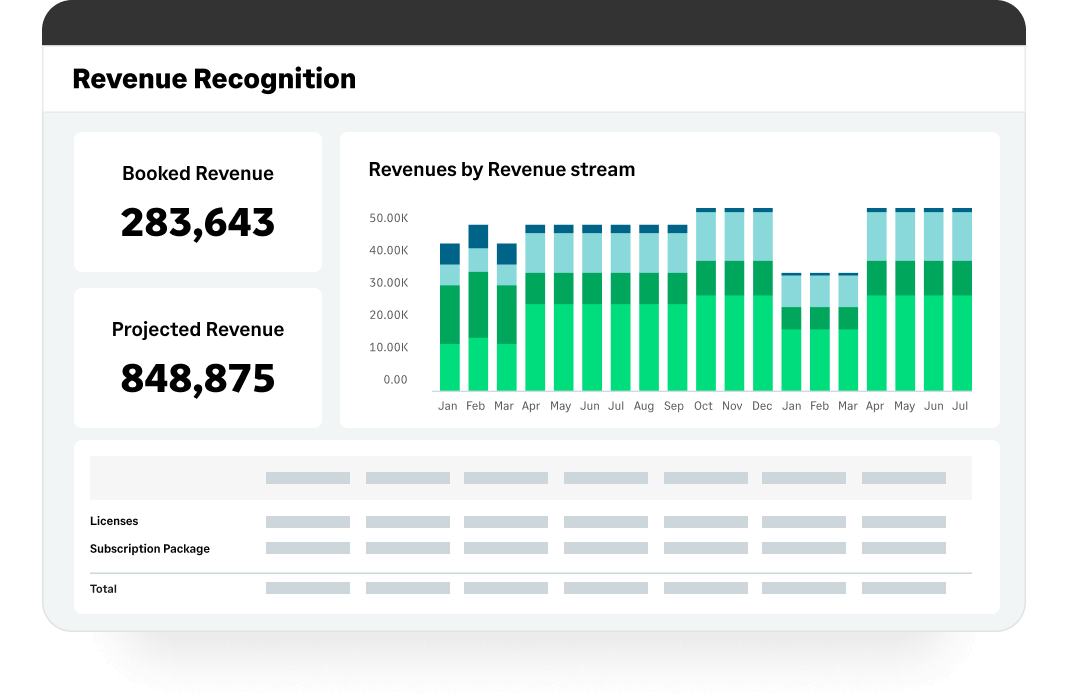
Sage Intacct is a cloud ERP system targeted at high-growth small and medium-sized businesses. Intacct includes applications for core financials and accounting, purchasing, order management, and financial reporting and business intelligence. It also integrates with 3rd party software like Salesforce.
N/A
JMP
Score9.8 out of 10
N/A
JMP® is statistical analysis software with capabilities that span from data access to advanced statistical techniques, with click of a button sharing. The software is interactive and visual, and statistically deep enough to allow users to see and explore data.
It depends on the scale and nature of the organisation, but for a business like ours, i.e. a medium sized business with several entities operating in more than one location with different currencies, I think it is a very good fit. It is relatively easy to get to grips with and provides a good level of functionality.
A de minimis incentive was given to thank the reviewer for their time. The incentive was not used to bias or drive a particular response, nor was the incentive contingent on a positive endorsement. More Info
It is perfectly suited for statistical analyses, but I would not recommend JMP for users who do not have a statistical background. As previously stated, the learning curve is exceptionally steep, and I think that it would prove to be too steep for those without statistical background/knowledge
Excellent roll-up reporting of various categories of expenses across multiple depts. Data is not siloed when we want to find all revenue sources across business entities, for example, or even down to details such as what is spent on "discretionary" expense elements.
Coding nomenclature is flexible and makes sense across business areas. Again, this allows for both more effective capture of data and with reporting slices and iterations.
Sage Intacct's open architecture (availability of APIs and already existing hooks) has made integration with other system tool-sets easier than we would ever have thought.
A de minimis incentive was given to thank the reviewer for their time. The incentive was not used to bias or drive a particular response, nor was the incentive contingent on a positive endorsement. TR verified that a representative sample of customers was invited. More Info
JMP is designed from the ground-up to be a tool for analysts who do not have PhDs in Statistics without in anyway "dumbing down" the level of statistical analysis applied. In fact, JMP operationalizes the most advanced statistical methods. JMP's design is centred on the JMP data table and dialog boxes. It is data focused not jargon-focussed. So, unlike other software where you must choose the correct statistical method (eg. contingency, ANOVA, linear regression, etc.), with JMP you simply assign the columns in a dialog into roles in the analysis and it chooses the correct statistical method. It's a small thing but it reflects the thinking of the developers: analysts know their data and should only have to think about their data. Analyses should flow from there.
JMP makes most things interactive and visual. This makes analyses dynamic and engaging and obviates the complete dependence on understanding p-values and other statistical concepts(though they are all there) that are often found to be foreign or intimidating.
One of the best examples of this is JMP's profiler. Rather than looking at static figures in a spreadsheet, or a series of formulas, JMP profiles the formulas interactively. You can monitor the effect of changing factors (Xs) and see how they interact with other factors and the responses. You can also specify desirability (maximize, maximize, match-target) and their relative importances to find factor settings that are optimal. I have spent many lengthy meetings working with the profiler to review design and process options with never a dull moment.
The design of experiments (DOE) platform is simply outstanding and, in fact, the principal developers of it have won several awards. Over the last 15 years, using methods broadly known as an "exchange algorithm," JMP can create designs that are far more flexible than conventional designs. This means, for example, that you can create a design with just the interactions that are of interest; you can selectively choose those interactions that are not of interest and drop collecting their associated combinations.
Classical designs are rigid. For example, a Box-Benhken or other response surface design can have only continuous factors. What if you want to investigate these continuous factors along with other categorical factors such as different categorical variables such as materials or different furnace designs and look at the interaction among all factors? This common scenario cannot be handled with conventional designs but are easily accommodated with JMP's Custom DOE platform.
The whole point of DOE is to be able to look at multiple effects comprehensively but determine each one's influence in near or complete isolation. The custom design platform, because it produces uniques designs, provides the means to evaluate just how isolated the effects are. This can be done before collecting data because this important property of the DOE is a function of the design, not the data. By evaluating these graphical reports of the quality of the design, the analyst can make adjustments, adding or reducing runs, to optimize cost, effort and expected learnings.
Over the last number of releases of JMP, which appear about every 18 months now, they have skipped the dialog boxes to direct, drag-and-drop analyses for building graphs and tables as well as Statistical Process Control Charts. Interactivity such as this allows analysts to "be in the moment." As with all aspects of JMP, they are thinking of their subject matter without the cumbersomeness associated with having to think about statistical methods. It's rather like a CEO thinking about growing the business without having to think about every nuance and intricacy of accounting. The statistical thinking is burned into the design of JMP.
Without data analysis is not possible. Getting data into a situation where it can be analyzed can be a major hassle. JMP can pull data from a variety of sources including Excel spreadsheets, CSV, direct data feeds and databases via ODBC. Once the data is in JMP it has all the expected data manipulation capabilities to form it for analysis.
Back in 2000 JMP added a scripting language (JMP Scripting Language or JSL for short) to JMP. With JSL you can automate routine analyses without any coding, you can add specific analyses that JMP does not do out of the box and you can create entire analytical systems and workflows. We have done all three. For example, one consumer products company we are working with now has a need for a variant of a popular non-parametric analysis that they have employed for years. This method will be found in one of the menus and appear as if it were part of JMP to begin with. As for large systems, we have written some that are tens of thousands of lines that take the form of virtual labs and process control systems among others.
JSL applications can be bundled and distributed as JMP Add-ins which make it really easy for users to add to their JMP installation. All they need to do is double-click on the add-in file and it's installed. Pharmaceutical companies and others who are regulated or simply want to control the JMP environment can lock-down JMP's installation and prevent users from adding or changing functionality. Here, add-ins can be distributed from a central location that is authorized and protected to users world-wide.
JMP's technical support is second to none. They take questions by phone and email. I usually send email knowing that I'll get an informed response within 24 hours and if they cannot resolve a problem they proactively keep you informed about what is being done to resolve the issue or answer your question.
A de minimis incentive was given to thank the reviewer for their time. The incentive was not used to bias or drive a particular response, nor was the incentive contingent on a positive endorsement. TR verified that a representative sample of customers was invited. More Info
In general JMP is much better fit for a general "data mining" type application. If you want a specific statistics based toolbox, (meaning you just want to run some predetermined test, like testing for a different proportion) then JMP works, but is not the best. JMP is much more suited to taking a data set and starting from "square 1" and exploring it through a range of analytics.
The CPK (process capability) module output is shockingly poor in JMP. This sticks out because, while as a rule everything in JMP is very visual and presentable, the CPK graph is a single-line-on-grey-background drawing. It is not intuitive, and really doesn't tell the story. (This is in contrast with a capability graph in Minitab, which is intuitive and tells a story right off.) This is also the case with the "guage study" output, used for mulivary analysis in a Six Sigma project. It is not intuitive and you need to do a lot of tweaking to make the graph tell you the story right off. I have given this feedback to JMP, and it is possible that it will be addressed in future versions.
I've never heard of JMP allowing floating licenses in a company. This will ALWAYS be a huge sticking point for small to middle size companies, that don't have teams people dedicated to analytics all day. If every person that would do problem solving needs his/her own seat, the cost can be prohibitive. (It gets cheaper by the seat as you add licenses, but for a small company that might get no more than 5 users, it is still a hard sell.)
Sage Intacct is continuously evolving and increasing it's functionalities. I am excited to attend conferences to learn what is in the roadmap for future releases. Additionally, using Sage Intacct allows me grow as a professional, I am really enjoy the knowledge that I have within the product to be able to share my experiences.
A de minimis incentive was given to thank the reviewer for their time. The incentive was not used to bias or drive a particular response, nor was the incentive contingent on a positive endorsement. More Info
JMP has been good at releasing updates and adding new features and their support is good. Analytics is quick and you don't need scripting/programming experience. It has been used organization wide, and works well in that respect. Open source means that there are concerns regarding timely support. Cheap licensing and easy to maintain.
The ease of use as a seasoned user is wonderful; however, new users struggle to adapt to the program efficiently. Better training videos--all in one location--would be beneficial. The use of a "sandbox" environment is a great tool for new employees or for the fiscal department to test certain journal entries or other transactions to verify accuracy of data.
A de minimis incentive was given to thank the reviewer for their time. The incentive was not used to bias or drive a particular response, nor was the incentive contingent on a positive endorsement. TR verified that a representative sample of customers was invited. More Info
The GUI interface makes it easier to generate plots and find statistics without having to write code. The JSL scripting is a bit of a steep learning curve but does give you more ability to customize your analysis. Overall, I would recommend JMP as a good product for overall usability.
A de minimis incentive was given to thank the reviewer for their time. The incentive was not used to bias or drive a particular response, nor was the incentive contingent on a positive endorsement. More Info
There has only been one occurrence where Sage Intacct was not available to me, however I had already been working a number of hours trying to get a project completed. It honestly allowed me to step back and take a much needed break.
A de minimis incentive was given to thank the reviewer for their time. The incentive was not used to bias or drive a particular response, nor was the incentive contingent on a positive endorsement. More Info
As fas as integration is concerned I don't feel this slows Sage Intacct down at all. However, sometimes I do feel it takes some larger reports more time to load due to all the detail. As well as, I "move very fast" in my motions so sometimes I double click on fuctions too quickly and the system seems to think that I have a duplicate request.
A de minimis incentive was given to thank the reviewer for their time. The incentive was not used to bias or drive a particular response, nor was the incentive contingent on a positive endorsement. More Info
Only a few times have we had to reach out to support, and every time we did, we received a relatively quick response and a solution was found fairly quickly. Only once was there an issue that took longer than a week to resolve, but it still did eventually get solved.
A de minimis incentive was given to thank the reviewer for their time. The incentive was not used to bias or drive a particular response, nor was the incentive contingent on a positive endorsement. TR verified that a representative sample of customers was invited. More Info
Support is great and give ease of contact, rapid response, and willingness to 'stick to the task' until resolution or acknowledgement that the problem would have to be resolved in a future build. Basically, one gets the very real sense that another human being is sensitive to your problems - great or small.
A de minimis incentive was given to thank the reviewer for their time. The incentive was not used to bias or drive a particular response, nor was the incentive contingent on a positive endorsement. More Info
I have taken in person training classes at several of the annual Sage Intacct user conferences. It is very interactive and the trainers are very easy to follow and understand. They are great at getting everyone in the class involved. They also make sure everyone has learned to task before moving to a new one.
A de minimis incentive was given to thank the reviewer for their time. The incentive was not used to bias or drive a particular response, nor was the incentive contingent on a positive endorsement. More Info
The free training is very minimal. For what we pay for the service, I would like more training. We end up training new users in-house because the provided free training is not nearly comprehensive enough. That being said, the training provided, for the material covered, was adequate and relevant for the given topics.
A de minimis incentive was given to thank the reviewer for their time. The incentive was not used to bias or drive a particular response, nor was the incentive contingent on a positive endorsement. TR verified that a representative sample of customers was invited. More Info
I would not use a thrid party administrator to implement your system, especially if you are going to be modifying the system at all. Use Intacct implementors as they will be able to better support you on any issues that come up after you go live.
A de minimis incentive was given to thank the reviewer for their time. The incentive was not used to bias or drive a particular response, nor was the incentive contingent on a positive endorsement. More Info
We evaluated Sage Intacct alongside many other options, but Blackbaud and NetSuite were the frontrunners. They all were cloud-based and capable systems, but for our team, Sage Intacct was the clearer choice for a few reasons. First, usability. Our team has varying levels of accounting experience, and Sage felt more intuitive across those different levels. The others could be powerful, but it also felt like it required more technical depth to navigate day-to-day, which was a concern for a small team. Second, functionality out of the box. Sage Intacct had more of what we needed built in without requiring a significant number of add-ons, which kept the solution simpler and the pricing more predictable. Third, nonprofit fit. Sage Intacct is purpose-built for organizations like ours, and that showed in the functionality available and the system's overall design. And finally, our implementation partner, RSM, was well-versed in Sage Intacct and gave us confidence that we would have the right support behind us. That partnership was part of the overall value of choosing Sage.
A de minimis incentive was given to thank the reviewer for their time. The incentive was not used to bias or drive a particular response, nor was the incentive contingent on a positive endorsement. More Info
MS Excel with AnalysisToolPak provides a home-grown solution, but requires a high degree of upkeep and is difficult to hand off. Minitab is the closes competitor, but JMP is better suited to the production environment, roughly equivalent in price, and has superior support.
A de minimis incentive was given to thank the reviewer for their time. The incentive was not used to bias or drive a particular response, nor was the incentive contingent on a positive endorsement. More Info
A de minimis incentive was given to thank the reviewer for their time. The incentive was not used to bias or drive a particular response, nor was the incentive contingent on a positive endorsement. More Info
Positive - It runs better than our old software when we all work together, rather than having to sign off on each other and deal with syncing issues.
Negative - It's not as easy to go back to fix an amount, a date, etc. Sometimes, a very small mistake needs to be corrected by voiding and redoing the entire transaction.
We can successfully sync other software we use with Intacct! It reduces workload when things are automated.
A de minimis incentive was given to thank the reviewer for their time. The incentive was not used to bias or drive a particular response, nor was the incentive contingent on a positive endorsement. TR verified that a representative sample of customers was invited. More Info
ROI: Even if the cost can be high, the insights you get out of the tool would definitely be much more valuable than the actual cost of the software. In my case, most of the results of your analysis were shown to the client, who was blown away, making the money spent well worth for us.
Potential negative: If you are not sure your team will use it, there's a chance you will just waste money. Sometimes the IT department (usually) tries to deploy a better tool for the entire organization but they keep using the old tool they are used too (most likely MS Excel).
A de minimis incentive was given to thank the reviewer for their time. The incentive was not used to bias or drive a particular response, nor was the incentive contingent on a positive endorsement. More Info