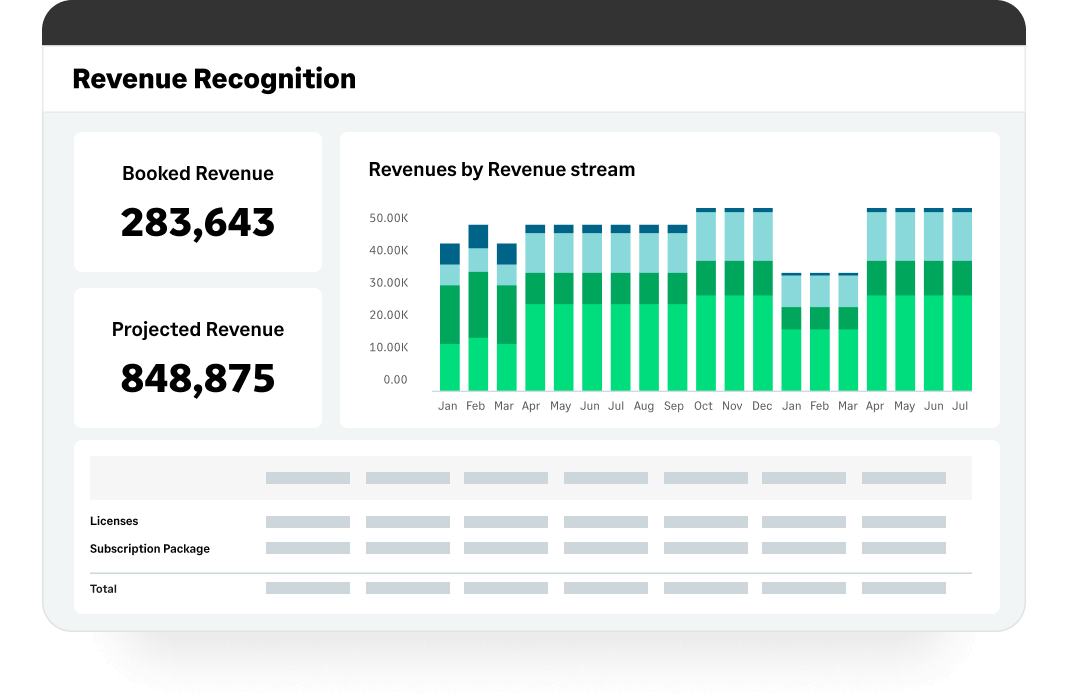
Sage Intacct is a cloud ERP system targeted at high-growth small and medium-sized businesses. Intacct includes applications for core financials and accounting, purchasing, order management, and financial reporting and business intelligence. It also integrates with 3rd party software like Salesforce.
N/A
.NET
Score 8.5 out of 10
N/A
Microsoft's .Net is an open source, freeware application infrastructure.
Sage has been ideal for our organizations to scale while maintaining functionality. Importing has made growth and acquisitions within our company easy to onboard additional entities from other platforms. The automation features are high quality and necessary for high transaction frequency companies. The reporting is great for overall reviews of business however custom reports can be difficult to create for specific needs. A high amount of training and developer support is needed to get started, however once fully onboarded the workflows and automations do most of the work allowing you to take time to learn the intricacies
.NET is well suited for any general purpose solution to a business problem, though if we are talking strictly the framework version - you have to be more or less tied to Microsoft Windows to run it. If this isn't a problem, then it will be able to address and solve any programming project you have.
Custom, real-time financial reporting. I am able to streamline my reporting to pull in various account groups and calculations which save me time from having to do it in Excel.
Out of the box standard reports for clients who don't require as custom of reporting or even as a great starting point to build out reports.
Integrations with other platforms, such as Airbase, various banks, Rippling, etc.
The dashboard module is extremely helpful in my monthly review of various entities.
.NET is heavily Microsoft Windows oriented, and while .NET core tried to resolve that with MacOS and Linux support, .NET Core is still waiting for wider adoption.
While free for small projects, additional features for big projects can be a little expensive.
Can be resource-heavy upon deployment. We continuously have our more senior staff optimize the code of our junior developers for performance. Other languages are a little bit more forgiving in comparison.
Sage Intacct is continuously evolving and increasing it's functionalities. I am excited to attend conferences to learn what is in the roadmap for future releases. Additionally, using Sage Intacct allows me grow as a professional, I am really enjoy the knowledge that I have within the product to be able to share my experiences.
The ease of use as a seasoned user is wonderful; however, new users struggle to adapt to the program efficiently. Better training videos--all in one location--would be beneficial. The use of a "sandbox" environment is a great tool for new employees or for the fiscal department to test certain journal entries or other transactions to verify accuracy of data.
The full .NET Framework is an amazing thing and is very robust. We have used it to create console apps, Windows apps, and online apps. When coupled with Visual Studio, development, testing, building, and deploying our applications has become 100 times easier as compared to doing those things manually before. The automation of this process has helped us push out changes to our applications faster to adapt to the ever-changing business requirements.
There has only been one occurrence where Sage Intacct was not available to me, however I had already been working a number of hours trying to get a project completed. It honestly allowed me to step back and take a much needed break.
As fas as integration is concerned I don't feel this slows Sage Intacct down at all. However, sometimes I do feel it takes some larger reports more time to load due to all the detail. As well as, I "move very fast" in my motions so sometimes I double click on fuctions too quickly and the system seems to think that I have a duplicate request.
Only a few times have we had to reach out to support, and every time we did, we received a relatively quick response and a solution was found fairly quickly. Only once was there an issue that took longer than a week to resolve, but it still did eventually get solved.
You don't often need to reach out to Microsoft for .NET support. If you do, there are forums and websites that have active Microsoft support folks where you can provide feedback or get help. Microsoft support in general is quite good as well, but not cheap. The best support is from the community like StackOverflow.
I have taken in person training classes at several of the annual Sage Intacct user conferences. It is very interactive and the trainers are very easy to follow and understand. They are great at getting everyone in the class involved. They also make sure everyone has learned to task before moving to a new one.
The free training is very minimal. For what we pay for the service, I would like more training. We end up training new users in-house because the provided free training is not nearly comprehensive enough. That being said, the training provided, for the material covered, was adequate and relevant for the given topics.
I would not use a thrid party administrator to implement your system, especially if you are going to be modifying the system at all. Use Intacct implementors as they will be able to better support you on any issues that come up after you go live.
Sage Intacct has most of the best features but doesn't have things integrated that I don't need/use. It's very module based so you can add/remove modules as you need to. It's very scalable as well so as I add entities, there's not an incremental software cost like there would be with QuickBooks and it's less expensive than Oracle.
The .NET platform has a much longer and broader history than Laravel, so we chose to go with it as the support will be far superior. Additionally, Laravel is tied to PHP, while you can use multiple different languages in .NET. The additional flexibility that .NET provides in the range of types of applications you can build with it sealed the deal.
Positive - It runs better than our old software when we all work together, rather than having to sign off on each other and deal with syncing issues.
Negative - It's not as easy to go back to fix an amount, a date, etc. Sometimes, a very small mistake needs to be corrected by voiding and redoing the entire transaction.
We can successfully sync other software we use with Intacct! It reduces workload when things are automated.
There are few factors we needed for our custom development. Below are each of them. We were able to get a satisfactory outcome for each of these factors which made .NET platform a very good choice in developing enterprise applications.
Reusability of codes- Microsoft has given many re-usable codes and components in the framework to help developers do their job effortlessly. With the help of default features, developers can create end-to-end solutions and make the business operations more efficient. As codes and components are reusable, .NET reduces development time and if applications take less time to develop, they cost cheaper and you get faster return on investment.
Easy to maintain- Development cost is one time, but maintenance cost is incurring. .NET apps are easily maintainable, thanks to the configuration settings that can be modified without any need to rewrite the code.
Deployment is hassle free- Deploying software is always challenging and the most common problem developers face in this process is the existence of multiple DLLs. It’s hard to make sure that all DLLs will co-exist in the same machine. .NET framework solves this problem by allowing different versions of the same DLL to exist side-by-side on the same machine.
Security- .NET is one of the most secure web and application development frameworks available in the market. As it’s made by Microsoft, you can be absolutely sure about the security measurements. Hackers can never steal valuable data from your website or apps.
Cross platform friendly- What if you had developed an app for desktop and laptop computers and now after seeing the growth of mobile apps in the market, you want it in mobile version as well? You can easily develop an app that runs on the desktop and PDA without any issue. As you can re-use the codes and utilize the same development environment, your job becomes a lot simpler.