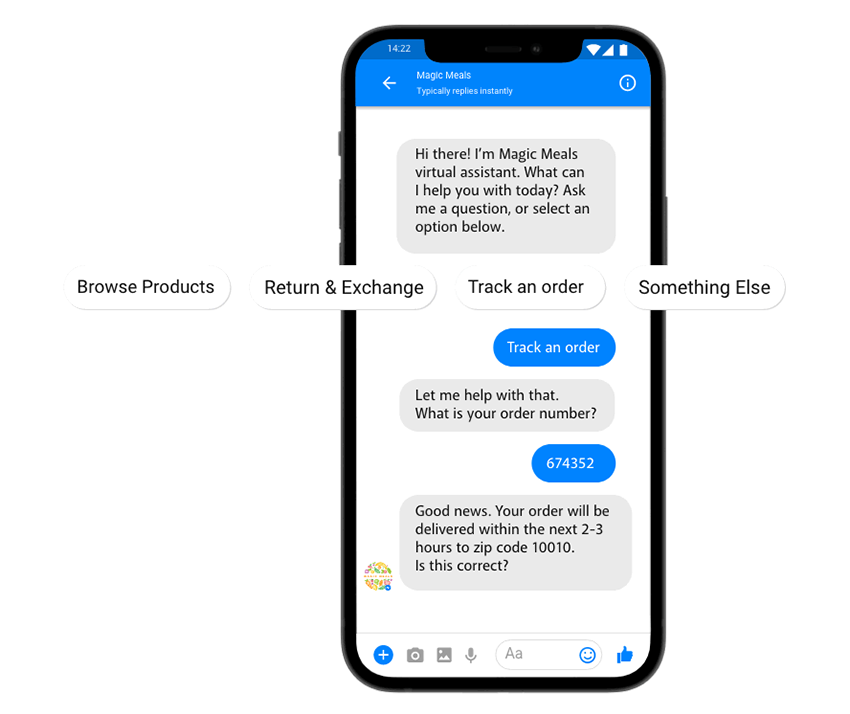
Fin is an AI Agent for customer service. It automates complex queries, improves resolution times, and delivers consistently high-quality support at scale.
$0.99
one-time fee per outcome
Verint Channel Automation
Score 8.0 out of 10
Mid-Size Companies (51-1,000 employees)
Verint Channel Automation is a social customer service software that enables companies to engage in large volumes of social media conversations with their customers. The cloud-based software combines intelligent prioritization with team management workflows.
N/A
Pricing
Fin
Verint Channel Automation
Editions & Modules
Fin with your current helpdesk
$0.99
one-time fee per outcome
Copilot add-on
$35
per month per user
Pro add-on
$99
per month For analysis of 1,000 conversations
Fin with Intercom’s Helpdesk
from $39 + $0.99 per Fin outcome
per month per seat
No answers on this topic
Offerings
Pricing Offerings
Fin
Verint Channel Automation
Free Trial
Yes
No
Free/Freemium Version
No
No
Premium Consulting/Integration Services
No
Yes
Entry-level Setup Fee
No setup fee
Optional
Additional Details
Fin comes with a 90-day money-back guarantee. Here's how it works:
Intercom states that users who sign up for the Fin Guarantee Success Program and do not achieve at least a resolution rate of 65% will be paid $1M. This program is designed for high volume customers.
Eligibility criteria:
High volume customers (over 250k monthly conversions) in North America and Europe. Intercom states that phase one of this program will admit customers on Intercom Helpdesk or Zendesk.
Fin is fantastic at answering simpler inquiries, where the range and types of questions are easier to categorize. Thereby reducing the subset of possible answers. Where it has shown great improvement - but still needs more improvement - is by becoming a true Agentic AI support engineer that is capable of answering more technically nuanced questions. Our product has a lot of variables used for troubleshooting that cannot be adequately captured in documentation. Even though we provide thousands of pages of spec docs, each issue is unique. Training and empowering Fin to be as good as a Level 1 support engineer is still very challenging.
From experience, you may ask the Conversocial team to make recommendations on licenses for larger vs. smaller social customer service teams. The need for support and the amount of usage you may get from the tool's robust offering may differ as a result of those precedents. The tool is adaptable in both scenarios it would seem.
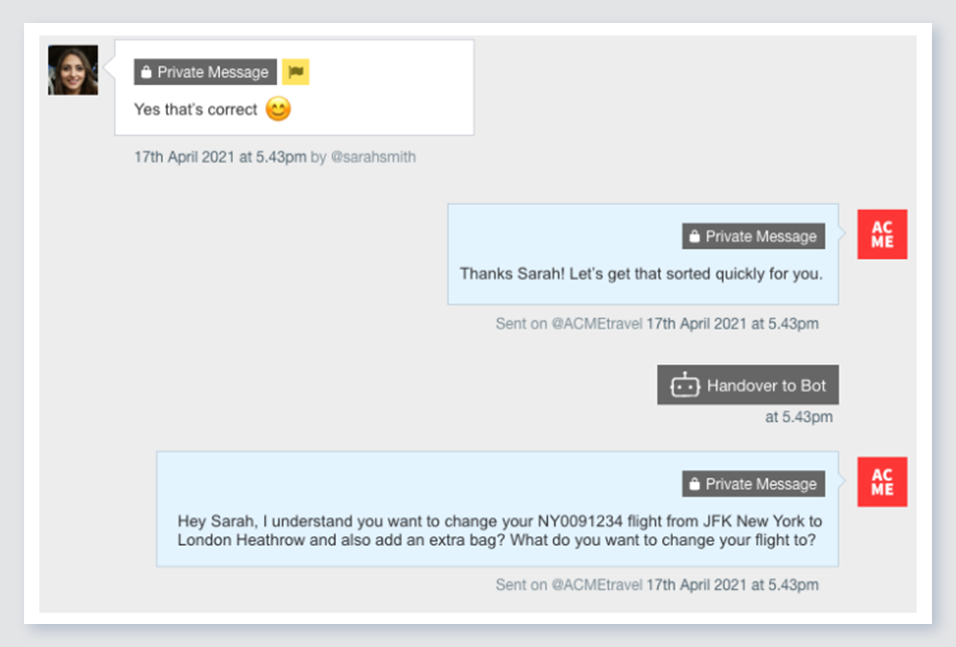
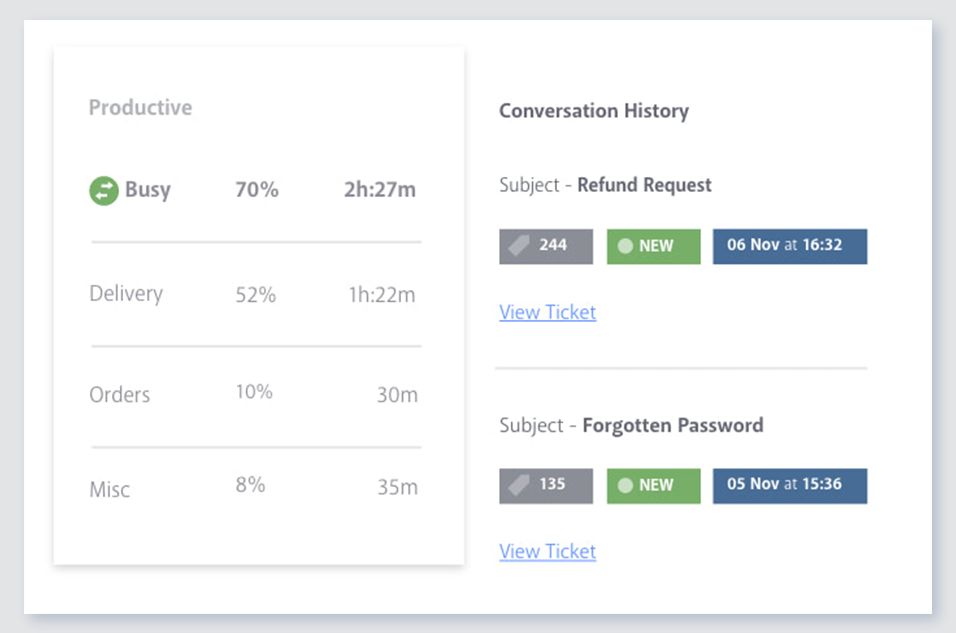
Previous conversations: This is one of the main reasons why I personally love Conversocial over Hootsuite and other social media engagement tools. Conversocial pulls in all previous interactions we've had with community members and it helps us identify if we've already addressed their problem, if they are a detractor/advocate, and so much more. With other engagement tools, it's frustrating as a community member may repost the same thing over and over again, but at different time periods. If you're unable to see what someone has said in the past, we may waste our time replying to the same thing multiple times, or we also risk responding with the same general advice, when we could try a different approach.
Tags and filters: Conversocials use of tags and filters are extremely simple to use. They have shortcuts which help you easily assign a tag to an item and then you can easily pull up each of those tags within Conversocial itself or your can open up an external report. If my team is in a hurry and wants to quickly see a certain tag, we can use the filter option and within seconds we have all the information we need.
Simple shortcuts: Conversocial has several shortcuts that save my team a lot of time. One single button on my keyboard can apply sentiment and archive something so it's out of my way. I can also use shortcuts to apply a tag, assign an item, and do other tasks. It may seem like a small benefit but each second saved really adds up throughout each day and week.
Communication: As we know, technology has issues and every tech issue Conversocial has experiences has been handled extremely well. I've never encountered any issues contacting Conversocial, we're always notified when they are working on a solution and once the problem has been fixed. We also receive random pop-ups within Conversocial to notify us of known issues before our team experiences them, and when there is a new feature that we should be aware of. Their communication is always on point and it's great to know that we can always rely on them.
It seems some users really struggle to figure out how to escalate to a human (especially through email).
Not excited about how "soft" resolutions still count as resolutions and are paid for. Though some abandoned cases appear to be able to be concluded as "the user got the answer they needed", there are others where they clearly didn't, because they just open up another chat (or even more), trying to get more info. This pads the resolution stats and makes it seem more effective than it actually is.
Cost -- Fin is quite expensive. It helps us with scaling coverage, but we're not really saving money.
I would like to see an improvement in the reporting dashboard which is something I mentioned to Josh (the CEO) on a call back in April. He said that it is something they are working on but to remember that this is truly a customer service social media platform so some of the features that I would like to see may not fit well with the users of the product.
We have been and will be continuing our journey with Intercom and nothing too concerning has happened that I have experienced or heard of that has us on the edge yet. If it ever happens it will be something along the lines of "Outgrowing" the use of need of the platform.
The only two reasons we would not continue using Conversocial are it's lack of comprehensive analytics and its lack of Radian6's categorization tools. Tags make up for the categorization pretty well, however, and we're considering switching everything over to this now that we've tested tags for a couple months within Conversocial. (I previously wrote that Conversocial lacks support for some social channels like Instagram, LinkedIn, and YouTube, but they have now added Instagram and YouTube.)
The platform is overall clear and intuitive. As with any new platform, there's a learning curve, but that wasn't an issue for our team (and it shouldn't be an issue for others). Fin options are scattered across several submenus, and I'd like them grouped together, but I also like having all those training-related tabs open at all times, so it's not much of a real issue for me.
Because of the number of features it offers and the manner in which they're presented. I've explored a number of other tools that just don't do it as well. When sorting through and responding to hundreds of social media messages each day, the number of clicks it takes to do something really matters. Conversocial does a great job of minimizing clicks and presenting the data we need without having to click to find it
I can get help by asking Fin questions about itself. It answers accurately, citing its own Help Center resources with visuals. It can reason and dialogue well. But when it comes to getting human support for Fin, it is not as quick. It can sometimes take a few days. They are polite and well-meaning. Some things aren't their fault (product limitations), but there was one occasion where something took a long time to resolve with lots of back and forth but it was I who found out the error in the end that they missed, so they didn't really help resolve it.
Our account rep at Conversocial has set up a call with me every two weeks to check in, talk about new features, or answer questions. I know I can email or call her for help anytime. Their support team also responds quickly.
Comprehensive training in all aspects of the software and general usages (including social media) for both agents and managers. Simulation workshops really made the live deployment process very smooth.
There are so many AI platforms available, and you could theoretically build a system using the available AI API's from any of the big platforms. However, I dont think it's as easy as this. Intercom is deliberately built for customer service, the features they are releasing a based on providing the best customer experience. If we were to build this ourselves or to use another platform we would be taking on the upkeep, using Fin is just much simpler as it's also our chosen ticketing platform so anything that Fin is not able to answer yet and escalated directly to our team with no extra effort required from our side.
Early on we did comparisons with Hootsuite and later with Adobe. While they have similarities, the difference at the time and likely currently, was the personal interest and general accessibility of Conversocial's platform and people. The combination of an effective CRM solution and a team that was readily available to help proved to be the winning formula for our business.
New role opportunities — Using the “Fin-first” approach has reduced the workload for our Tier 1 team, giving them more time to focus on their own career growth. It’s also opened the door to a dedicated, AI-focused role, where a team member regularly reviews Fin’s answers and makes updates to help it perform even better.
Enabling Fin has also reduced our response time and allowed us to meet SLA's.
One of the biggest benefits we are seeing is that we have reduced the number of post-holiday complaints coming into head office. Since we are responding to issues and concerns as they arise, we can impact overall customer satisfaction.
The efficiencies gained from using a centralized platform for managing the response process has enabled us to reduce our team by 50%.
We can track that we are responding to a fan's first message within 30 minutes.
We can track the number of messages each user engages with.
We can see the most effective times of day to post and reply.