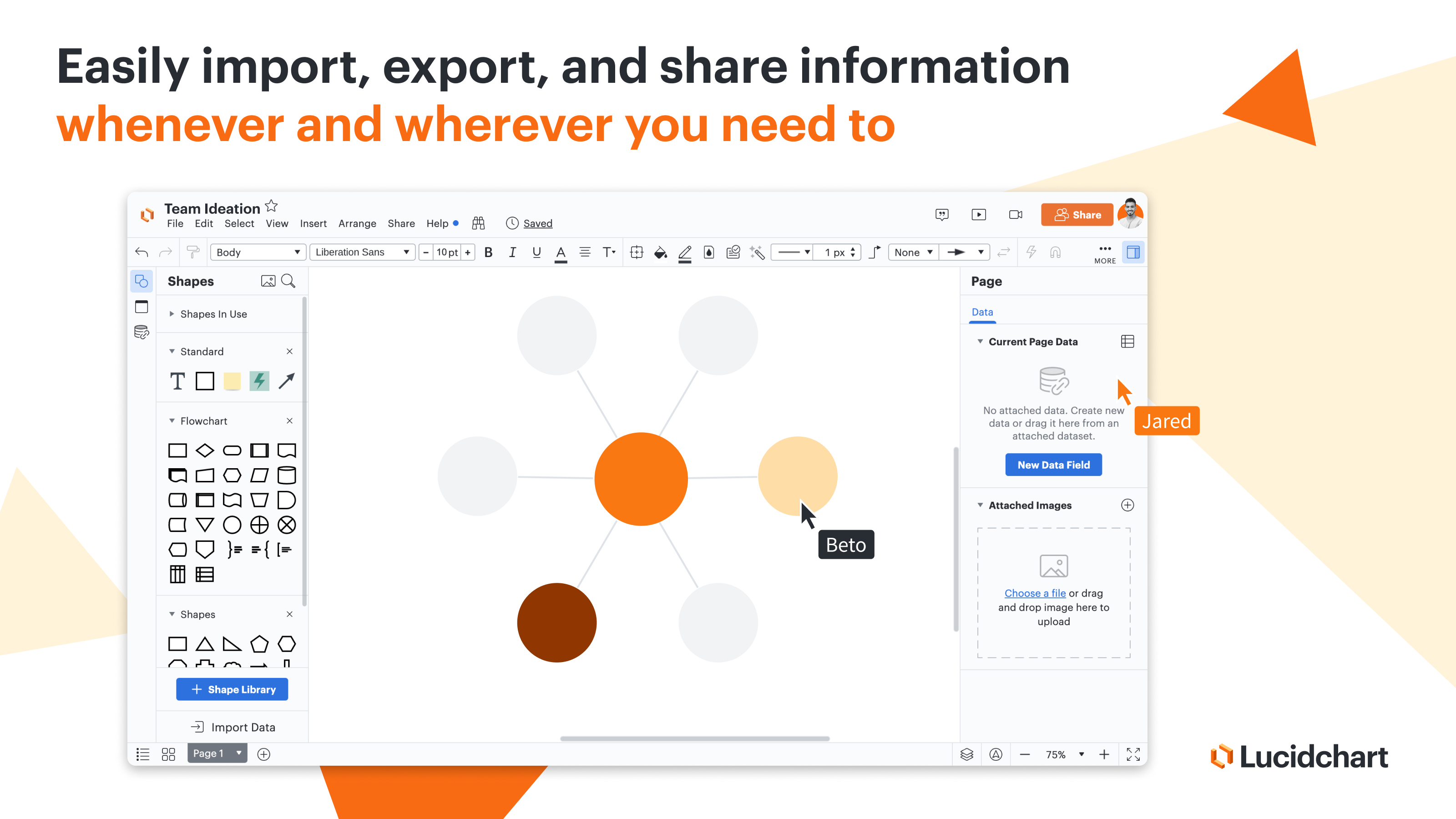
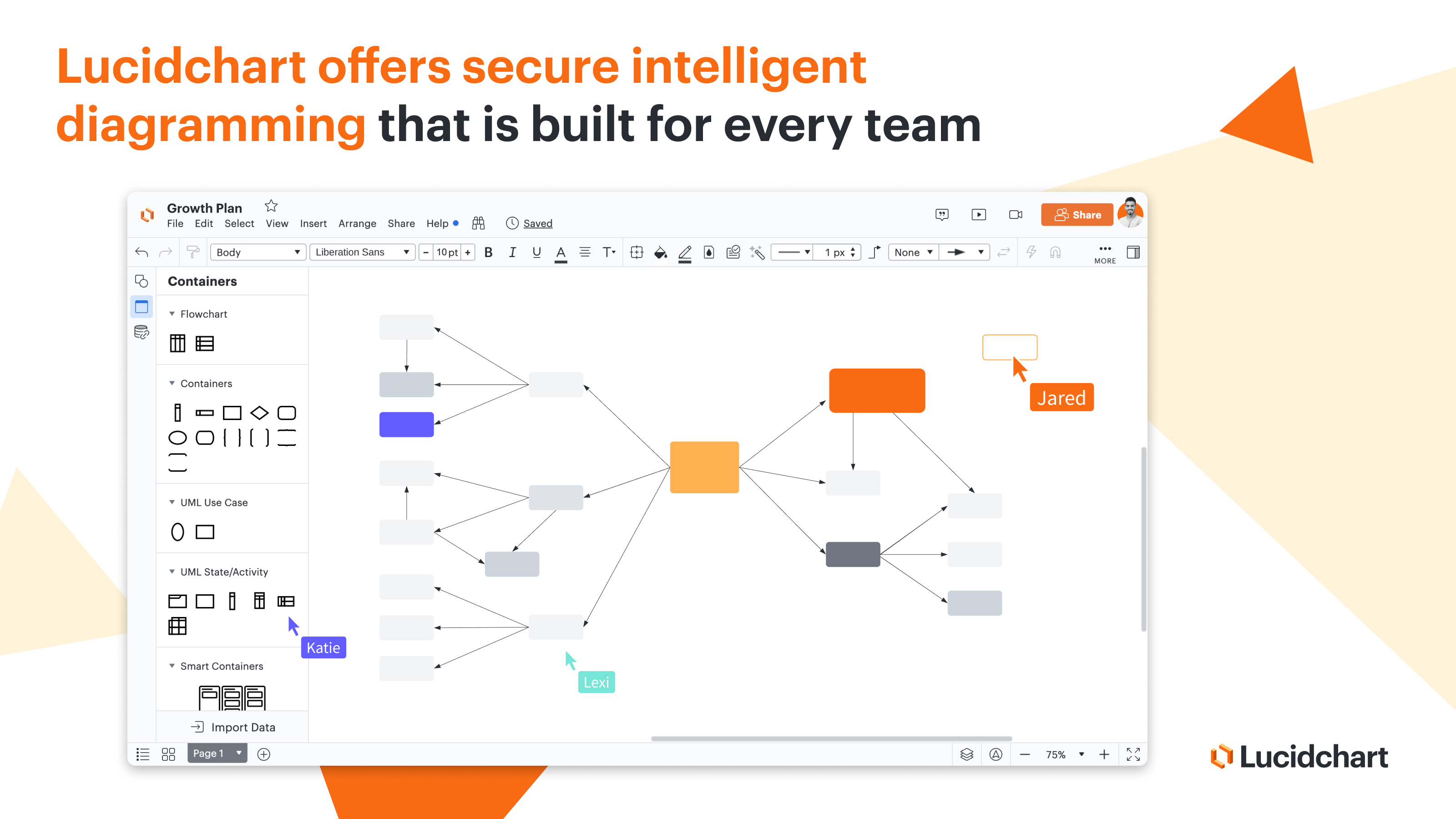
The Lucid Visual Collaboration Suite empowers teams to ideate, plan, design, build, and launch game-changing solutions from a shared infinite canvas.
$0
per month
Microsoft Powerpoint
Score 7.9 out of 10
N/A
Microsoft PowerPoint is a presentation software designed to allow users to create slide-based presentations including video and images, as well as slide transitions and animations.
When I began my job I was tasked with creating org charts for current and prospective clients so my team could identify areas to penetrate for success. I tried a few other tools and Lucidchart was by far the best. I began with a free trial and then purchased an annual …
interestingly more than half of my alternatives are unrecognised. Lucidchart works online. It does not require Windows. It does not require a download. It does not require installation, by extension it does not require local admin. I can use it from any country in the world …
In the past, our organization used a variety of tools from Google or Microsoft to create the charts and diagrams we needed to communicate. In general, they worked but they're clunky and cumbersome because they're clearly not made with charting and diagramming in mind as a …
Lucidspark's infinite canvas is proving incredibly useful for strategic planning and other long-lived activities where being able to navigate the history of complex pictures is valuable. I have found Google Slides and PowerPoint to be underpowered when it comes to …
I have used several different similar products over the course of my career and all seem to have some benefits but none seemed to really meet all my needs. Ideally, I want a tool that works for me individually and allows me to manage my own projects and visual communication …
I have not used any other products like Lucidchart, but before, I would use things like PowerPoint to create diagrams. Lucidchart is a much much better solution compared to PowerPoint, as the elements are easier to use, things snap together, and the graph can be expanded in any …
Lucidchart is much easier to use and functions much easier than Powerpoint to create charts. We were wasting time out of our day trying to format on Powerpoint so when we came across Lucidchart on a free trial, it was a no brainer. The program's usability speaks for itself when …
I come from a mostly [Microsoft] Visio and Powerpoint background and can safely say that Lucidchart blows them both out of the water. The ease of use, cloud nature of operation, imagery, and sharing capabilities cut my work time down, enhance my end product and allow me to …
Equal or better. There's a learning curve, but overall it's rather intuitive. I felt confident in building out customer journey maps on Lucidchart after only a few hours of tinkering. Easy to use in other applications. Love the collaboration with Slack and Jira. Ease of …
I've tried many heavy applications that are great at a lot of things. I needed something specific to build out charts that were easy to dive in and out of. Lucidchart delivered on this need exceptionally well.
Lucid Visual Collaboration Suite is effective for process documentation and knowledge sharing across teams. For us, we used it to map out individual roles and specific tasks within each role to create clear and visual workflows that others can follow at any time. A key scenario where it works well in our business for business continuity during absences another colleague can pick up the role by following the process on Lucid Visual Collaboration Suite with minimal disruption. The visual diagrams are easy to understand and a written document.
The learning curve with Microsoft Powerpoint is not too steep, and most everyone can create really nice-looking presentations. The thing I like most about the new advancements in Microsoft Powerpoint comes to formatting. If you are creating a newsletter, don't get bogged down by all of the annoying formatting rules and issues you would have if creating in Publisher or Word. Microsoft Powerpoint makes it very simple. You can add text boxes and move them anywhere on the page. The templates are a nice touch, but they could use more, as most of these are outdated. I believe there are many free websites for downloading more templates.
Large number of predefined charts, diagrams, flows
A great repository of various symbols and objects
The easiness of using and manipulating objects and shapes. There is a lot of auto-editing and adjusting which the software does for you which saves a lot of your time.
Easy way of duplicating shapes.
While working with the app everything feels organic and natural. You don't get the clunky/limited feeling which happens with some other similar apps.
The sign in page could use some help. When I first signed up, it was really difficult to login, unless I was logged into the perfect Lucid Visual Collaboration Suite software. It doesn’t seem to have a route to get people to the right place if you’re in the wrong place.
It’s nearly impossible to move content off of the Lucid Visual Collaboration Suite if you’re looking to get your content into a different platform.
Lucid Visual Collaboration Suite requires frequent updates and refreshes of the pages (at least daily).
The usability of Lucid Visual Collaboration Suite is bar none and incomparable to any other tool used in the past. There is such a vast offering that covers all the needs of any user in industries far and wide. It is no doubt that this is a firm recommendation for anyone and everyone to utilize this tool for all their needs.
It’s great overall! I can think of a few improvements that would make it a 10, for example: better Smart Art graphs, automatic distribution of columns and rows in tables, and being able to more easily save templates for graphs. For example, if I could determine that a same brand name in all graphs would have a specific color, it would be great
I've never had any issues with its availability. As it is installed on my machine, it's ready when I need it, online or offline. Creating large slide decks with complex elements like video and audio doesn't affect its stability. The only limitation would be the capability of your own computer, as far as I can tell.
The performance is very strong. It loads reasonably quickly. Large presentations load relatively quickly too, given their complexity, and once loaded each slide is readily available. It's easy to scroll up and down through your slide deck and go to the slide you want. Videos, pictures and music all load on demand, controllable by clicks.
I reached out about being able to access Linear through their new acquisition partner, and they kept pointing me to the same article even though I told them it wasn't giving me the information I needed. I asked for a meeting with a CSM and they didn't reach out to help. I've also tried to contact some PM friends to give feedback, but no one seems to care
I have never had to use the actual support. Most of my questions are "how to" questions and there is a rich internet full of users sharing their tips and tricks with this application. Sometimes I find the answers on Microsoft support site but often I don't
Lucidchart is well beyond Microsoft Visio and is constantly improving. Visio is pretty much stagnant and hasn't been improved for several years, Lucid is constantly adding new functionality like AI powered functions and tools. We have no reason to pay for Visio licenses when Lucid can provide so much more for less.
Adobe Illustrator is an excellent software but it's not easy to use for [everyone without] having any training or previous experience in working with illustrator. Microsoft Powerpoint is very easy to use and it's fantastic as it saves time more than illustrator. Another thing is it takes small space while illustrator takes a significant amount of space in the business machine
Scaling up use of Microsoft Powerpoint would be a simple case of buying further licences. The software is intuitive and therefore training demands from scaling it to more departments or more individuals would be relatively straightforward. Google Slides may be easier to share among those organisations that use Google's suite of apps, however.
Though I can't necessarily provide hard numbers, I can confidently say that Lucidchart has saved countless hours for myself and my teams as we don't need to try to develop some type of complex diagram using markup or any kind of code.
I have previously been able to build a complete ERD using Lucidchart in a past position, which the company never had before. It ended up being used by countless teams in the company and ultimately in a large-scale data stack migration effort.