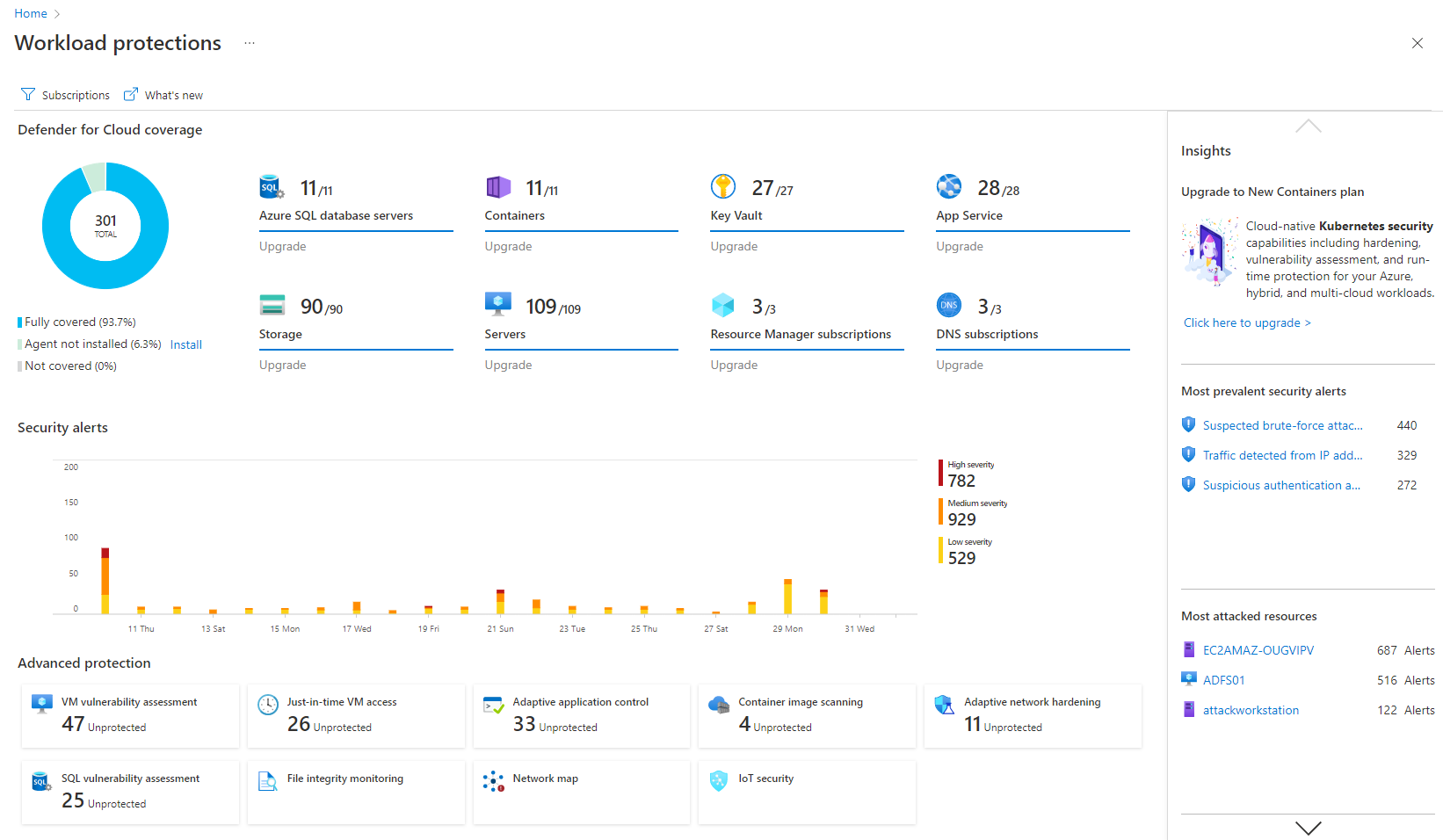
Microsoft Defender for Cloud is a Cloud Security Posture Management (CSPM) and Cloud Workload Protection Platform (CWPP) for Azure, on-premises, and multicloud (Amazon AWS and Google GCP) resources.
N/A
Microsoft Defender for Endpoint
Score 8.8 out of 10
N/A
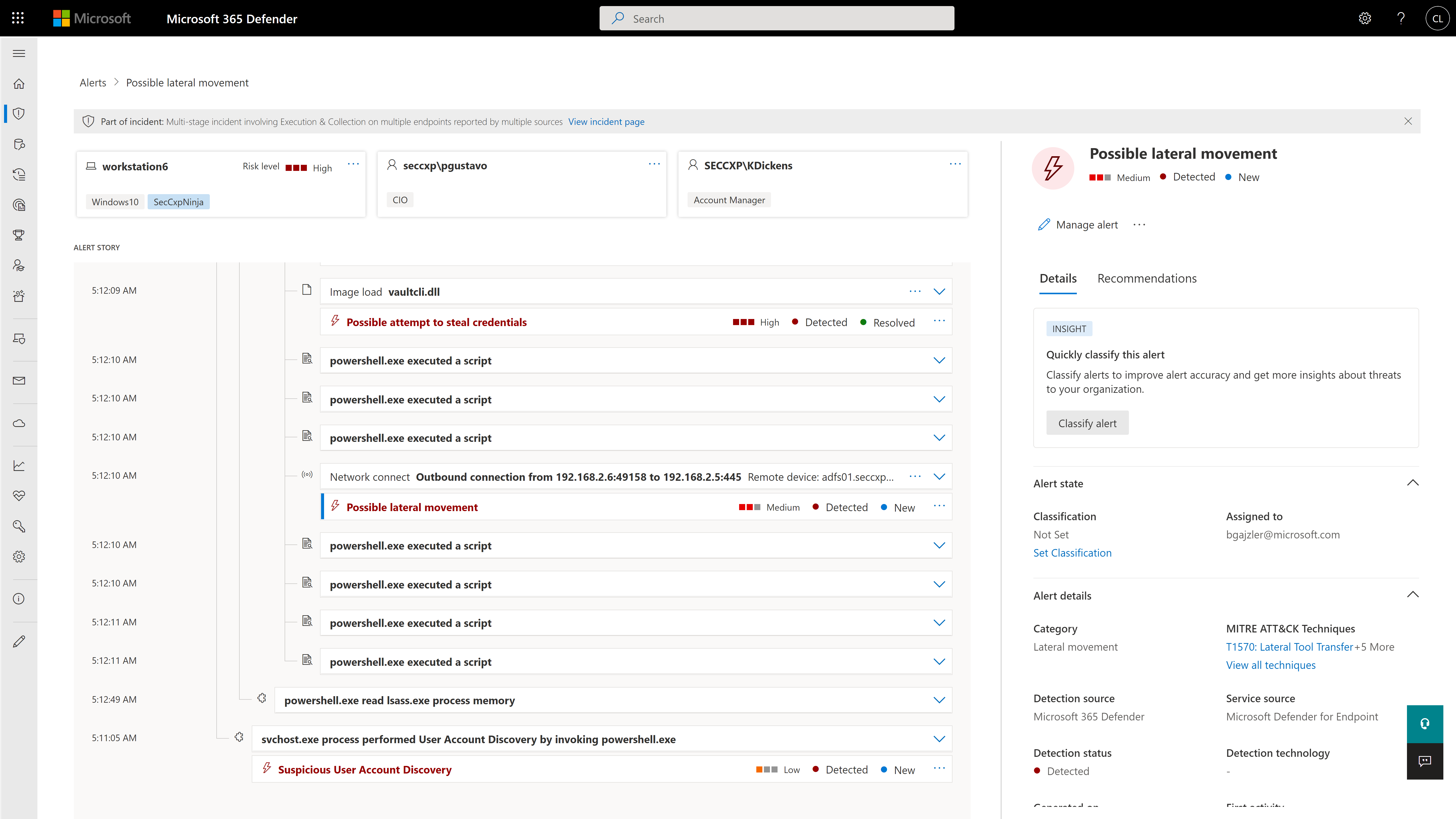
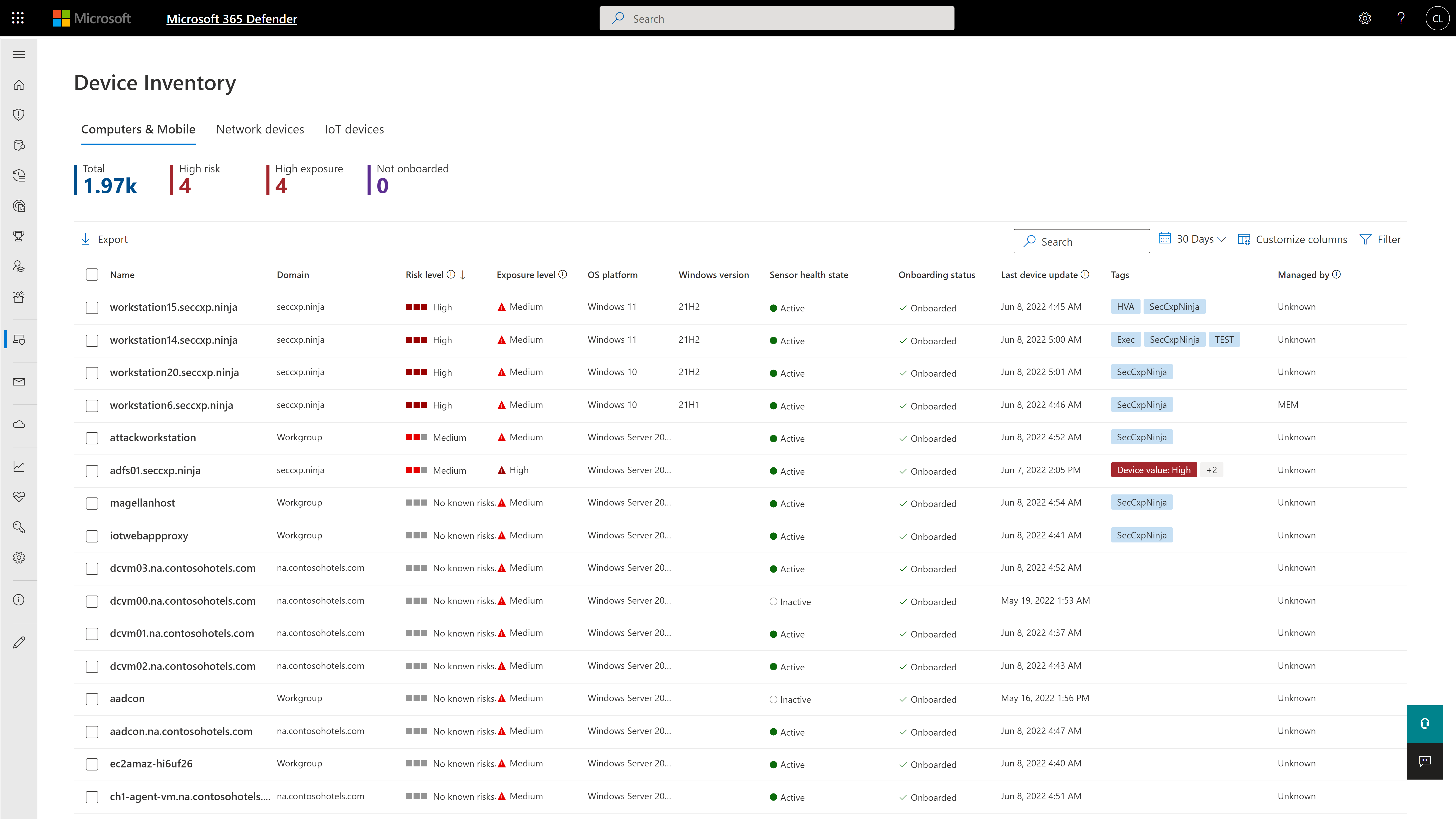
Microsoft Defender for Endpoint (formerly Microsoft Defender ATP) is a holistic, cloud delivered endpoint security solution that includes risk-based vulnerability management and assessment, attack surface reduction, behavioral based and cloud-powered next generation protection, endpoint detection and response (EDR), automatic investigation and remediation, managed hunting services, rich APIs, and unified security management.
$2.50
per user/per month
Watchguard Endpoint Security
Score 8.7 out of 10
N/A
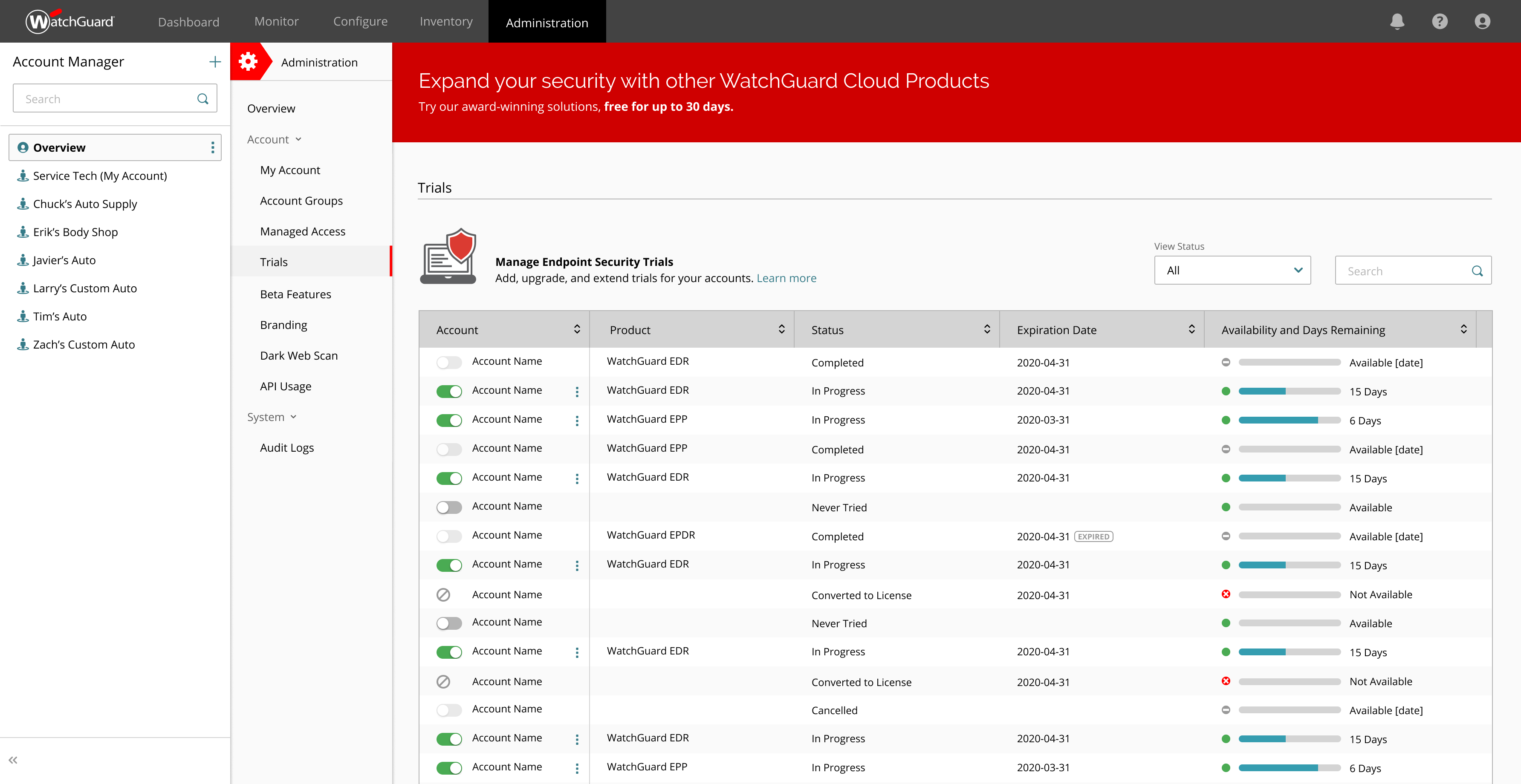
WatchGuard EPDR (formerly Panda Adaptive Defense 360) combines next-generation antivirus protection, endpoint detection and response (EDR), patch management, content filtering, email security, full disk encryption, and more, into one package. The platform touts a unique zero-trust security service that certifies the legitimacy and safety of all running applications thanks to a combination of automated, AI-driven processes and investigation services provided by a team of malware analysts.
I have been working with customers that they are transitioning from Sentinel One, CrowdStrike to Defender for Endpoint, right? So I think it's because they see the value in the product and also they see how much they can save in terms of the cost for companies because they …
At the time, Microsoft Defender for Endpoint was a comparable selection with SentinelOne, but won on one important consideration for Educational Use, cost. Microsoft Defender for Endpoint was including in our Microsoft Enterprise agreement meaning that there was no additional …
Tenable Security Center was a fantastic exposure detection tool but there was always a lag and servers would hang alot when being scanned causing resource traffic. Microsoft Defender for Endpoint on the other hand does not use up most resources soo there is usually noo lag …
It excels in detecting unusual behavior on endpoints, offering valuable insights into potential attack paths, and it operates with remarkable speed and responsiveness.
Panda Adaptive Defense, in combination with Panda Systems Management, was a pretty big and powerful suite of AV software. However, the AV is pretty traditional, all things considered. ATP will always have a slight advantage due to its ability to seamlessly integrate with the …
The main reason we have selected WatchGuard Endpoint Security is the integration it has with the other WatchGuard security products we are using. The WatchGuard Cloud platform is really of great value!
We upgraded from Webroot to WatchGuard EPP as we felt it offered greater protection for end points. The basic reports are emailed to us each month that we run through with our clients each month to review the current environment and any security patterns we can see through the …
We used Kaspersky for all of our clients for many years. It was a good platform, but Panda Adaptive Defense works better and is easier to manage. Adaptive Defense 360 classifies the network environment first and will only allow trusted applications in the future upon review and …
For a long time, the centralized administration and the pool licenses were our intention to use [Adaptive Defense 360 / WatchGuard EPDR]. At the moment, the blocking against unknown programs and whitelisting of common programs are the main parts to use [Adaptive Defense 360 / …
Microsoft is well-suited with its definitive cloud, and I also like its Microsoft Intune ID. The conditional policies are great with that, and they're really good and well situated, so you can't beat them at that conditional policy level. Less appropriate, as I said, some of these low-hanging fruit features, like being good in phishing campaigns, and then I feel like maybe doing better at their seam products. So we'll see how that goes.
I can definitely tell you where it’s more suited, because we haven’t come across any less appropriate scenarios. But definitely in regard to how we centrally manage our user space and our endpoints, it’s been beneficial from an API perspective and is really transferable, with strong collaboration with our Azure stack. It works very well.
I would absolutely recommend Watchguard Endpoint Security to a colleague - as there's only four of us on the team in the entire district. The additional client insights have been invaluable to us. We had, historically, been doing Windows updates A. whenever a device was turned in with issues, or B. each Summer during device turn in. We can now control those updates with this software - pushing Windows patches to necessarily clients with the push of a button. This has saved us COUNTLESS hours of driving or directing staff to update themselves (and then ignoring us). We do have a remote desktop client that we have utilized in the past, but updating during the day is cumbersome for teachers. Watchguard Endpoint Security has now given us more control over our devices - as well as better protection from threats as well.
Definitely on the threat action and response. We didn't have a stress-response option before, but the dependent brand point provided it instantly. Also, it's doing UVA and machine learning, which we didn't have before. So it's definitely providing more sophisticated threat-detection capabilities than we had before.
Granular permissions and role-based access management could improve security. This would enable organizations to control who has access to and can set specific features.
While it offers integration with various Microsoft services, expanding support for third-party cloud platforms and applications would enhance its versatility. Many organizations use multiple cloud providers, and broader compatibility would be advantageous.
The cost structure could be more transparent, especially for larger organizations with extensive cloud resources. Clearer cost breakdowns and predictions would help organizations budget more effectively.
The only thing is sometimes, because Microsoft has so many platforms, it gets a little confusing, like am I in the security platform? Am I in Purview? Where am I at right now? Because there's so many sites that are kind of doing a lot of the same thing, and so that does get a little confusing from time to time, but outside of that, it's a pretty good product.
EndPoint has an optional feature for automatic and remote software updates on endpoints, a handy option for keeping computers up-to-date and secure. However, it is not used to install new software but only to update it. We believe that this part is instrumental, but it is somewhat incomplete.
Another drawback is that some complementary functions to the antivirus, such as the one above, are optional and require a separate subscription.
The implementation of EndPoint requires some planning, especially the time required to harden and learn the system. This is not critical and is typical for this type of system, but it is necessary to plan it well.
It is a great product that integrates nicely when running an Azure platform and even multi-cloud environment. Not looking for point-solutions but a suite that answers most requirements. It is very comfortable being able to use KQL, workbooks and automation that is native to the azure platform
Cost add-ons for Security features is nickel and diming the process to keep pace with cybercrime. Limited Education budgets require us to be more pro-active in finding cost-effective measures to protect our devices, staff and students. Defender is a strong, well-featured product that is pricing itself out of the education market
The ease of use, pricing, support, reliability, and quality of the product. Panda / WatchGuard products are highly rated, priced right and easy to maintain. All of this make it very easy to renew and purchase new licenses for us and our clients.
My visibility is limited because I'm only doing very small pieces of what the overall org does. And also, we have limitations on what we're allowed to use. It's not like we get a new product as users or leadership level users, and everything is on, and we can just do whatever we want. We're very restricted in what we can use any tooling within the org because of the different levels of regulatory constraints we have, because of just the nature of who we are inherently. So that's why. I don't think it's necessarily the product. I think it's more or less of what we're able to do with the product.
Microsoft Defender for Endpoint is a great EDR to have that works quickly and silently in the background and it integrates well with other Microsoft services. As an IT manager, I can appreciate that I do not get bombarded by alerts for every small detail. On the flipside, the management site can use some work in being more clear and should be more streamlined so I'm not clicking through multiple pages to figure out what happened
Easy and intuitive MSP management portal to manage all of your clients from a single pane of glass. Policies can be pushed down globally or individually based on needs. The client portal allows access to their tenant information and installs only which is nice if you are working with clients who might have an internal person or an IT team that also wants access to things to manage themself.
Microsoft Defender for Endpoint chugs along just fine no matter what we throw at it and what systems it's running on. It doesn't take up a lot of resources either, so that's welcomed.
The software is 100% managed on a cloud platform that can be managed via an account even if they are not present within the company network where the software is installed, I even always opened the control panel on the browser of my smartphone to monitor the situation.I have never experienced any abnormal software crashes
The only annoyance I complain, if we want to be picky, is the fact of the constant disconnections from the control panel.Every about 4 hours the account logs out even if I set the "remember this device" flag; having said that I have not noticed neither slowdowns nor conflicts with other software
The first time I tried to onboard my macOS endpoints to MDE I struggled for quite a bit. I had to reach out to Microsoft's MDE support team. The tech was very helpful in walking me through the steps during a screen share session
I gave it a 10 because I compare it to air conditioning. I need it to work every day, 24/7. I need it to be reliable and not something that requires a ton of interaction from staff to make sure it works every day. In addition, I should be able to run other things at my house when the AC is on. Panda fits that description.
The training was very helpful. It demonstrated how to configure the service for initial install, items to monitor, and how to set up for ongoing protection. Hands on training is more helpful but this is a good starting point
Deployment was handled by our team here and everything went pretty smoothly. We did have a few hiccups in our test group, but that only took a bit to get ironed out.
Implementation shouldn't present any problems in standard office environments. In environments with development teams, however, caution is needed. If zero trust is enabled, mechanisms must be in place to ensure that internal software isn't classified as a false positive (software certificate, exception folder, etc.)
Microsoft Defender for Cloud is definitely the choice with the latest market trend and attacks that are currently happening. Microsoft has been able to safe guard a lot after the recent serious attacks happening globally in the digital world. There is a trust in this software and with the latest updates and machine learning capabilities, Microsoft Defender for Cloud should be the choice.
Previously, we've used Sophos. We've used, way back when, McAfee, Norton, Symantec, all those. And we finally settled on Microsoft Defender for Endpoint. We're a Microsoft technology stack shop. So obviously it was natural. It's built into Windows, so we're not adding additional agents. Some of the other vendors and their agents, for a while, would compete with CPU usage. And so it actually slowed down the machines. Because Microsoft Defender for Endpoint is built into the Windows product, Microsoft is going to ensure that it does not affect the other productivity tools that a user may use.
We prefer to maintain loyalty with a brand that really delivers what it promises. Our focus is to bring customers who have other solutions to Watchguard's base, however some companies have their own IT department and already work with other tools. Preferimos Fidelizar com uma marca que realmente entreg o que promente. Nosso foco é trazer os clientes que possuem outras soluções para base da Watchguard, contudo algumas empresas possuem departamento de TI próprio e já atuam com outras ferramentas.
With the implementation of watchguard (at the beginning Panda Endpoint, but it is the same) I was able to insert in the control panel all the unauthorized software previously installed by colleagues without any authorization from the various department heads.Now any licensed software goes into lockdown and can be unlocked from the control panel
It simplifies security management and saves time. I'm not sure, but I'm very confident it saved me a couple of paychecks by centralizing the data I need to secure the cloud environment.
I also utilize the inventory overview to monitor my team's activities and verify they are following internal regulations, as well as cost overruns.
The recommendations can be utilized as a valuable instructional tool. I have the team explain why they are receiving them, why they are not following them, and what they are doing differently.
By committing to go all in on Watchguard Advanced EPDR across our whole client base, we maximized our price position - enabling us to offer the best endpoint security at a price better than what lesser competitive products cost.
Leveraging Watchguard Endpoint Security as part of our unified platform strategy provides better integrated security, managed through Watchguard's cloud architecture. This significantly reduces our cost to deploy, manage, and support our client's. Our improved security offering, better delivery, and stronger price position has helped us achieve 56% growth in our managed services business over the past 18-months.
Organizations that have disparate cyber security products often require specialists for each solution in their stack. Watchguard provides outstanding training resources that equip our entire technical staff - significantly improving our service delivery while lowering our overall cost of business.