Overview
ProductRatingMost Used ByProduct SummaryStarting Price
Red Hat OpenShift
Score 9.2 out of 10
N/A
OpenShift is Red Hat's Cloud Computing Platform as a Service (PaaS) offering. OpenShift is an application platform in the cloud where application developers and teams can build, test, deploy, and run their applications.
$0.08
per hour
Amazon Redshift
Score 8.9 out of 10
N/A
Amazon Redshift is a hosted data warehouse solution, from Amazon Web Services.
$0.24
per GB per month
Snowflake
Score 8.7 out of 10
N/A
The Snowflake Cloud Data Platform is the eponymous data warehouse with, from the company in San Mateo, a cloud and SQL based DW that aims to allow users to unify, integrate, analyze, and share previously siloed data in secure, governed, and compliant ways. With it, users can securely access the Data Cloud to share live data with customers and business partners, and connect with other organizations doing business as data consumers, data providers, and data service providers.N/A
Pricing
Red Hat OpenShiftAmazon RedshiftSnowflake
Editions & Modules
No answers on this topic
Redshift Managed Storage
$0.24
per GB per month
Current Generation
$0.25 - $13.04
per hour
Previous Generation
$0.25 - $4.08
per hour
Redshift Spectrum
$5.00
per terabyte of data scanned
No answers on this topic
Offerings
Pricing Offerings
Red Hat OpenShiftAmazon RedshiftSnowflake
Free Trial
YesNoYes
Free/Freemium Version
YesNoNo
Premium Consulting/Integration Services
NoNoNo
Entry-level Setup FeeNo setup feeNo setup feeNo setup fee
Additional Details
More Pricing Information
Community Pulse
Red Hat OpenShiftAmazon RedshiftSnowflake
Considered Multiple Products
Red Hat OpenShift

No answer on this topic

Amazon Redshift
Chose Amazon Redshift
Snowflake supports semi-structured data types and provided solutions to manage/process the semi-structured data. It supported sharing data between the different accounts and makes it easy in the scale and scale down process. Snowflake doesn't limit users on the database.
Chose Amazon Redshift
Most of our stack is on AWS, so while Snowflake and BigQuery was a viable option from a performance perspective, it was easier to integrate with RedShift. We considered hosting SQL Server on AWS or using Amazon RDS (Postgres or MySQL), however, the self-service aspect of …
Chose Amazon Redshift
We are currently on Redshift, because it was out before Snowflake. However, Snowflake looks promising. It's the new shiny toy that gives options that Redshift does not provide for. The big thing is that storage and compute can be scaled separately, whereas you cannot do that in …
Chose Amazon Redshift
We like Snowflake for its separation of computing and storage and also the separation of data warehouse different users. We replaced Redshift with Snowflake. However, Snowflake is great for its pay for performance kind of methodology.
Chose Amazon Redshift
Redshift leapfrogged Hive back when Hive was trying to figure out how to implement indexes, providing a more stable, standardized (postgres), easy to use (any postgres client), easier to administer, and scalable solution for querying server logs and raw usage data.

Now, Snowflak…
Chose Amazon Redshift
Azure SQL Database was discarded because of a less attractive licensing, costs, plus its integrates poorly with many of the Azure offerings as say Azure Data Factory - it is not a true ETL yet. Also, the rest of the tools used were of Open Source type and it did not look like a …
Chose Amazon Redshift
Biggest advantage of Amazon Redshift is it's part of the aws ecosystem. When tuned well it is also very cheap compared to something like Snowflake. And compared to spark or databricks, Amazon Redshift is a solid warehouse that's well suited for tabular data. We use it for user …
Chose Amazon Redshift
Amazon Redshift, BigQuery, and Snowflake are all fully managed data warehouse services that are designed to handle large volumes of structured data and support business intelligence and analytics efforts. However, Amazon Redshift has the upper hand with its cost-effective …
Chose Amazon Redshift
Amazon Redshifts has fewer features but at the same time, you also have some gains once it is running on AWS Cloud and it is really easy to set up. Besides that, in our case, it is a bit cheaper and we don't really need the extra features that you can find on Snowflake. Another …
Chose Amazon Redshift
We evaluated [Amazon] Redshift vs BigQuery vs Amazon EMR, back in 2014.
Back then BigQuery cost was slightly higher than that of [Amazon] Redshift price structure.
Amazon EMR, needs lots more management (Admin tasks) and EMR is designed to be ephemeral and not designed to be a …
Chose Amazon Redshift
Amazon Redshift is one of the fastest service offerings available in the market now. Plus you get an advantage of using a cutting edge compute service offering from AWS. Other technologies are fast but not as good as Amazon Redshift, I would say. Our business is interested in …
Snowflake
Chose Snowflake
Snowflake is much faster and more intuitive than Amazon Redshift. We currently use AWS for other aspects of our data ingestion process but found that Snowflake is extremely compatible and the user interface is unmatched.
Chose Snowflake
Redshift and Hive both have unique architecture. Both have their own cons. My guess is that Snowflake is made up by using the concepts of the two architecture concepts such as Amazon Redshift and Haddop, addressed the issues or gaps found in Redshift and Hadoop.
Chose Snowflake
Since we switch from Amazon Redshift to Snowflake, we found Snowflake is much better than redshift in many ways, including the data integrate and data pull. However, comparing directly pull data from Amazon S3, Snowflake is quite slow in terms of data pull speed and the more …
Chose Snowflake
Compared to Amazon Redshift, Snowflake is slightly easier and faster to achieve ROI but based on the user's perspective, the two tools have very little difference since both are leveraging SQL to pull data from AWS S3. Snowflake is also working with Microsoft Azure but it is …
Chose Snowflake
We use these tools for applications they are better suited for vs a Snowflake. For e.g. MS Fabric has powerful agentic AI capabilities; Redshift is our go to choice for the TMT vertical within the organization and Databricks is the default choice for AI/ML applications.
Chose Snowflake
Snowflake provides various features, such as integration with Python using Snowpark. The reporting feature that caters to your small reporting needs is Snowsight. The Snowflake data marketplace is where you can get multiple data for free and even some of the data which you can …
Chose Snowflake
We particularly liked Snowflake's security model as well as its unique storage (whereby everything is essentially a pointer to immutable micro-partitions, which is the key behind its zero-copy cloning, its secure sharing, its time travel, etc.). and also how it separates …
Chose Snowflake
Snowflake has an attractive pricing model with auto-suspend and auto-resume and pay per use. AWS Redshift requires higher administrative efforts to maintain and scale the platform whereas with Snowflake those admin tasks are not needed or automatically taken care of.
Chose Snowflake
Each of the other solutions were cloud vendor specific, Snowflake can ride on either Amazon Web Services, Microsoft Azure, or Google Cloud. The fact that they are ANSI-sql compliant and have an effective means of offloading data makes them portable and easy to sell to teams …
Chose Snowflake
Snowflake beats these other products in every category it was rated against
Chose Snowflake
In my experience running the data management practice at InterWorks, we believe that cloud data warehouse products will eventually serve the majority of data warehousing use cases and power data analytics at most companies. Of this cohort, we believe that Snowflake is the best …
Chose Snowflake
Redshift compute and storage can be scaled up/down together (though they added some features recently, they don't quite add up). I haven't tried Avalanche or Firebolt but would love to in the near future, due to their pedigree or revolutionary billing methods.
Chose Snowflake
Our issue with Redshift was that it was very expensive. On top of that, queries were still slow and if we used more of Redshift's memory, then it would have cost even more. Snowflake is not cheap, but less costly for us. Plus, the performance was much better. Also, we got to …
Chose Snowflake
For us our previous solution in this space was Redshift which we found to be much less reliable and was hardware capped. There may very well be cloud options that our company just wasn't utilizing. For us, queries constantly ran out of memory and failed. Even when they didn't …
Chose Snowflake
  • Delivered as an easy-to-use data warehouse service, Snowflake enables you to process and analyze all your diverse data, build multiple databases, query with a common robust ANSI SQL environment, and execute ACID transnational capabilities.
  • No need to create indexes and optimize …
Chose Snowflake
The average percentage of time that a data warehouse is actually doing something is around 20%. Given this, the price by query estimate becomes an important pricing consideration.

For this, Snowflake crucially decouples of storage and compute. With Snowflake you pay for 1) …
Chose Snowflake
More flexible and faster compared to Redshift, more functionality compared to BigQuery e.g. - per minute billing, instant spin up of warehouse. Overall, the cost and time savings swayed us in favor of Snowflake.
Chose Snowflake
Instant provisioning of computing resources and data sharing is something we have not seen with any other vendor. Being HIPAA compliant at the time of evaluation was a must for us. Other vendors were late on this. Onboarding on support during implementation was also excellent.
Chose Snowflake
I evaluated Redshift and Panoply when making the choice for Snowflake. Panoply is built on Redshift, so the two are equal in drawbacks: Redshift requires a cluster to be running 24/7 for your data to live there. We produce terabytes of data every day, so this was not an option …
Chose Snowflake
  • Low-cost, Scalable cloud storage
  • Elastic compute on demand
  • Optimized for semi-structured and structured data
Features
Red Hat OpenShiftAmazon RedshiftSnowflake
Platform-as-a-Service
Comparison of Platform-as-a-Service features of Product A and Product B
Red Hat OpenShift
8.2
277 Ratings
5% above category average
Amazon Redshift
-
Ratings
Snowflake
-
Ratings
Ease of building user interfaces8.1239 Ratings00 Ratings00 Ratings
Scalability9.0265 Ratings00 Ratings00 Ratings
Platform management overhead7.9247 Ratings00 Ratings00 Ratings
Workflow engine capability7.9225 Ratings00 Ratings00 Ratings
Platform access control8.4249 Ratings00 Ratings00 Ratings
Services-enabled integration8.2234 Ratings00 Ratings00 Ratings
Development environment creation8.6242 Ratings00 Ratings00 Ratings
Development environment replication8.5229 Ratings00 Ratings00 Ratings
Issue monitoring and notification7.8242 Ratings00 Ratings00 Ratings
Issue recovery7.7240 Ratings00 Ratings00 Ratings
Upgrades and platform fixes8.4243 Ratings00 Ratings00 Ratings
Best Alternatives
Red Hat OpenShiftAmazon RedshiftSnowflake
Small Businesses
AWS Lambda
AWS Lambda
Score 8.3 out of 10
Google BigQuery
Google BigQuery
Score 8.8 out of 10
Google BigQuery
Google BigQuery
Score 8.8 out of 10
Medium-sized Companies
IBM Cloud Private
IBM Cloud Private
Score 9.6 out of 10
Snowflake
Snowflake
Score 8.7 out of 10
Google BigQuery
Google BigQuery
Score 8.8 out of 10
Enterprises
IBM Cloud Private
IBM Cloud Private
Score 9.6 out of 10
Snowflake
Snowflake
Score 8.7 out of 10
Google BigQuery
Google BigQuery
Score 8.8 out of 10
All AlternativesView all alternativesView all alternativesView all alternatives
User Ratings
Red Hat OpenShiftAmazon RedshiftSnowflake
Likelihood to Recommend
9.1
(266 ratings)
9.0
(38 ratings)
9.0
(43 ratings)
Likelihood to Renew
8.9
(27 ratings)
-
(0 ratings)
10.0
(2 ratings)
Usability
8.4
(12 ratings)
9.0
(10 ratings)
9.3
(19 ratings)
Availability
5.5
(1 ratings)
-
(0 ratings)
-
(0 ratings)
Performance
8.7
(131 ratings)
-
(0 ratings)
-
(0 ratings)
Support Rating
6.9
(10 ratings)
9.0
(7 ratings)
9.9
(8 ratings)
In-Person Training
7.0
(1 ratings)
-
(0 ratings)
-
(0 ratings)
Implementation Rating
6.7
(4 ratings)
-
(0 ratings)
-
(0 ratings)
Contract Terms and Pricing Model
8.0
(3 ratings)
10.0
(1 ratings)
8.0
(1 ratings)
Professional Services
7.3
(1 ratings)
-
(0 ratings)
-
(0 ratings)
Vendor post-sale
8.0
(1 ratings)
-
(0 ratings)
-
(0 ratings)
Vendor pre-sale
8.0
(1 ratings)
-
(0 ratings)
-
(0 ratings)
User Testimonials
Red Hat OpenShiftAmazon RedshiftSnowflake
Likelihood to Recommend
Red Hat
Red Hat OpenShift, despite its complexity and overhead, remains the most complete and enterprise-ready Kubernetes platform available. It excels in research projects like ours, where we need robust CI/CD, GPU scheduling, and tight integration with tools like Jupyter, OpenDataHub, and Quiskit. Its security, scalability, and operator ecosystem make it ideal for experimental and production-grade AI workloads. However, for simpler general hosting tasks—such as serving static websites or lightweight backend services—we find traditional VMs, Docker, or LXD more practical and resource-efficient. Red Hat OpenShift shines in complex, container-native workflows, but can be overkill for basic infrastructure needs.
Read full review
Amazon AWS
If the number of connections is expected to be low, but the amounts of data are large or projected to grow it is a good solutions especially if there is previous exposure to PostgreSQL. Speaking of Postgres, Redshift is based on several versions old releases of PostgreSQL so the developers would not be able to take advantage of some of the newer SQL language features. The queries need some fine-tuning still, indexing is not provided, but playing with sorting keys becomes necessary. Lastly, there is no notion of the Primary Key in Redshift so the business must be prepared to explain why duplication occurred (must be vigilant for)
Read full review
Snowflake Computing
Snowflake is well suited when you have to store your data and you want easy scalability and increase or decrease the storage per your requirement. You can also control the computing cost, and if your computing cost is less than or equal to 10% of your storage cost, then you don't have to pay for computing, which makes it cost-effective as well.
Read full review
Pros
Red Hat
  • We had a few microservices that dealt with notifications and alerts. We used OpenShift to deploy these microservices, which handle and deliver notifications using publish-subscribe models.
  • We had to expose an API to consumers via MTLS, which was implemented using Server secret integration in OpenShift. We were then able to deploy the APIs on OpenShift with API security.
  • We integrated Splunk with OpenShift to view the logs of our applications and gain real-time insights into usage, as well as provide high availability.
Read full review
Amazon AWS
  • [Amazon] Redshift has Distribution Keys. If you correctly define them on your tables, it improves Query performance. For instance, we can define Mapping/Meta-data tables with Distribution-All Key, so that it gets replicated across all the nodes, for fast joins and fast query results.
  • [Amazon] Redshift has Sort Keys. If you correctly define them on your tables along with above Distribution Keys, it further improves your Query performance. It also has Composite Sort Keys and Interleaved Sort Keys, to support various use cases
  • [Amazon] Redshift is forked out of PostgreSQL DB, and then AWS added "MPP" (Massively Parallel Processing) and "Column Oriented" concepts to it, to make it a powerful data store.
  • [Amazon] Redshift has "Analyze" operation that could be performed on tables, which will update the stats of the table in leader node. This is sort of a ledger about which data is stored in which node and which partition with in a node. Up to date stats improves Query performance.
Read full review
Snowflake Computing
  • Snowflake scales appropriately allowing you to manage expense for peak and off peak times for pulling and data retrieval and data centric processing jobs
  • Snowflake offers a marketplace solution that allows you to sell and subscribe to different data sources
  • Snowflake manages concurrency better in our trials than other premium competitors
  • Snowflake has little to no setup and ramp up time
  • Snowflake offers online training for various employee types
Read full review
Cons
Red Hat
  • I wouldn't necessarily say there is look everyday technology transform. I can see a trend wherein Red Hat OpenShift is adopting all the new technology trends and helping their customers align with their priorities and the emerging technology trends. I wouldn't call out various scope for development every day. There is scope for development. It is all how the organizations adopt it and how they deliver it to their customers. I don't want to call out there is scope for development. It's happening. It is a never ending process.
  • At the moment, I don't have anything to call out. We are experiencing Red Hat OpenShift and we can see every day they're coming up with new features as and when they come up with new features, we want to experience it more and more. We are looking for opportunities wherein this can be leveraged to help our users and partners.
Read full review
Amazon AWS
  • We've experienced some problems with hanging queries on Redshift Spectrum/external tables. We've had to roll back to and old version of Redshift while we wait for AWS to provide a patch.
  • Redshift's dialect is most similar to that of PostgreSQL 8. It lacks many modern features and data types.
  • Constraints are not enforced. We must rely on other means to verify the integrity of transformed tables.
Read full review
Snowflake Computing
  • Add constraints for views and not just for tables
  • Do not force customers to renew for same or higher amount to avoid loosing unused credits. Already paid credits should not expire (at least within a reasonable time frame), independent of renewal deal size.
Read full review
Likelihood to Renew
Red Hat
OpenShift is really easy of use through its management console. OpenShift gives a very large flexibility through many inbuilt functionalities, all gathered in the same place (it's a very convenient tool to learn DevOps technics hands on) OpenShift is an ideal integrated development / deployment platform for containers
Read full review
Amazon AWS
No answers on this topic
Snowflake Computing
SnowFlake is very cost effective and we also like the fact we can stop, start and spin up additional processing engines as we need to. We also like the fact that it's easy to connect our SQL IDEs to Snowflake and write our queries in the environment that we are used to
Read full review
Usability
Red Hat
The virtualization part takes some getting used to it you are coming from a more traditional hypervisor. Customization options are not intuitive to these users. The process should be more clear. Perhaps a guide to Openshift Virtualization for users of RHV, VMware, etc. would ease this transition into the new platform
Read full review
Amazon AWS
Just very happy with the product, it fits our needs perfectly. Amazon pioneered the cloud and we have had a positive experience using RedShift. Really cool to be able to see your data housed and to be able to query and perform administrative tasks with ease.
Read full review
Snowflake Computing
Because the fact that you can query tons of data in a few seconds is incredible, it also gives you a lot of functions to format and transform data right in your query, which is ideal when building data models in BI tools like Power BI, it is available as a connector in the most used BI tools worldwide.
Read full review
Reliability and Availability
Red Hat
Redhat openshift is generally reliable and available platform, it ensures high availability for most the situations. in fact the product where we put openshift in a box, we ensure that the availability is also happening at node and network level and also at storage level, so some of the factors that are outside of Openshift realm are also working in HA manner.
Read full review
Amazon AWS
No answers on this topic
Snowflake Computing
No answers on this topic
Performance
Red Hat
Overall, this platform is beneficial. The only downsides we have encountered have been with pods that occasionally hang. This results in resources being dedicated to dead or zombie pods. Over time, these wasted resources occasionally cause us issues, and we have had difficulty monitoring these pods. However, this issue does not overshadow the benefits we get from Openshift.
Read full review
Amazon AWS
No answers on this topic
Snowflake Computing
No answers on this topic
Support Rating
Red Hat
Every time we need to get support all the Red Hat team move forward looking to solve the problem. Sometimes this was not easy and requires the scalation to product team, and we always get a response. Most of the minor issues were solved with the information from access.redhat.com
Read full review
Amazon AWS
The support was great and helped us in a timely fashion. We did use a lot of online forums as well, but the official documentation was an ongoing one, and it did take more time for us to look through it. We would have probably chosen a competitor product had it not been for the great support
Read full review
Snowflake Computing
We have had terrific experiences with Snowflake support. They have drilled into queries and given us tremendous detail and helpful answers. In one case they even figured out how a particular product was interacting with Snowflake, via its queries, and gave us detail to go back to that product's vendor because the Snowflake support team identified a fault in its operation. We got it solved without lots of back-and-forth or finger-pointing because the Snowflake team gave such detailed information.
Read full review
In-Person Training
Red Hat
I was not involved in the in person training, so i
can not answer this question, but the team in my org worked directly
with Openshift and able to get the in person training done easily, i did not
hear problem or complain in this space, so i hope things happen
seamlessly without any issue.
Read full review
Amazon AWS
No answers on this topic
Snowflake Computing
No answers on this topic
Online Training
Red Hat
We went thru the training material on RH webesite, i think its very descriptive and the handson lab sesssions are very useful. It would be good to create more short duration videos covering one single aspect of openshift, this wll keep the interest and also it breaks down the complexity to reasonable chunks.
Read full review
Amazon AWS
No answers on this topic
Snowflake Computing
No answers on this topic
Implementation Rating
Red Hat
The learning curve is quite high but worth it.
Read full review
Amazon AWS
No answers on this topic
Snowflake Computing
No answers on this topic
Alternatives Considered
Red Hat
The Tanzu Platform seemed overly complicated, and the frequent changes to the portfolio as well as the messaging made us uneasy. We also decided it would not be wise to tie our application platform to a specific infrastructure provider, as Tanzu cannot be deployed on anything other than vSphere. SUSE Rancher seemed good overall, but ultimately felt closer to a DIY approach versus the comprehensive package that Red Hat OpenShift provides.
Read full review
Amazon AWS
Than Vertica: Redshift is cheaper and AWS integrated (which was a plus because the whole company was on AWS).
Than BigQuery: Redshift has a standard SQL interface, though recently I heard good things about BigQuery and would try it out again.
Than Hive: Hive is great if you are in the PB+ range, but latencies tend to be much slower than Redshift and it is not suited for ad-hoc applications.
Read full review
Snowflake Computing
I have had the experience of using one more database management system at my previous workplace. What Snowflake provides is better user-friendly consoles, suggestions while writing a query, ease of access to connect to various BI platforms to analyze, [and a] more robust system to store a large amount of data. All these functionalities give the better edge to Snowflake.
Read full review
Contract Terms and Pricing Model
Red Hat
It's easy to understand what are being billed and what's included in each type of subscription. Same with the support (Std or Premium) you know exactly what to expect when you need to use it. The "core" unit approach on the subscription made really simple to scale and carry the workloads from one site to another.
Read full review
Amazon AWS
Redshift is relatively cheaper tool but since the pricing is dynamic, there is always a risk of exceeding the cost. Since most of our team is using it as self serve and there is no continuous tracking by a dedicated team, it really needs time & effort on analyst's side to know how much it is going to cost.
Read full review
Snowflake Computing
No answers on this topic
Scalability
Red Hat
This is a great platform to deployment container applications designed for multiple use cases. Its reasonably scalable platform, that can host multiple instances of applications, which can seamlessly handle the node and pod failure, if they are configured properly. There should be some scalability best practices guide would be very useful
Read full review
Amazon AWS
No answers on this topic
Snowflake Computing
No answers on this topic
Return on Investment
Red Hat
  • All of the above. Red Hat OpenShift going into a developer-type setting can be stood up very quickly. There's a very short period to have developers onboard to it and they're able to become productive much faster than a grow your own type solution.
Read full review
Amazon AWS
  • Our company is moving to the AWS infrastructure, and in this context moving the warehouse environments to Redshift sounds logical regardless of the cost.
  • Development organizations have to operate in the Dev/Ops mode where they build and support their apps at the same time.
  • Hard to estimate the overall ROI of moving to Redshift from my position. However, running Redshift seems to be inexpensive compared to all the licensing and hardware costs we had on our RDBMS platform before Redshift.
Read full review
Snowflake Computing
  • With separate compute and storage feature, the queries get executed quickly and it improves our overall productivity.
  • Earlier we were using a different product for analytical purposes, but with Snowflake's in-built analytical feature we are now able to save money.
  • Snowflake is cost efficient, features like auto suspend for compute resources helped to control the costs.
Read full review
ScreenShots

Snowflake Screenshots

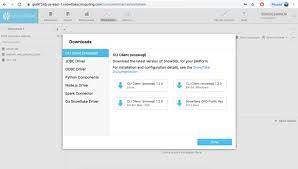
Screenshot of Snowflake Installation