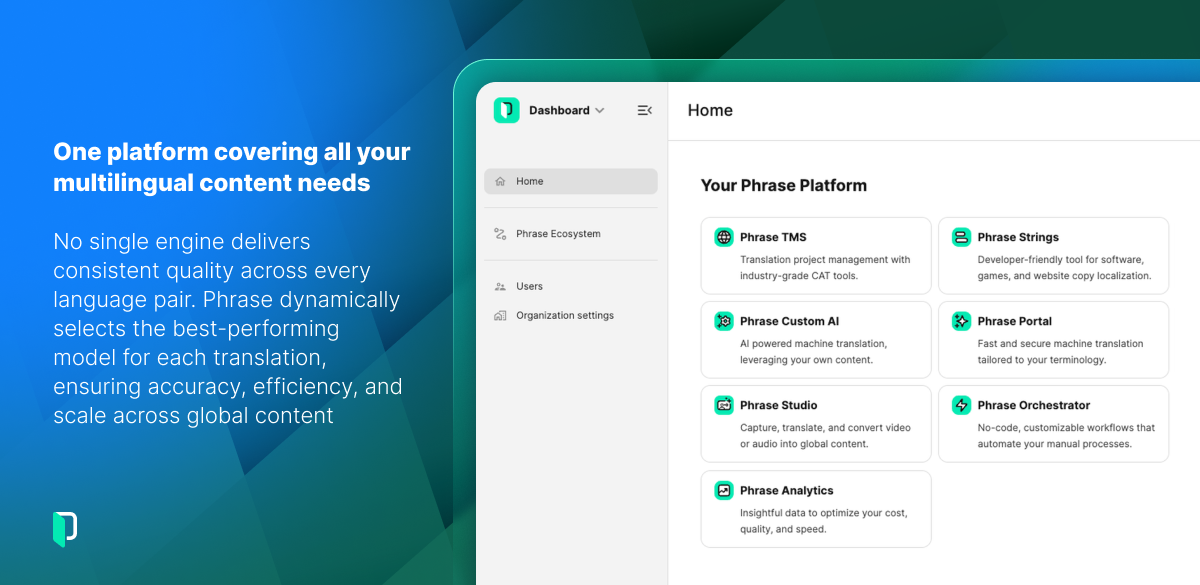
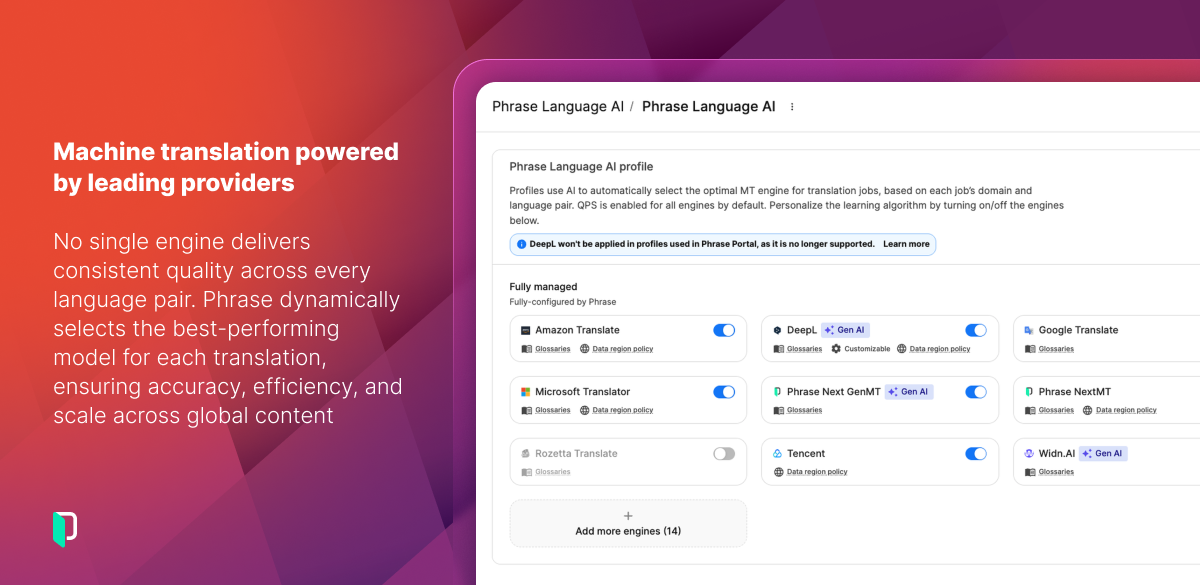
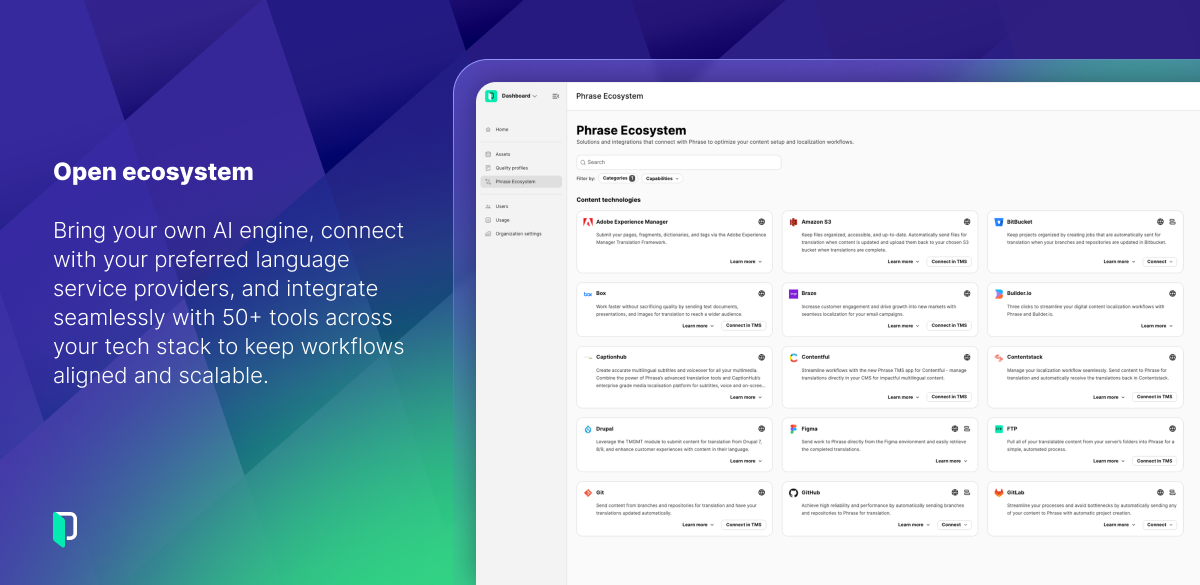
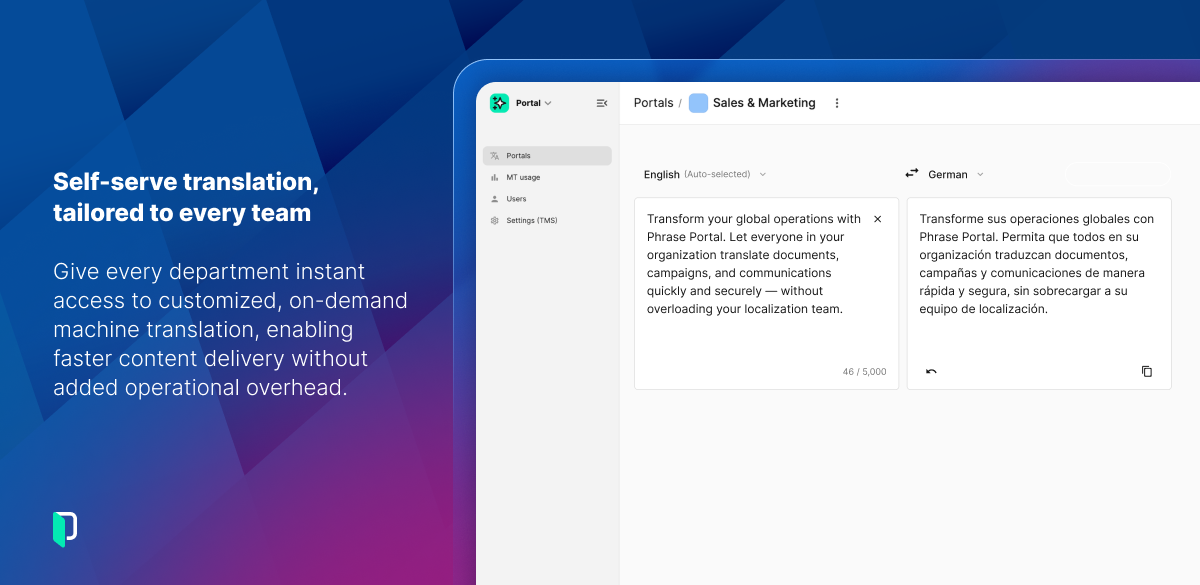
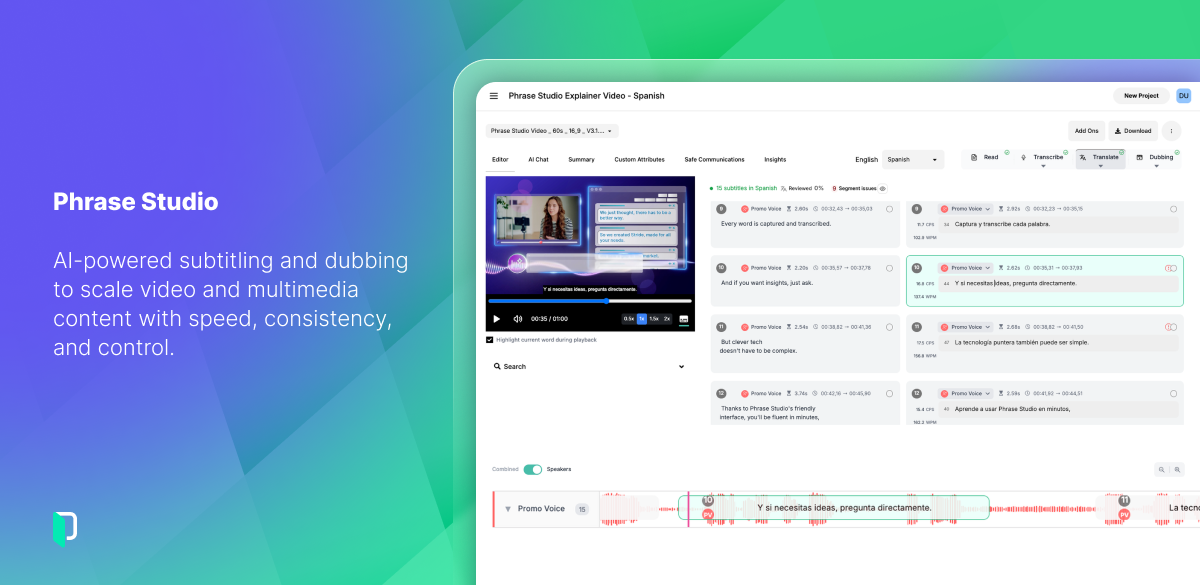
Phrase is a Language Intelligence provider. Its enterprise platform automates, manages, and delivers multilingual content. Global brands use Phrase across hundreds of languages to reduce time to market and deliver consistent brand experiences worldwide. The Phrase Platform brings together translation management, software localization, multimedia localization, machine translation, workflow automation, and language AI in a single integrated environment. From marketing…
$324
per year
Verint Speech and Text Analytics
Score8.4 out of 10
N/A
Verint Speech Analytics is a tool used to transcribe and analyze millions of calls to discover customer insights and improve contact center performance in the cloud.
The system is well suited if you also run Trados or any second system. As the system is very expensive and the use of MTUs is rather complicated to understand the best thing is to run most larger projects through Trados or any other CAT tool and then to import it. Large projects are expensive in Phrase Localization Platform so I would recommend it if you have small projects and have enough capacity to carefully check the terminology as the data pulled from the term base is inconsistent. The same applies to the find replace feature which can work great.
In my experience, a lot of the times Verint Speech and Text Analytics is going to be the cheapest solution and this would be a good reason for a Business that does NOT currently have any solution whatsoever to get in at the cheaper price point. I think Verint does things well for a company that has not been in another solution that does it better. And Verint Speech and Text Analytics has a lot of areas that it can help business with that have not been in a different solution
A de minimis incentive was given to thank the reviewer for their time. The incentive was not used to bias or drive a particular response, nor was the incentive contingent on a positive endorsement. More Info
One of the things that I find extremely beneficial about Verint Speech Analytics is the transcription. Sometimes you have an hour call, an hour and a half call, and you don't have time to listen to an hour and a half call. The beauty is that we can find the transcription and then we can look in it. It specifies where if you look in the interaction details in the back of the call, you can actually see the transcription. You can see it'll identify where in the call, what line at what timestamp did that call hit your category and with what string, with what term did it hit. And that is extremely beneficial. And we're trying to go through and find those little points of, sometimes they're points of abrasion, sometimes there are things that are going really well. I love that we have a transcription. I love that we can also see the screens that is vital because a lot of times, and again, not that we're trying to find something bad, but the reality is in any industry, there's in any call center environment, should I say, there's call avoidance. There's always going to be some agents, it's just in any call center, in any industry, it happens.
Or sometimes our agents are just struggling. And if you see in real life, for example, a very high silence time, when we notice a trend, we'll start going into those calls and actually looking at those screens and seeing, is silence time call avoidance or could it be the agents are having difficulty utilizing the resources? Are the resources not clear? Is that what the delay is? Are they having trouble trying to find the answer? And a lot of times we found that too. We found they're searching and clicking and searching and clicking and it's because they just didn't know where to go. So that is a coaching opportunity. And sometimes it's a coaching opportunity, not so much in a positive way because they're purchasing things from Amazon. But I think, like I said, that's inherent in any call center environment. I do find the screens, the transcription, the trend analysis that's available within speech, there are so many things I could literally sit here and talk to you for quite some time.
We love it. And I'm even more excited personally now because I learned so much, as I was saying, about being in the cloud and being in that open-source environment where all of these enhancements that Verint has. And they're so often that they enhance their products and their offering now these little bots and AI to help with all of these different aspects, but that's only available if you're in the cloud and the open source. So there's a lot of benefit in being in prem, in net platform, which is where we are. And we were able to provide a lot of meaningful insight and guidance into a lot of different pain points in the company. But I anticipate, and I have full confidence, that we'd be a much more effective team once we're able to move into the cloud. So I'm very hopeful for that. I'm anticipating what else we could discover.
A de minimis incentive was given to thank the reviewer for their time. The incentive was not used to bias or drive a particular response, nor was the incentive contingent on a positive endorsement. More Info
In the case of EN to JA translation, we enter text and then convert it to get the correct final text (word or phrase) which uses correct Chinese character(s), as there are often multiple Chinese characters with the same reading but different meanings. When those conversion options are displayed, it is usually possible to change our selection among them by hitting the Tab key, but in Phrase, hitting the Tab key makes us leave the text conversion and move to the source segment, so we must make sure to use arrow keys to choose the right conversion option when using Phrase.
When there are tag elements used in the source text, the tags must exist in the target text of course, but the tag order also must be the same. The tags cannot be moved around in the segment, which causes problems in the case of the Japanese language, because the word order differs between EN and JA.
In the Japanese language, Italics are basically not used, so there must be no texts between the tags which specify Italic font. But then the segment cannot be confirmed and the job status cannot be changed to "Complete".
Automated scrubbing of PCI and PII data from transcription transcripts and recordings. Using AI to detect the payment screens in a real time manner vs having to program triggers.
Easier way to bulk export transcriptions and recordings for our legal teams.
A de minimis incentive was given to thank the reviewer for their time. The incentive was not used to bias or drive a particular response, nor was the incentive contingent on a positive endorsement. TR verified that a representative sample of customers was invited. More Info
I use and manage an Academic edition (approx. 15 students) and the corporate license (10 users). In both cases, the features are easy to find, set and use. My students and my translators understand the dynamics of the platform easily and get used to them quickly.
A de minimis incentive was given to thank the reviewer for their time. The incentive was not used to bias or drive a particular response, nor was the incentive contingent on a positive endorsement. More Info
It is designed to be a lean system, but that means that things are clustered in weird groups and a lot of trial and error is involved getting the settings right. If something goes wrong first level support is very quick and has very fast answers which are quite typical of first level support and essentially equate to asking you if you have switched it off and on yet. Anything more involved is challenging for support to address.
Easy to use, the language model can be custom-tuned to your company's specific lingo and terms. It also has great front-end reporting and ease of back-end custom reports and integrations to the rest of the Verint ecosystem. This is a one-stop shop for great insights and a stepping stone to much more.
A de minimis incentive was given to thank the reviewer for their time. The incentive was not used to bias or drive a particular response, nor was the incentive contingent on a positive endorsement. More Info
A de minimis incentive was given to thank the reviewer for their time. The incentive was not used to bias or drive a particular response, nor was the incentive contingent on a positive endorsement. TR verified that a representative sample of customers was invited. More Info
A de minimis incentive was given to thank the reviewer for their time. The incentive was not used to bias or drive a particular response, nor was the incentive contingent on a positive endorsement. TR verified that a representative sample of customers was invited. More Info
We rarely use support, but most questions were answered in a timely fashion, although we didn't exactly find them satisfactory. That's mostly the fault of the software and not the Support team because we asked for things that Phrase couldn't do.
A de minimis incentive was given to thank the reviewer for their time. The incentive was not used to bias or drive a particular response, nor was the incentive contingent on a positive endorsement. More Info
Phrase has a very good user interface that people can quickly learn and start using. Also, its analysis features are top class which helps me provide a detailed estimate to my client based on the file particulars. It has a QA feature that helps me do a very high-quality check before I send out my translation to the client.
We did not have anything like this before but we did go through a long review and found out no other company had everything we needed. With our security and technology department we did decide that this was the best product for our business. Have all great thing to say and would recommend this to everyone
A de minimis incentive was given to thank the reviewer for their time. The incentive was not used to bias or drive a particular response, nor was the incentive contingent on a positive endorsement. TR verified that a representative sample of customers was invited. More Info
The system is relatively reliable with minimal downtime. However, when there is an issue, it is often addressed slowly and causes significant business issues
A de minimis incentive was given to thank the reviewer for their time. The incentive was not used to bias or drive a particular response, nor was the incentive contingent on a positive endorsement. TR verified that a representative sample of customers was invited. More Info
We are still developing ROI; we have a lot of data, but it's hard to get insights from the data at times. Adoption is something we are working on evaluating.
We have alerts that have saved us $ on benefit quoting errors.
A de minimis incentive was given to thank the reviewer for their time. The incentive was not used to bias or drive a particular response, nor was the incentive contingent on a positive endorsement. More Info