SAP Datasphere, the next generation of SAP Data Warehouse Cloud, is a comprehensive data service that enables data professionals to deliver seamless and scalable access to mission-critical business data. It provides a unified experience for data integration, data cataloging, semantic modeling, data warehousing, data federation, and data virtualization. SAP Datasphere enables users to distribute mission-critical business data — with business context and logic preserved — across the data…
N/A
SAP BPC (Business Planning and Consolidation)
Score8.3 out of 10
N/A
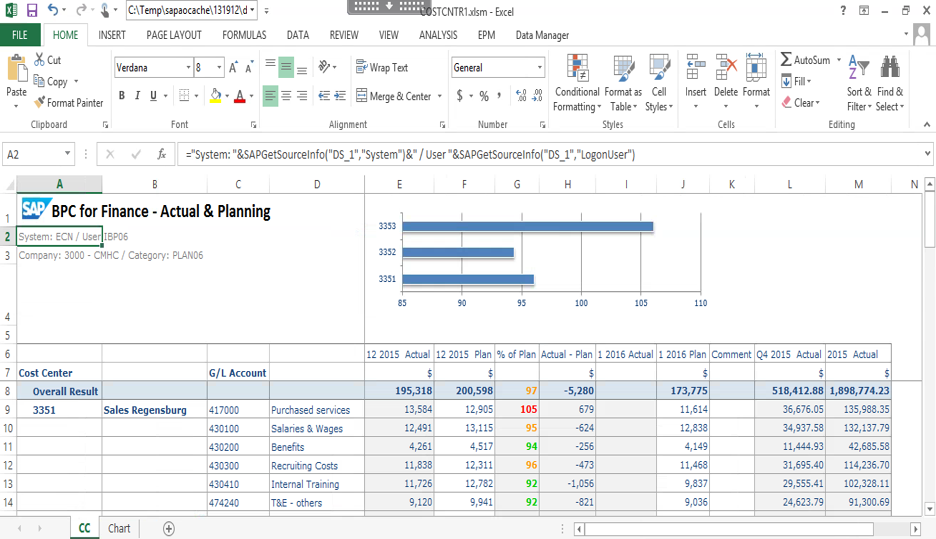
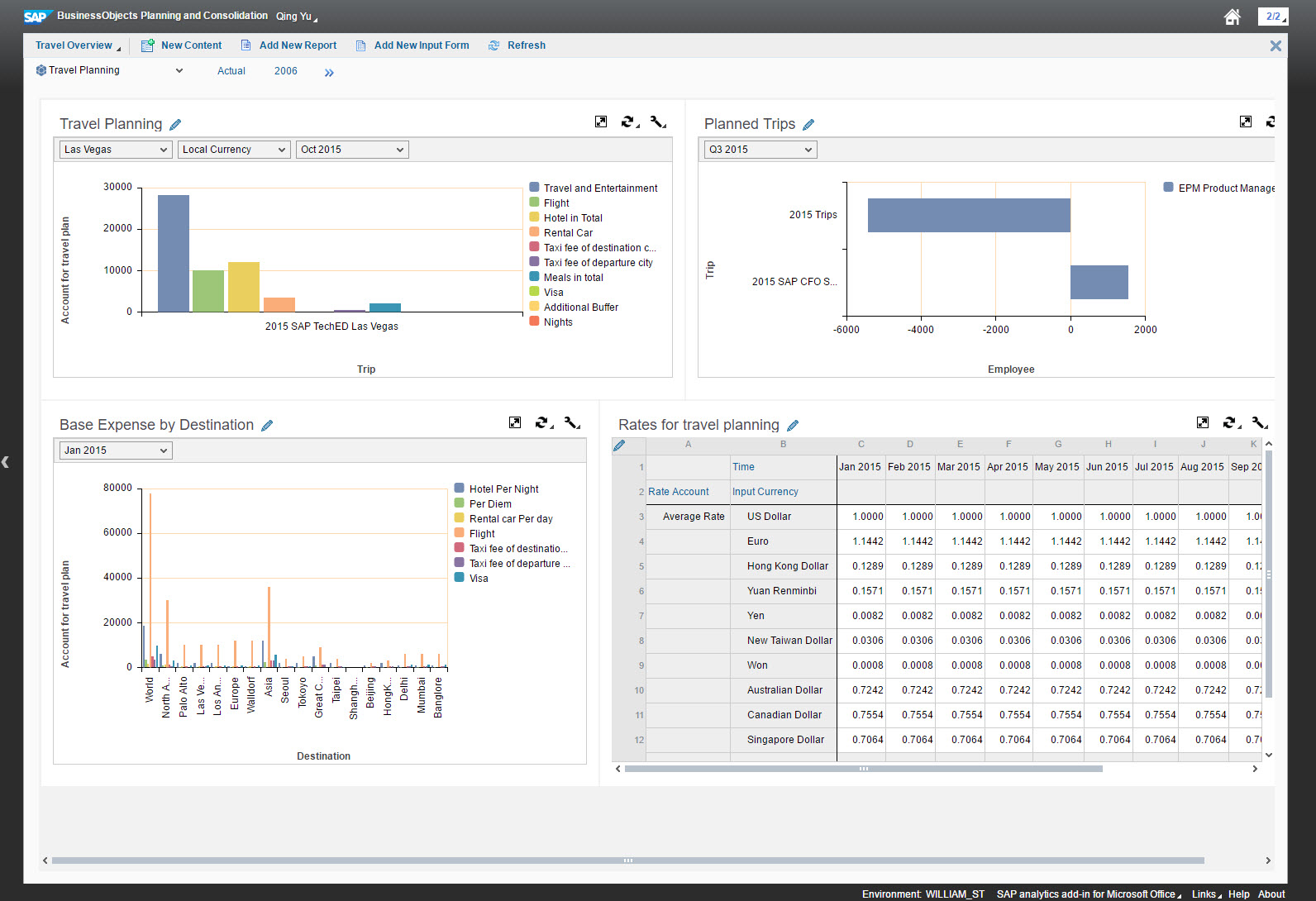
The SAP BPC software is designed to help users plan and achieve a faster, more accurate close. The SAP BPC software aims to help users spend more time growing their business and less time closing books. The vendor’s value proposition is that their software delivers planning, budgeting, forecasting, and financial consolidation capabilities in a single application. This, in turn, enables them to easily adjust plans and forecasts, speed up budget and closing cycles, and ensure compliance with…
N/A
Pricing
SAP Datasphere
SAP BPC (Business Planning and Consolidation)
Editions & Modules
No answers on this topic
No answers on this topic
Offerings
Pricing Offerings
SAP Datasphere
SAP BPC (Business Planning and Consolidation)
Free Trial
Yes
No
Free/Freemium Version
No
No
Premium Consulting/Integration Services
No
Yes
Entry-level Setup Fee
No setup fee
No setup fee
Additional Details
SAP Datasphere is available as a subscription or consumption-based model. The SAP Datasphere capacity unit (CU) offers an adaptable approach to pricing that enables any workload on any hyperscaler. The number of CUs required is determined by the unique workload, with the ability to tailor the combination of required services within SAP Datasphere utilizing a flexible tenant configuration. The services that contribute to CU consumption are the core application (compute and storage), data lake, BW bridge, data integration, and data catalog (crawling and storage).
It is an SAP tool. SAP and non-SAP integration. Reusable data products. The future roadmap is a data sphere with AI enhancements. It provides a cloud-based architecture.
A de minimis incentive was given to thank the reviewer for their time. The incentive was not used to bias or drive a particular response, nor was the incentive contingent on a positive endorsement. More Info
SAP Datasphere is well suited for scalable cloud based data integration scenarios which also opens up the doors for AI driven insights which are much harder to achieve with on-prem data warehouses. Considering the licensing model of SAP Datasphere being based on consumption driven capacity units cost can be a big consideration for organizations with large volumes of data that can be a pre-requisite for data mining and AI use cases. So this can be a bottleneck or not so well adopted scenario for SAP Datasphere.
A de minimis incentive was given to thank the reviewer for their time. The incentive was not used to bias or drive a particular response, nor was the incentive contingent on a positive endorsement. More Info
SAP BPC (Business Planning and Consolidation) overall is a good package and has helped improve our reporting a lot whilst also making it more efficient due to the reliability of data input / output. There are limitations like graphs being so limited in functionality and reports failing when too much data being processed however i would recommend to others.
A de minimis incentive was given to thank the reviewer for their time. The incentive was not used to bias or drive a particular response, nor was the incentive contingent on a positive endorsement. More Info
SAP Data Warehouse Cloud offers free trial for 90 days with free 128 GB of storage and 64 GB memory.
Availability of self-service data modeling and analytics on SAP Data Warehouse Cloud enables users to access and analyze data without getting support from the IT team.
Without zero coding while collecting, connecting, analyzing and modeling data, it saves us time and operational costs of partnering with external IT support experts.
A de minimis incentive was given to thank the reviewer for their time. The incentive was not used to bias or drive a particular response, nor was the incentive contingent on a positive endorsement. More Info
SAP BPC is real time data. You can send information into the system and see it reflected in your reports immediately. Other systems may require a manual push into a reporting system.
SAP BPC is a shared reporting tool, so multiple users can be working in a model/environment at the same time, real time. This is especially helpful if your workbooks incorporated multiple processes requiring multiple users to get into the same model.
SAP BPC is a powerful tool designed to help all facets of the company, from cash flow to capital expenditures to headcount management to financial planning to consolidation.
A de minimis incentive was given to thank the reviewer for their time. The incentive was not used to bias or drive a particular response, nor was the incentive contingent on a positive endorsement. More Info
A de minimis incentive was given to thank the reviewer for their time. The incentive was not used to bias or drive a particular response, nor was the incentive contingent on a positive endorsement. More Info
SAP should focus on delivering one single product for planning, consolidation and budgeting needs rather than providing a large list of options to choose from.
The product is not very user-friendly compared to other cloud competitors. There is a heavy dependency on IT teams.
A de minimis incentive was given to thank the reviewer for their time. The incentive was not used to bias or drive a particular response, nor was the incentive contingent on a positive endorsement. More Info
Datasphere can come with its own challenges which can feel like a mountain to get over. However, once one has an understanding of how the product works it becomes easier to use. Once the time is spent to get it setup and working correctly very little is needed to keep it running smoothly. Its a great tool it just takes time to learn.
A de minimis incentive was given to thank the reviewer for their time. The incentive was not used to bias or drive a particular response, nor was the incentive contingent on a positive endorsement. More Info
SAP has suggested that BW 7.5 will be sunset soon. Usability is good in SAP BW Modernization. Instead of going with other non-SAP tools, staying with SAP will be suitable for existing users. Across the board, many of them are moving to DataSphere.
A de minimis incentive was given to thank the reviewer for their time. The incentive was not used to bias or drive a particular response, nor was the incentive contingent on a positive endorsement. More Info
A de minimis incentive was given to thank the reviewer for their time. The incentive was not used to bias or drive a particular response, nor was the incentive contingent on a positive endorsement. More Info
I would greatly acknowledge the services of Sap Data [warehouse Cloud] because we were struggling before its arrival where we used to get manual data connections and this used to consume a lot of time but after its use, we now are able to connect data easily saving a lot of time and finances.
A de minimis incentive was given to thank the reviewer for their time. The incentive was not used to bias or drive a particular response, nor was the incentive contingent on a positive endorsement. More Info
SAP BPC training content and trainers are very good. The training is structured and provides a very good understanding of the product features and functionalities. I attended 6 separate training sessions of week-long or more. I had very good experience in all the sessions. The training is organized very well.
A de minimis incentive was given to thank the reviewer for their time. The incentive was not used to bias or drive a particular response, nor was the incentive contingent on a positive endorsement. More Info
A de minimis incentive was given to thank the reviewer for their time. The incentive was not used to bias or drive a particular response, nor was the incentive contingent on a positive endorsement. More Info
A de minimis incentive was given to thank the reviewer for their time. The incentive was not used to bias or drive a particular response, nor was the incentive contingent on a positive endorsement. More Info
Each of these listed software has its own unique strength and capacity that scales well. SAP Datasphere on its end up against them with more suitability for large establishments with complex data ecosystems with scalability support. Also, it avails a pay-as-you-go pricing for users, and it is widely up for data quality, data governance, and data discovery.
A de minimis incentive was given to thank the reviewer for their time. The incentive was not used to bias or drive a particular response, nor was the incentive contingent on a positive endorsement. More Info
With Hyperion we struggled as it didn’t have integrated planning and consolidation, whereas BPC does have it. BPC is easier for reporting as it is Excel-based. Also BPC has prepackaged business process flows that helped a lot. Hyperion on the other hand has a faster response time for user queries or report generation.
A de minimis incentive was given to thank the reviewer for their time. The incentive was not used to bias or drive a particular response, nor was the incentive contingent on a positive endorsement. TR verified that a representative sample of customers was invited. More Info
Despite the pricing model being expensive for small businesses, it provides decent features and capabilities for organizations of different sizes and it's an appropriate investment in today's business environment where there is constant pressure to build a scalable and flexible analytics service
A de minimis incentive was given to thank the reviewer for their time. The incentive was not used to bias or drive a particular response, nor was the incentive contingent on a positive endorsement. More Info
Ever since we implemented SAP Data Warehouse Cloud, we have been able to reduce the additional costs of hiring third-party service providers by incorporating professional services offered by the vendor.
A de minimis incentive was given to thank the reviewer for their time. The incentive was not used to bias or drive a particular response, nor was the incentive contingent on a positive endorsement. More Info
Preserving data quality has enhanced governance on data by having a single source that is accessible to every business user via self-service capabilities.
Operational cost is lowered by connecting data in one integrated solution hence making it easy to access information without having to keeping logging to other applications. Additionally, no external IT support is needed since SAP Data Warehouse Cloud has no-coding modeling tools.
SAP Data Warehouse Cloud has enabled every business user to understand different data by transforming data to real insights.
A de minimis incentive was given to thank the reviewer for their time. The incentive was not used to bias or drive a particular response, nor was the incentive contingent on a positive endorsement. More Info
When originally implemented (as the predecessor product Outlooksoft) BPC took ASU from trying to budget and forecast for a 2B enterprise out of spreadsheets and into a far more consolidated tool. It has saved us considerable time over the years and paid for itself several times over.
BPC also allows us to present our budget in multiple different views to support management, board and departmental reporting.
A de minimis incentive was given to thank the reviewer for their time. The incentive was not used to bias or drive a particular response, nor was the incentive contingent on a positive endorsement. More Info