UXPin is a UX design platform with wireframing, prototyping and interactive mockup features.
N/A
Zoho Projects
Score8 out of 10
N/A
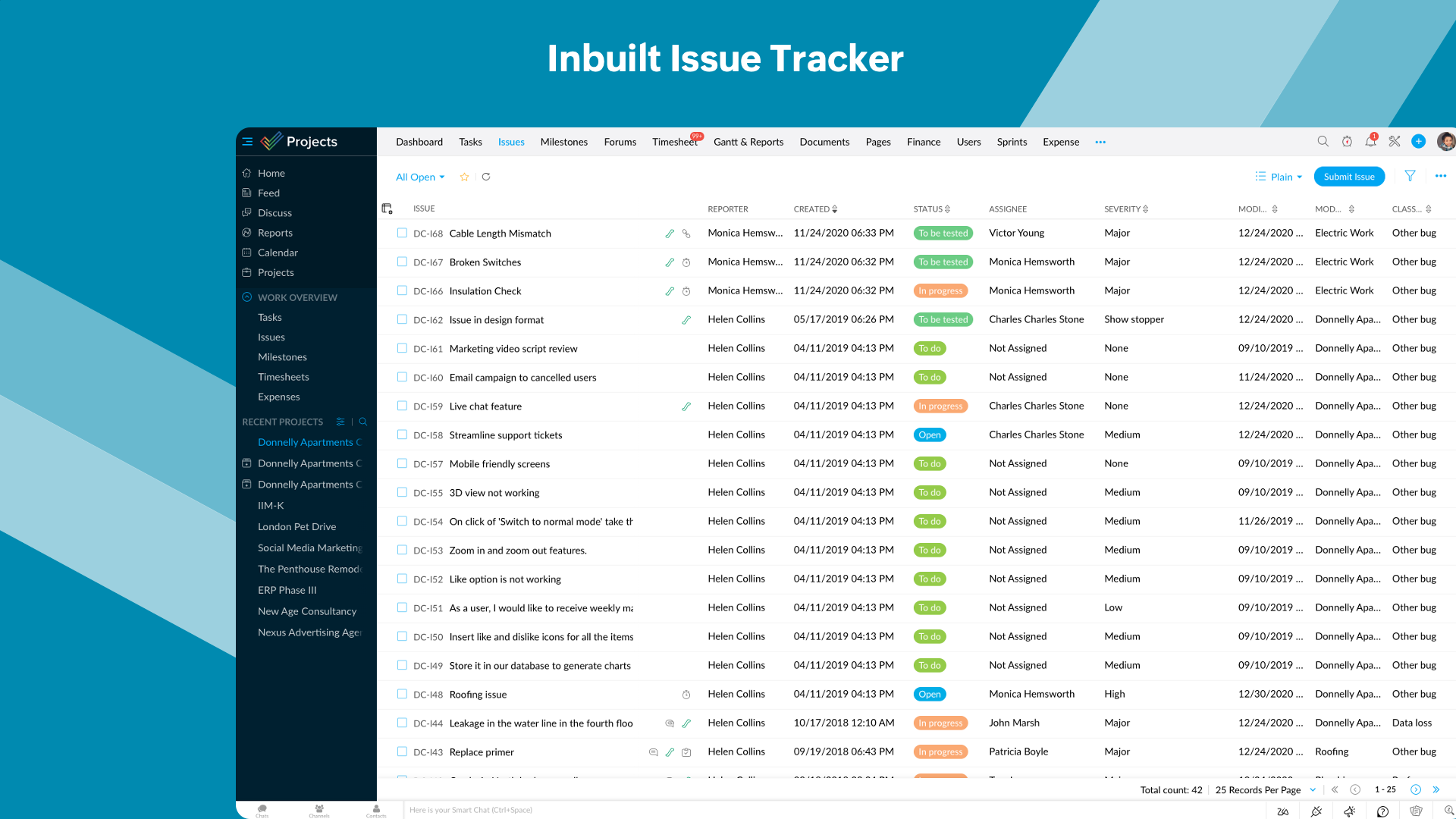
Zoho Project is online project management and planning software that provides project teams with a web-based collaborative environment. Zoho Projects can also include a bug tracking module specifically design to support software development project. It is integrated with other Zoho products including Zoho CRM.
UXPin is an excellent resource for creating website and app flows and to better help our clients understand how their websites and apps will function. It also gives them a visual reference and some real-life application. It can be difficult for clients to truly understand how a website or an app flows from one page or screen to another via a phone call or web conference. UXPin helps us to illustrate these flows in a hands-on, visual format. UXPin also helps our clients understand the purpose of a sitemap. We used to send our clients a sitemap in an outline format. While many understood that the top-level items on the outline were the main navigation of their website and other items were child pages, several did not. We have found that using UXPin to show the main level navigation, how in-page navigation and child pages (drop-down menus from the main navigation) work has been an integral step in getting approval on sitemaps.
A de minimis incentive was given to thank the reviewer for their time. The incentive was not used to bias or drive a particular response, nor was the incentive contingent on a positive endorsement. More Info
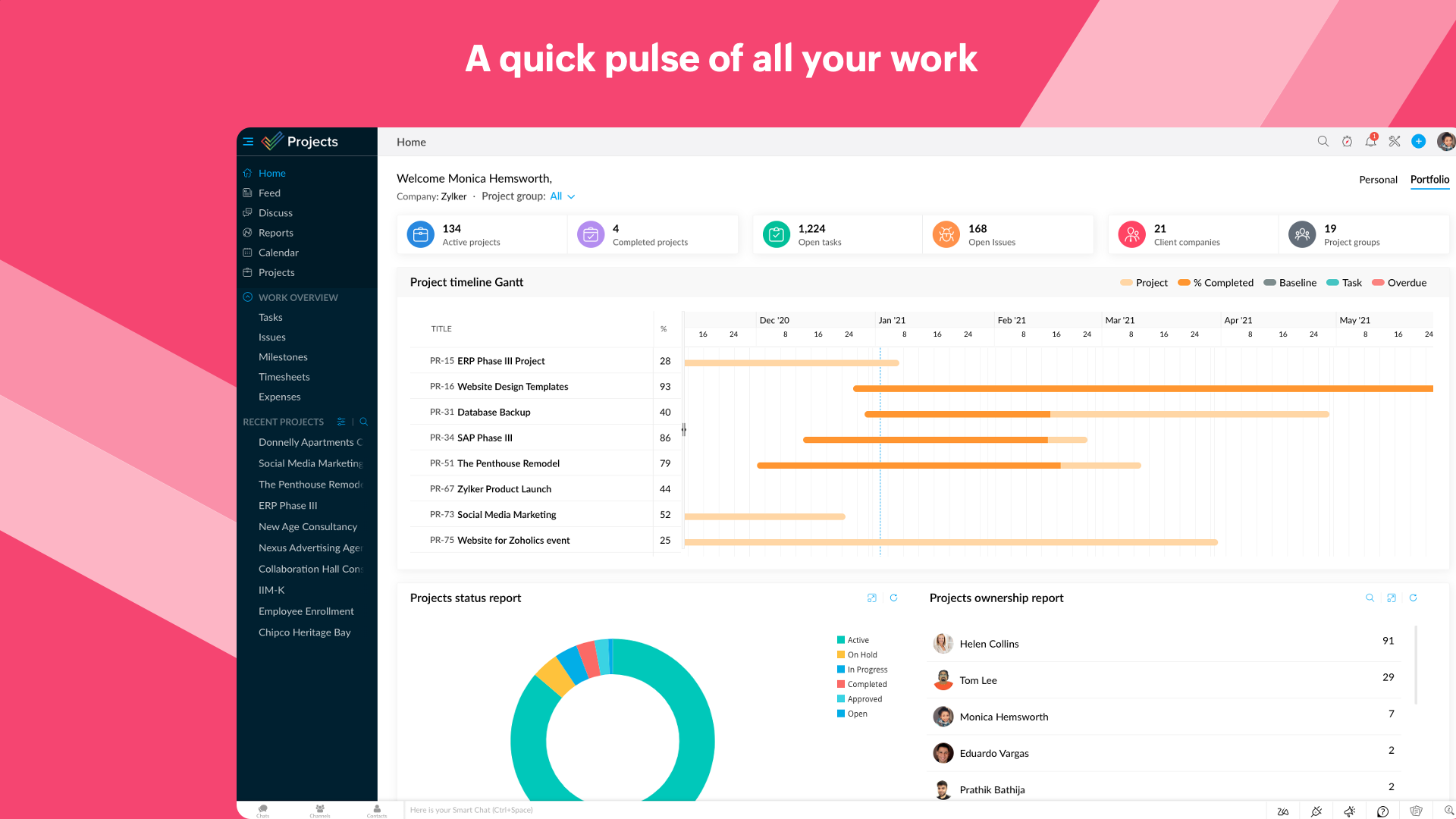
My work involves projects of 5-15 people with numerous projects running simultaneously. Prior to Zoho, I did not have a central location from which to view all project statuses at once. Zoho looks to provide this and also looks like it will deliver. I am anxious to see how our organization's use of it develops. At this time, I feel I am likely to recommend Zoho Projects because my organization has made great software decisions in the past so I have a level of trust already that the research has been done that Zoho is the best solution for our line of work.
A de minimis incentive was given to thank the reviewer for their time. The incentive was not used to bias or drive a particular response, nor was the incentive contingent on a positive endorsement. More Info
Smart elements are super nice because they allow me to create complicated features that will appear on every page. When the client wants to change something it is very easy to do so in one place.
Working on grid is important to me. Having the ability to change and manipulate that grid in UXPin is just what I need.
There are tons of add on features like Font Awesome icons and prebuilt stuff that not only looks great, but also just lets me get ideas across fast without committing to what the final design is going to look like.
I love the ability to edit things if I want. I can control several details, but it's not too overwhelming. They include various font options from Google fonts as well. You can design as much or as little as you want. The interface doesn't get in the way. It's there if you want it but has a simplicity that is nice.
Having a link on a live webpage is a necessity. As soon as you make changes, they are live. No more worrying about which is the latest version.
I'm a photoshop user so it has a few keyboard commands that are familiar like hold 'alt', click and drag to duplicate is nice!
A de minimis incentive was given to thank the reviewer for their time. The incentive was not used to bias or drive a particular response, nor was the incentive contingent on a positive endorsement. More Info
We use it to manage our sales orders as there are lots of moving parts which are necessary to get client orders done properly.
I use it anytime I have a new idea I want to put into motion. As I can create a list for brainstorming, feedback, specific actions necessary in order to test and or implement the idea.
Unrelated to business, it's a great way to plan travel in order to make sure you don't forget those important things like passport, flight arrangement, client meeting confirmation, and meeting prep as far as what specific documents or things do you need to bring with you.
And since everyone is on the go and expected to keep up with work, the mobile/tablet app makes it a breeze to keep up, work on, and create new projects.
A de minimis incentive was given to thank the reviewer for their time. The incentive was not used to bias or drive a particular response, nor was the incentive contingent on a positive endorsement. More Info
No search and replace for fonts (missing or just to replace).
Tool is built for design/dev teams but does not integrate content teams in well.
If you are not careful you can get lost in designing interactions when you should be just creating building blocks - don’t over animate!!!
There is currently no “scrub” or click-drag interaction which limits touch capability testing/concepts.
Editing adaptive versions of designs is very time consuming, edits to not ripple through from master viewport size. All updates are manual, even when creating an adaptive version.
When a library item is updated, it can revert changes you have made unknowingly.
Video integration is limited to online video host aggregators such as IMGR, YouTube, and Vimeo.
Not a ton of info for a designer on how to use the expressions effectively.
Prototypes with a lot of interactions can get slow, especially on computers with a lot of security software. It’s best to work with UXPin to figure out what is blocking APIs, and JS.
We'll definitely continue to use UXPin. Right now it provides us with everything we need in order to deliver quality projects to our clients. If at any point in time, UXPin doesn't provide us with what we need, we'll start vetting other software out there that may be similar. My guess is that UXPin will continue to make updates and improvements so we'll likely stick with it for quite some time.
A de minimis incentive was given to thank the reviewer for their time. The incentive was not used to bias or drive a particular response, nor was the incentive contingent on a positive endorsement. More Info
I've reviewed about 8 other project management solutions and Zoho Projects is the best I've seen without being overly complicated. Zoho Projects keeps getting better! Recent new enhancements makes it even easier to navigate. There are new keyboard shortcuts that cut my time way down. The tools are very easy to use.
Zoho Projects is an easy project management tool to use. It provides all the functionality that we required for handling projects. We can easily create personal forms for projects and tasks, allowing us to add and report on our own desire. Apart from this we can create and edit documents in real time which saves our time. This allows us to share text docs, presentations, tables with the whole team and we can work on them together
A de minimis incentive was given to thank the reviewer for their time. The incentive was not used to bias or drive a particular response, nor was the incentive contingent on a positive endorsement. More Info
As far as I know, my teams have only had to use the UXPin support once. The experience went really well. We just needed a bit of assistance with using the Documentation feature. UXPin's support was quick and helped my team in a matter of minutes. We will definitely reach out to their support without hesitation in the future.
A de minimis incentive was given to thank the reviewer for their time. The incentive was not used to bias or drive a particular response, nor was the incentive contingent on a positive endorsement. More Info
Although it might lack intuitiveness, once you get a hang of how Zoho Projects works, you can do a LOT. The impact good project management has on profitability is huge, and it has helped not only improve communication and coordination when working on a project, but more importantly have adequate tracking of time, due dates and potential bottle necks
A de minimis incentive was given to thank the reviewer for their time. The incentive was not used to bias or drive a particular response, nor was the incentive contingent on a positive endorsement. More Info
Adobe XD is so much more than UXPin, with Adobe Cloud you can easily share designs as well. We used Adobe XD before changing to UXPin. At first UXPin seems so advanced and helpful, but don't get fooled. You're heavily limited in the long run, and after all the training and implementation of UXPin (both app-wise for IT but also training designers etc) it is not worth your time.
Zoho Projects provides a more limited set of functionality and customization options than other task/bug trackers on the market, but what it lacks in functionality it makes up for in ease of use. It probably has 80-90% of the features of its competitors but takes about a third of the time to get up and running and realizing value.
A de minimis incentive was given to thank the reviewer for their time. The incentive was not used to bias or drive a particular response, nor was the incentive contingent on a positive endorsement. More Info
Saving money by using one tool for lo-fi wireframing, high fidelity wireframing, prototyping, and user testing, rather than four separate tools.
The ability to create and use team libraries enables us to create visually consistent designs with less effort than creating every single design from scratch, which allows us to save considerable time (and therefore money!)
In-platform collaboration saves our team a lot of time and energy. With everything in one place (wireframes, prototypes, user feedback, collaboration comments), we can all be on the same page about the design workflow and pinpoint discussion points that are based on up-to-date designs.
A de minimis incentive was given to thank the reviewer for their time. The incentive was not used to bias or drive a particular response, nor was the incentive contingent on a positive endorsement. More Info
We needed a system to organize our growing business, so anything was better than what we had, which was nothing.
Recording time spend is a huge reason for using project software. It has made me aware of the tasks that are taking too long and where we are not being profitable as a company.
It has kept our team accountable for what needs to get completed and when projects are not in motion or completed timely. It's helpful to know in order to get billing out faster.
A de minimis incentive was given to thank the reviewer for their time. The incentive was not used to bias or drive a particular response, nor was the incentive contingent on a positive endorsement. More Info