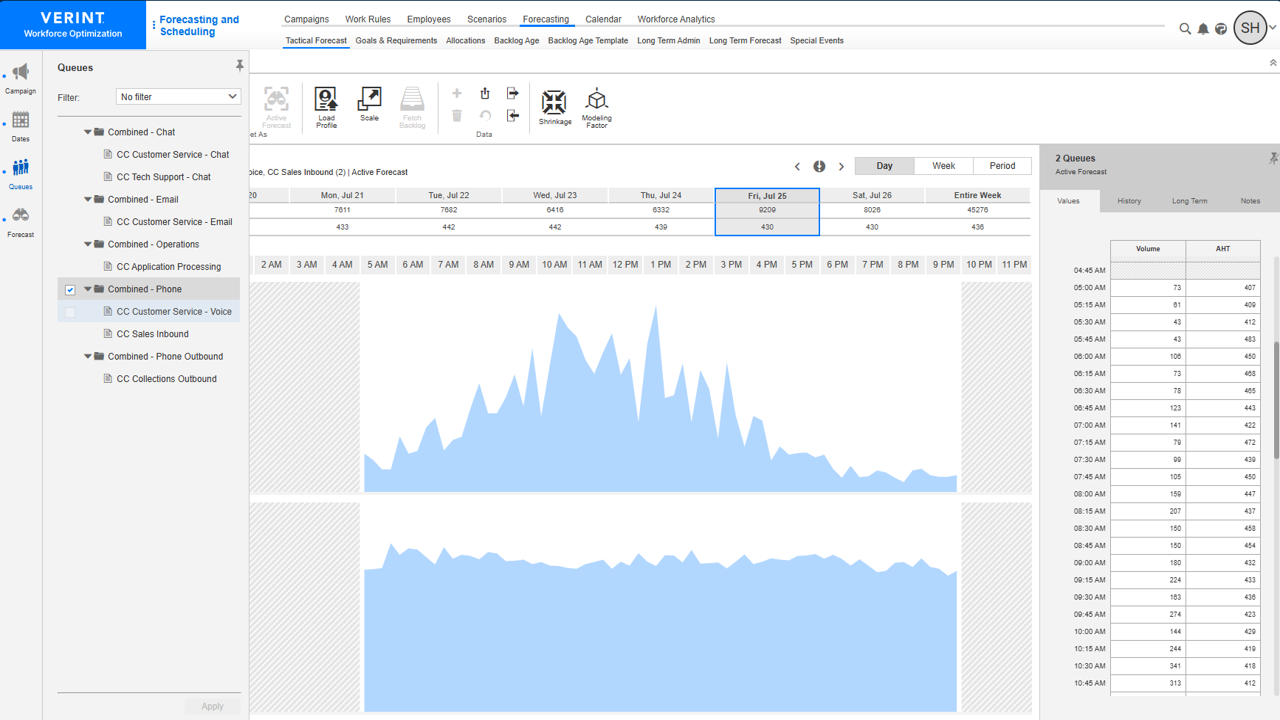
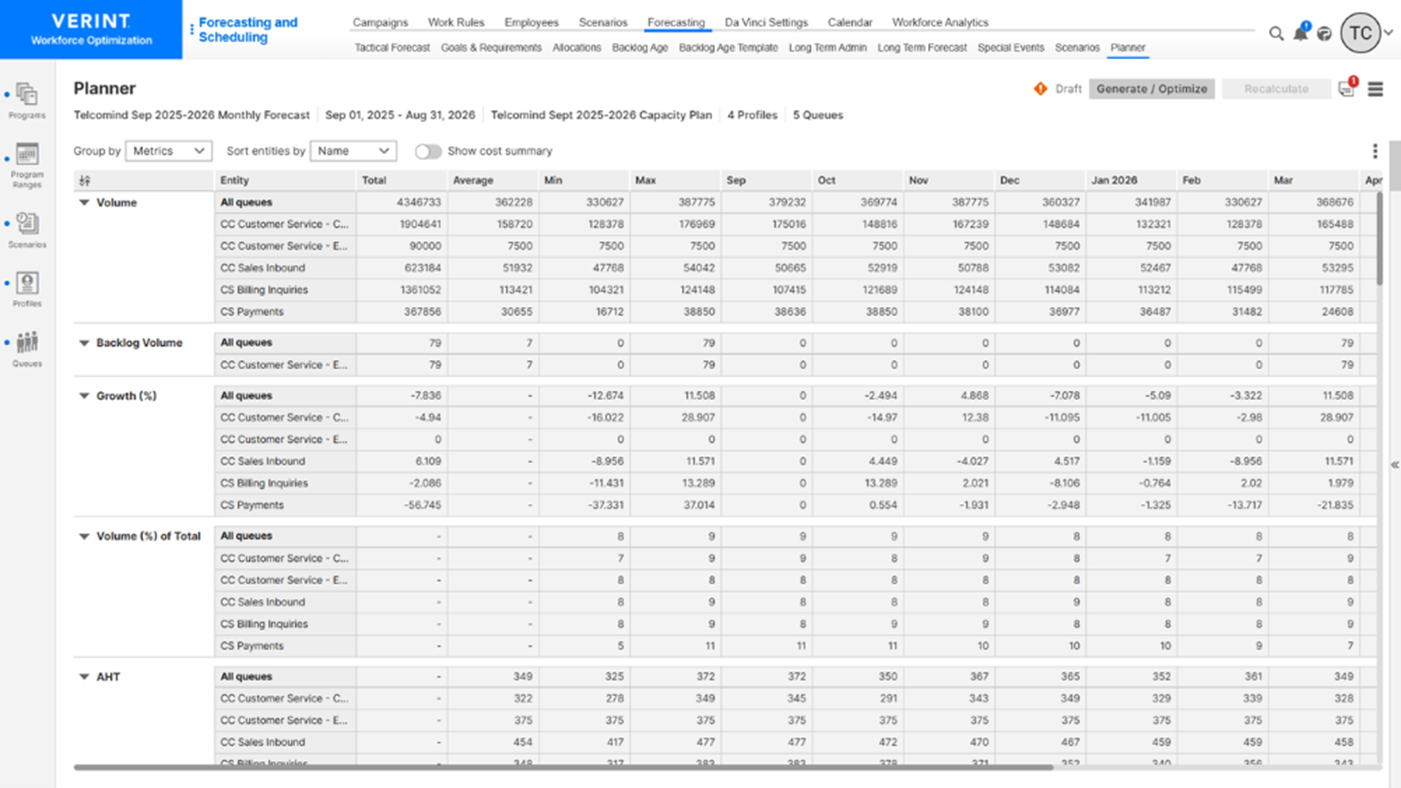
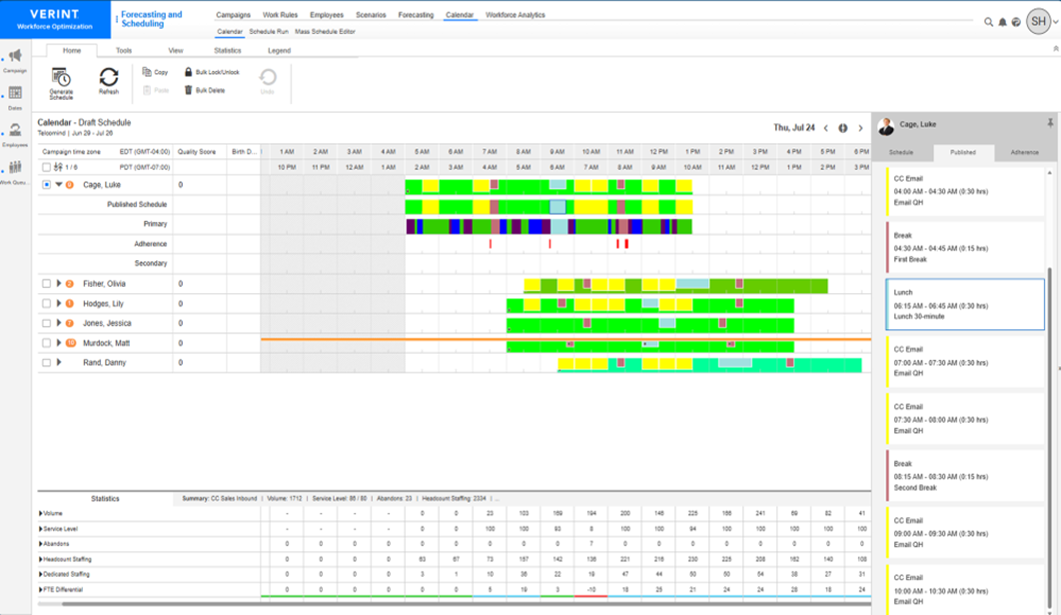
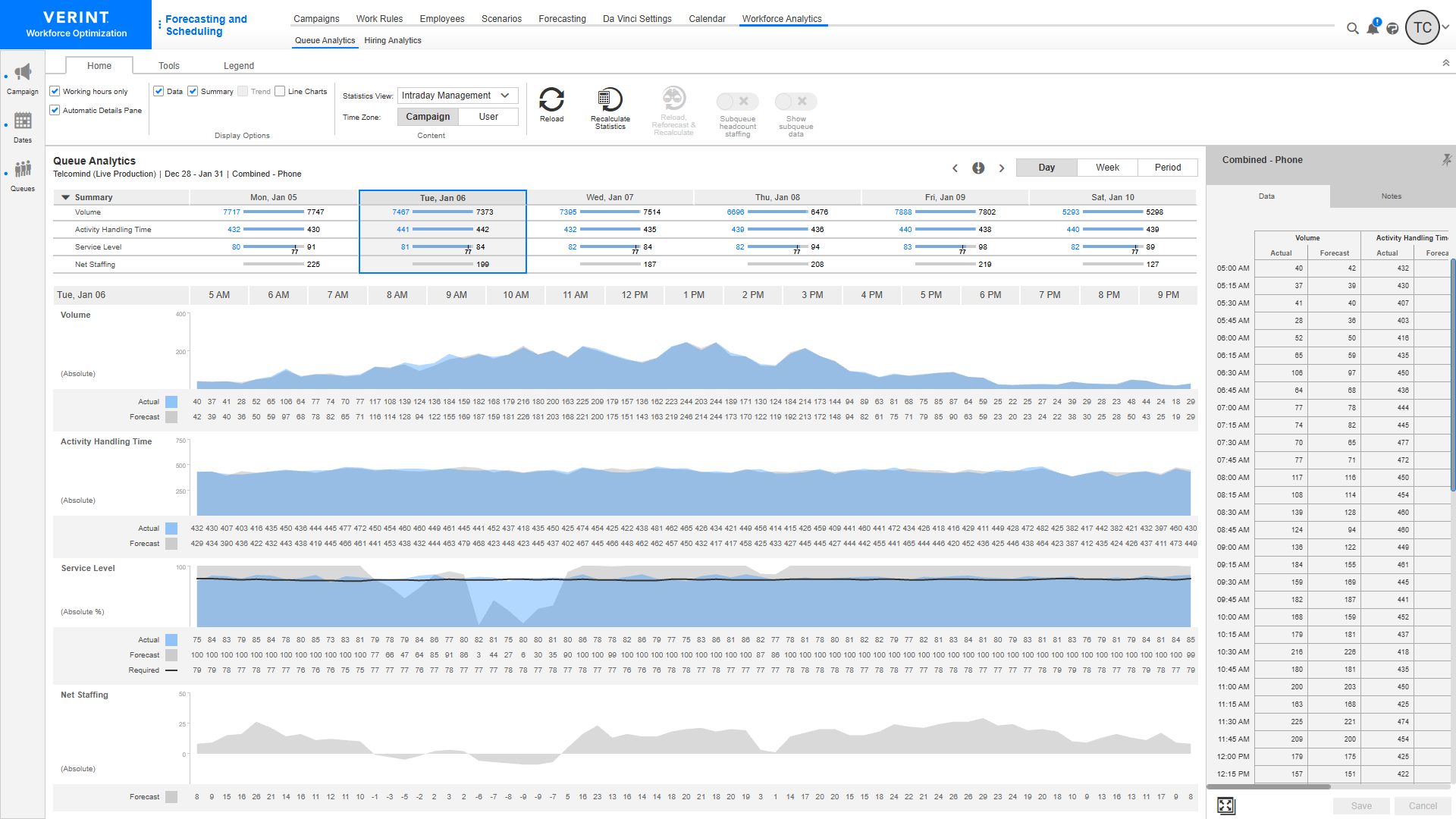
Verint Workforce Management is a solution that
forecasts customer demand, analyzes and predicts the number of employees
needed, and optimizes employee schedules to align with demand across contact
center and back-office operations, to help organizations to meet CX and efficiency
goals.
Verint WFM is part of Verint Open Platform,
which helps organizations' customer service operations to lower costs and elevate EX and CX
with AI-powered bots that automate CX workflows. The…
N/A
Workday HCM
Score7.8 out of 10
N/A
Workday Human Capital Management is a cloud-native system offering a globally
consistent user experience. Workday HCM is part of an intelligent, unified system with other
Workday products.
N/A
Pricing
Verint Workforce Management
Workday HCM
Editions & Modules
WFM Enterprise
-
per month per user
WFM Enterprise SaaS
-
per month per user
No answers on this topic
Offerings
Pricing Offerings
Verint Workforce Management
Workday HCM
Free Trial
No
No
Free/Freemium Version
No
No
Premium Consulting/Integration Services
Yes
No
Entry-level Setup Fee
No setup fee
No setup fee
Additional Details
Verint offers a named user pricing model with SaaS and on-premise delivery methods.
I think Verint Workforce Managementi s well suited for all scenarios. No system is perfect, but understanding the gaps allow you to be effective considering those gaps. The one scenario I can think of is if you don't need to forecast. We have some departments where volume is controlled (example Outbound). Because of the business model we have staffing on a given day or hour isn't important. Only agents are working 40 hours a week.
A de minimis incentive was given to thank the reviewer for their time. The incentive was not used to bias or drive a particular response, nor was the incentive contingent on a positive endorsement. More Info
Large organizations with extensive back-office support functions. With that in mind, WD is a great HCM system for mastering and controlling downstream data and providing strong support. Where WD falls short is the front-end user experience. If your intent is for the average Jane/Joe to use the system, you will find them frustrated or disappointed.
A de minimis incentive was given to thank the reviewer for their time. The incentive was not used to bias or drive a particular response, nor was the incentive contingent on a positive endorsement. More Info
I think what it does is not having worked on the side of talent acquisitions. Whenever we have a job interview, for example, you can go right there, you can put in everything in Workday Human Capital Management. If I need to go in and see what a coworker put in or notes all that, I can document everything there in Workday Human Capital Management. I think the other thing that makes it a lot easier is for performance management, goal setting. All these things can be done right there in the platform and it just makes it easier. So to store documents, I can do that. I mean it is like a one-stop shop all in one, so it's excellent.
A de minimis incentive was given to thank the reviewer for their time. The incentive was not used to bias or drive a particular response, nor was the incentive contingent on a positive endorsement. More Info
Usability from the end user. Our leaders in particular struggle with navigation and getting the information they need
Forecasting solutions outside of the basic call center. We do forecasting for back office groups and need to use different models than what is offered today, This requires us to do forecasting outside of Verint Workforce Management.
Improved Schedule Change request. Our business has a more flexible model for SCR. While we use the shift bid for other purposes, we need more flexible way to allow reps to submit for SCR
A de minimis incentive was given to thank the reviewer for their time. The incentive was not used to bias or drive a particular response, nor was the incentive contingent on a positive endorsement. More Info
Whilst Verint Workforce Management is doing much of the work we were hoping it would do, there are some limitations that cause hesitancy when deciding if it is the tool for the future. No further exploration has taken place to seek alternatives to date. It is good for the Contact element of our business but not for the rest of the business, meaning we have to use two planning tools currently.
It is work to make one system the source of truth for our data, but now that it is done, there is less work involved in staying on this path. This means for us that maintaining and/or implementing new modules like performance, finance, talent, etc. is simple. It's a no-brainer
A de minimis incentive was given to thank the reviewer for their time. The incentive was not used to bias or drive a particular response, nor was the incentive contingent on a positive endorsement. More Info
As someone who was new to the WFM world just over 2 years ago but very tech savvy I found it very not user friendly. The interface is not intuitive from a rep perspective or an administrator perspective. While Verint Workforce Management could benefit many organizations at our company the user interface is holding back other organizations from wanting to implement it.
A de minimis incentive was given to thank the reviewer for their time. The incentive was not used to bias or drive a particular response, nor was the incentive contingent on a positive endorsement. More Info
Workday's on a great path in terms of user experience. Their goals is to deliver a use experience that doesn't require training or instruction, like Amazon on the consumer side for example. That's hard to do when you're talking about complex business processes and important and sensitive employee information, but they're doing it well
A de minimis incentive was given to thank the reviewer for their time. The incentive was not used to bias or drive a particular response, nor was the incentive contingent on a positive endorsement. More Info
In 2014, Workday has changed the update process. There will be two updates a year; the updates will be delivered to customers typically in a 24 hour window during these two weekends a year. They also keep the Community up-to-date about any planned outages, etc. There is weekly scheduled downtime on Friday night.
From my perspective, the system runs like a well oiled machine and I have not had any issues with customers complaining about speed. If a report is taking long to run, the report can run in the background and you can go about your business. For larger enterprises, there is additional space and machines to process the application in what Workday refers to it as Extended Configuration Tenant
The team always work diligently to provide answers to my questions and fixes to my issues. The support team has remained consistent and is familiar with our business needs and that is something that is very beneficial as we grow and change
A de minimis incentive was given to thank the reviewer for their time. The incentive was not used to bias or drive a particular response, nor was the incentive contingent on a positive endorsement. More Info
Workday is still learning about the needs of higher education. I have seen rapid improvement in support and knowledge over the last year so am confident this will continue to improve. Overall however, I have found the Support Team to be extremely responsive and Workday offers the advantage of having support across several timezones so that we never wait more than a few hours for a response.
Training was covered in full day sessions that went very fast with no way of recording the information for later review. This made it hard to capture & retain all the details of information.
A de minimis incentive was given to thank the reviewer for their time. The incentive was not used to bias or drive a particular response, nor was the incentive contingent on a positive endorsement. More Info
Some training is offered online. Cost is per-person. This also gets quite expensive. Training doesn’t follow a logical path A to B. Starts in middle. When you try to do it afterwards at your desk, difficult. • Training scenarios are not very real
Training is more broad on specific use cases. It would be good to have training based on our current situations as we deal with so many unique setups & client needs.
A de minimis incentive was given to thank the reviewer for their time. The incentive was not used to bias or drive a particular response, nor was the incentive contingent on a positive endorsement. More Info
I have done for report writing and mass imports (EIBs). They give materials and you run through examples, i.e. you don’t just watch them do tasks, so that is helpful. Training is expensive – a single reporting writing class is $600 per person for virtual training
The team helping us did a great job training our WFM leaders on how to use the tool from forecasting, to schedule updates to maintenance. They allowed us to be involved in implementation but also did a lot of the initial heavy lifting allowing us to stay focussed on the tasks at hand. It was a great experience and one I would hope occurs again should we ever need to implement a new tool again.
A de minimis incentive was given to thank the reviewer for their time. The incentive was not used to bias or drive a particular response, nor was the incentive contingent on a positive endorsement. More Info
It was implemented before my joining the company. At my last company, we used Workday professional services.
Based upon my experience at my last company, I would rate the implementation experience an 8/10. There are different ways to set things up and we had different people telling us different things. It set us back a couple of times.
Regarding configuration advice, we could set things up where every manager has supervisory organizations, or have it financially based i.e. aligned to cost center/department. We chose the individual manager path and I think we should have chosen a department route. Going down the individual manager path, to maintain the information, we have to inactivate a supervisory org whenever a manager changes/leaves.
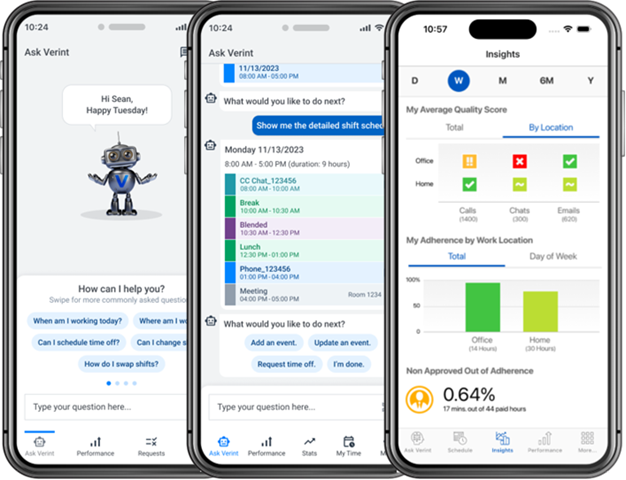
I find that Verint wants to give you a lot of customisation options, but this can potentially lead to a lot of work, but is also offers us something that we didn't have before, the opportunity to give benefits back to our employees with tools like request leave, shift swap, shift bidding, timeflex, etc. This is why we chose Verint Workforce Management.
A de minimis incentive was given to thank the reviewer for their time. The incentive was not used to bias or drive a particular response, nor was the incentive contingent on a positive endorsement. More Info
Workday is an incomplete product, by this I mean it must work alongside other products and does not work by itself. Trying to make several different products work smoothly together becomes very challenging. As compared to ADP products, when purchased all together work very well all together. Also, ADP has extensive Training programs and extensive Customer Support. So ADP's products are far superior to Workday's products in my opinion.
A de minimis incentive was given to thank the reviewer for their time. The incentive was not used to bias or drive a particular response, nor was the incentive contingent on a positive endorsement. More Info
Workday has released Financials and is continuing to develop it's Human Capital Management footprint with the addition of Workday Recruiting. I think customers will find that is easy to add on additional functionality in the system. Workday does make it easy for customers to make changes without relying on IT resources. The Business Process framework is a visual tool that allows functional resources to make changes and see the flow of the transaction
Staffing optimization - With the Verint tool, we have been able to optimize our workforce, reduce our staff and centralize our processes.
Employee Engagement - Our employees always know where their performance stands so they can take ownership in their performance.
We have implemented WFM in several areas of the company and have been able to improve those departments which have never had a tool to help in back office operations.
A de minimis incentive was given to thank the reviewer for their time. The incentive was not used to bias or drive a particular response, nor was the incentive contingent on a positive endorsement. TR verified that a representative sample of customers was invited. More Info
To get the most value out of all possible automation in Workday you really need to use a lot of their modules, otherwise you may not be able to solve for some pretty important and necessary needs.
The system maintenance is way more than what I have seen with some other systems and therefore you need a quite large team dedicated to it.
The ability to automate a lot of administrative tasks and the ability for employee and manager self-service definitely create a lot of opportunity for HR to spent time and effort elsewhere. A lot of the automation that can be leveraged in Workday also allows for eliminating third party vendors as well as the cost of their maintenance and integrations.
A de minimis incentive was given to thank the reviewer for their time. The incentive was not used to bias or drive a particular response, nor was the incentive contingent on a positive endorsement. More Info