TrustRadius: an HG Insights company

ScienceLogic AI Platform

Score8.8 out of 10

435 Reviews and Ratings

What is ScienceLogic AI Platform?

ScienceLogic provides a unified IT Operations platform designed to manage operational workflows using high-fidelity Telemetry Data and explainable automation. The ScienceLogic AI Platform is deployable across On-Premises, Cloud, and Hybrid Environments. The platform consolidates monitoring tools to provide Observability and enables engineers to automate manual processes using Machine Learning capabilities. The platform utilizes automation for Closed-Loop Remediation and provides insights governed by enterprise policies. The solution is intended to reduce Mean Time to Repair (MTTR) and improve operational efficiency by ensuring automated actions are verifiable and aligned with organizational requirements. Through direct integrations and Discovery capabilities, the ScienceLogic AI Platform allows enterprises and Managed Service Providers (MSPs) to manage distributed infrastructures. The architecture is built on continuous data collection to support infrastructure management at scale. The solution is designed for use by enterprises, MSPs, and government agencies to support service scalability. It facilitates toolset consolidation through automated workflows built on environmental data. The platform is intended to facilitate service restoration and provide organizational visibility. According to the vendor, the system aims to support the transition toward autonomous IT Operations.

Read more details.

Media

Screenshot of Unified Observability and Contextual Intelligence
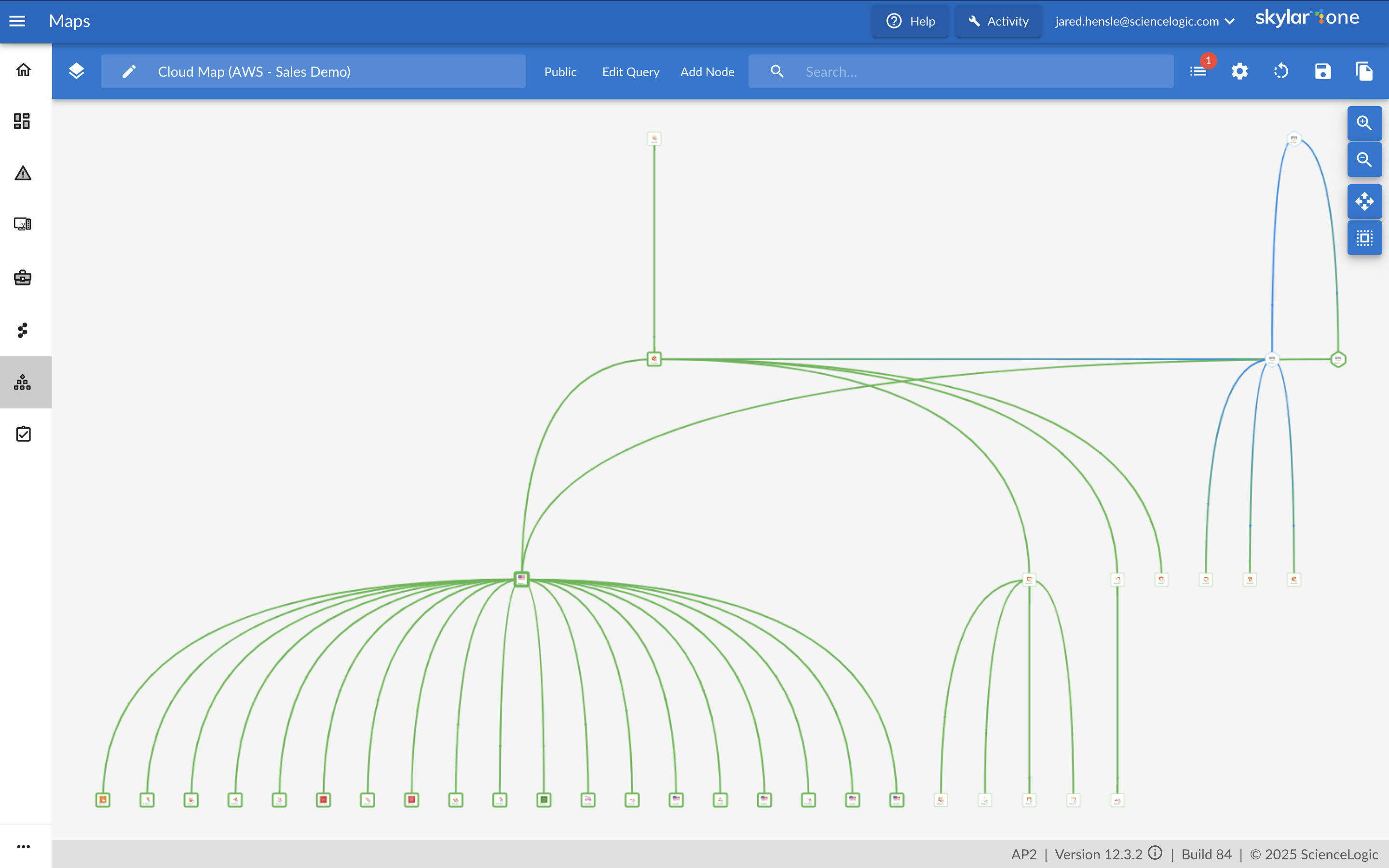
Screenshot of Relationship Mapping & Service Visibility
Screenshot of ITSM and Collaboration Integrations
Screenshot of Low-Code Workflow Builder
Screenshot of Dynamic Application Development
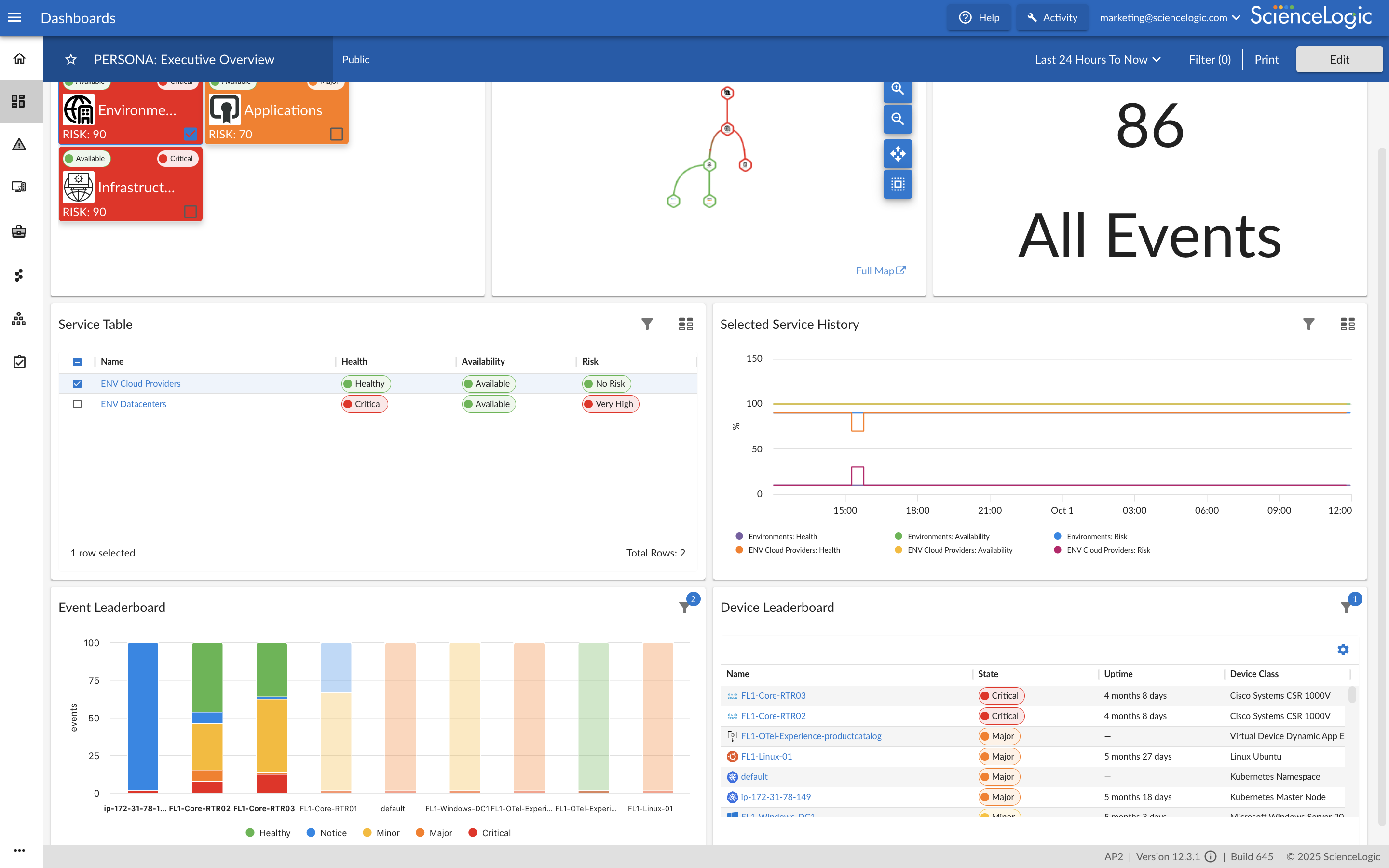
Screenshot of Executive Overview Dashboard
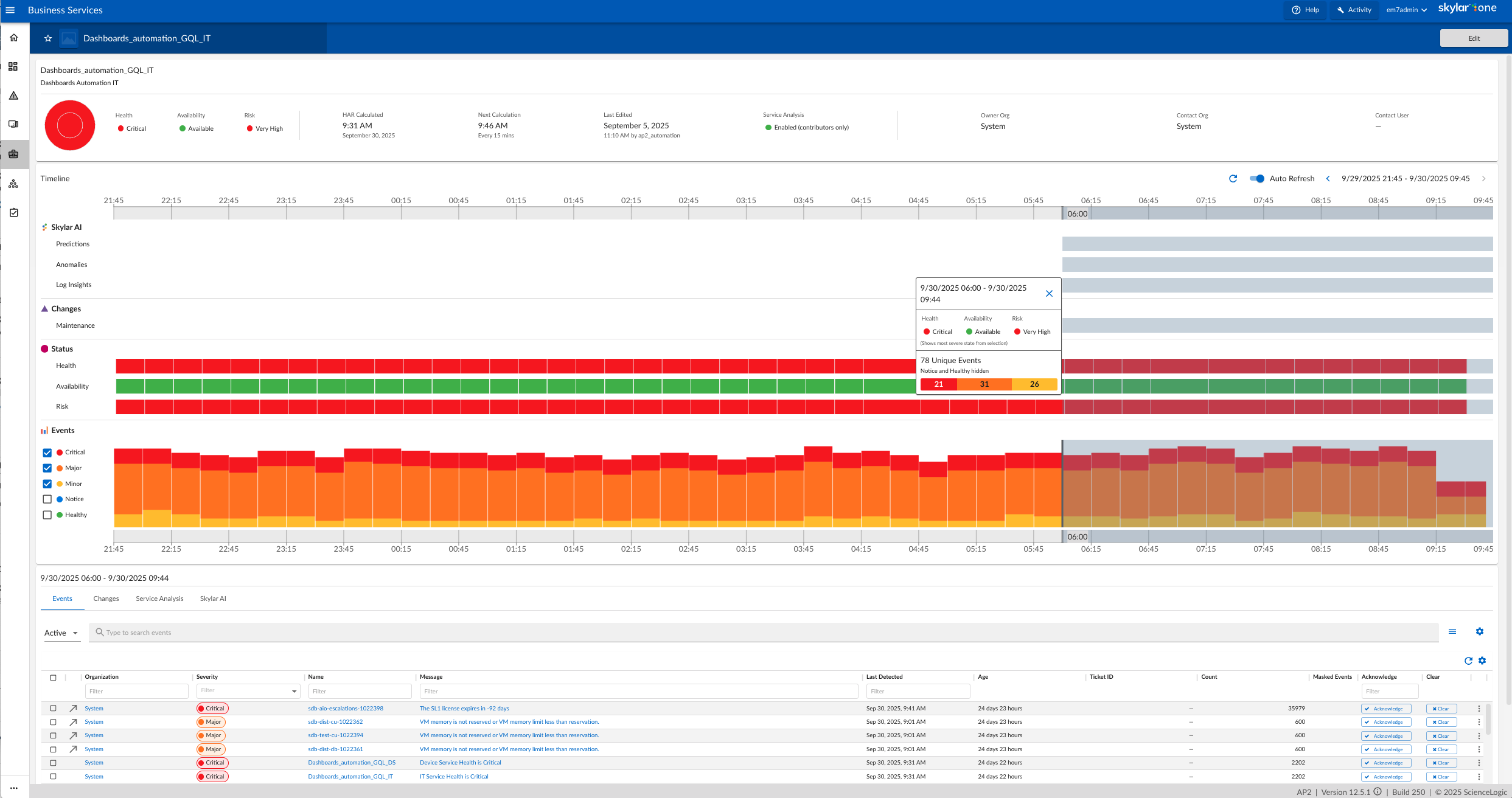
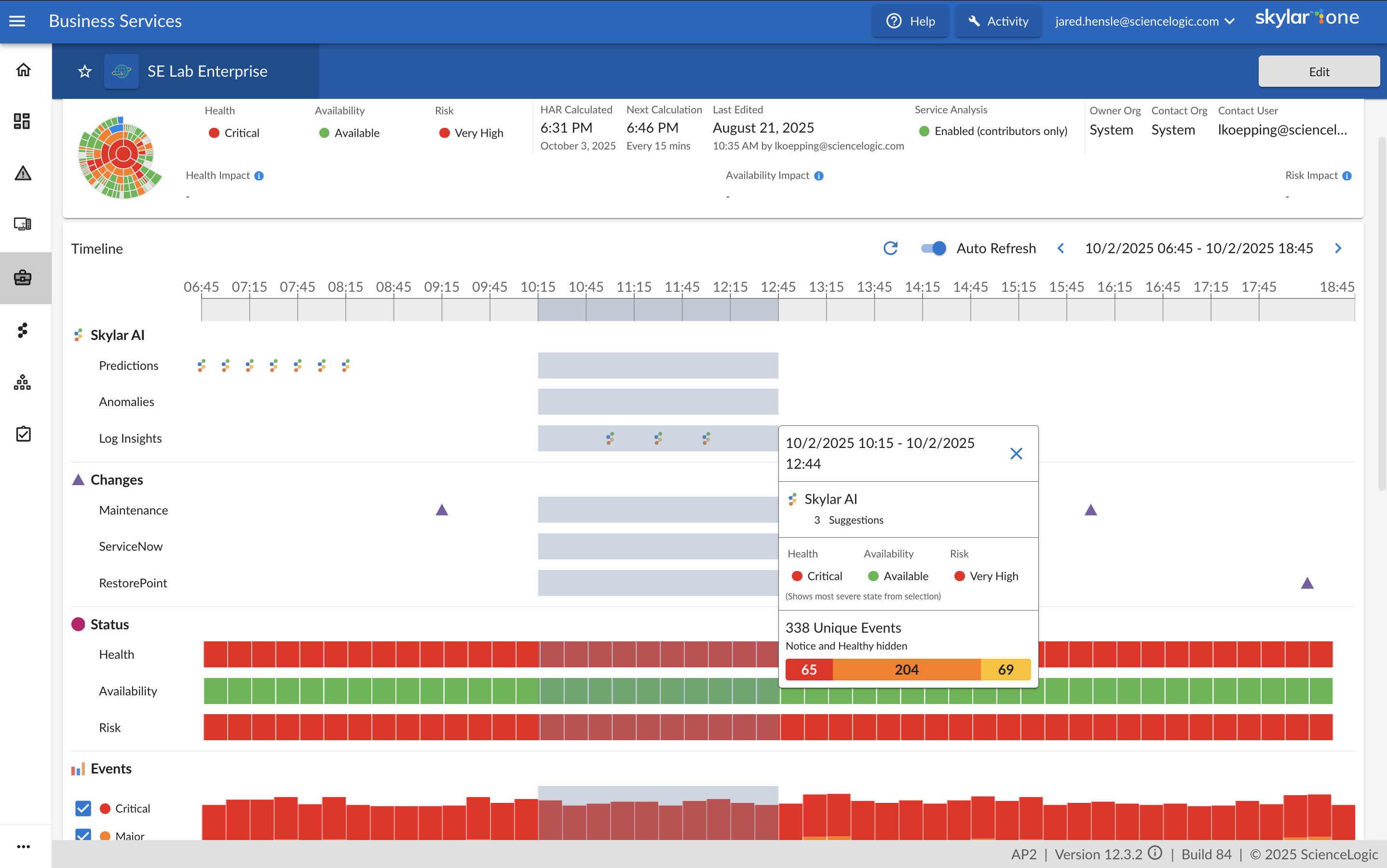
Screenshot of Business Services Dashboard
Screenshot of Relationship Mapping

1 / 8

Screenshot of Unified Observability and Contextual Intelligence

Top Performing Features

  • Monitoring and Alerting

    The tool provides real-time monitoring of IT infrastructure and applications, and prioritizes alerts to users when there are anomalies or issues detected.

    Category average: 8.1

  • Collaboration and Communication

    The tool provides features for collaboration and communication among IT teams, such as chat, ticket commenting, and shared dashboards.

    Category average: 7.7

  • Performance Analytics

    The tool analyzes historical performance data to provide insights and recommendations for optimizing system performance and resource allocation.

    Category average: 7.7

Areas for Improvement

  • Threat Intelligence

    The tool can leverage external libraries of known issues, best practices, and troubleshooting guides to support IT teams in problem-solving and decision-making.

    Category average: 7.2

  • Capacity Planning Tool

    The tool predicts future resource utilization and helps IT teams plan for capacity upgrades or adjustments to avoid performance issues.

    Category average: 7

  • Incident Management

    The tool helps manage and track incidents by providing a centralized platform for logging, notifying, and resolving incidents.

    Category average: 7.1

Pros

  • Comprehensive monitoring and observability across diverse IT infrastructure
  • Granular metric collection and effective alerting for service disruptions
  • User-friendly interface and straightforward overview in Device Manager

Cons

  • Complex user interface and overall user experience challenges
  • Inefficiencies in event parsing and customization for alarms
  • Specific feature gaps, such as SSH password management for STIG systems

SL1 A Reliable User-Friendly.

Use Cases and Deployment Scope

To monitor any type of network device, it's very user-friendly & easy to understand. We can explore much & have real-time troubleshooting. Log analysis is very efficient. Dashboard customization & report fetching based on user requirements can also be done very proficiently.

Pros

  • Monitors of any type of network nodes.
  • Delivering unified visibility across hybrid and multi-vendor environments.
  • Observability

Cons

  • Event parsing & ticket generation can be more efficient.

Return on Investment

  • Time saving.
  • Power flow.
  • Enhanced visibility.
  • Observability

Other Software Used

Splunk Enterprise Security

ScienceLogic is a Logical Choice

Use Cases and Deployment Scope

We use ScienceLogic as our proactive monitoring platform for our core infrastructure devices, including our VMs, as well as all the devices for our managed customers. The monitoring notification system allows us to notify the key stakeholders, by email of any potential issues before it becomes critical. The flexibility of ScienceLogic is allowing us to tailor the monitoring of each device differently.

Pros

  • Versatile
  • Integrated with our existing environment
  • Customize

Cons

  • Expensive
  • No standard template

Return on Investment

  • Being proactive
  • Allow for release management
  • Trending analytical

Alternatives Considered

Zenoss Cloud

Other Software Used

ServiceNow IT Operations Management, Calabrio Teleopti WFM

Science Logic : Journey from Better to Best

Use Cases and Deployment Scope

Science logic helps our company to provide services to the customers in more easier and relevant ways. We can easily monitor any sort of devices on it in a very unique way. The design scope of a use case can be the enterprise, a specific system or a subsystem. Use cases that are used to describe the business process are typically of scope “enterprise”.

Pros

  • It better monitors every single and smallest things for the devices like CPU utilization, Thresholds, Memories etc.
  • Auto-ticketing for the alerts is the best part of it.
  • It helps to build relationship between one parent and many child devices.

Cons

  • It should only alert for the device/server which is down, not for all the other devices attached to the same affected devices.
  • Tabs should be in more organized manner instead.
  • Nothing more.

Return on Investment

  • We integrated ScienceLogic SL1 to streamline our IT operations. We used its unified monitoring for a clear view of our hybrid IT environment, automating asset discovery which saved significant manual effort. The platform's AI-driven analytics improved our incident response, dependency mapping aided in informed decision-making during migrations, and its capacity planning tools optimized our resource utilization. Overall, SL1 transformed our IT processes, making them more proactive and efficient.
  • Grouping of Devices for central management
  • communicates with Service Now very well
  • Easily search customers or devices
  • Event Monitoring
  • Dashboards and creating custom Dashboards
  • Device Discovery

Alternatives Considered

Fortinet on IBM Cloud

Other Software Used

Fortinet on IBM Cloud

Usability

Monitor your Infra with ease, as SL is there always

Use Cases and Deployment Scope

We use ScienceLogic SL1 to monitor the entire IT Infra. We have a dedicated team who is monitoring the SL effectively and reaches out to concern teams proactively before there is a major impact. This helps us very good to avoid the impact downtime for our customers.

Pros

  • Monitors the Infra efficiently
  • Auto Tickets to respective queues whenever any flaws in Infra
  • Email reminders gets for any CRITICAL issues on Infra

Cons

  • Auto Ticketing is a real time challenge.
  • When event gets changed from Minor to Major, the incident comes back to source queue
  • No location filter option in register to filter via device location wise

Return on Investment

  • Reduced Business Impact
  • Before MIM gets created, we come to know the issues and started to address
  • Auto ticketing from SL to right queues, as no manual routing required

Alternatives Considered

Microsoft System Center Operations Manager (SCOM), Splunk Application Performance Monitoring (APM) and Grafana

Other Software Used

Microsoft System Center Operations Manager (SCOM)

SL1 - Easy to implement robust monitoring

Use Cases and Deployment Scope

SL1 was recently introduced in my organization. And now the adoption of SL1 for critical infrastructure alerting and monitoring is now in full force. The organization was able to adopt and deploy the service quickly with ease

Pros

  • Alerting and observability
  • Data gathering of metrics
  • Visualization

Cons

  • UI/UX can be further improved for simplicity
  • Use AI for suggestions and improvement of metrics
  • Better SSO login implementation

Return on Investment

  • Positive impact to business as deployment was easier
  • Decommissioning of legacy servers helped better implementation
  • Automation was much easier

Alternatives Considered

Zabbix and IBM Netcool Network Management

Other Software Used

Zabbix, Dynatrace