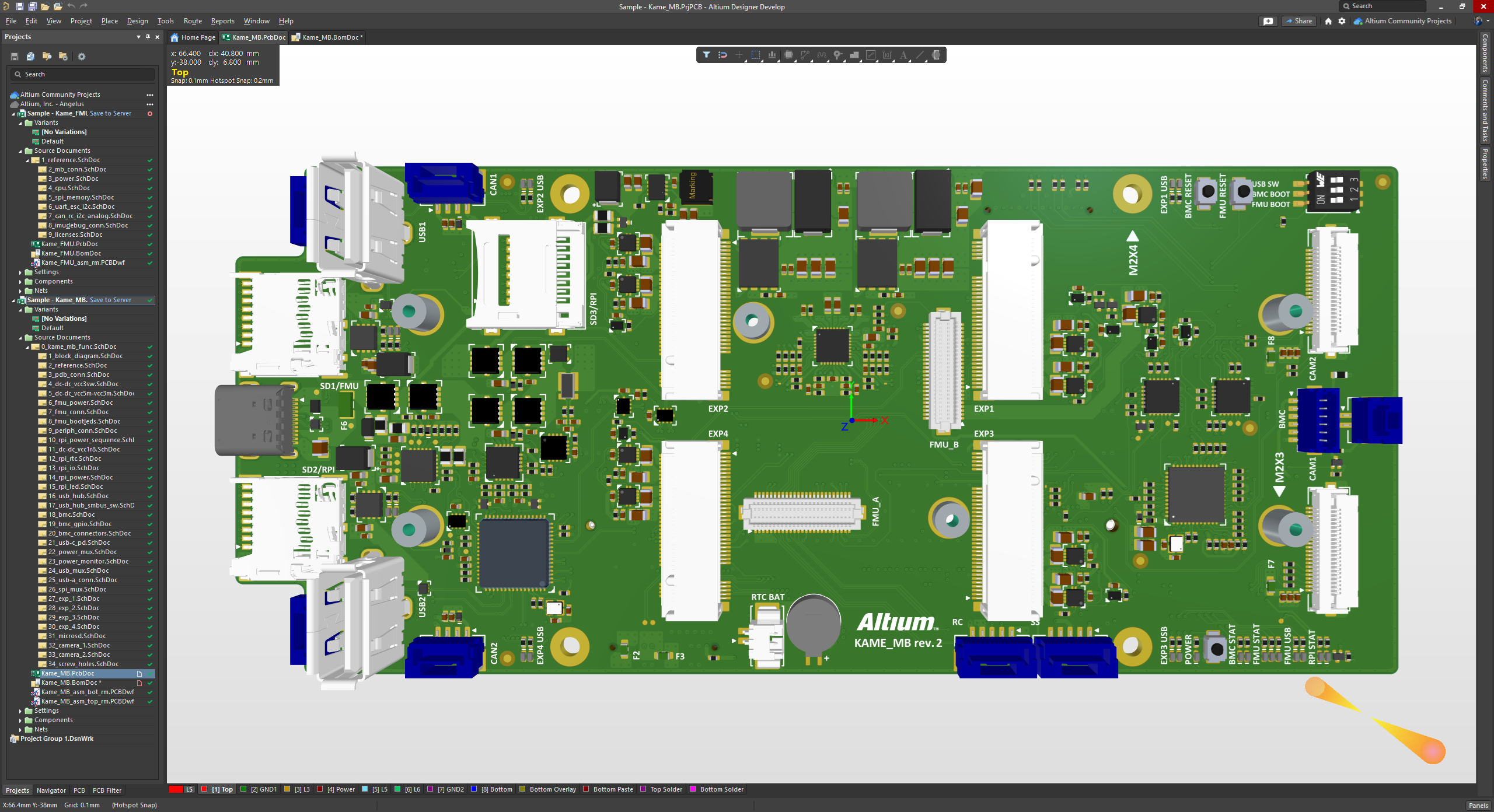
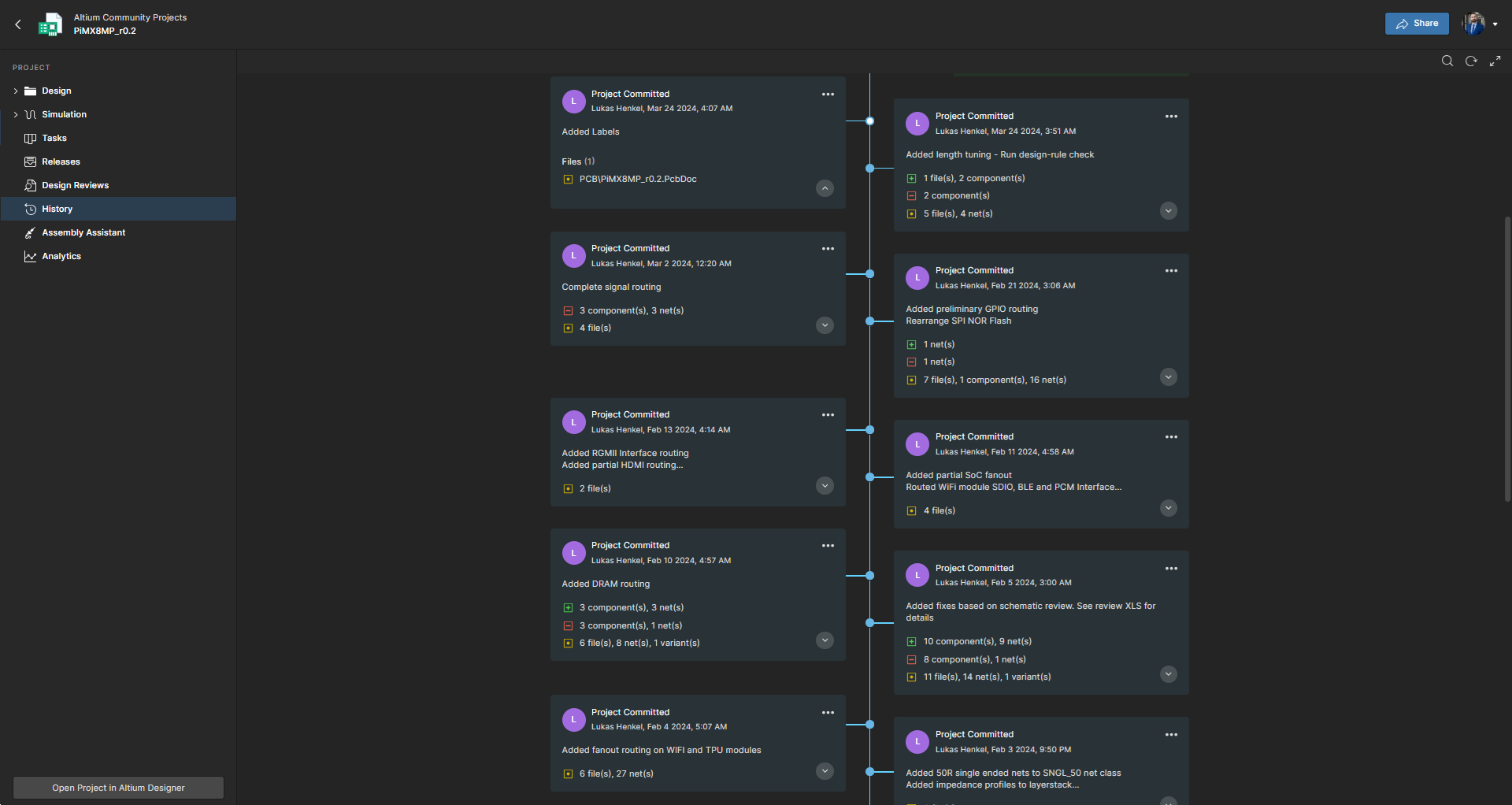
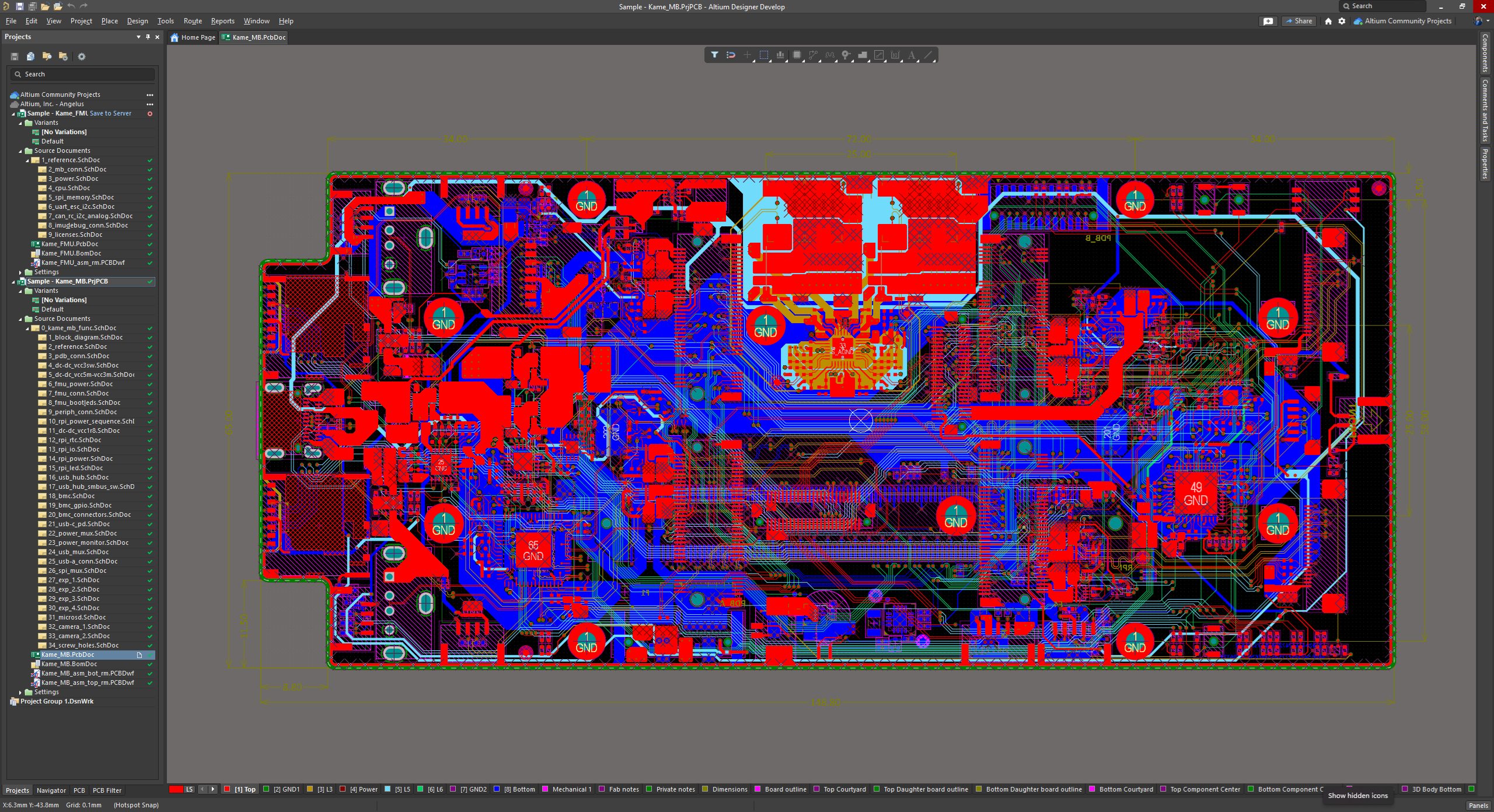
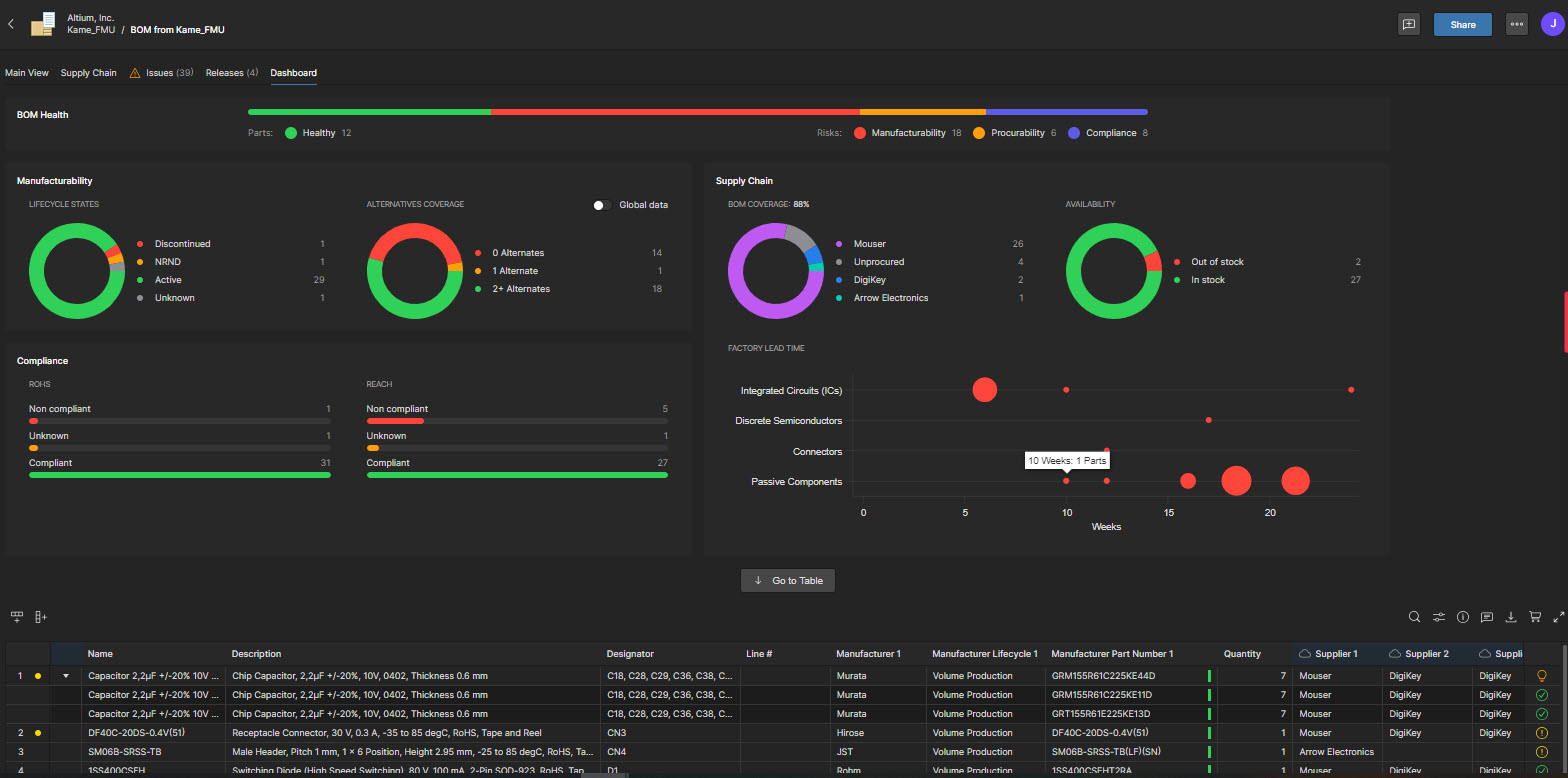
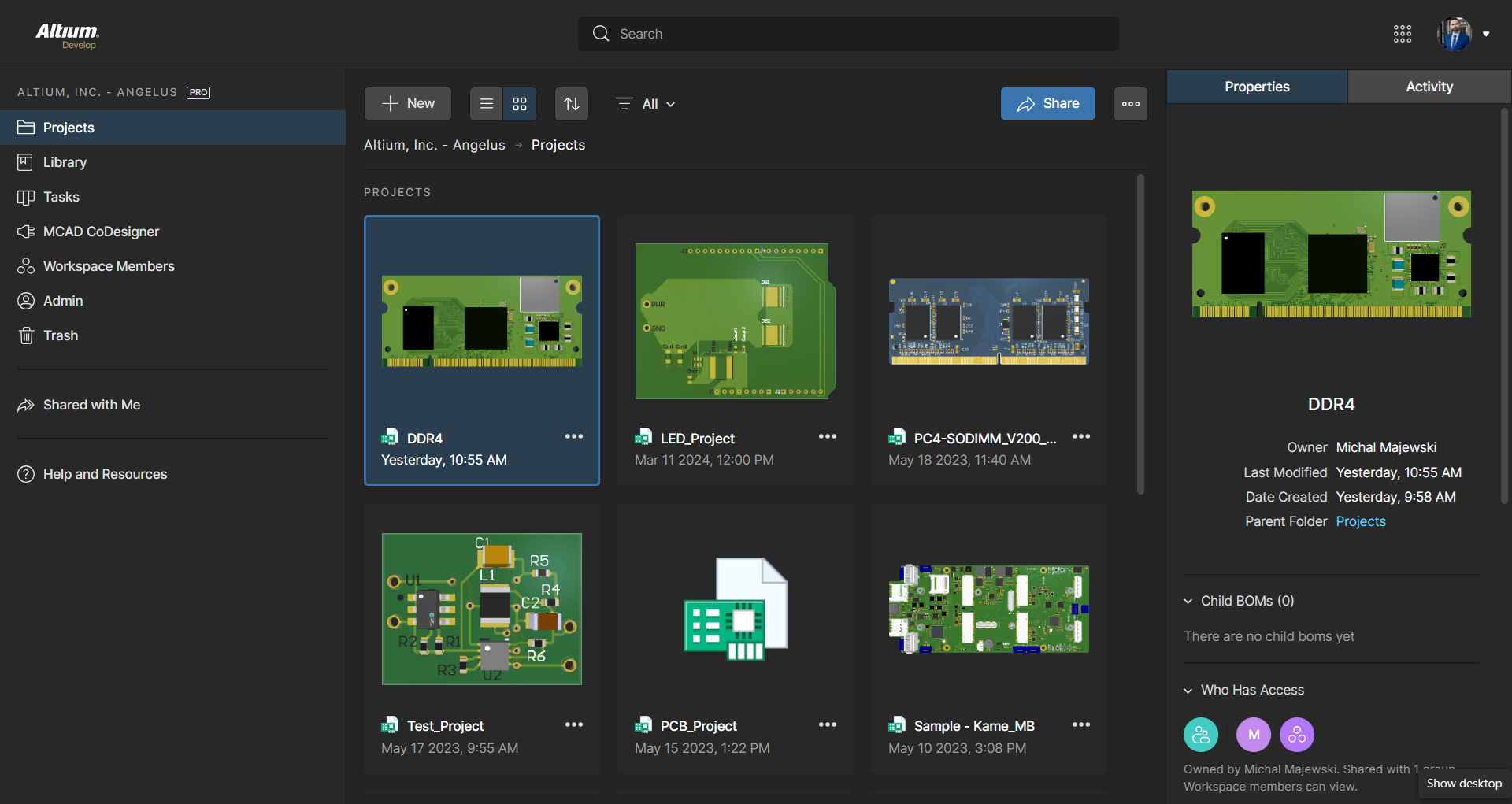
Altium Develop is a platform that unifies multidisciplinary teams across engineering, sourcing, and manufacturing to support seamless co-creation. It provides real-time visibility into designs, requirements, and supply chain data, enabling contributors to work together concurrently rather than in silos.
$1,990
per year
Autodesk Fusion
Score 7.9 out of 10
N/A
Autodesk Fusion is a cloud-based 3D CAD, CAM, and CAE tool which integrates design, modeling, and simulation capabilities.
$70
per month
SOLIDWORKS
Score 8.6 out of 10
N/A
Dassault Systemes offers SOLIDWORKS, a computer-aided design (CAD) system for education and manufacturing supporting 2D or 3D design, electrical design, simulations, and product development with collaboration tools.
$1,295
per year
Pricing
Altium Develop
Autodesk Fusion
SOLIDWORKS
Editions & Modules
No answers on this topic
Fusion 360 - Paid Monthly
$70
per month per user
Fusion 360 - Paid Annually
$545
per year per user
Fusion 360 - 3 Years
$1635
3 years per user
Solidworks Annual Subscription
1,295
per year
Solidworks Standard
3,996
per standalone license
Offerings
Pricing Offerings
Altium Develop
Autodesk Fusion
SOLIDWORKS
Free Trial
Yes
Yes
No
Free/Freemium Version
No
Yes
No
Premium Consulting/Integration Services
No
No
No
Entry-level Setup Fee
No setup fee
No setup fee
No setup fee
Additional Details
Altium Develop is offered as an annual subscription starting at $1,990 per year, which includes one Altium Designer ECAD Design Author and a shared workspace for projects, libraries, and collaboration. The subscription provides unlimited workspace users at no additional cost, enabling broad participation in reviews, commenting, task management, BOM access, and change workflows.
Teams can add up to four additional Altium Designer ECAD Design Authors for $995 per Author per year, allowing organizations to scale active design capacity while keeping contributors and collaborators included at no extra charge.
OrCAD was used at our company for years before we switched over to Altium Designer. Usually, moving all projects from one software can be a pain and time-consuming. Altium Designer made it very streamline to move all projects over, including all component libraries. In …
For some reason Autodesk Eagle wasn't showing up, but personally the cross team aspect of Altium Designer is much better, as well as the schematic editing and PCB editing, especially on a board level with placing constraints and editing layers. Fusion360 with its new schematic …
I used Eagle for a long time, then switched to Altium Designer around 2014. Eagle was rather basic comparatively, but also comparatively dirt cheap and capable for modestly complex designs. But the future was clear - Altium Designer was required for stepping up my design game.
Altium Designer is a CAD tool like the others. In comparison, Altium is chosen for its ability to make electrical circuits, its wide capacity, and its shared mode, which facilitates configuration and improves work time on projects.
Overall Altium Designer is in another league compared to KiCad, especially the older versions. The whole design process works better in Altium Designer. The only thing I miss from KiCad is the disjointedness between symbols and footprints. Whilst less appropriate for …
Altium Designer is the industry standard for a reason. While KiCad can be used for complex and capable designs the software will fight you along the way. Further, the constantly breaking backward compatibility makes KiCad hard to maintain current versions and up to date with.
Altium Designer is far easier to use and has a simplified pricing model for use to forecast project costs. Altium Designer also has many value-added features such as Altium 365 and MCAD integration which we can use for no additional costs. Other vendors charge by feature. …
It is certainly easier to get designs up and running with great support and constant software updates. The ability to work with or without the cloud is a great feature. The only downside to Altium Designer is that it does have a cost to it that is not cheap. Overall I think it …
I prefer Altium Designer because it makes collaboration easy, and I have had a more enjoyable time using it. Altium Designer runs better on my computer than other software, and I have never run into a problem while using it. It allows me to really get into my work and focus on …
Fusion 360 is the most modern and robust professional CAD program on the market. It has its quirks (as with any robust piece of software), but overall it provides a lot more functionality than the traditional CAD programs -- SOLIDWORKS, Creo, and Autodesk Inventor. If it …
Fusion 360 is the second-most powerful software of the three, SOLIDWORKS being the best. Fusion 360 is an excellent step into making 3D CAD available to more people, but there are definitely still kinks they need to work out. The software gets sluggish and slow at times, but …
Both [Autodesk] Fusion 360 and SOLIDWORKS are far beyond any open source project or 2-D oriented software. Compared to SOLIDWORKS, [Autodesk] Fusion 360 comes packaged with more functionality without needing to purchase additional add-ons for each function.
SOLIDWORKS wins hands down. I will be cancelling Fusion 360 as I have realised Fusion 360 is a budget package with no support.
Verified User
Engineer
Chose Autodesk Fusion
They are mainly related to CAD-type software, which is useful for modeling/design, although in a different area. In this case, Fusion is used because it is for mechanical-type models used in prototyping that are not related to some aspect of electronics, which differentiates it …
Fusion 360 is a cloud-based CAD software with built-in rendering, simulation, and CAM programming functionality. SOLIDWORKS has all of these options at an additional cost. Fusion 360 may be a cheaper option; however, being in the cloud, simulations are costly and larger …
We originally used Autodesk, but we switched to SOLIDWORKS a few years ago primarily because of the slightly better ease of use, more readily available support and training from 3rd party resellers local to us, and what seemed to be more engineers with experience using …
Solidworks is easier to use than Creo, but not as usable as Inventor. It is superior to Onshape and Fusion, however, Onshape is better for collaboration.
It's very good. SolidWorks has a great marketing budget and really reaches college students. My loyalty actually is to Inventor by AutoDesk, but honestly, they do the same things equally as well. I think that the user interface is better in Inventor and allows me to be …
SOLIDWORKS is so much more advanced than either of the other programs. Fusion 360 and Inventor are great programs, but once you get to more complicated models, they do not stack up. There are so many more functions and ways to customize files in SOLIDWORKS for users to create …
SOLIDWORKS has been around much longer than Fusion 360...and in many realms they aren't even comparable. Fusion 360 is great for small product development projects... but really can't handle large files like SOLIDWORKS can. SOLIDWORKS overall has better and more simulation …
It's the most approachable "professional" package for small to medium-sized businesses, given the price point. It's fairly mature feature-wise and has improved stability enough over the last 5 years that it no longer constantly crashes. But it feels like there's a push to constantly increase prices until it's no longer an obvious choice. That, coupled with the insistence on subscription models and the terrible user experience when on poorly connected mobile data plans, means it's still my CAD package of choice, but I'm now a reluctant user rather than a fan.
This software has been so easy to use from day one! I couldn't be more thrilled with it. Being an SME, it is offered on an annual basis free of charge. My network of engineers are amazed I am able to accomplish what I have using this software when the companies they come from are paying thousands for licensing. I also would like to note that Autodesk offer an incredible specialization to really round out your skills via Coursera.
As a mechanical engineer, it is one of the best tools to just start modeling and engineering with. The UI tools are intuitive and engineering analysis such Mold Analysis, FEA, are great! Other 3D CAD modeling tools have a longer learning curve to master. All in all, if you're not planning to design an entire airplane with large assembly files, then Solidworks is your tool!
The first PRO of Fusion 360 that always comes to mind is how versatile it is. Fusion 360 is the first CAD/CAM software that also includes other key features that CAD programs of this size don't have.
Fusion 360 has a generous licensing structure that gives those just starting out a place to start with a professional level CAD program. As a result, this has helped build up a huge community and user base around Fusion 360.
Fusion 360 is updated on a monthly basis. This has proven to be a huge advantage over Solidworks (something else I use) which is only updated once a year. The nice thing about monthly updates, other than regular bug fixes, is that the team can adapt quickly and no one is taken by storm with a big overhaul of the UI or features at the beginning of the year.
The collaborative work environment is a cool and useful feature where groups of people can work on the same model at the same time, and SOLIDWORKS ensures that you don't overwrite each other's work.
The ease and amount of customization options are very useful for creating a personalized and intuitive user interface, whether SOLIDWORKS is your native CAD package or not.
It is very easy to quickly edit a model you have already created. The software allows sketch and feature editing without having to take the time to actually enter the sketch/feature environment.
The use of configurations and configurations-specific dimensions in the same sketch is very useful for creating different forms of the same part
It is difficult to create new components while reusing existing footprints/symbols. For example, reuse a 1206 package footprint, create a variant for resistors with an appropriate 3D model, and then a variant for capacitors with an appropriate 3D model.
The software's overall responsiveness seems slow, and it does not update properly in all instances. For example, clicking a component in the schematic will not always show its properties; it usually shows the properties of the last selected component. Clicking the blank space in the schematic first, then selecting the component, seems to load some of the correct data. But the 3D model in the properties view would still show the last EDITED part.
Saving components to the server would not always register correctly, requiring the component editor to be closed 'without saving' to close the part out, even though no changes were made since the last save to the server.
It is unclear where a list of footprints/symbols can be managed. For example, deleting a deprecated footprint so that it does not appear as a valid option in the future.
BOM part choice data has an NRFND component selected as in use, causing the status to be yellow. There is no apparent way to select a different manufacturer part as the 'in use' part to resolve the warning.
Updating from the library does not pull the most up-to-date symbol/footprint data for a given component. So far, there does not appear to be a way to do this, even though the component itself has been updated to use the correct references. This may be related to the general delays and consistency/reliability issues with the online link.
Fusion 360 is a very simple program, so once you begin to draw more complex 3D models, the software gets sluggish and loses its fluidity.
It would be really nice if Fusion 360 could output a model as a SolidWorks file so I can begin to draw something out in Fusion 360 and then pick it up in SolidWorks when I need to do some more advanced functions.
Because Fusion 360 is a simpler program, there are a few functions such as 3D sketches that are not intuitive like all the rest of the functions are.
Save DWG 2D files in inches or metric easily, defaults to metric and has to be manually converted to inches
When using the sketch feature, the ability to disable ALL references. If I don't know the exact shape and I want to draw/adapt my design, it harshly interprets the references which have no value to me. The easiest exact is to think about when you have a Microsoft Word document that has a lot of formatting, photos, tabs, etc. If you accidentally hit the "enter" key, you can explode the formatting and everything goes crazy. SW does this to me, I just want to "doodle" my sketches, edit/delete/etc and not be bound by arbitrary references.
For the sketch feature, ability to use a DraftSight plugin of some sort. I'm super fast in DS, if I could draw using the commands in SW then I would probably never open DS again and convert to SW full time. Currently, I only use SW as a way to convert 3D files so I can build everything in DraftSight.
ALTIUM DESIGNER is the reference tool in the electronic circuit design sector, its use is widespread worldwide. Although there are other alternatives, some of them free do not rival ALTIUM DESIGNER in terms of features and reliability. It is also very practical to request quotes with ALTIUM DESIGNER BOM reports since all suppliers are accustomed to using the tool.
I originally chose Altium Develop for its superior usability. All operations being handled in one cohesive platform greatly improves efficiency. When handling many different designs, project setup and component creation eat into every project's productivity. Templates, defaults and design reuse all speed up design. I hold back from a higher rating because development focus on those usability features seems to have stagnated a bit. Simple missing features requested seem to remain missing. New collaboration features, simulation and sourcing features are released, but I just want to be able to draw dashed lines! I think this reflects a general focus on the 10% of datacenter/AI/smartphone customers over the 90% of 2-4 layer designs. The lack of information available during the platform transition gave me significant pause before buying in as well.
Because the tool is very useful and easy to access, it provides very basic and useful tools to start in the modeling part despite being basic processing aspects. It is also very easy to get a free, temporary, or student license, which makes it a very good CAD tool.
I have been using SOLIDWORKS for around 12 years as of writing this review, so have learned where most things are and how they work. When first starting out it was quite daunting, but the interface is well laid out with like functions near each other which made finding new functions relatively easy.
Support is conducted via internet Q&A boards; newcomers to 3D modeling may find that articulating their questions in the language of CAD software is the tricky part — once they find the right technical term for what they're trying to accomplish, answers come quickly. Autodesk also provides a large library of educational tutorial videos that make the initial process of learning Fusion 360's interface much easier.
We have an unusual arrangement. We don’t pay for support, but we’re partnered with a VAR for second-tier support.
I work with other users if I have questions but when we’ve had to ask the VAR, they always have answers. It appears that all of the VARs have access to a support platform from DS SOLIDWORKS that helps them answer most questions.
In terms of collaborative work, Altium 365 is the easiest to use since KiCad nor OrCAD have sophisticated infrastructure for team members to interact with each other. By allowing features such as organizations and version control, Altium 365 is by far the best product for collaborative work. Additionally, electronics parts management and creation is better in Altium 365 than the other products. Actions such as importing schematic libraries, creating bills of materials, and conducting simulations are simply better in Altium 365.
Autodesk Inventor excels at daily core engineering tasks. When integrated with Vault management systems and part libraries, Autodesk Inventor is tough to beat when you need a mechanical design solution. When Inventor and Vault are setup properly it allows for a very efficient design workflow. I think it would be difficult to achieve the same amount of workflow efficiency with Autodesk Fusion 360, that said, Autodesk Fusion 360 offers a very good toolset at a much lower cost. I can maintain a yearly subscription of Autodesk Fusion 360 and get about 85% of the functionality that is available via the Inventor design suite for the cost of about 2 months of an Inventor subscription. I then also get access to manufacturing plugins with Autodesk Fusion 360 but lose a lot in the drawing environment. Inventor beats Autodesk Fusion 360 hands down when it comes to documentation.
Onshape is a direct competitor. It has great entry level pricing and it is easy to access with no installation required. Being a web based app there is sometime some lag being based in NZ. Management also have concerns over where the data is stored on the cloud. With SW we can control where it is stored