Audiense is a social marketing platform focused on Twitter analytics. The company and product was formerly called SocialBro, and rebranded in 2015. Capabilities include social listening, social marketing, and Twitter advertising.
$99
per month
MutualMind (discontinued)
Score5.6 out of 10
N/A
MutualMind was an enterprise listening platform with engagement and publishing features and analytics, that is now discontinued after the company's acquisition in 2016.
When you start a strategy and want to discover how the audiense is composed, this is the first step to start exploring and then create your buyer personas with more details from other auxiliary tools (social listening, market research). Audiense is the best way to start exploring. It works better when you are dealing with big social media accounts when you want to explore audiences from a specific country or very specific interests. It’s good to import information from listening tools like Brandwatch to get better results about your audience.
A de minimis incentive was given to thank the reviewer for their time. The incentive was not used to bias or drive a particular response, nor was the incentive contingent on a positive endorsement. More Info
Audiense is the best tool I have found for tie your tweets to changes in your followers. In essence, I can see when tweets are gaining or losing followers for my account.
Audiense also has great analytical tools like best time to tweet reports
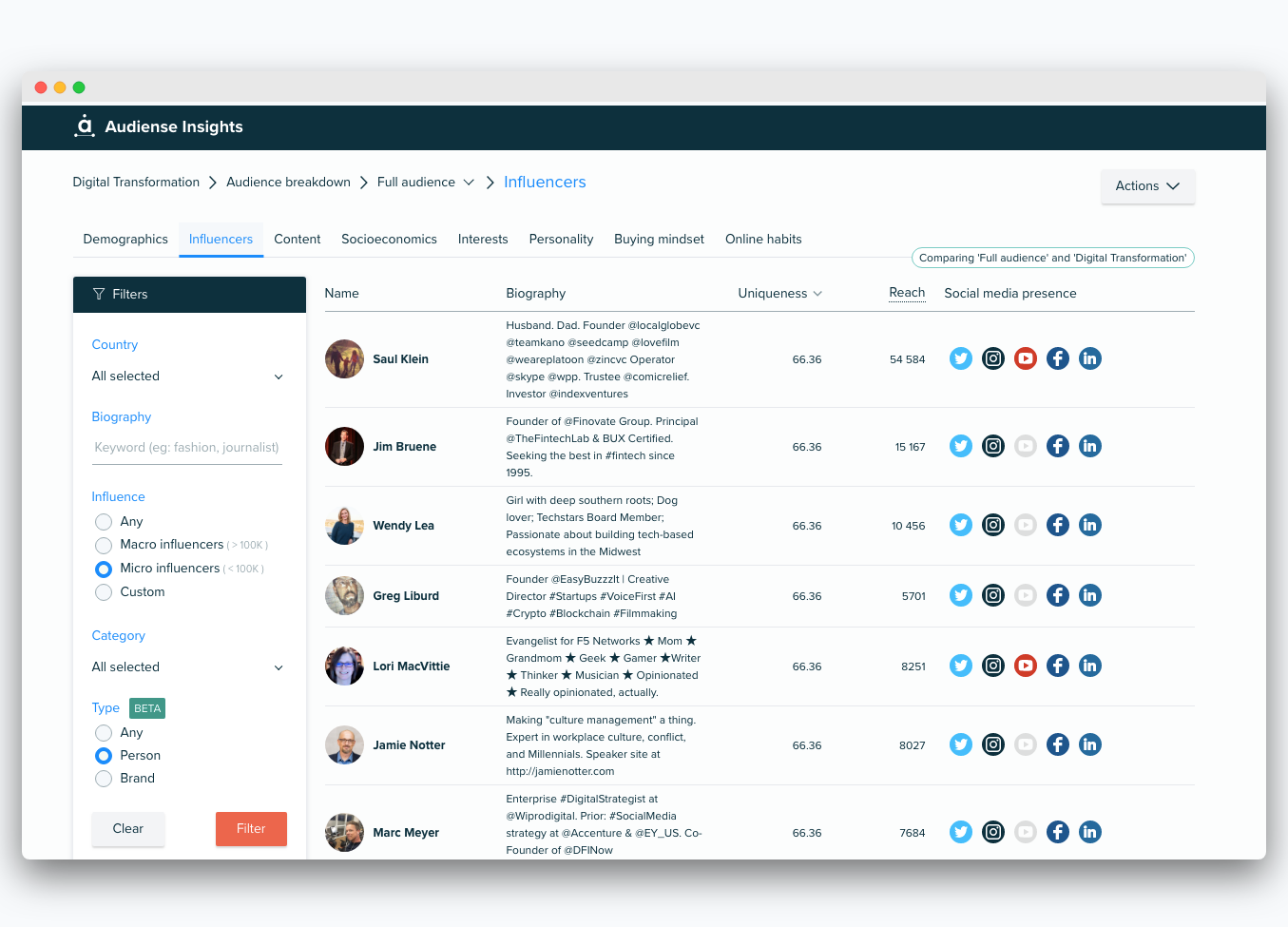
Audiense also provide a very complete look at each person you follow or is following you. It helps to understand who the people are.
MutualMind gives us a view into the reach of social content we produce on behalf of our advertisers and the engagement that content generates with shoppers.
For the USA, if Audiense.com is able to pull in the FULL spectrum of Acxiom data, then we have a truly splendid solution.
For the world, if Audiense.com is able to enrich an audience with PIPL, Apollo.io, and Full Contact API data, then we have the next iteration of this already amazing solution
As Audiense.com refines its SEMRush partnership, we will see advanced SEO unlink anything seen in past decades.
If Audiense.com were to integrate the full capabilities of Relationship Science ( relsci.com ), then we would, as salespeople, have the next iteration of the solution as a sales power tool.
A de minimis incentive was given to thank the reviewer for their time. The incentive was not used to bias or drive a particular response, nor was the incentive contingent on a positive endorsement. More Info
MutualMind gauges sentiment around social conversations but does so with the standard margin of error found in most social analytics products. The nature of human conversation makes it difficult for a machine to categorize sentiment with 100% accuracy. MutualMind gets sentiment right between 50% to 70% which is within acceptable industry averages for this type of product. With additional tuning (which MutualMind provides) the accuracy levels will increase.
I have been using it for a few years now and I still think it's a pretty competitive tool, although a lot of new interesting tools are coming on the market and I am always on the lookout for new solutions. If it keeps innovating, however, Audiense could stay relevant for some time to come
A de minimis incentive was given to thank the reviewer for their time. The incentive was not used to bias or drive a particular response, nor was the incentive contingent on a positive endorsement. More Info
As a company that's only 3 years old, MutualMind's toolset is quite usable but it could use some tweaks in the user interface, which they are constantly working on.
During a recent upgrade period, MutualMind had a small window of unavailability. I am confident they have addressed the root cause and do not foresee any future issues.
The product's performance has improved greatly in the last year and we anticipate seeing additional improvements in coming months based no planned infrastructure changes.
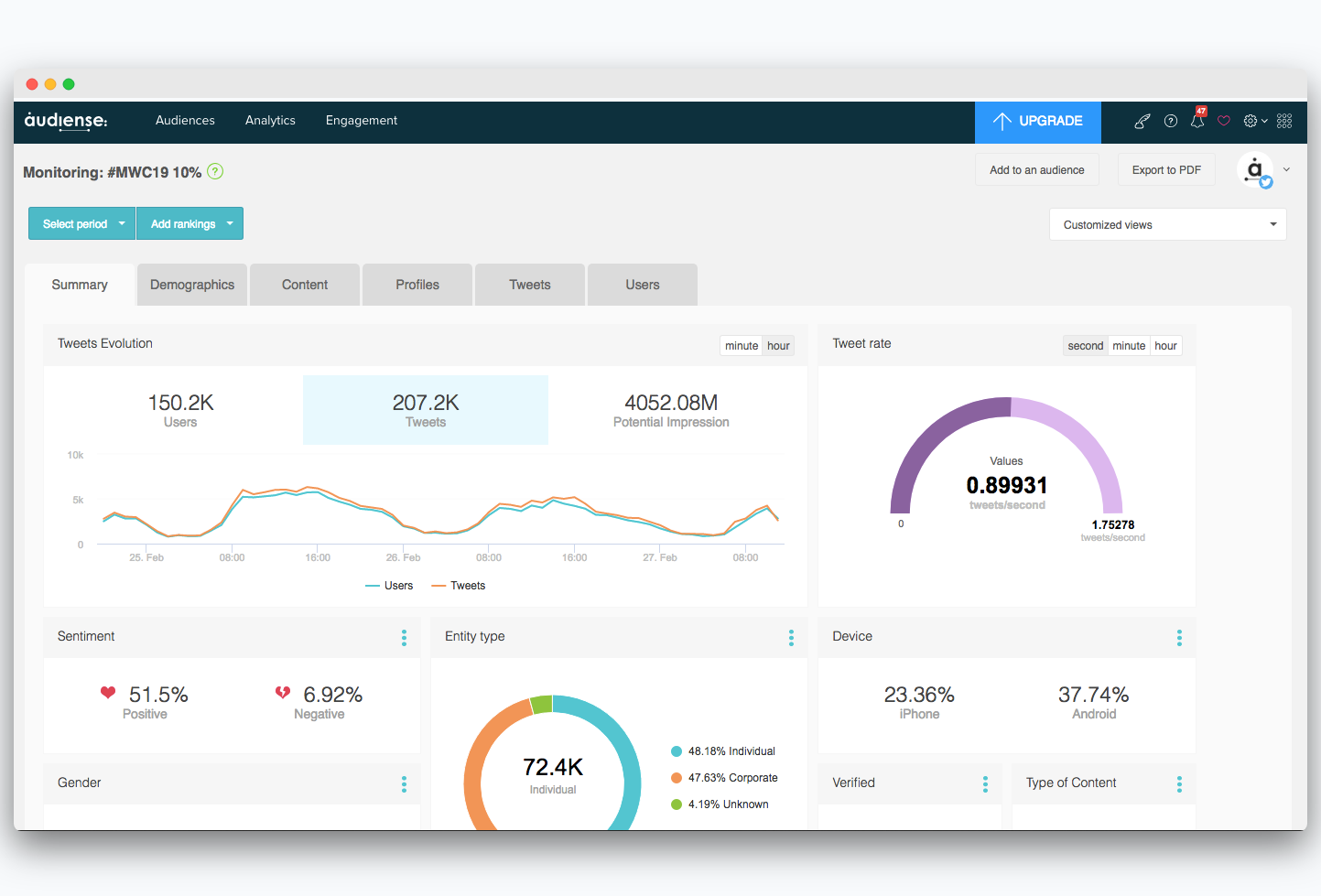
I have used a few audience insight tools but I find Audiense has a large mix of data within one platform. For instance, IBM Watson, Demos, Social Listening, Hashtags. It is great to have a lot of insights about an audience in one place to have a holistic understanding.
A de minimis incentive was given to thank the reviewer for their time. The incentive was not used to bias or drive a particular response, nor was the incentive contingent on a positive endorsement. More Info
Definitely increased the value of my social intelligence data. Now I'm able to really understand who my audience is and this helps my clients think about them as real people instead of an anonymous group.
Time saved, being able to click a button and then have my audience generated within a couple of hours without me having to do anything else is invaluable.
A de minimis incentive was given to thank the reviewer for their time. The incentive was not used to bias or drive a particular response, nor was the incentive contingent on a positive endorsement. More Info
By showing increases in engagement and share of voice (defined as the amount of content generated for our advertisers versus the amount of content generated for their competitors over time) we are able to correlate content to incremental sales data provided by our advertisers.