Blackbaud Grantmaking (formally GIFTS Online) is part of Blackbaud’s extensive portfolio of software, services, data intelligence and expertise that powers social good. Blackbaud Grantmaking delivers grantmaking capabilities configured to meet the user's needs, and to improve efficiency with personalized online grant applications and report forms, personalized user dashboards, and simplified financial processing tools. By providing access to giving data, including standard, advanced, and ad hoc…
N/A
Agentforce 360 for Nonprofits
Score 8.7 out of 10
N/A
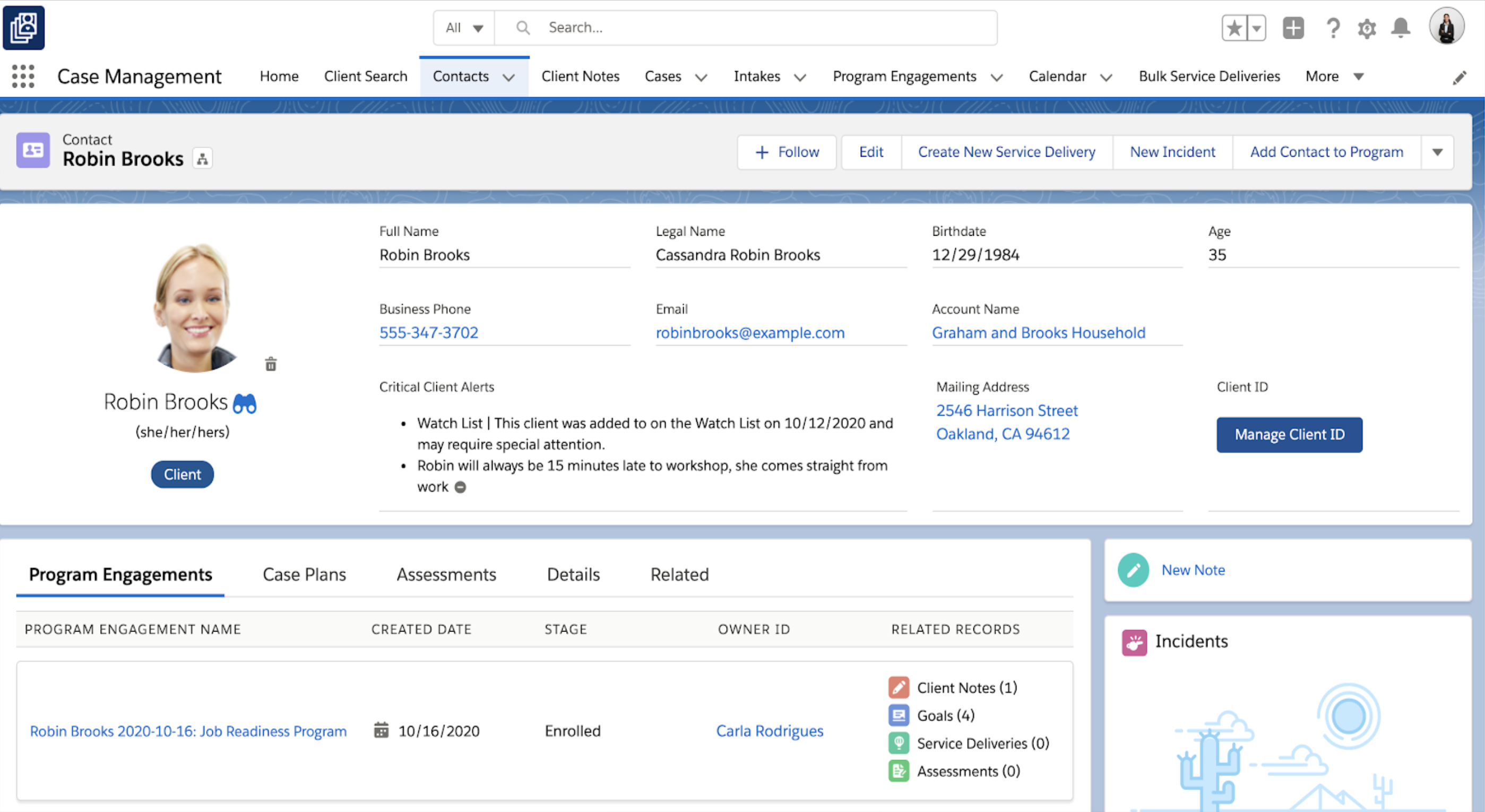
Salesforce for Nonprofits, the Salesforce.org Nonprofit Cloud, is a nonprofit constituent relationship management platform from Salesforce, which supports constituent engagement, fundraising, and grants. Nonprofit editions contain Salesforce Lightning Edition along with the former Nonprofit Success Pack (NPSP) combined.
As I mentioned, cost is prohibitive for us. Because it is highly customizable, it is very powerful, but if you are looking for an intuitive, easy to use solution right "out of the box" solution because you have few staff and no IT dept. this may not be the best fit (unless they develop some lower cost / less customizable options?). That being said, we have managed to implement successfully with no IT. I completed the implementation, code the application and online reporting forms (using HTML) and use Blueprint to customize what we need, but it has been a big learning curve and an investment of time to manage the back end of the program. I will say that training new general users is pretty straight forward so their ability to search for information they need and quickly is greatly enhanced. The automatic customized reports and reminders are pretty great, and the overall integrity of our processes and data are greatly improved. Sometimes we wonder if it is overly complex and if there is a way e could "hide" more of the aspects that are not relevant to us, or that we are not using, so we can have a cleaner interface.
I’d say it’s very well suited for organizations looking to move toward AI integrations and make more data-driven decisions. As I mentioned, I’ve also used the competing product from Blackbaud, which is a very closed system — you can’t really pull out the data. Salesforce, on the other hand, has a big advantage with its APIs, allowing you to extract data, store it in Data Cloud, and do much more with it. However, if your requirements aren’t clearly defined or if there’s heavy customization involved, the implementation can get messy. So I wouldn’t recommend using Salesforce Nonprofit Cloud in cases where the requirements and structure aren’t clearly laid out.
We like to create our own numbering system and Blackbaud Grantmaking allows us that flexibility. When we were having issues with items being in numerical order the tech support was amazing.
Creating your own forms is very important for us. We have several different donors and we have a grant application form and a report form for each one. They are easy to create as well as update and access.
Alternative ways to hunt for information. I can access a grant by the organization name, project name, grant number or even the name of the person who submitted the grant application. This is critical in a case where the program officer has a nickname for the grant (you can include that as well in the profile) and can't remember anything else.
System enhancement ideas must be submitted to a community portal and other users must take the initiative to vote on their favorite ideas instead of vendor programmers collecting received ideas and doing the work themselves.
Lack of conditional logic in online application
Communication with other Blackbaud products notably Employee Volunteering and Engagement (fka AngelPoints)
Organizations that are new to Salesforce need to be prepared for report building and other configurations. Customization is a great feature, but it can be overwhelming if not impossible for a brand new user.
Salesforce Trailhead is robust but can be confusing and overwhelming.
I'm currently comfortable with only using Salesforce CMS or any iteration on a desktop.
As long as there is continued development in the product allowing us to create efficiencies, streamline operations, deliver on our reporting requirements and the usability for internal and external partners remains strong we would have no reason to look elsewhere from a systems perspective. If costs changed substantially we'd have to look at different options to meet our cost savings objectives.
There is room for improvement and the development of the software seem slow. As customers, we hear a lot about what's in development and promises of new features rolling out. However, it feels like those developments take a really long time to show up in they system for my day-to-day use.
Salesforce CMS is very intuitive and easy to use. I have not found where it glitches or crashes out. You can tell where data is "supposed to live" and it you aren't sure, there is an easy search function. Support is made readily available.
I have never had bad conversations with any support people with Salesforce but we also have not used them very much. I put it a little less because we are struggling to switch to lightning (some of our custom features do not migrate well) and it feels like the help and support for a little organization is not incredibly helpful unless we want to spend a lot of money.
At the time that I used GrantedGE, the product was in the development stages and there were a lot of bugs and issues with functionality. The customer service didn't have the bandwidth to quickly respond to issues. BlackBaud's customer service and history in the field are advantages
As a cloud native organization with no previous Microsoft infrastructure, Salesforce was a more logical and effective option for us. The suite of products was also far more comprehensive and required less customization. We were able to adopt a "configure not code" approach to our development of systems to support our mission that lowered the cost of upgrades.