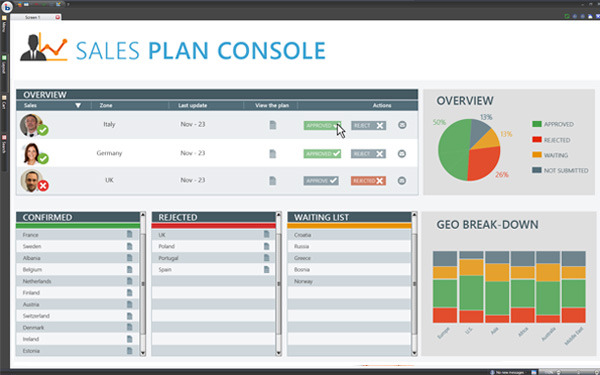
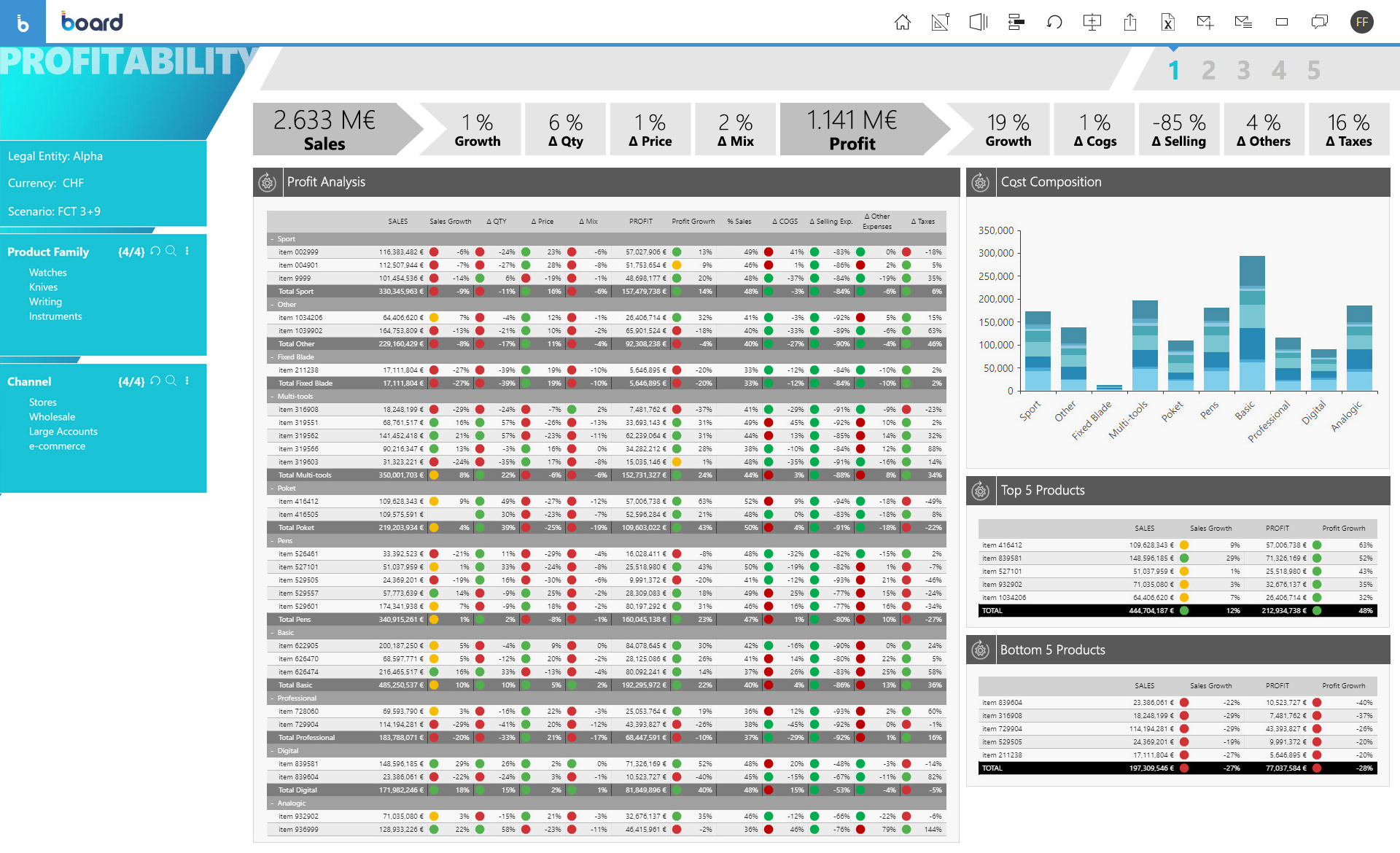
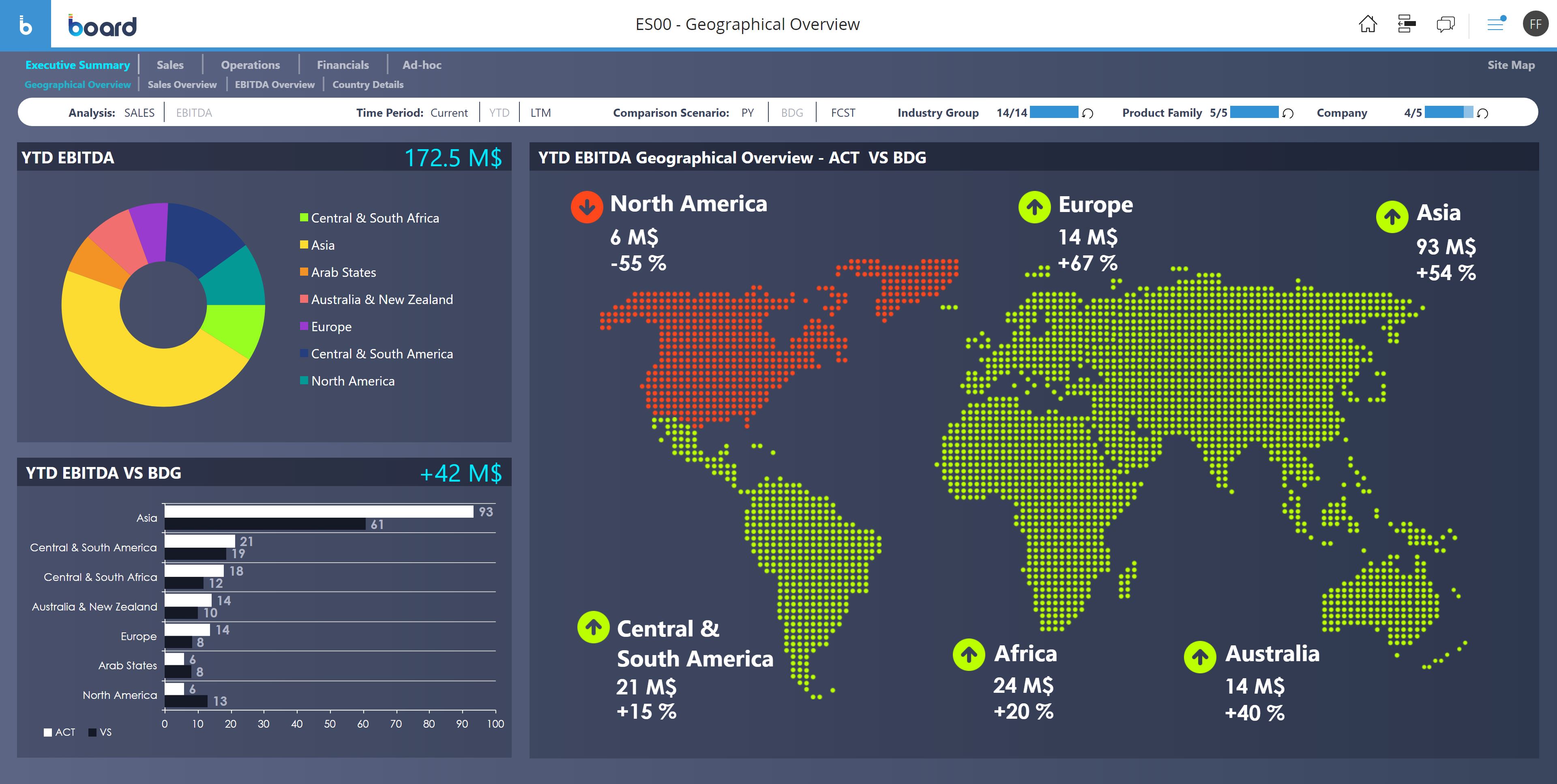
Board is presented as an enterprise planning platform, offered as a solution to accelerate business performance and enable continuous planning with greater forecast accuracy to drive confident, aligned decisions.
N/A
Amazon Redshift
Score 8.9 out of 10
N/A
Amazon Redshift is a hosted data warehouse solution, from Amazon Web Services.
$0.24
per GB per month
Pricing
Board
Amazon Redshift
Editions & Modules
No answers on this topic
Redshift Managed Storage
$0.24
per GB per month
Current Generation
$0.25 - $13.04
per hour
Previous Generation
$0.25 - $4.08
per hour
Redshift Spectrum
$5.00
per terabyte of data scanned
Offerings
Pricing Offerings
Board
Amazon Redshift
Free Trial
No
No
Free/Freemium Version
No
No
Premium Consulting/Integration Services
Yes
No
Entry-level Setup Fee
No setup fee
No setup fee
Additional Details
—
—
More Pricing Information
Community Pulse
Board
Amazon Redshift
Features
Board
Amazon Redshift
BI Standard Reporting
Comparison of BI Standard Reporting features of Product A and Product B
Board
6.8
91 Ratings
11% below category average
Amazon Redshift
-
Ratings
Pixel Perfect reports
6.778 Ratings
00 Ratings
Customizable dashboards
6.991 Ratings
00 Ratings
Report Formatting Templates
6.984 Ratings
00 Ratings
Ad-hoc Reporting
Comparison of Ad-hoc Reporting features of Product A and Product B
Board
6.9
96 Ratings
16% below category average
Amazon Redshift
-
Ratings
Drill-down analysis
6.994 Ratings
00 Ratings
Formatting capabilities
6.292 Ratings
00 Ratings
Integration with R or other statistical packages
6.964 Ratings
00 Ratings
Report sharing and collaboration
7.687 Ratings
00 Ratings
Report Output and Scheduling
Comparison of Report Output and Scheduling features of Product A and Product B
Board
7.1
88 Ratings
15% below category average
Amazon Redshift
-
Ratings
Publish to Web
6.977 Ratings
00 Ratings
Publish to PDF
7.285 Ratings
00 Ratings
Report Versioning
6.978 Ratings
00 Ratings
Report Delivery Scheduling
7.676 Ratings
00 Ratings
Data Discovery and Visualization
Comparison of Data Discovery and Visualization features of Product A and Product B
Board is a useful tool with a great set of features. We migrated from human apps to board and we find it relatively fast in search results and better-managed threads and forums. There are some areas, such as UI and interactions which could be improved but overall a great product. The learning section is also pretty good.
If the number of connections is expected to be low, but the amounts of data are large or projected to grow it is a good solutions especially if there is previous exposure to PostgreSQL. Speaking of Postgres, Redshift is based on several versions old releases of PostgreSQL so the developers would not be able to take advantage of some of the newer SQL language features. The queries need some fine-tuning still, indexing is not provided, but playing with sorting keys becomes necessary. Lastly, there is no notion of the Primary Key in Redshift so the business must be prepared to explain why duplication occurred (must be vigilant for)
[Amazon] Redshift has Distribution Keys. If you correctly define them on your tables, it improves Query performance. For instance, we can define Mapping/Meta-data tables with Distribution-All Key, so that it gets replicated across all the nodes, for fast joins and fast query results.
[Amazon] Redshift has Sort Keys. If you correctly define them on your tables along with above Distribution Keys, it further improves your Query performance. It also has Composite Sort Keys and Interleaved Sort Keys, to support various use cases
[Amazon] Redshift is forked out of PostgreSQL DB, and then AWS added "MPP" (Massively Parallel Processing) and "Column Oriented" concepts to it, to make it a powerful data store.
[Amazon] Redshift has "Analyze" operation that could be performed on tables, which will update the stats of the table in leader node. This is sort of a ledger about which data is stored in which node and which partition with in a node. Up to date stats improves Query performance.
We've experienced some problems with hanging queries on Redshift Spectrum/external tables. We've had to roll back to and old version of Redshift while we wait for AWS to provide a patch.
Redshift's dialect is most similar to that of PostgreSQL 8. It lacks many modern features and data types.
Constraints are not enforced. We must rely on other means to verify the integrity of transformed tables.
Board is a fantastic product for swift BI solution delivery when compared with its peers. Ease of use, support and integration with Microsoft Office Addin open a wide horizon of opportunities for further enhancements to solutions. Easy bespoke app development capabilities make it a winner for us. BOARD is just like a white canvas, it lets you explore your creative side while designing and delivering a solution
From a user perspective, Board is quite simple to use. You can evaluate the presentation of the data, the navigation, the configuration of the users, the selection of the data etc ... It would have a better rating if it were even more intuitive as regards the construction of a project, starting from the database, to the info-cubes, to entities, to data acquisition procedures from other servers.
Just very happy with the product, it fits our needs perfectly. Amazon pioneered the cloud and we have had a positive experience using RedShift. Really cool to be able to see your data housed and to be able to query and perform administrative tasks with ease.
The only time I needed assistance was due to a problem in the prints: the colors of the brochures as they were on the screen were not reproduced in the print, but a series of standard colors were reproduced. This fact made colored numbers on a colored background illegible. From the assistance they confirmed that it was a problem of version 10.2 that occurred when leaving the brochures with the default colors proposed by Board. To obtain the desired colors, they had to be personalized ... I didn't like the solution very much and the technician who recommended it didn't like me either, but they would have solved the problem with the following versions. In any case, the assistance was quick and effective even if not exactly efficient.
The support was great and helped us in a timely fashion. We did use a lot of online forums as well, but the official documentation was an ongoing one, and it did take more time for us to look through it. We would have probably chosen a competitor product had it not been for the great support
Board is fairly simple and straight forward. Advance training on workflows and procedures is a good one but the training content only touches through the interesting areas. training content needs to cover a few areas more in-depth
The problem of user profiling in our context is certainly quite complex. The complexity is given by the fact that the company is divided territorially into logistic points of sale, but at the same time they are virtually divided into divisions (or specific implementation areas) and points of sale of competence. The same operator can have access to data at different logistic sales points, sales points of competence and divisions.
Board has been more complete when compared to Anaplan. Although I didn't participate in the buying decision of any of those products I have used both and by far Board just has more features. It's more than a CPM, it's BI and CPM put together. If I had to make a choice now it would be Board.
Than Vertica: Redshift is cheaper and AWS integrated (which was a plus because the whole company was on AWS). Than BigQuery: Redshift has a standard SQL interface, though recently I heard good things about BigQuery and would try it out again. Than Hive: Hive is great if you are in the PB+ range, but latencies tend to be much slower than Redshift and it is not suited for ad-hoc applications.
Redshift is relatively cheaper tool but since the pricing is dynamic, there is always a risk of exceeding the cost. Since most of our team is using it as self serve and there is no continuous tracking by a dedicated team, it really needs time & effort on analyst's side to know how much it is going to cost.
Board facilitates proactive decision making - it gives all the insights of the company's needs, which includes predictive analytics and manipulation of data to make different types of reports.
Easy to use for non-programmer and integration with other software is seamless. It has [the] ability to handle large amounts of data.
Our company is moving to the AWS infrastructure, and in this context moving the warehouse environments to Redshift sounds logical regardless of the cost.
Development organizations have to operate in the Dev/Ops mode where they build and support their apps at the same time.
Hard to estimate the overall ROI of moving to Redshift from my position. However, running Redshift seems to be inexpensive compared to all the licensing and hardware costs we had on our RDBMS platform before Redshift.