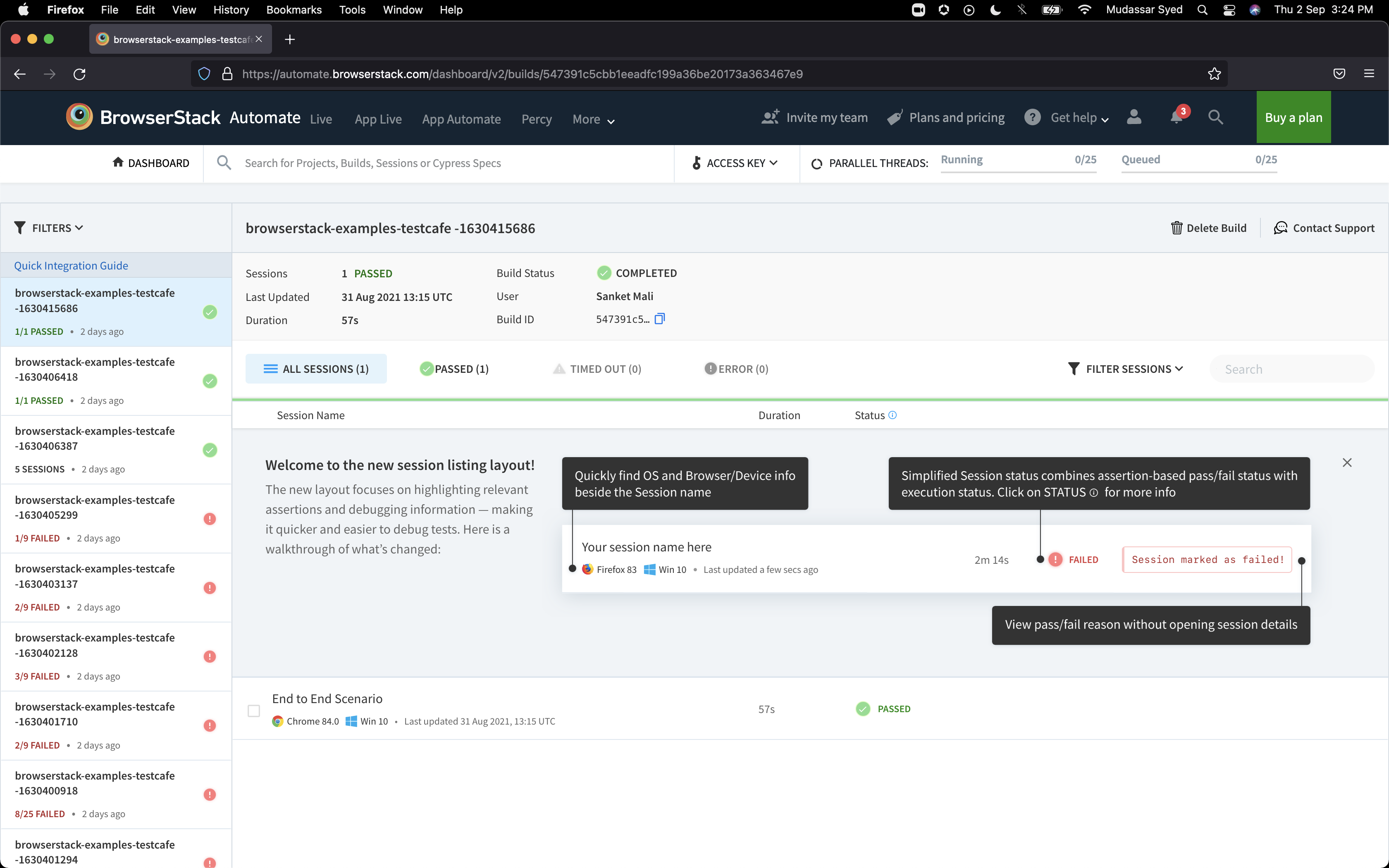
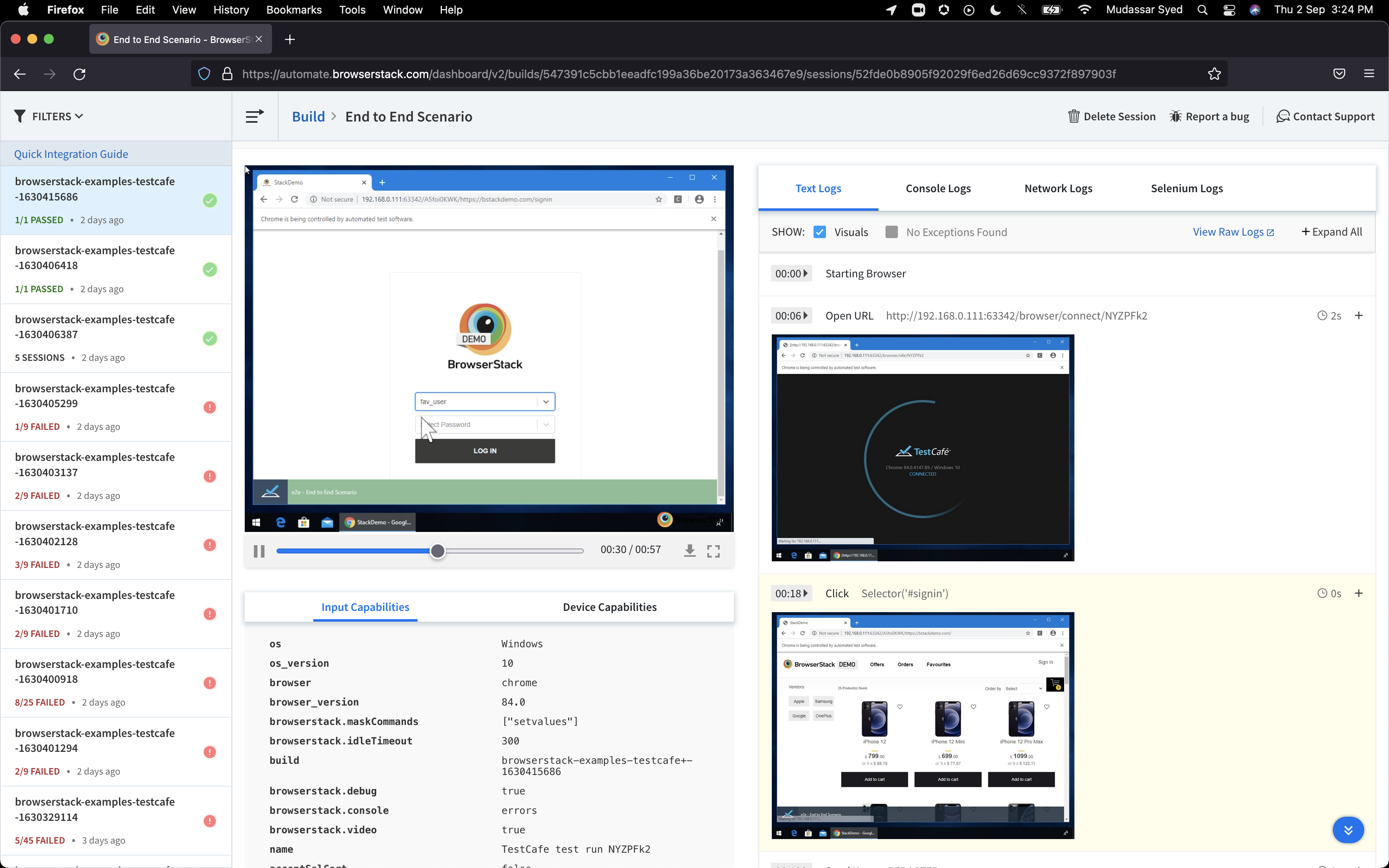
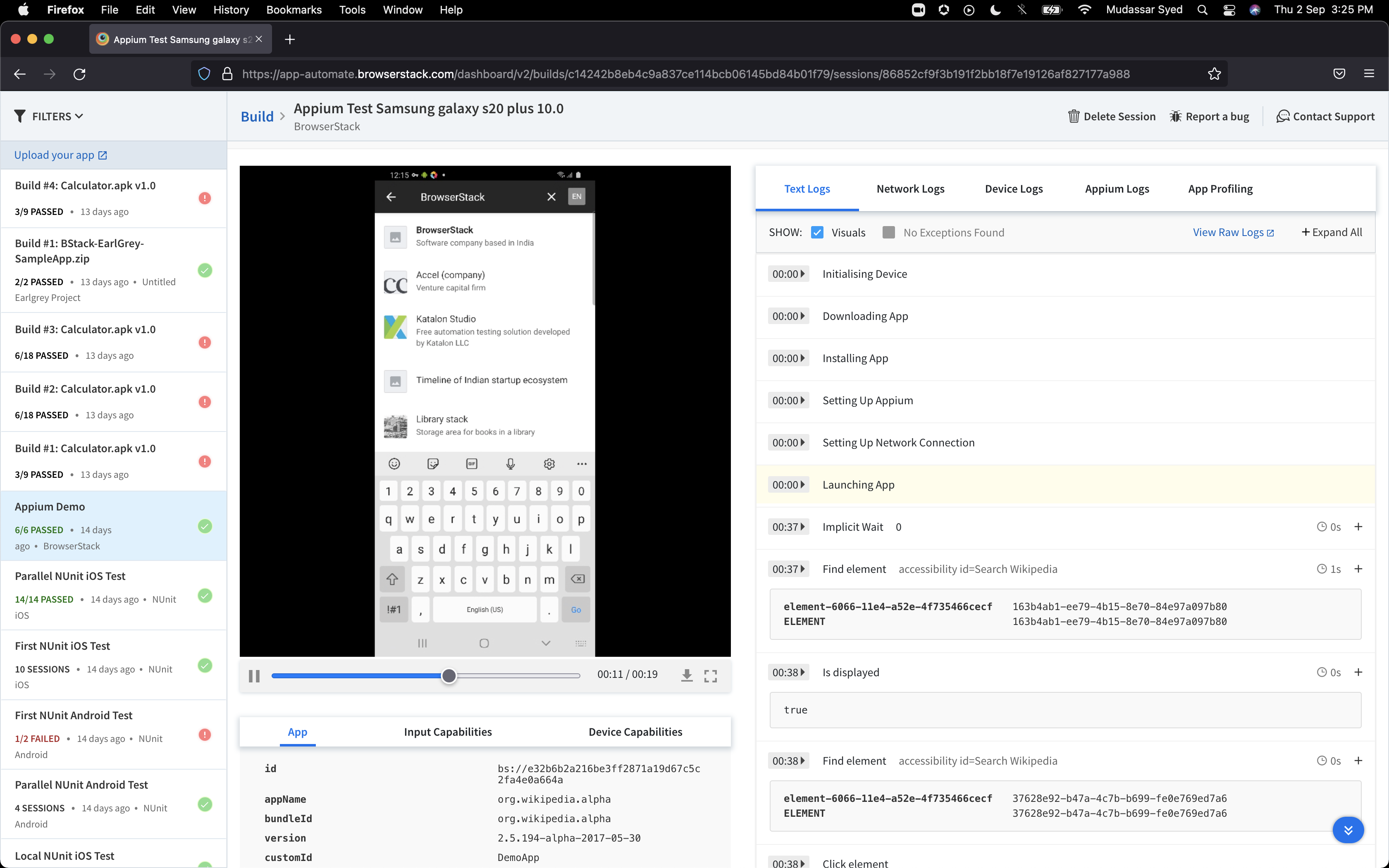
BrowserStack is a test platform built for developers and QAs to expand test coverage, scale and optimize testing with cross-browser, real device cloud, accessibility, visual testing, test management, and test observability. BrowserStack states it currently powers over a billion tests a year for customers who include Amazon, Paypal, Well Fargo Bank, Nvidia, MongoDB, Pfizer, GE, Discovery, React JS, Apache, JQuery and several others rely on BrowserStack to test their web and mobile apps.
$0
per month Unlimited users and 5000 free screenshots
OpenText ALM/Quality Center
Score 9.1 out of 10
N/A
OpenText™ ALM/Quality Center, formerly from Micro Focus, serves as the single pane of glass for software quality management. It helps users to govern application lifecycle management activities and implement rigorous, auditable lifecycle processes.
N/A
Pricing
BrowserStack
OpenText ALM/Quality Center
Editions & Modules
Percy - Free
$0
per month Unlimited users and 5000 free screenshots
App Percy - Free
$0
per month 5000 free screenshots and 100 minutes of infrastructure
Browserstack is great if you have a need for cross-browser or cross-device testing. You can even load in native apps/websites that might not be live on the public internet but are hosted on a secure network, which makes it easier to test against QA and STG environments as well. There might be better tools out there if you don't really have a need for that cross browser and device testing though and are just looking to set up some type of automation or only have a few devices or OSes that you need to test with. The value of the product will vary wildly depending on what you want to do with it.
For an organisation that has completely adopted SAFe structure including naming terminology, it is less appropriate and apart from that. It can suit any organisation out there, and it can solve all your problems one way or another by customising it. It is a robust and highly scalable solution to support all the business needs. It improves a lot of productivity and visibility.
If you have a mix of automation & manual test suites, HPALM is the best tool to manage that. It definitely integrates very well with HP automation tools like HP Unified Functional Testing and HP LoadRunner. Automated Suites can be executed, reports can be maintained automatically. It also classifies which test suites are manual & which are automated & managers can see the progress happening in moving from manual to automated suites. In HPA ALM all the functional test suites, performance test suites, security suites can be defined, managed & tracked in one place.
It is a wonderful tool for test management. Whether you want to create test cases, or import it, from execution to snapshot capturing, it supports all activities very well. The linking of defects to test runs is excellent. Any changes in mandatory fields or status of the defect triggers an e-mail and sent automatically to the user that the defect is assigned to.
It also supports devops implementation by interacting with development tool sets such as Jenkins & GIT. It also bring in team collaboration by supporting collaboration tools like Slack and Hubot.
This tool can integrate to any environment, any source control management tool bringing in changes and creates that trace-ability and links between source control changes to requirements to tests across the sdlc life-cycle.
I wish it didn't time out so quickly. I often move back and forth between my native Mac OS system and browsers to BrowserStack for Windows browsers and it often times out so I have to start over.
I am not sure why, but when I've been testing in BrowserStack for a long period of time - maybe over a couple of hours, it sometimes gets buggy and unresponsive or slow to respond. It makes it hard to tell if I'm experiencing an issue with the site I'm testing or if it's an issue with BrowserStack.
If I'm wishing for the moon and stars, I'd ask for the ability to use BrowserStack to also test with JAWS screen reader. But I'm happy having NVDA.
The requirements module is not as user friendly as other applications, such as Blue Bird. Managing requirements is usually done in another tool. However, having the requirements in ALM is important to ensure traceability to tests and defects.
Reporting across multiple ALM repositories is not supported within the tool. Only graphs are included within ALM functionality. Due to size considerations, one or two projects is not a good solution. Alternatively, we have started leveraging the template functionality within ALM and are integrating with a third party reporting tool to work around this issue.
NET (not Octane) requires a package for deployment to machines without administrative rights. Every time there is a change, a new package must be created, which increases the time to deploy. It also forces us to wait until multiple patches have been provided before updating production.
It's almost the 3rd year for us and it's renewal time for us. So yes, we are already discussing how many licenses we need to increase as users are increasing internally. So it's 100% sure that we are already planning renewal this year as well BrowserStack with live and app automate.
So many options that it can be a little overwhelming, but the core functions are easy to find and use and it's usually not too hard to figure things out for the more complex tasks. Very easy to boot up a device and a specific browser from the dashboard to begin a manual website test.
Because it lets me track the test cases with detailed scenarios and is clearly separated in folders. Also the defect filter helps me filter only the ones that have been assigned to a particular area of interest. The availability of reports lets me see the essentials fields which I might be missing the data on and helps me to work on these instead of having to go through everything.
I rated BrowserStack's availability a 10 because it is consistently reliable, with minimal to no downtime or unplanned outages. The platform is accessible whenever needed, ensuring uninterrupted testing. Its robust infrastructure and proactive monitoring ensure a seamless experience, allowing us to meet deadlines without delays caused by availability issues and all
The tests are fast considering the fact that they're Appium tests. I've seen tests reliably pass or fail when they're supposed to, with next to zero issues on the BrowserStack side of things. Tests launch only seconds after I kick off them off from my CLI.
I've not had much direct interaction with the BrowserStack support team. The help and community are great and we've not run into any issue that has really required us to reach out. I guess having a stable and easy to use system means you may never need to contact support.
It is a great tool, however, it got this rating because there is a lot of learning that takes a lot longer than other tools. There are no mobile versions of ALM even with just a project summary view. I believe ALM is well capable of integration with other analytics tools that can help business solutions prediction based on current and past project data. This is Data held in ALM but with no other use apart from human reading and project progress. ALM looks like a steady platform that I believe can handle more dynamic functionality. You could add an internal communication platform that is not a third party. Limit that communication tool to specific project members.
Yes, it was online training on meet, and trainer looks like skilled and technical strong, he has covered end to end all the features and he has answers all the queries. because of this trainings we are able to implement it by our own in the organization, thank you for support and training.
It was a quick training from the support of browserstack, it was nice and easy to understand, thanks again for the support given by the team. and regularly I used to receive mails for training from support for any new feature they launch, I was able to spread same training to all my team and dev.
I rated the implementation satisfaction an 8 because while it went smoothly overall, there were some challenges during the initial learning phase and integration with existing tools. Key insights include the importance of providing sufficient training upfront and ensuring seamless integration with other systems to minimize disruptions and improve adoption speed.
BrowserStack products has been found better for low code automations and visual regression techniques. We have been struggling to maintain the API endpoint sanity tests and writing a lot of code for them while releasing the builds, while we chose BrowserStack accessibility solutions, we found it a way easier than we thought and worked it up.
We have other tools in our organization like Atlassian JIRA and Microsoft Team Foundation Server, which are very capable tools but very narrow in their approach and feature set and does not come even close to the some of the core capabilities of HP ALM. HP ALM is the "System of Record" in our organization. It gives visibility for an artifact throughout the delivery chain, which cut downs unnecessary bottlenecks and noise during releases.
I may not be the best person to answer this as I am only using it for 1 department and at 1 site but will still try my best As far as Scalability for Devices for Mobile Automation is concerned, it gets a Solid 10, as the users can run cases on upto 10 device parallel and also have the best choices of devices to choose