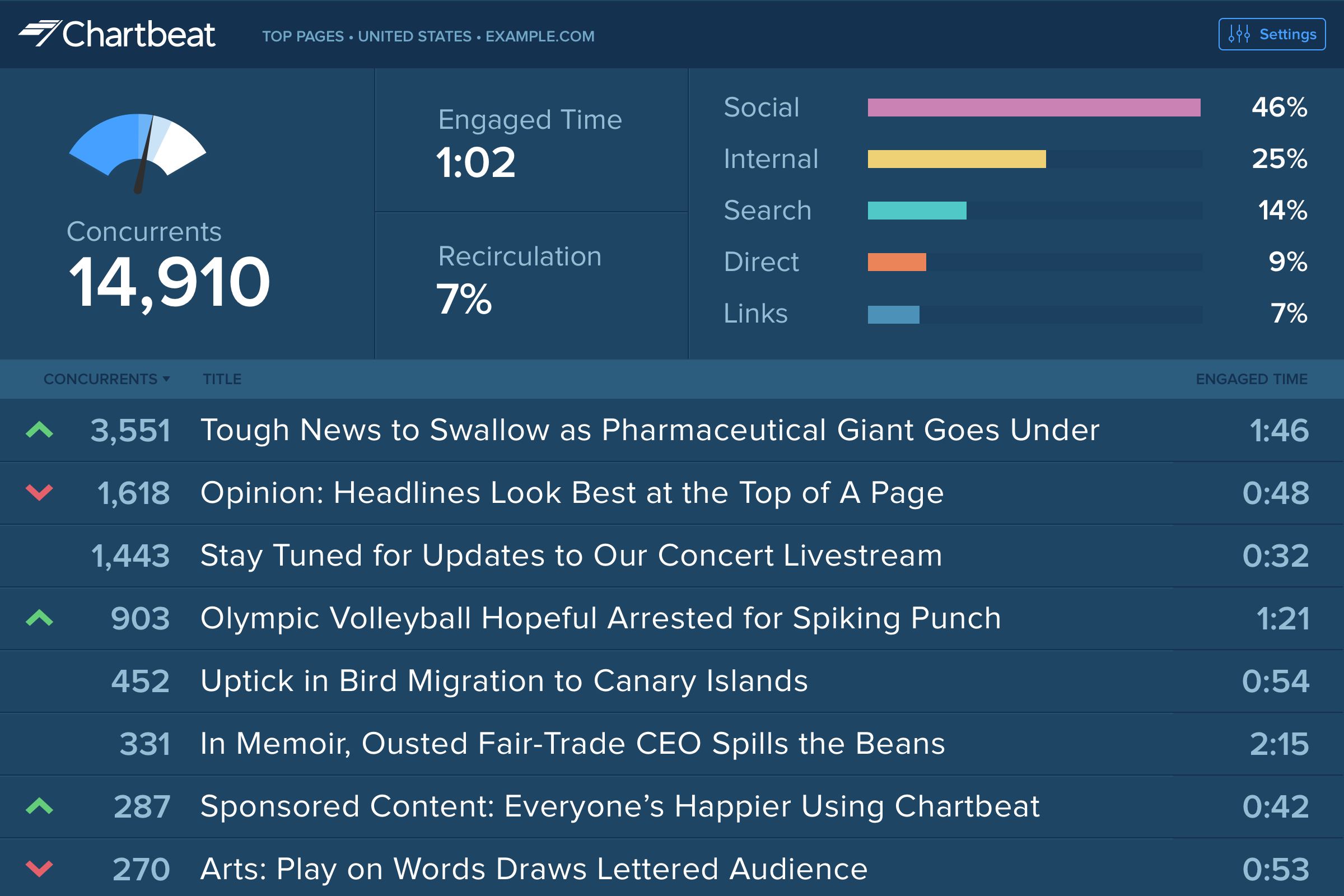
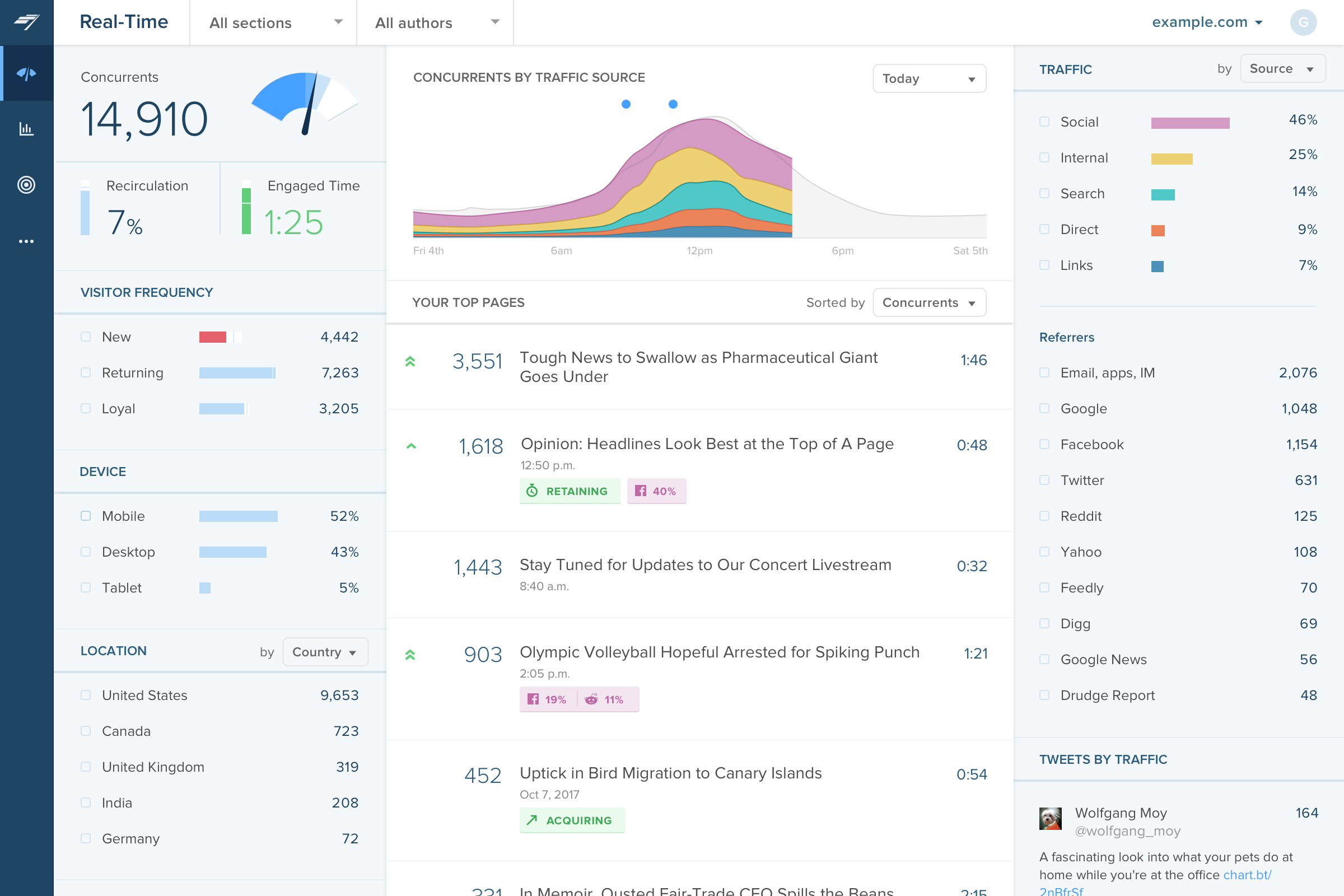
Chartbeat delivers real-time analytics, insights, and transformative tools for content teams around the world, to help improve audience engagement, inform editorial decisions, and increase loyalty.
N/A
Full Circle Insights
Score8 out of 10
N/A
Full Circle Insights (formerly Full Circle CRM) is built on the Salesforce platform and is primarily a marketing performance management tool. It is used to calculate the ROI from marketing programs and includes robust analytics dashboards. As such it integrates with the major marketing automation systems including Marketo, Eloqua and Act-On.
N/A
Pricing
Chartbeat
Full Circle Insights
Editions & Modules
No answers on this topic
No answers on this topic
Offerings
Pricing Offerings
Chartbeat
Full Circle Insights
Free Trial
Yes
No
Free/Freemium Version
No
No
Premium Consulting/Integration Services
Yes
No
Entry-level Setup Fee
No setup fee
No setup fee
Additional Details
Chartbeat pricing is based on monthly site page views. Discounts are applied to multi-year contracts. The Basic Plan includes the Real-time Dashboard, Historical Dashboard, Heads Up Display, Reports, Big Board, iOS and Android app, and Real-time API endpoints.
The Plus Plan includes all of the Basic Plan features, plus ONE of the following Premium features: Headline Testing, Advanced Queries, or Multi-Site View.
The Premium Plan includes all of the Basic Plan features, plus ALL Premium features: Headline Testing, Advanced Queries, Multi-Site View, and enterprise-level support and custom trainings.
The main point of benefit is the realtime data. This is vital to our team as we are publishing a lot of content per day, so we have a busy homepage to manage and it's important to know which content is performing well. We also like to get an understanding as quickly as possible - which Chartbeat offers - of where traffic is coming from. Often we will see an example where a page is getting high traffic from Google, for example, and we know that might not need to be placed so prominently on the homepage because the traffic is arriving to us externally anyway. Without that depth of understanding what is performing best and why - updated immediately, unlike in Google Analytics now - our homepage would not be as well optimised for users coming to us direct
A de minimis incentive was given to thank the reviewer for their time. The incentive was not used to bias or drive a particular response, nor was the incentive contingent on a positive endorsement. More Info
In full disclosure as a professional services marketing agency and consultancy, based on our very positive experience with Full Circle CRM, the robustness of their offering, and our ability to work together, we have entered into a partnership to provide implementation and consulting services in cooperation with Full Circle CRM. Rather than paint this review as biased, I hope that it provides insights into our decision to partner with an impressive and growing company.
A de minimis incentive was given to thank the reviewer for their time. The incentive was not used to bias or drive a particular response, nor was the incentive contingent on a positive endorsement. More Info
Source of traffic needs improvement. Search and social make sense, but "internal" and "links" is a grey area. It would be helpful to define those with an organization and provide an information icon so users can easily remember what each of those buckets is tracking.
More ways to customize the real-time board. For example, with video content, that's great that I can see a user has started a video, but what is the completion rate, was that only on O&O or can that track Facebook, too?
Would like to see demo (age) information included as a way to slice the data so I can see what's working with my older and younger demo.
A de minimis incentive was given to thank the reviewer for their time. The incentive was not used to bias or drive a particular response, nor was the incentive contingent on a positive endorsement. TR verified that a representative sample of customers was invited. More Info
We worked closely with the vendor to add functionality to their current release to allow us to track multiple separate waterfalls simultaneously in order to operationalize the new Sirius Decisions Waterfall model. With the needed changes, the product works as advertised, and is providing the specific results we anticipated. In 6 months, we have not found anything else that we would want to change.
I gave Chartbeat a 5 for a renewal rating, because, while it delivers clear and understandable content, Google Analytics also provides many of the same features for free. For a small to medium website, I believe it would be more cost effective to use Google Analytics. A website with a high amount of traffic, however, could merit spending the money on Chartbeat to maximize their potential.
Full Circle CRM has solved a major visibility problem for us that was the result of architectural differences between Eloqua and salesforce.com that cannot be solved by reporting alone. We rely on this visibility as much as the core systems themselves.
I am able to "set it and forget it," keeping it up on my monitor for either constant checking or just keeping an eye on the numbers during the day. I'm also able to keep track of what times are perfect to post a story and which stories rack up the most traffic.
A de minimis incentive was given to thank the reviewer for their time. The incentive was not used to bias or drive a particular response, nor was the incentive contingent on a positive endorsement. More Info
I have had limited experience of support for Chartbeat but whenever I have needed help it has been there. Recently there was an issue of seeing different forms of data in real time - app and otherwise effectively, and the issue was being clearly dealt with and communicated back to us.
A de minimis incentive was given to thank the reviewer for their time. The incentive was not used to bias or drive a particular response, nor was the incentive contingent on a positive endorsement. More Info
The vendor worked with us tirelessly, never complaining about our broken processes and bad data. In fact, they went above and beyond their responsibilities to assist us in the process re-engineering and the data clean-up
The instructor was the same person who guided our implementation so they not only knew their application but they were also familiar with our data and our specific configuration and processes within salesforce.com. They were able to provide customized instruction to match our needs and personnel.
When I look back at where we were on November 25th compared to where we were on January 25th, having been live for just one month, the difference is amazing. Our management discussions had already moved from discussing the validity of the data to the implications of the insights. As we approach the mid-point in our year, it is difficult to remember the old days when we could not see the road in front of us.
Omnilytics is more robust, detailed, and catered for an intermediate media user, while I think Chartbeat is a more user-friendly and beginner-oriented piece of technology. That being said, there is an impressive amount of lift for Chartbeat, and it's evident that simplicity is the key to using a software daily (which is absolutely the point in the content world).
A de minimis incentive was given to thank the reviewer for their time. The incentive was not used to bias or drive a particular response, nor was the incentive contingent on a positive endorsement. More Info
Full Circle's main competitors are standalone reporting tools which perform well and are a good first step into attribution. All tools require significant investment to improve your marketing data model and how you plan and execute campaigns. Full Circle is heavily married to Salesforce and takes advantage of Salesforce's reporting suite vs. visualizing in a standalone tool. This approach also works well if you prefer to visualize data in an alternative tool such as Tableau or Looker. The proprietary approach to visualization used by Bizible and BrightFunnel are less appealing to enterprise companies who are building a modern stack.
A de minimis incentive was given to thank the reviewer for their time. The incentive was not used to bias or drive a particular response, nor was the incentive contingent on a positive endorsement. More Info
A de minimis incentive was given to thank the reviewer for their time. The incentive was not used to bias or drive a particular response, nor was the incentive contingent on a positive endorsement. More Info
A de minimis incentive was given to thank the reviewer for their time. The incentive was not used to bias or drive a particular response, nor was the incentive contingent on a positive endorsement. More Info