Claris' FileMaker is presented as a Workplace Innovation Platform, and is used to create a custom app. Manual processes can be automated with Claris FileMaker Pro, and apps can be created to manage contacts, track inventory, organize projects, etc.
$21
per month per user
IntelliJ IDEA
Score 9.3 out of 10
N/A
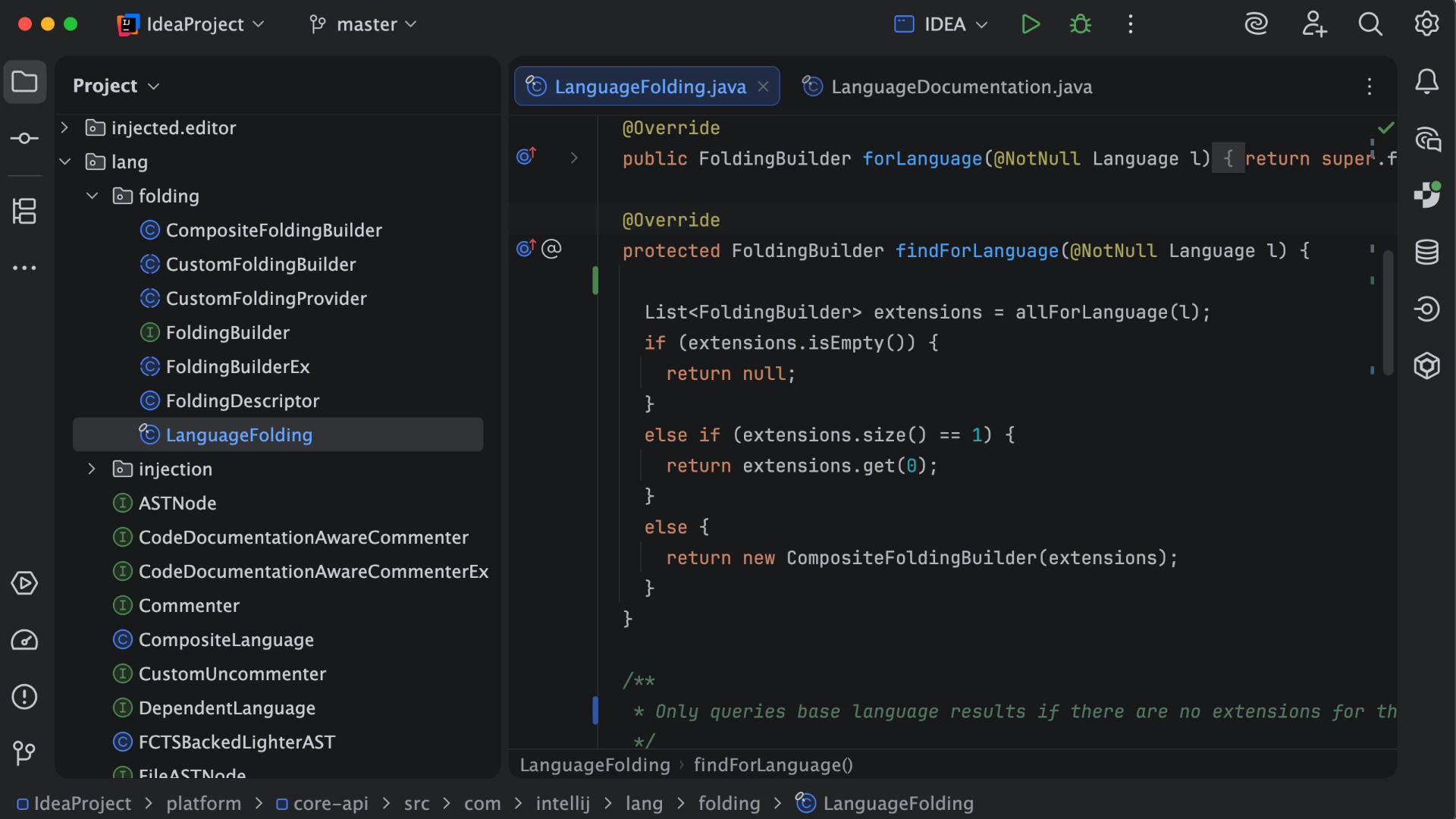
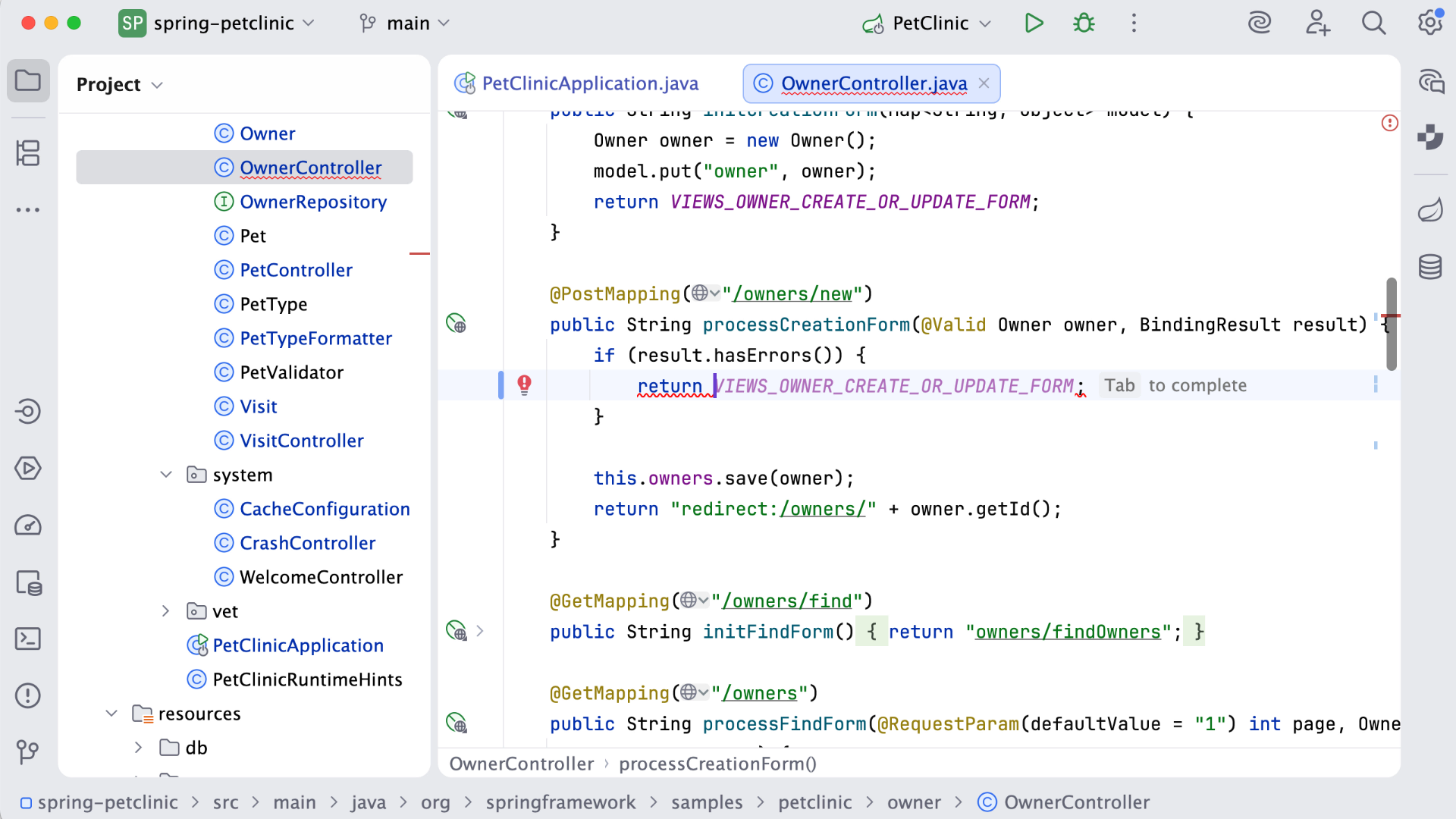
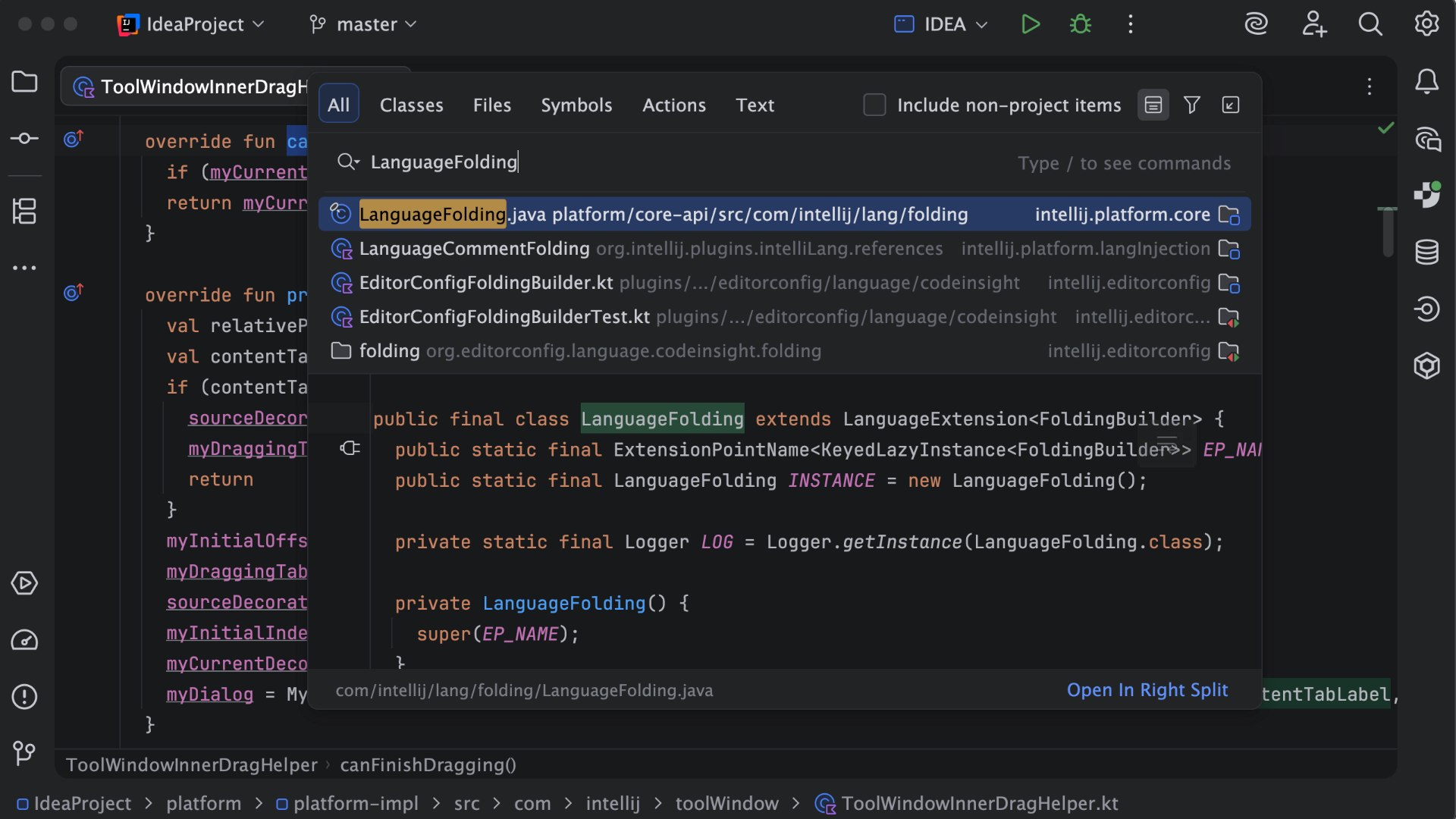
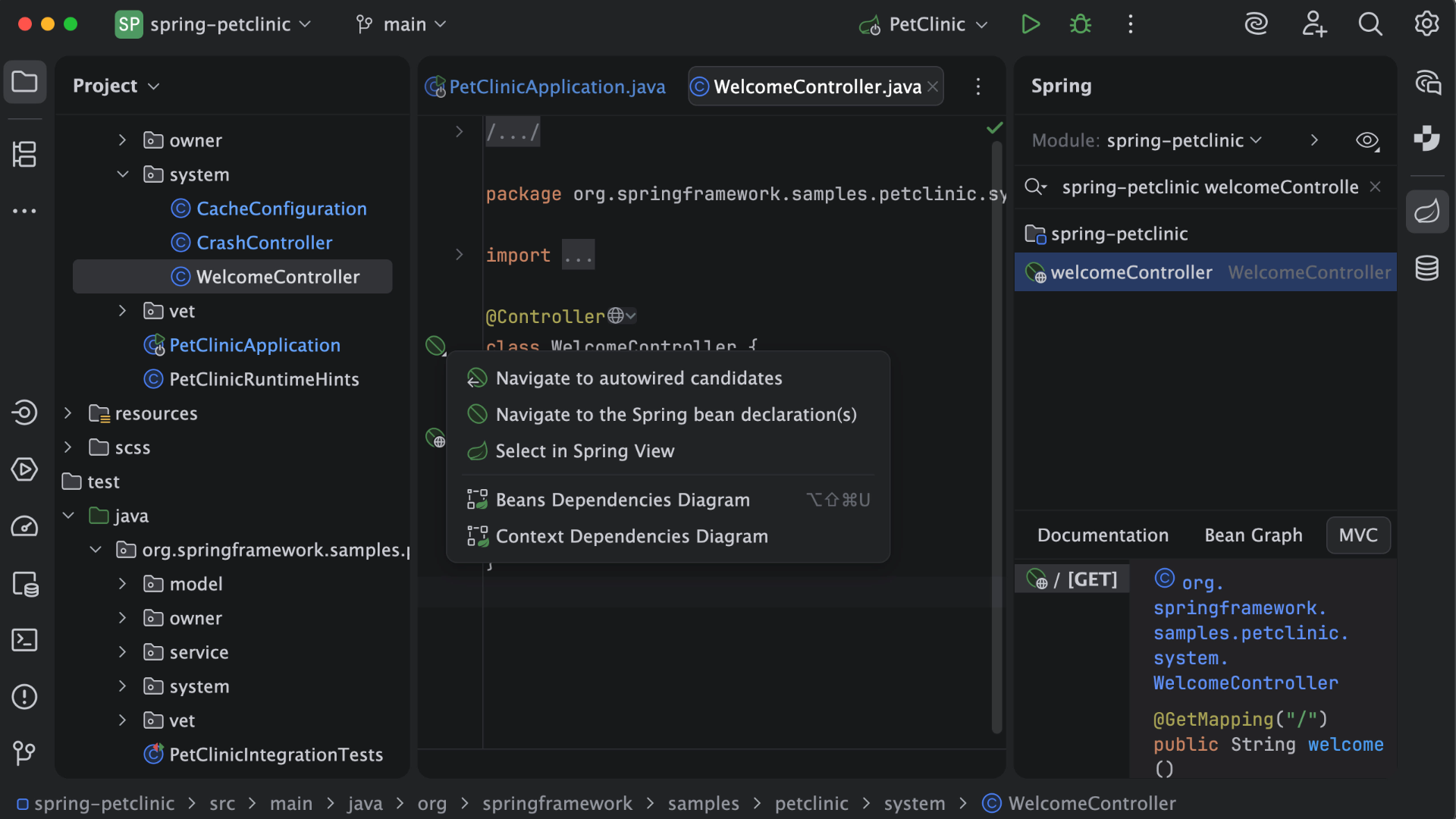
IntelliJ IDEA is an IDE that aims to give Java and Kotlin developers everything they need out of the box, including a smart code editor, built-in developer tools, framework support, database support, web development support, and much more.
$19.90
per month
Visual Studio
Score 8.8 out of 10
N/A
Visual Studio (now in the 2022 edition) is a 64-bit IDE that makes it easier to work with bigger projects and complex workloads, boasting a fluid and responsive experience for users. The IDE features IntelliCode, its automatic code completion tools that understand code context and that can complete up to a whole line at once to drive accurate and confident coding.
$45
per month
Pricing
Claris FileMaker
IntelliJ IDEA
Microsoft Visual Studio
Editions & Modules
Platform Subscription
$21
per month per user
Individual desktop license
$594
one-time fee
For Individual Use (Monthly billing)
$19.90
per month
For Organizations (Monthly billing)
$71.90
per month
For Individual Use (Yearly billing)
$199
per year
For Organizations (Yearly billing)
$719
per year
Professional
$45.00
per month
Enterprise
$250.00
per month
Offerings
Pricing Offerings
Claris FileMaker
IntelliJ IDEA
Visual Studio
Free Trial
No
Yes
No
Free/Freemium Version
No
Yes
Yes
Premium Consulting/Integration Services
No
No
No
Entry-level Setup Fee
No setup fee
No setup fee
No setup fee
Additional Details
—
All Products Pack (For Individual Use) – $299 /1st year, $ 239 /2nd year and $ 179 /3d year onwards
All Products Pack (For Organizations) – $979 / year
—
More Pricing Information
Community Pulse
Claris FileMaker
IntelliJ IDEA
Microsoft Visual Studio
Considered Multiple Products
Claris FileMaker
Verified User
Consultant
Chose Claris FileMaker
I chose FileMaker over a custom DB with Azure and SQL Server because of the low code nature of FileMaker. And we needed ease of access with Apple products so we didn't use Microsoft Access.
Back in the day, there weren't too many PHP IDEs with proper syntax and code checks, but PHPStorm and IDEA worked great. So great that when I needed a Java IDE the next time, I gave it a go and have never looked back since (okay, I did keep checking the competition and …
IntelliJ stacks better against Eclipse or vs code because it provides better code suggestions, out-of-the-box SonarLint integration, and built-in support for version control with git. It also has a vast collection of plugins that can increase developer productivity, reduce …
IntelliJ IDEA is the most specific and oriented towards my line of work, however, after using it for years - it's also my preferred IDE that I use for personal projects as well. Jetbrains other IDE offerings are almost as good and I do use them from time to time but IntelliJ …
IntelliJ IDEA has several benefits over vs code when it comes to Java applications, including in-built Java compilers, Maven lifecycle support, Lombok preprocessing, and sonar integration. While vs code is largely generic, IntelliJ IDEA has focused primarily on Java …
IntelliJ has the richest and most complete set of features out of all the IDEs I've tried. There is the most compatibility across different languages and caters to different compilation strategies. The updates come very regularly, so we know that the product is constantly …
UI--IntelliJ IDEA is the winner. IntelliSense--Again, IntelliJ IDEA is the winner. Performance and CPU usage - IntelliJ IDEA has a lot of room to improve on this. Eclipse handle the large projects more effectively than IntelliJ IDEA.
IntelliJ surpassed every single competitor. The only viable alternative I still use is VisualStudio Code build in a browser for demo purposes... other than that, IDEA does everything better, faster, and in a more comfy way. This is the best IDE out there. This is just as good …
For allowing me to modify to my own taste my graphic interface as my preferential option, in addition to having a wide field for high caliber project in any programming language.
Verified User
Engineer
Chose IntelliJ IDEA
I selected IntelliJ IDEA over Eclipse and NetBeans because of the easy to use interface, great customizable features, and it comes with features for the development of Android applications. It is the most stable IDE among the 3, it has never crashed since the moment that I have …
I selected Visual Studio IDE because of its fast syntax analysis capabilities, the ease of which I can install, update and remove packages from my application. The IDE comes with an integrated SVC plugin which allows the fast synchronization of my code. NetBeans falls down in …
IntelliJ IDEA is also a development IDE, but it is much more limited. The tools and methods of execution and debugging are much more complex, and there is not much support.
Some of the editors are suitable for a particular programming language . For example PyCharm is suited for Python .
Visual Studio has support for many languages and Visual Studio is comparatively light weight from most of the IDE . The ability to get extensions and use them is …
It's a well [maintained], mature IDE, which has the benefit of being a [software] which only the most skilled developers works on, instead of being open source. It has a lot of very useful features, which most free IDE-s don't. Also, it has many options from commercial …
The main reason why we can't choose the Visual Studio IDE is that the entity framework provides excellent solutions. Besides, there is a very strong community of users. The Visual Studio IDE has a very user-friendly display. Creating functions and creating classes is much more …
No added value. If Visual Studio costs too much then I see the point. But otherwise there is just no need for any other tool. IntelliJ is a mess, buggy and counter intuitive. Or maybe it's because java is not a particularly cool language...
Verified User
Team Lead
Chose Microsoft Visual Studio
Both are good but for Microsoft, you need to use Visual Studio IDE.
Because it is the product that offers the most stable synchronization and compatibility in the market with Windows OS, in addition to a graphic environment and a variety of fundamental advanced options.
Also VSCode; these are all IDE that support the creation of web APIs and web applications; and it can support C# (for example VSCode) but Visual Studio IDE has a better set of integrated tools in the same environment. A developer adopts it very naturally, so a person can be …
Visual Studio can do what all of these alternatives can do and does them well. PowerApps is RAD and you just can't tweak apps like you can in Visual Studio. Xamarin is now supported in Visual Studio and IntelliJ is javascript which you can create inside of Visual Studio. Would …
If your company is really small, I can understand the need for a product like this. However, I would go for MS Access... FileMaker Pro can not be integrated with other systems (like MS Access can at least be handled by C# for instance, and can be integrated with MS Excel or even SQL server). I'm really not sure in what scenario one would choose for FileMaker Pro. If your application or company grows bigger, you're going to have a problem to move to another environment. Also, the fact that only one person can work with the backend at any given time is a problem in a somewhat larger company.
This is a superb tool if your project involves a lot of backend development, especially in Java/Spring Boot and Kotlin. The support for the front end is great as well, but some developers may prefer to use the GitHub copilot add-on. I especially love using the GitHub copilot add-on. It may be less appropriate if your project requires heavy use of HotSwaps for backend debugging, as sometimes the support for that can be limited.
When working with base C# code for desktop and web projects, then Microsoft Visual Studio is ideal as it provides the libraries and interfaces needed to quickly create, test and deploy solutions. It is when slightly more complex scenarios are required that issues can arise. The built-in integration for things like PowerBI Paginated Reports and dashboards is far from ideal.
The relational database management system makes the program highly customizable to fit the needs of any product. You can add a ton of information to each record and update your inventory on a regular basis with an Excel import or manually inside of the record. It has the capability to incorporate barcoding, which can manage your available inventory with ease.
The scripting language allows FileMaker to automatically calculate complex algorithms automatically or generate report outs with the click of a button. This allows for greater UI, especially with active users who are not familiar with writing code. Almost all of our internal data is linked to the FileMaker database
The server license allows many users to update the database in real time, which is handy if your inventory is constantly changing. We have users with Macs, PCs, iPhones and handheld tablets linked to our FileMaker database and they are updating the information constantly throughout the day.
If you invest some time into formatting and scripting the database, there is a high ease of use for users without knowledge of any programming or FileMaker itself.
Unit testing: Fully integrated into IntelliJ IDEA. Your unit tests will run smoothly and efficiently, with excellent debugging tools for when things get tricky.
Spring integration: Our Spring project using Maven works flawlessly in IntelliJ IDEA. I know firsthand that Apache is also easily and readily supported too. The integration is seamless and very easy to set up using IntelliJ IDEA's set up wizard when importing new projects.
Customization: IntelliJ IDEA comes out of the box with a bunch of handy shortcuts, as well as text prediction, syntax error detection, and other tools to help keep your code clean. But even better is that it allows for total customization of shortcuts you can easily create to suit your needs.
Developer features need to be beefed up - namely adding the ability to search code for a phrase or keyword and the ability to do the same in the "relationship graph" in the database.
Add ability for users to edit the same table record at the same time by version control.
Allow Filemaker Server to use more than 1 core; currently multi-processing is not supported and it can be tricky to find just the right server to support the application you've built to the fullest capacity.
It it not really up to me but my opinion does have some weight in the decision and the reason I would renew my use FileMaker Pro 8.5 is because I am finally getting used to it! Now that I have been working with the program, tasks have become quicker and projects are getting done faster. File Maker Pro 8.5 really is a versatile tool and I think we are just scratching the surface with it's abilities.
VS Code is maturing and has a Scala plugin now. The overall experience with VS Code - for web development at least - is very snappy/fast. IntelliJ feels a bit sluggish in comparison. If that Scala plugin for VS Code is deemed mature enough - we may not bother renewing and resort to the Community Edition if we need it.
VS is the best and is required for building Microsoft applications. The quality and usefulness of the product far out-weight the licensing costs associated with it.
It's almost what it should be after so may years and with Apple's longevity and strength behind it. For people who earn their living based on efficiency I think there are too many developer obstacles that waste time and therefore money.
There is always room for improvement, but I haven't met any IDE that I liked more so far. Even if it did not fit a use case right out of the box, there is always a way to configure how it works to do just that.
I love the overall usability of Microsoft Visual Studio. I’ve been using this IDE for more than 20 years, and I’ve seen it evolve by leaps and bounds. Today, with AI and code-suggestion/completion features, developers no longer need to remember countless libraries, methods, or language syntax, or invest a huge amount of programming effort to complete a project. It truly offers everything a developer needs to program, debug, test, and deploy in a single IDE.
The forums are great with lots of helpful experts and the staff monitor them to provide help where needed. There have been a couple of unique technical issues I've had to deal with that I haven't been able to get resolved so I chose to score this a 9 instead of a 10.
Customer support is really good in the case of IntelliJ. If you are paying for this product then, the company makes sure that you will get all the services adequately. Regular update patches are provided to improve the IDE. An online bug report makes it easier for the developers to find the solution as fast as possible. The large online community also helps to find the various solutions to the issues.
There are many resources available supporting Visual Studio IDE. Microsoft whitepapers, forum posts, and online Visual Studio documentation. There are countless demonstration videos available, as well. If users are having issues, they can call Microsoft Support, but depending on the company's agreement with Microsoft, the number of included support calls will vary from organization to organization. I've found that Microsoft support calls can be hit or miss depending on who you get, but they can usually get you with the right support person for your issue.
IT is very complicated to understand all the functions that the environment has if you are not familiar with this type of development environments. It is important to select a good in-person training to achieve to understand all the possibilities and the capacity of the application. In this case, you will be able to develop a lot type of different applications.
If you are not accustomed to develop in this type of development environments it would be complicated to follow all the parts of the course because if the course does not include a great tour with all the concepts to develop you will not have the option to understand all the functions.
Suggest you use an iterative R.A.D. or AGILE development approach. (i.e. rather than writing a gigantic spec for a system, then building it). FileMaker facilitates quick prototypes. Developing an example, then allowing users to "try it out" is a snap.
This installs just like any other application - its pretty straight forward. Perhaps licensing could be more challenging - but if you use the cloud licensing they offer its as simple as having engineers login to the application and it just works.
FileMaker is still the quickest way to go from zero to having a minimum viable working solution. Simple solutions can be built in as little as a afternoon of development. It is the only tool I am aware of which allows tech savy end users with domain knowledge to build bespoke apps for their businesses without undertaking professional software development training.
Eclipse is just so old, like a dinosaur, compared to IntelliJ. There are still formats that Eclipse supports better, especially old and/or propriety ones. Still, most of the modern software development needs can be done on IntelliJ, & in a much better way, some of them are not even supported on Eclipse.
I personally feel Visual Studio IDE has [a] better interface and [is more] user friendly than other IDEs. It has better code maintainability and intellisense. Its inbuilt team foundation server help coders to check on their code then and go. Better nugget package management, quality testing and gives features to extract TRX file as result of testing which includes all the summary of each test case.
We are a more agile company because of FileMaker. A few of us who are tech-savvy enough to manage the database (but are not professional developers) can make needed adjustments to our database without having to employ an in-house developer or contract with a 3rd party. As our business processes evolve and change, it's easy to update the database to accommodate those changes.
Using the integration between Visual Studio and our source control service, the cost of re-work and losing code is drastically reduced.
Paid versions of Visual Studio enable developers to be so much more productive than hacked-together open source solutions that it's hard to imagine developing in Windows without it.
When combined with support subscriptions and the vast array of free online help options available, Visual Studio saves our developers time by keeping them coding and testing, not wasting their time trying to guess their way out of problems or spend endless hours online hoping to find answers.