Contentstack headquartered in San Francisco offers an API-first headless CMS. From desktops to smart phones, from kiosks to smart watches, from billboards to jumbotrons, from dashboards to VR headsets – content is delivered with the push of a button and optimized for every screen, device and channel.
N/A
Pantheon
Score 8.6 out of 10
N/A
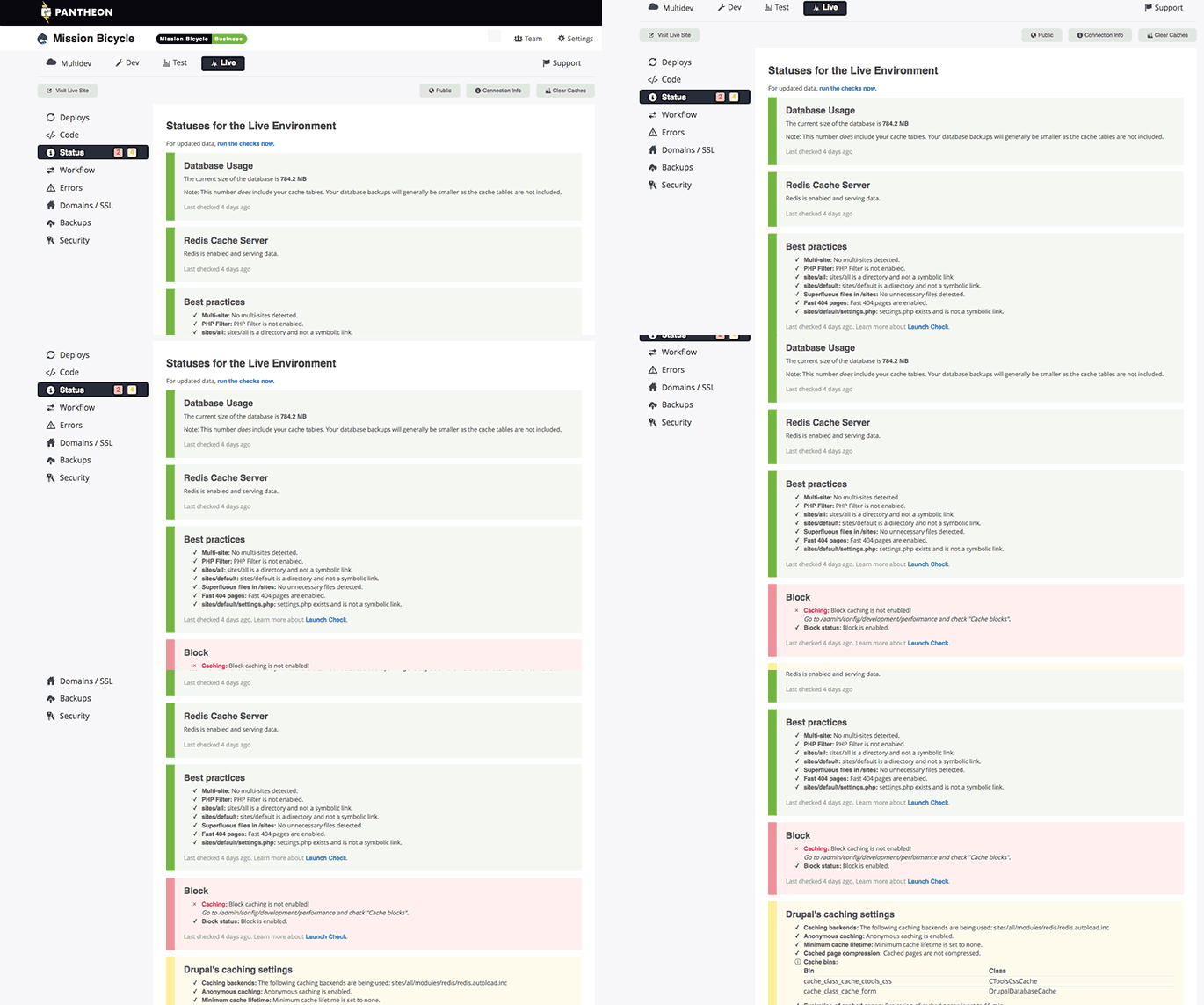
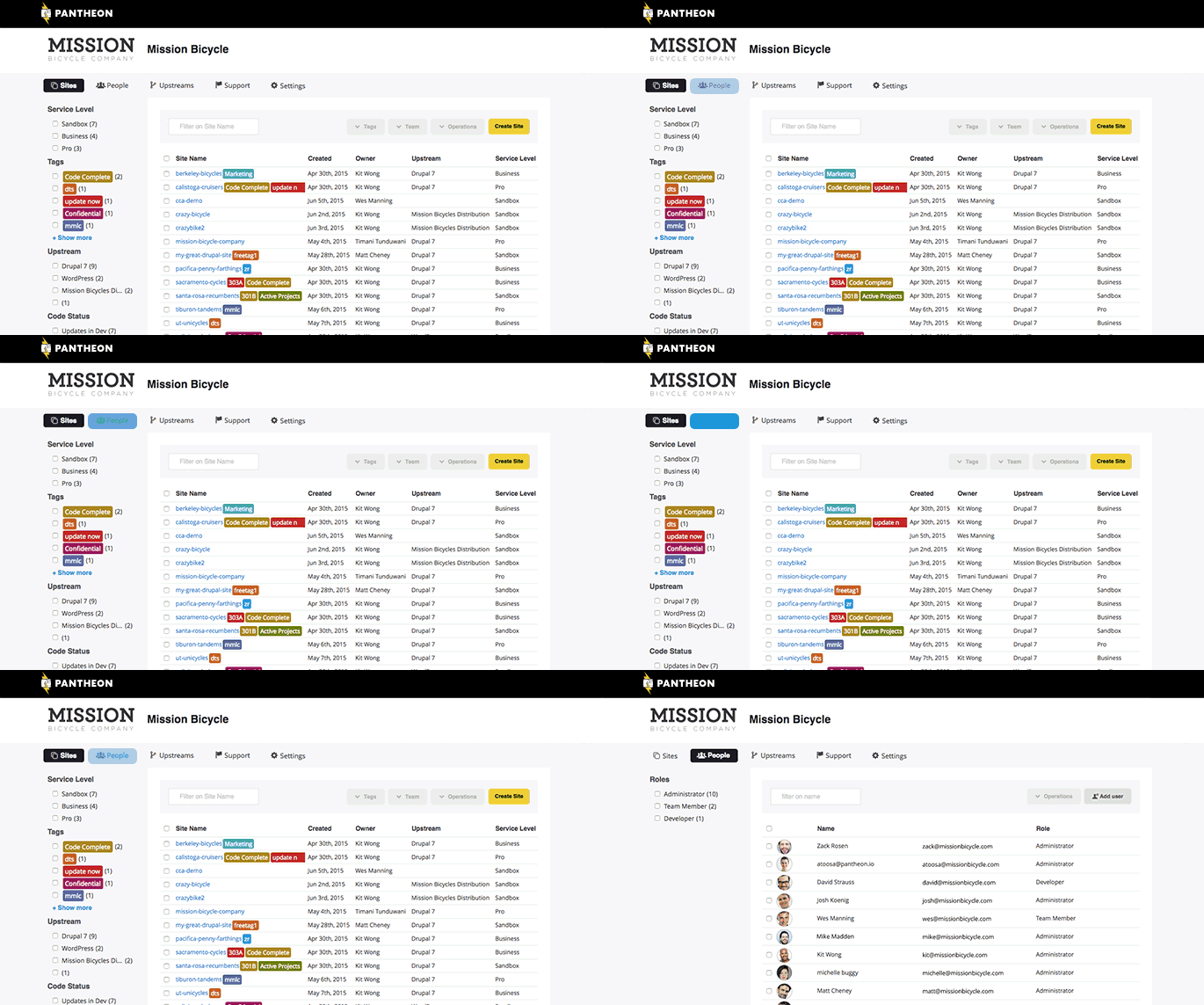
Pantheon is a WebOps platform where marketers and developers collaborate to drive results. The vendor states that with Pantheon, site owners maximize their capacity to update website design and functionality, responding to market trends, catering to consumer behavior, and adding real value to the business's bottom line. Today, companies compete on the basis of digital experiences, and the best results emerge from an agile build-test-learn process. Whether it's publishing content,…
$29
per month
Upsun
Score 9.9 out of 10
N/A
Platform.sh helps companies of all sizes, from SaaS entrepreneurs looking to build, run, and scale their websites and web applications.
Acquia was terrible. We use DigitalOcean for some all-purpose computing needs and Platform.sh for an application that does more computing and high-throughput processing where we do not want page views (API calls) to count against our usage.
We use several hosting solutions depending on the client needs or what they were already setup on. Pantheon is very similar to them and offers similar services however one of the main features we use is the Multidev service which allows us to test pieces of work separately and …
In our team we use Platform.sh mostly while sites are in developmental phase. Then we do a lift and shift to either Acquia or AWS depending on the type of sites we have. Platform.sh is really cost effective and more fluid in terms of Continuous Development hence the usage. …
Contentstack has flexible functionality which opens up a lot of possibilities for businesses with proactive web development teams to create their own website builder app to compete with 3rd party agencies. This is especially useful in a large enterprise where non-technical teams often turn to expensive outside agencies which cost more in the long run than an up-front investment into an in-house application.
Pantheon is excellent for medium-large websites that require high availability and a managed workflow. It would be inappropriate for small websites because of the cost or for situations where more control of the environment is appropriate. We find it useful because we rarely do anything outside of the Drupal application.
In our organisation we are the only team that uses Platform.sh to host any site. This was a cost effective way for us as we were using Acquia Cloud earlier for these websites. We mostly use Platform.sh for those sites which are always in development as it is simpler and faster to handle these operations in Platform.sh. Then we do a lift and shift to Acquia as we move more towards the go live and post production maintenance side.
In my opinion it's not very intuitive. I've found its difficult to understand how to best structure entries, especially if they are related
In my experience, entries can get difficult to understand if weren't the creator. It would be helpful to have some meta data around the entry itself and the fields within them in my opinion.
Integration with an A/B testing platform would be nice.
Platform.sh is not for beginners in my opinion. It has a good amount of learning curve in my opinion.
As this is a PaaS, teams habituated with cloud infrastructure may miss the server side support from their cloud teams. I believe you will have to work on server bugs more on your own.
During normal maintenance periods, integrations may fail if you are working on your sites in that time, in my experience.
Pantheon is an easy system, especially to the users with previous experience with other similar platform and the interface is clear enough to easily understand how things operates. On the Cloud deployment everything also works effectively and the technical team from Pantheon community are very helpful on providing the necessary assistant to their customers.
They have an in-app chat with their support team, who is always quick to respond and provide helpful answers. I've never walked away from an interaction without my issue being solved quickly and easily. They're also very communicative over email and are sure to follow up after any changes are made to ensure we're seeing the desired result. They are always very professional and easy to work with.
Even tier 1 Pantheon chat and ticket support are knowledgeable, competent, and useful. They routinely understand and promptly resolve urgent, complex, and/or unusual issues that other hosts need to escalate to tier 2 or tier 3 support personnel. I honestly can't think of a truly negative or disappointing support experience in the years I've used Pantheon hosting for client websites.
Contentstack has better international hosting support then Contentful and we found the presales and sales support people were MUCH more responsive than Contentful. The Sitecore sales process was very very slow and overly complex. We felt Sitecore had many features that were not valuable and the cost to benefit ratio was much lower compared to ContentStack
Although it may seem a good fit for a company that needs extra control over the deployment process and development process, for a firm that is mainly concentrating on SEO, it would be an overkill. Pantheon provides that sweet automation that allows us to shed some weight on development and focus on our business activities.
In our team we use Platform.sh mostly while sites are in developmental phase. Then we do a lift and shift to either Acquia or AWS depending on the type of sites we have. Platform.sh is really cost effective and more fluid in terms of Continuous Development hence the usage. After said development is done, we generally lift and shift to Acquia for more content heavy sites and to AWS for more transaction oriented sites.