
Chose Datadog
Datadog vs. Sentry vs. SolarWinds SQL Sentry
Datadog vs. Sentry vs. SolarWinds SQL Sentry
| Product | Rating | Most Used By | Product Summary | Starting Price |
|---|---|---|---|---|
 Datadog | N/A | Datadog is a monitoring service for IT, Dev and Ops teams who write and run applications at scale, and want to turn the massive amounts of data produced by their apps, tools and services into actionable insight. | $18 per month per host | |
 Sentry | N/A | Sentry provides engineering teams with tools to detect and solve user-impacting bugs and other issues. | $26 per month | |
 SolarWinds SQL Sentry | N/A | SolarWinds SQL Sentry is designed to help data professionals optimize SQL Server database performance in physical, virtual, and cloud environments. SQL Sentry delivers metrics to help users find and fix database performance problems and provides scalability, boasting demonstrated success monitoring 800+ SQL Server instances with one monitoring database. With SQL Sentry, the user can monitor: SQL Server Azure SQL Database SQL Server Analysis… | $0 Free |
| Datadog | Sentry | SolarWinds SQL Sentry | ||||||||||||||||||||||
|---|---|---|---|---|---|---|---|---|---|---|---|---|---|---|---|---|---|---|---|---|---|---|---|---|
| Editions & Modules |
|
|
| |||||||||||||||||||||
| Offerings |
| |||||||||||||||||||||||
| Entry-level Setup Fee | Optional | No setup fee | No setup fee | |||||||||||||||||||||
| Additional Details | Discount available for annual pricing. Multi-Year/Volume discounts available (500+ hosts/mo). | — | — | |||||||||||||||||||||
| More Pricing Information | ||||||||||||||||||||||||
| Datadog | Sentry | SolarWinds SQL Sentry | |
|---|---|---|---|
| Considered Multiple Products |  Datadog  Jeffrey van Santen Sr SWE Chose Datadog Datadog is a more complex but complete solution than any of the other Log Aggregation, monitoring, or general observabilty tools that we have trialed. I found it easier to setup following useful and up-to-date documentation provided directly by Datadog instead of scattered …  Fernando Battistella DevOps Engineer Chose Datadog ease of use and implementation, other than New Relic (which I think is terrible in every possible way), the other two support opentelemetry better, have more manageable costs and comparable basic services, but they do not have the breadt of services dd does. | Sentry  Nazif Aksay QA and Observability Engineer Chose Sentry It is cheaper and offers better support for front-end applications for enterprise large environments with more then 30 scrum teams and hundreds of micro frontend applications. The configuration options, both with the agent and from the user interface, are superior to other … | SolarWinds SQL Sentry  Sharath K Database Tech Lead Chose SolarWinds SQL Sentry We went with demo and applicability and SQL Sentry was chosen based on our needs and reviews.  Timothy Ford Team Lead: Database Administration Chose SolarWinds SQL Sentry The sheer amount of information, ability to tune almost all areas of alerting and thresholds, and the low impact of monitoring as well as transparency into how their monitoring processes may impact performance gives them the advantage over these others. In some cases their …  Jun Tang Database Administrator Chose SolarWinds SQL Sentry SQL Sentry offers more features and is customize-able to fit our business needs. It has more centralized management and support. The company's technical support is also top notch. It is also worth mentioning that SentryOne Team Blog is an excellent source. One can find lots of …  Hiram Amador Database Administrator / Email Marketing Developer Chose SolarWinds SQL Sentry We used to use DBTuna. DBTuna recorded every query, but did not record server health statistics. I believe Performance Advisor was able to deliver more information about our system, and have lower impact. When I introduced the tool to our CTO and a lot of our programmers, I was …  Andreas Eriksson Servers and Infrastructure Chose SolarWinds SQL Sentry We have not tried any other product. We were recommended to buy this from our SQL Consultant.  Aron Feldman Lead Engineer, Database Engineering | Data Sciences Chose SolarWinds SQL Sentry I was an Idera user. It sometimes felt very complicated to deal with the information delivered by that tool. I started to do some research and found SQL Sentry. After evaluating the product for a couple of weeks, and showing upper management what SQL Sentry was able to do, we …  karthikeyan Thangaraju Database Administration Chose SolarWinds SQL Sentry I was searching for a lot of tools that have more functionality like monitoring the historical queries and other stuff. In face I came to know most of the tools. Monitoring SQL Server, is one is the best.  ARTHUR ARBUCKLE Database Administrator and Developer Chose SolarWinds SQL Sentry Much more organized and easier to use than Profiler and Activity Monitor. Job failure monitoring is critical.  Nathan Snow Integration Support Specialist Chose SolarWinds SQL Sentry I have not looked at other products as of yet, but I am going to be reviewing SQL 2016 soon to see if it could be a replacement to SQL Sentry. SQL 2016 has a new Query Store function that saves the execution plans and history of previously executed queries. Currently, this is …  Thomas Parsonage Senior Data Architect Chose SolarWinds SQL Sentry I selected this tool over SQL Monitor as it provided the all round package, it seemed to dig deeper into the server that SQL Monitor and the interface is so much nicer to use,  Ashish Upadhyay Manager of Database Administration Chose SolarWinds SQL Sentry We evaluated couple of product on certain parameters like global view, performance tuning recommendations, analysis, expensive/long running queries, IO information, alerts, dashboard, reports, licensing model and pricing etc. We decided to select SQL Sentry Performance Advisor …  Vasilis Papamichael Databases and Security Administrator Chose SolarWinds SQL Sentry Sentry is more centralized and wide open. It has abilities to "dive" into deepest SQL aspects providing details that other products are just unable to do. It is not just a quick monitoring, alerting tool. It has the unique ability to "teach" or "remind" you (throughout policies … |
| Datadog | Sentry | SolarWinds SQL Sentry | |||||||||||||||||||||||
|---|---|---|---|---|---|---|---|---|---|---|---|---|---|---|---|---|---|---|---|---|---|---|---|---|---|
| SQL Performance Monitoring |
|
| Datadog | Sentry | SolarWinds SQL Sentry | |
|---|---|---|---|
| Small Businesses |  InfluxDB Score 8.8 out of 10 |  GitLab Score 8.8 out of 10 | No answers on this topic |
| Medium-sized Companies |  Sumo Logic Score 8.8 out of 10 | GitLab Score 8.8 out of 10 |  LogicMonitor Score 9.0 out of 10 |
| Enterprises |  NetBrain Technologies Score 9.2 out of 10 | GitLab Score 8.8 out of 10 | LogicMonitor Score 9.0 out of 10 |
| All Alternatives | View all alternatives | View all alternatives | View all alternatives |
| Datadog | Sentry | SolarWinds SQL Sentry | |
|---|---|---|---|
| Likelihood to Recommend | 9.4 (55 ratings) | 9.0 (15 ratings) | 8.6 (102 ratings) |
| Likelihood to Renew | - (0 ratings) | - (0 ratings) | 8.8 (16 ratings) |
| Usability | 9.2 (34 ratings) | 8.0 (3 ratings) | 9.0 (12 ratings) |
| Availability | - (0 ratings) | - (0 ratings) | 7.1 (2 ratings) |
| Performance | - (0 ratings) | - (0 ratings) | 7.1 (2 ratings) |
| Support Rating | 8.9 (6 ratings) | - (0 ratings) | 7.5 (14 ratings) |
| In-Person Training | - (0 ratings) | - (0 ratings) | 8.0 (1 ratings) |
| Implementation Rating | - (0 ratings) | - (0 ratings) | 8.8 (8 ratings) |
| Configurability | - (0 ratings) | - (0 ratings) | 7.9 (2 ratings) |
| Ease of integration | - (0 ratings) | - (0 ratings) | 5.0 (1 ratings) |
| Product Scalability | - (0 ratings) | - (0 ratings) | 7.0 (1 ratings) |
| Vendor post-sale | - (0 ratings) | - (0 ratings) | 8.5 (2 ratings) |
| Vendor pre-sale | - (0 ratings) | - (0 ratings) | 8.5 (2 ratings) |
| Datadog | Sentry | SolarWinds SQL Sentry | |
|---|---|---|---|
| Likelihood to Recommend | Datadog
| Sentry
| SolarWinds
|
| Pros | Datadog
| Sentry
 Luke Abbott Developer | SolarWinds
|
| Cons | Datadog
| Sentry
| SolarWinds
 Kevin R. Zakoski Database Engineer III |
| Likelihood to Renew | Datadog
| Sentry No answers on this topic | SolarWinds
|
| Usability | Datadog
Jeffrey van Santen Sr SWE | Sentry
| SolarWinds
 Mark Lessard Associate Director of Database Architecture |
| Reliability and Availability | Datadog No answers on this topic | Sentry No answers on this topic | SolarWinds
|
| Performance | Datadog No answers on this topic | Sentry No answers on this topic | SolarWinds
|
| Support Rating | Datadog
| Sentry No answers on this topic | SolarWinds
|
| In-Person Training | Datadog No answers on this topic | Sentry No answers on this topic | SolarWinds
|
| Implementation Rating | Datadog
| Sentry No answers on this topic | SolarWinds
|
| Alternatives Considered | Datadog
| Sentry
Nazif Aksay QA and Observability Engineer | SolarWinds
Jun Tang Database Administrator |
| Scalability | Datadog No answers on this topic | Sentry No answers on this topic | SolarWinds
|
| Return on Investment | Datadog
| Sentry
 Rahul Jain Senior Software Engineering | SolarWinds
|
| ScreenShots | Datadog Screenshots 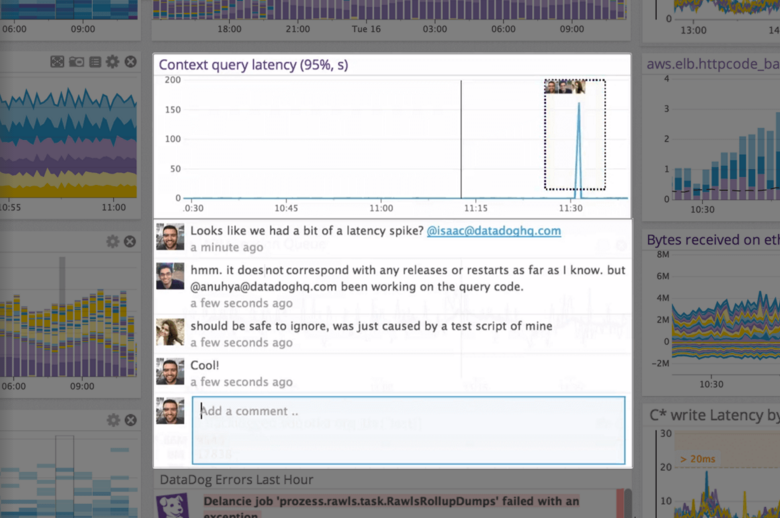 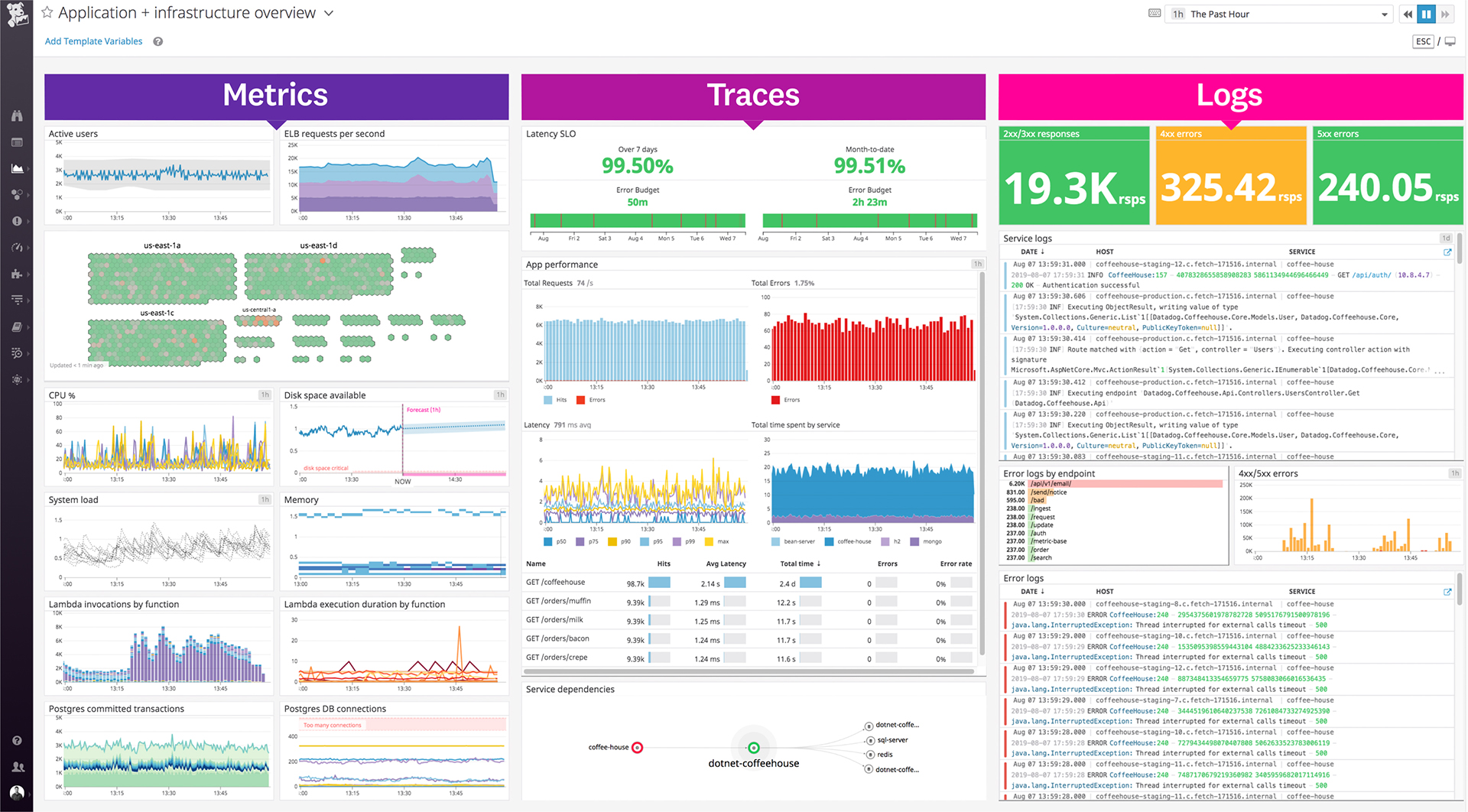    | SolarWinds SQL Sentry Screenshots  |