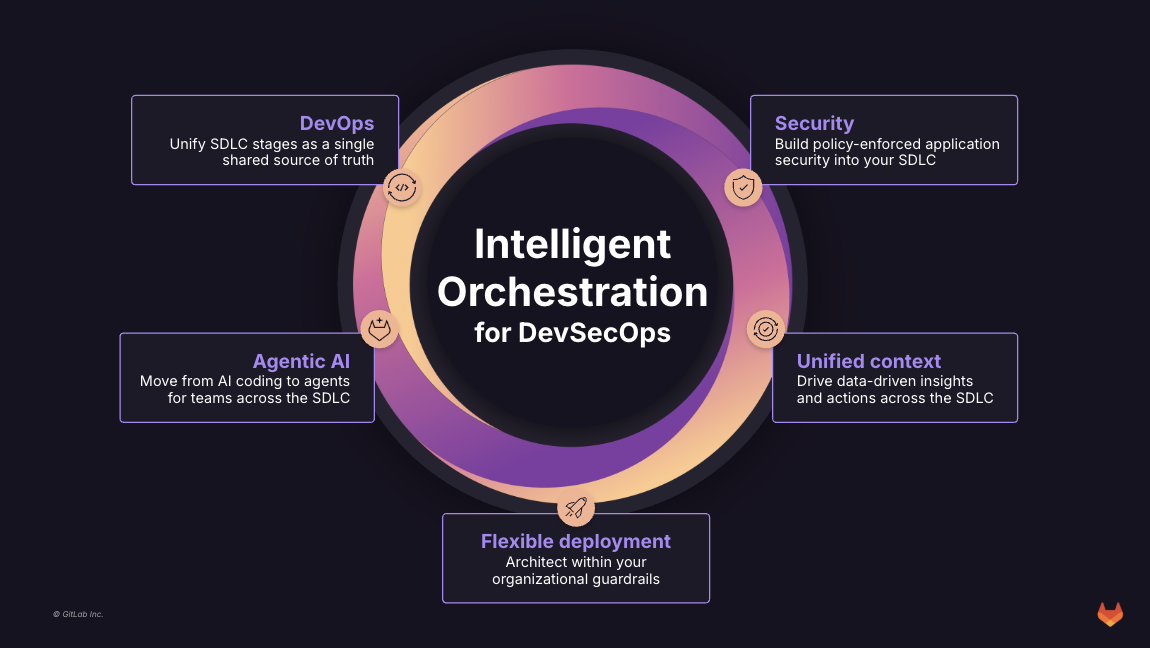
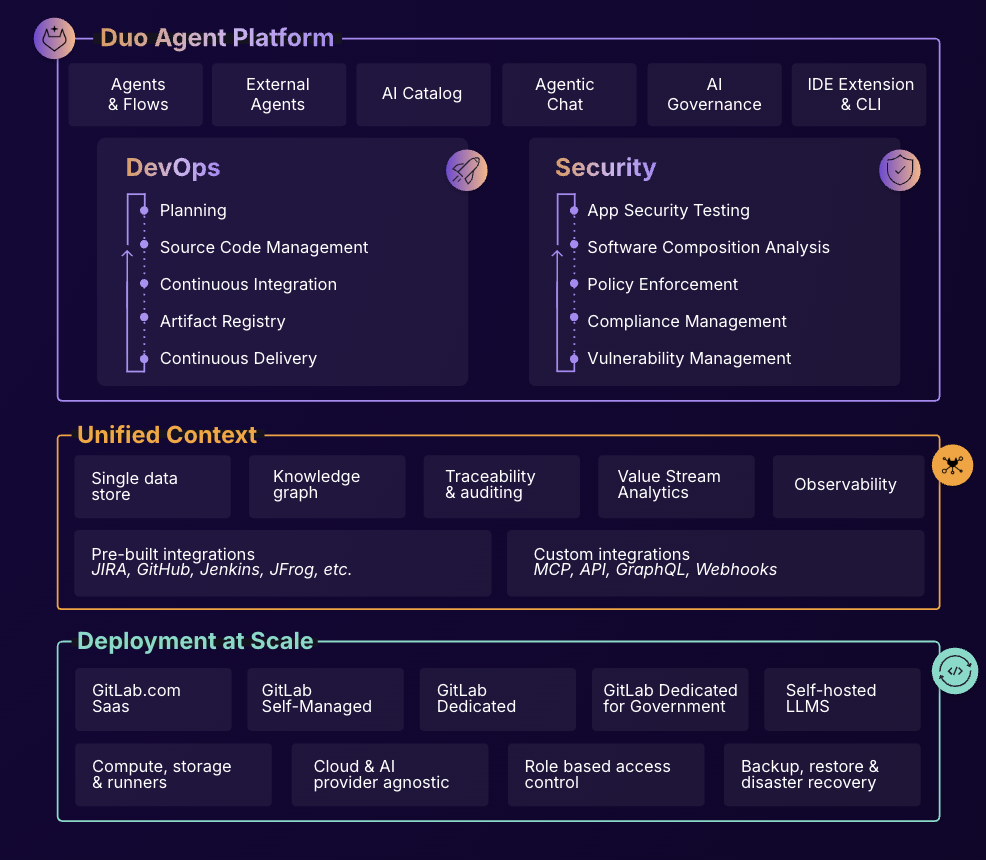
GitLab is an intelligent orchestration platform for DevSecOps, where software teams enable AI at every stage of the software lifecycle to ship faster. The platform enables teams to automate repetitive tasks across planning, building, securing, testing, deploying, and maintaining software.
$0
per month per user
Jenkins
Score 8.4 out of 10
N/A
Jenkins is an open source automation server. Jenkins provides hundreds of plugins to support building, deploying and automating any project. As an extensible automation server, Jenkins can be used as a simple CI server or turned into a continuous delivery hub for any project.
N/A
Oracle SQL Developer
Score 7.9 out of 10
N/A
Oracle SQL Developer is an integrated development environment (IDE) which provides editors for working with SQL, PL/SQL, Stored Java Procedures, and XML in Oracle databases.
N/A
Pricing
GitLab
Jenkins
Oracle SQL Developer
Editions & Modules
GitLab Free (self-managed)
$0
GitLab Free
$0
GitLab Premium
$29
per month per user
GitLab Premium (self-managed)
$29
per month per user
GitLab Ultimate
Contact Sales
GitLab Ultimate (self-managed)
Contact Sales
No answers on this topic
Offerings
Pricing Offerings
GitLab
Jenkins
Oracle SQL Developer
Free Trial
Yes
No
No
Free/Freemium Version
Yes
Yes
Yes
Premium Consulting/Integration Services
Yes
No
No
Entry-level Setup Fee
Optional
No setup fee
No setup fee
Additional Details
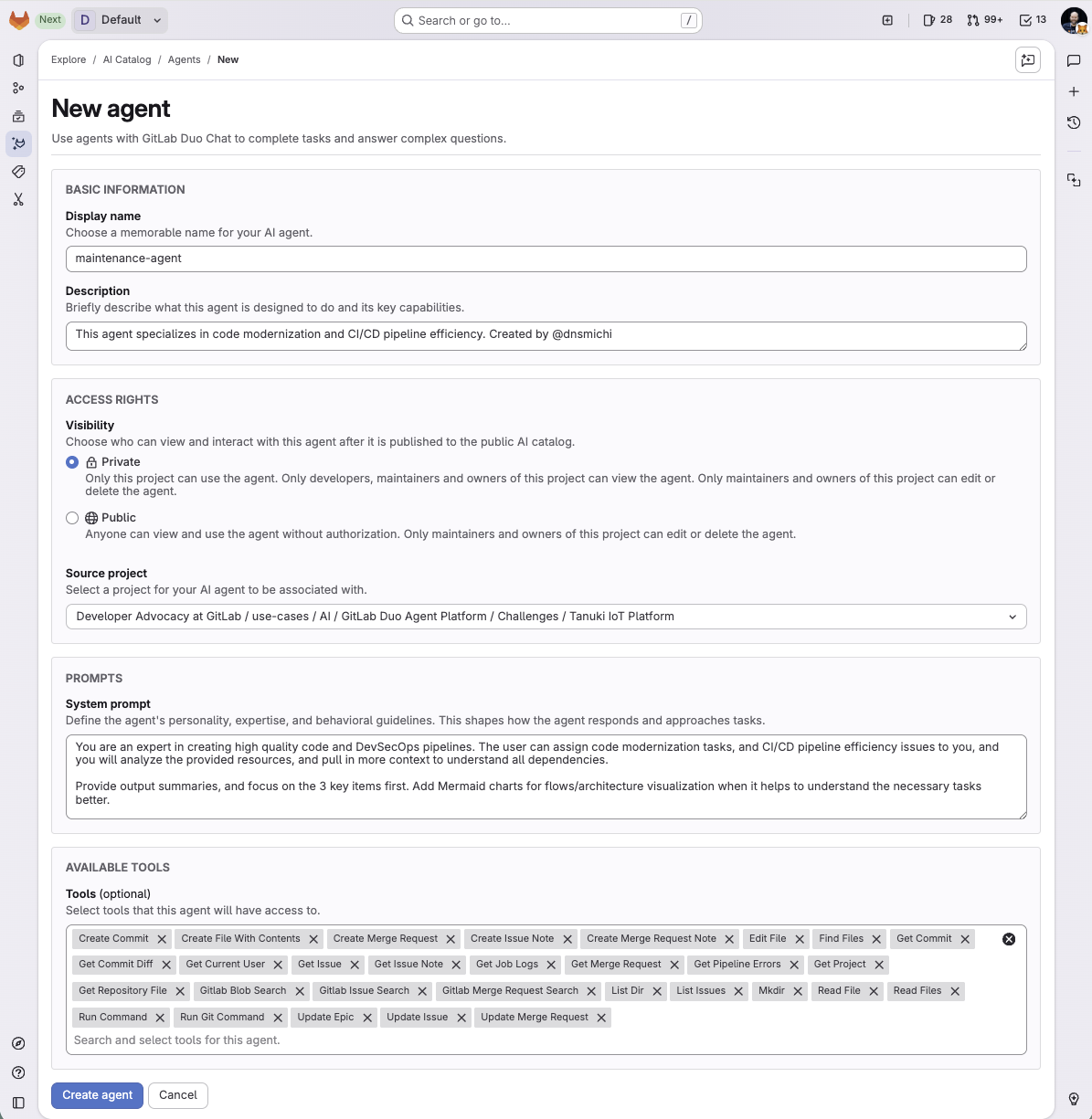
GitLab Credits enable flexible, consumption-based access to agentic AI capabilities in the GitLab platform, allowing you to scale AI adoption at your own pace while maintaining cost predictability. Powered by Duo Agent Platform, GitLab’s agentic AI capabilities help software teams to collaborate at AI speed, without compromising quality and enterprise security.
If usage exceeds monthly allocations and overage terms are accepted, automated on-demand billing activates without service interruption, so your developers never lose access to AI capabilities they need.
Real-time dashboards provide transparency into AI consumption patterns. Software teams can see usage across users, projects, and groups with granular attribution for cost allocation. Automated threshold alerts facilitate proactive planning. Advanced analytics deliver trending, forecasting, and FinOps integration.
The company has had prior experience with Bamboo. GitLab has much more functionality than Bamboo and worked better with some of our legacy projects. While Jenkins is free, it really isn't free - the amount of work required to get something up and running would have been …
GitLab fits our needs much better because it is a all-in-one solution and is easier to learn. We have a wide range of users - senior software developers and people who only write small, easy scripts or just start pipelines. Jenkins is rather useful when e.g. more fine-grained …
GitLab is an all-in-one Git and CI/CD platform that also offers generous credits in its free plan. It allows both private and public projects. The pipelines can be fully defined in YAML files put under version control.
We have recently migrated from Bamboo to GitLab across our enterprise as part of our tech modernization roadmap. GitLab provides a all-in-one platform for integrated code management. The only advantage that Bamboo had over GitLab was the integration with JIRA. The streamlined …
i have more exoerence in GitLab rather than Bitbucket . As personally , it is good for me to understand how things is going on. i have used personally and also in organisation . It is great for developer to see there 3 months ago code and also can come up with new solution to …
It was a management decision to use GitLab over other tools. It integrates well with RBAC using Terraform. Runners are easy to setup. Almost all the features the organization used before are available in GitLab.
Software delivery is the key objective and GitLab made it much easier to hit the group quickly. It worked well with automation, and integrations with other SDLC tools used in the Organization and it is really easy to use. It's widely adopted and has the power to deliver what we …
GitLab's online IDE and code modification is much better compared to Stash. While pricier than Bitbucket, Gitlab also provides CI CD configuration better than BB.
We migrated from Gerrit to GitLab, and minus a few minor bumps during migration, GitLab has been hands down better. Our devs have faster time to code review with notifications, the UI is easy to navigate and, and our pipeline is integrated and automated, so once everything is …
Gitlab provided on par functionality and it provided a good option for us to self host which is very important for our business. We think the business continuity story is more solid with Gitlab.
GitLab is easily the preferred tool when it comes to versioning and source control. With other tools the UI often feels outdated and clunky leading to inefficiency and confusion. With some of the sleeker tools such as GitKraken, while the aesthetic is pleasing, the experience …
Git has a Distributed Model. SVN has a Centralized Model. In git every user has their own copy of code on their local like their own branch. In SVN there is central repository has working copy that also make changes and committed in central repository
Gitlab is very well organized compared with the other VCS software Merge request option is the best option compared with the other companies The role of the administration is very easy to set and understand To track the issues/features and discuss with your teammates seems …
Sometimes it gets very slow and provides a problem to connect or update the servers. Search is difficult on some pages. Some features are missing that are available on GitHub.
Even though all three tools are also useful for their own merit, we found GitLab to be the best supported and most customizable for our needs. It is useful to know that the product today is what we need it to be and the community is there to keep it updated if we need more …
GitLab is the best combination of all the other tools. They are still viable in their own sense, but for the projects we were using, GitLab proved to be an excellent alternative.
GitLab CI and GitHub Actions are other powerful options in the market also with a rising popularity and high interoperability with their respective platform. But Jenkins is still a good option for complex pipelines that require scripting and logic. Also, Jenkins uses as runtime …
Overall, Jenkins is the easiest platform for someone who has no experience to come in and use effectively. We can get a junior engineer into Jenkins, give them access, and point them in the right direction with minimal hand-holding. The competing products I have used (TravisCI/G…
Bitbucket building was very slow, in order to improve that you have to upgrade to spend double or more minutes per build minute. The GUI was also very slow in updating on the progress of the builds, making things rather confusing. GitLab worked a bit better in my opinion, but …
Jenkins is highly customizable, making it ideal for complex pipelines that require scripting, conditional logic, and integration with a variety of tools.Jenkins offers thousands of plugins, giving it unmatched versatility.
Jenkins is highly customizable and flexible, supporting a wide range of plugins and integrations. Jenkins works with any version control system (Git, Subversion, etc.). Jenkins has a more mature ecosystem, and it may be better for large-scale, complex environments, especially …
One of the most important factors for selecting Jenkins would be the cost. Since Jenkins is opensource, there is a good amount saved from licensing and software procurement costs. Apart from cost, Jenkins is easy to understand and there is wide range of documentation and …
Both Jenkins and TeamCity do a good job of automating CI/CD. Jenkins runs much leaner than TeamCity - it only needs about a Gig of free memory, whereas TeamCity needs a fat 4 Gig free. Many tasks in Jenkins yml config can be very cumbersome, especially running local and …
Originally Jenkins was selected because it was the best around, but it has since been outclassed by more specific services or cloud-based services and tools that will do all of the heavy lifting for you. Jenkins still has a use case - but it's hard to argue the additional …
Jenkins immense flexibility and its large and impressive selection of available community-driven plugins makes it ideal choice for solving non-traditional problems.
However, for CI/CD - consider the benefit of modern tools that enforce reusable, infrastructure as code design …
I would use TeamCity if Jenkins was not already in place. TeamCity seems a lot more stable when it comes to upgrading the software and job templates the way TeamCity handles them is an absolute killer feature. Jenkins is a bit of a wild animal, quite unpredictable but with the …
Now days it seems like most tools in these categories have all of the same features. They typically have niches where they are better at one thing than another tool in that category. SQL Developer's niche is obviously connecting to Oracle databases. That plus the fact that it …
GitLab is good if you work a lot with code and do complex repository actions. It gives you a very good overview of what were the states of your branches and the files in them at different stages in time. It's also way easier and more efficient to write pipelines for CI\CD. It's easier to read and it's easier to write them. It takes fewer clicks to achieve the same things with GitLab than it does for competitor products.
Jenkins is a highly customizable CI/CD tool with excellent community support. One can use Jenkins to build and deploy monolith services to microservices with ease. It can handle multiple "builds" per agent simultaneously, but the process can be resource hungry, and you need some impressive specs server for that. With Jenkins, you can automate almost any task. Also, as it is an open source, we can save a load of money by not spending on enterprise CI/CD tools.
Almost all development activities (the tool is called "SQL Developer", not "DBA Toolset") can be done easily and quick with [Oracle] SQL Developer. From data model creation (tables, views) to development (creation of procedures, functions, packages) and then testing (SQL Developer includes an easy to use debugger), all tasks can be performed in a single tool.
It may not be as complete as other solutions for DBA tasks like instance monitoring, but it is usually OK for development and testing environments if you want to do some basic troubleshooting.
Automated Builds: Jenkins is configured to monitor the version control system for new pull requests. Once a pull request is created, Jenkins automatically triggers a build process. It checks out the code, compiles it, and performs any necessary build steps specified in the configuration.
Unit Testing: Jenkins runs the suite of unit tests defined for the project. These tests verify the functionality of individual components and catch any regressions or errors. If any unit tests fail, Jenkins marks the build as unsuccessful, and the developer is notified to fix the issues.
Code Analysis: Jenkins integrates with code analysis tools like SonarQube or Checkstyle. It analyzes the code for quality, adherence to coding standards, and potential bugs or vulnerabilities. The results are reported back to the developer and the product review team for further inspection.
Object Browser in SQL Developer allows you to explore the contents of your database using the connection tree.
The SQL Worksheet is an editor that allows for execution of SQL statements, scripts, and PL/SQL anonymous blocks. SELECT statements can be executed to return results in a spreadsheet-like 'grid' or can be executed as a script such to emulate SQL*Plus behavior and output
DBA Console allows users with administrative privileges to access DBA features such as database init file configuration, RMAN backup, storage, etc.
Inability to run multiple queries on the same database. You can only run one query on a given database.
Analytical models created from complex tables isn't accurate, and needs work.
Inability to view multiple tables of a database side-by-side. When trying to find correlations between tables, it would help to be able to see them at once on the same page.
I really feel the platform has matured quite faster than others, and it is always at the top of its game compared to the different vendors like GitHub, Azure pipelines, CircleCI, Travis, Jenkins. Since it provides, agents, CI/CD, repository hosting, Secrets management, user management, and Single Sign on; among other features
We have a certain buy-in as we have made a lot of integrations and useful tools around jenkins, so it would cost us quite some time to change to another tool. Besides that, it is very versatile, and once you have things set up, it feels unnecessary to change tool. It is also a plus that it is open source.
I find it easy to use, I haven't had to do the integration work, so that's why it is a 9/10, cause I can't speak to how easy that part was or the initial set up, but day to day use is great!
Jenkins streamlines development and provides end to end automated integration and deployment. It even supports Docker and Kubernetes using which container instances can be managed effectively. It is easy to add documentation and apply role based access to files and services using Jenkins giving full control to the users. Any deviation can be easily tracked using the audit logs.
Oracle SQL Developer is very easy to use and there are a wide range of courses available which can help you get started just within a day. Data can be exported in multiple formats based on user requirements. Organizational data can be stored and management effectively using Oracle SQL Developer. All the data, tables, sequences, indexes can be easily created and updated in Oracle SQL Developer.
I've never had experienced outages from GItlab itself, but regarding the code I have deployed to Gitlab, the history helps a lot to trace the cause of the issue or performing a rollback to go back to a working version
GItlab reponsiveness is amazing, has never left me IDLE. I've never had issues even with complex projects. I have not experienced any issues when integrating it with agents for example or SSO
No, when we integrated this with GitHub, it becomes more easy and smart to manage and control our workforce. Our distributed workforce is now streamlined to a single bucket. All of our codes and production outputs are now automatically synced with all the workers. There are many cases when our in-house team makes changes in the release, our remote workers make another release with other environment variables. So it is better to get all of the work in control.
At this point, I do not have much experience with Gitlab support as I have never had to engage them. They have documentation that is helpful, not quite as extensive as other documentation, but helpful nonetheless. They also seem to be relatively responsive on social media platforms (twitter) and really thrived when GitHub was acquired by Microsoft
As with all open source solutions, the support can be minimal and the information that you can find online can at times be misleading. Support may be one of the only real downsides to the overall software package. The user community can be helpful and is needed as the product is not the most user-friendly thing we have used.
It is worth well the time to setup Jenkins in a docker container. It is also well worth to take the time to move any "Jenkins configuration" into Jenkinsfiles and not take shortcuts.
Gitlab seems more cutting-edge than GitHub; however, its AI tools are not yet as mature as those of CoPilot. It feels like the next-generation product, so as we selected a tool for our startup, we decided to invest in the disruptor in the space. While there are fewer out-of-the-box templates for Gitlab, we have never discovered a lack of feature parity.
Overall, Jenkins is the easiest platform for someone who has no experience to come in and use effectively. We can get a junior engineer into Jenkins, give them access, and point them in the right direction with minimal hand-holding. The competing products I have used (TravisCI/GitLab/Azure) provide other options but can obfuscate the process due to the lack of straightforward simplicity. In other areas (capability, power, customization), Jenkins keeps up with the competition and, in some areas, like customization, exceeds others.
I have started to use Toad for Oracle recently because it is easier to sort and filter results, due to their memory sort feature that puts the results from your query in memory so that you don't have to rerun your query. I have used SQL Developer to easily update records in tables that I need to fix. I haven't found an easy way to do this in Toad other than writing SQL insert statements.