HCL Digital Experience is based on the former IBM Web Content Manager and IBM WebSphere Portal products, acquired by HCL Technologies from IBM in late 2018. The product allows the user to create, manage and deliver engaging omnichannel digital experiences to audiences with responsive content, targeted offers, seamlessly integrated applications and consistent branding across channels (web, mobile, and hybrid mobile/web applications and more).
N/A
Nexthink
Score 7.4 out of 10
N/A
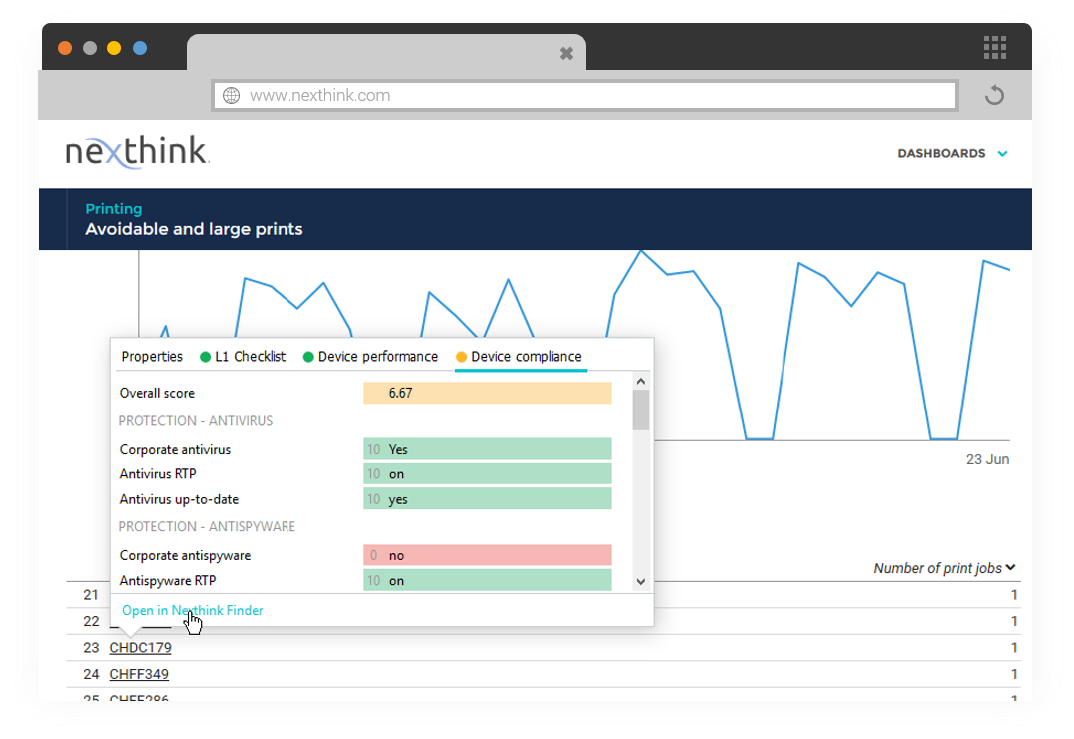
Nexthink Workplace Experience is a cloud-native platform allowing IT teams to manage the Digital Employee Experience (DEX) by providing insights across devices, applications, users, operating systems, locations and organizational units.
N/A
Progress Sitefinity
Score 7.6 out of 10
N/A
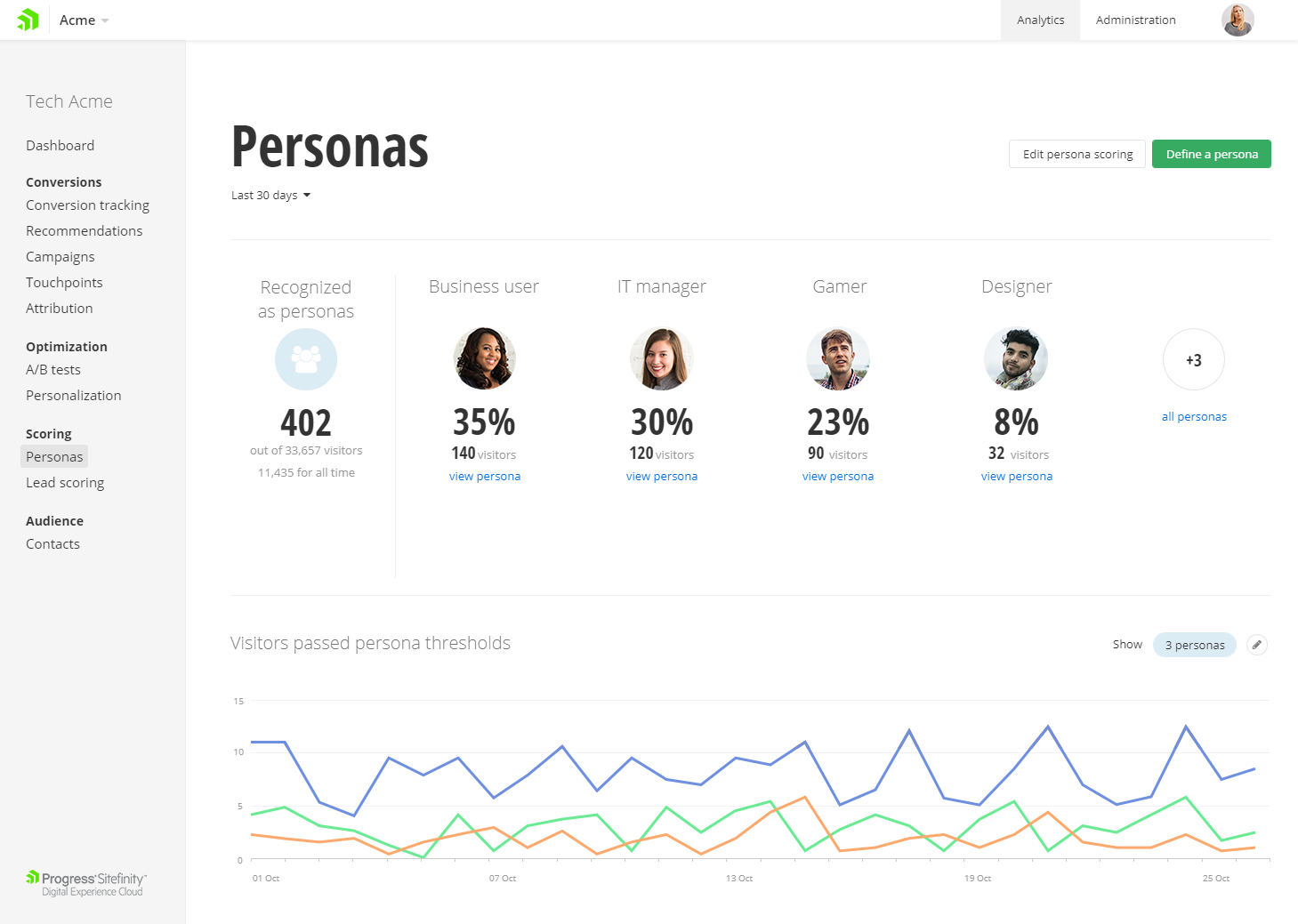
Progress Sitefinity is a content management and customer analytics platform. It supports content management, tailored marketing, multi-channel management, and ecommerce sites.
N/A
Pricing
HCL Digital Experience
Nexthink
Progress Sitefinity
Editions & Modules
No answers on this topic
No answers on this topic
No answers on this topic
Offerings
Pricing Offerings
HCL Digital Experience
Nexthink
Progress Sitefinity
Free Trial
No
No
Yes
Free/Freemium Version
No
No
No
Premium Consulting/Integration Services
No
Yes
Yes
Entry-level Setup Fee
No setup fee
Required
No setup fee
Additional Details
—
—
—
More Pricing Information
Community Pulse
HCL Digital Experience
Nexthink
Progress Sitefinity
Features
HCL Digital Experience
Nexthink
Progress Sitefinity
Security
Comparison of Security features of Product A and Product B
HCL Digital Experience
5.0
5 Ratings
48% below category average
Nexthink
-
Ratings
Progress Sitefinity
8.1
163 Ratings
0% below category average
Role-based user permissions
5.05 Ratings
00 Ratings
8.1163 Ratings
Platform & Infrastructure
Comparison of Platform & Infrastructure features of Product A and Product B
HCL Digital Experience
4.1
5 Ratings
66% below category average
Nexthink
-
Ratings
Progress Sitefinity
8.1
144 Ratings
0% below category average
API
4.14 Ratings
00 Ratings
8.1137 Ratings
Internationalization / multi-language
4.15 Ratings
00 Ratings
8.1106 Ratings
Web Content Creation
Comparison of Web Content Creation features of Product A and Product B
HCL Digital Experience
2.9
5 Ratings
85% below category average
Nexthink
-
Ratings
Progress Sitefinity
8.0
170 Ratings
11% above category average
WYSIWYG editor
7.04 Ratings
00 Ratings
8.1160 Ratings
Code quality / cleanliness
3.15 Ratings
00 Ratings
8.0151 Ratings
Admin section
3.15 Ratings
00 Ratings
8.0168 Ratings
Page templates
1.15 Ratings
00 Ratings
8.1164 Ratings
Library of website themes
1.15 Ratings
00 Ratings
8.0104 Ratings
Mobile optimization / responsive design
4.04 Ratings
00 Ratings
8.0155 Ratings
Publishing workflow
1.14 Ratings
00 Ratings
8.1152 Ratings
Form generator
3.02 Ratings
00 Ratings
8.0140 Ratings
Web Content Management
Comparison of Web Content Management features of Product A and Product B
HCL Digital Experience
1.9
5 Ratings
112% below category average
Nexthink
-
Ratings
Progress Sitefinity
8.0
164 Ratings
17% above category average
Content taxonomy
1.15 Ratings
00 Ratings
8.1157 Ratings
SEO support
2.15 Ratings
00 Ratings
8.1151 Ratings
Bulk management
2.13 Ratings
00 Ratings
8.0122 Ratings
Availability / breadth of extensions
2.14 Ratings
00 Ratings
8.0130 Ratings
Community / comment management
2.13 Ratings
00 Ratings
8.0121 Ratings
Best Alternatives
HCL Digital Experience
Nexthink
Progress Sitefinity
Small Businesses
Bloomreach - The Agentic Platform for Personalization
Score 9.0 out of 10
SolarWinds Pingdom
Score 9.5 out of 10
Bloomreach - The Agentic Platform for Personalization
HCL DX does really well at managing and maintaining the site. It allows the business to basically maintain the site while IT spent time developing new and enhanced functions. The main issue I currently have with HCL DX is not directly with the product but it does play a role. It is difficult finding skilled resources to support HCL DX in my experience.
I've been managing desktops for 20+ years and Nexthink was the missing tool out of my toolbox. Just to give some perspective, if you were building and maintaining a house, Nexthink would be comparable to switching up from a hammer and nails and to full blown using a nailgun. Nexthink is a solution accelerator and a well thought out toolset to give you the customer experience at a glance. It allows for so much more visibility just with the default set of data points the Collector (agent) gathers, which is A LOT, and grants you the ability to gather even more data with remote actions. All of this evidence cuts how the "it could possibly be this" and "maybe it's that" discussions when you're troubleshooting an issue. It may not provide the exact answer all the time, but it gives you a "compass point" on where you need to start looking to resolve the issue. Also the service monitoring, activity monitoring, and critical event thresholds really empower the teams to know when a problem is happening and they can get ahead of it before the first call even reaches the Help Desk. Nexthink is a cornerstone tool in our environment for end user experience and I'm excited to see where the go next.
Progress Sitefinity remains a little heavyweight for sites that require basic text content, or a limited number of pages. However, its flexibility (including the range of different content types if supports) make it a good choice for any organization requiring advanced content management capabilities at an affordable price.
With Version 8.5, IBM Web Content Manager introduced in place editing capabilities which allow authors to make content edits on sections of the page instead of going to the content itself. This feature allows authors to make changes in context of the page and preview changes within the actual look and feel of a live page.
Projects provide a collaborative atmosphere for the author community so that authors can interact and work as a team to manage inter-dependent content changes under one project and publish all changes at once, instead of working separately on individual content changes. This brings awareness across authors in an organization and easy knowledge share.
IBM Digital Data Connector is a cool feature that allows [users] to integrate external content sources onto the portal using IBM Web Content Manager presentation components. This allows UI/UX designers to present integrated external data in any manner they want, manage UI changes with an underlying approval process and leverage syndication to push changes live immediately.
IBM Web Content Manager offers a targeted content feature that allows business users to deliver personalized content to customers based on customer demographic information, browsing history and other transaction related information. Any rules created follow the publishing process thereby making it just a configurable item resulting in less turn around to turn on the feature on a website.
IBM Web Content Manager offers 'multi lingual solution' out of the box which allows content creation for almost all popular languages.
Syndication feature has improved a lot and it now provides a detailed views comprising of 'failed items', 'items that have syndicated successfully, 'items in queue'. Failed items view provides detailed and clear cut information of what resulted in failure helping IT to troubleshoot problems easily.
'Low-code structured content' (dynamic content types) is one of Sitefinity's most powerful features that allows you to structure content according to business needs, while at the same time dampening editorial freedom to ensure accessibility, meta enhancement, SEO and API consumption can be achieved.
Sitefinity's content provider model allows us to flexibly (by means of admin interface) easily aggregate or separate content sharing within a multi-site instance.
This proofs particularly powerful in emerging situations where there suddenly is a demand for content sharing across countries or regions.
Adaptability at its core.
While there's never a perfect fit for everything, it allows for easy code customization and extension being a .NET application at heart. Giving it a corporate edge over other custom solutions, whether it is on the development side or deployment side (on premise, IaaS or Azure DevOps Paas). And it has enabled us to put the system to use in its core feature - which is to manage content, where on other occasions we were able to take full advantage of its features such as A/B testing and personalization.
IBM Web Content Manager should provide some easily usable connectors through a GUI to connect to bring content from custom data sources including connecting to Salesforce and custom databases.
Should further optimize and enhance creation of rich and responsive content driven UIs on various digital channels.
Should further optimize and enhance content personalization features.
The on-premise solution can be slow at times and resource-demanding even on newer laptops. (This isn't the case with the cloud offering.)
Some useful features are only available to cloud customers.
Library pack configuration could be made easier, often these packs require some customization and it's not always clear how to get them up and running after importing.
Diagram or illustrate more use cases for server setups, and managing of upgrades.
I'd like to see the ability to synchronize from one server to multiple others at once.
Implementation assistance as part of the purchase rather than farming out to 3rd party, although they did answer every question we asked in order to determine our best architecture setup.
IBM products always moves forward to adapt to new requirements and technologies. I have used versions 6, 6.1, 7 and 8 of IBM WCM, and I know IBM is ready to revamp the tool based on emerging needs, and still provide the capabilities to migrate your old system to the newer versions.
Very big fan of this CMS, as it allows scalability, performance, and everything else. The support is great whenever we need it. As a marketer, the digital/marketing side of things is very easy to use and we've seen strong results from an SEO and marketing perspective. I can't speak to the developer/creative side too much, but in talking with these teams, they do recommend the tool as well.
Support can be pretty good, even though, depending on the level of licensing, it can take longer to hear back from their team. They do have a phone option, which works well. Overall, they are knowledgeable, and helpful when needed. At times, support is able to access the system directly and troubleshoot critical items when needed.
N/A - I was not part of the implementation team. We have had this internally for over 5 years. Based on my experience, ensure that you have documentation on the initial implementation and subsequent upgrades. I would also recommend to have all the documentation on how and why the system was implemented the way it was
Magento and Prestashop are E-commerce CMS platforms. They are used in a different scale of application than WCM.
Concerning Joomla, it's a useful CMS forsmaller website. Once again this is an other scale of application than WCM Liveray can compete WCM 7 concerning the : ¤ specific development ¤ security ¤ responsive
Nexthink had better integration and a better user interface. 1E did not have the engagement capability which is so critical to many of the actions we complete using Nexthink. Nexthink had better trending data capabilities. 1E did not capture and hold data the way Nexthink does so all data assumes you are able to pull information from all systems at any time. with remote systems it is unlikely you will capture all systems at the same time so it makes any actions less effective. this review was performed 4 years ago so 1E may have addressed some of these limitations but Nexthink has also grown and continues to add and improve on their industry-leading capabilities.
It is hands down just easier for our customers to use. The interface and the page builder experience is much better than what we have used in the past and has many enterprise features even in the lower price-point
SCCM proactive remediation: Automatically resolving hundreds of SCCM issues per month
Hardware: Identification of over $5m cost avoidance by seeing a lack of usage for 128GB SSDs - no need to upgrade to 256GB... coupled with OneDrive migration packs in the Nexthink library this is valuable.