Hypersocket (formerly Nervepoint) enables organizations to efficiently manage and administer end users and their access to disparate systems by empowering end users to manage their own accounts across multiple systems both on-premise and in the cloud, while allowing IT to gain control over user sprawl, cut support and gain in-depth business insight.
N/A
Middesk
Score 8.9 out of 10
N/A
Middesk is a business intelligence (BI) software used to onboarded clients working in three primary verticals — Fintech, Credit Reporting, and Business Marketplaces.
$1,000
per month
OpenText Magellan
Score 9.0 out of 10
N/A
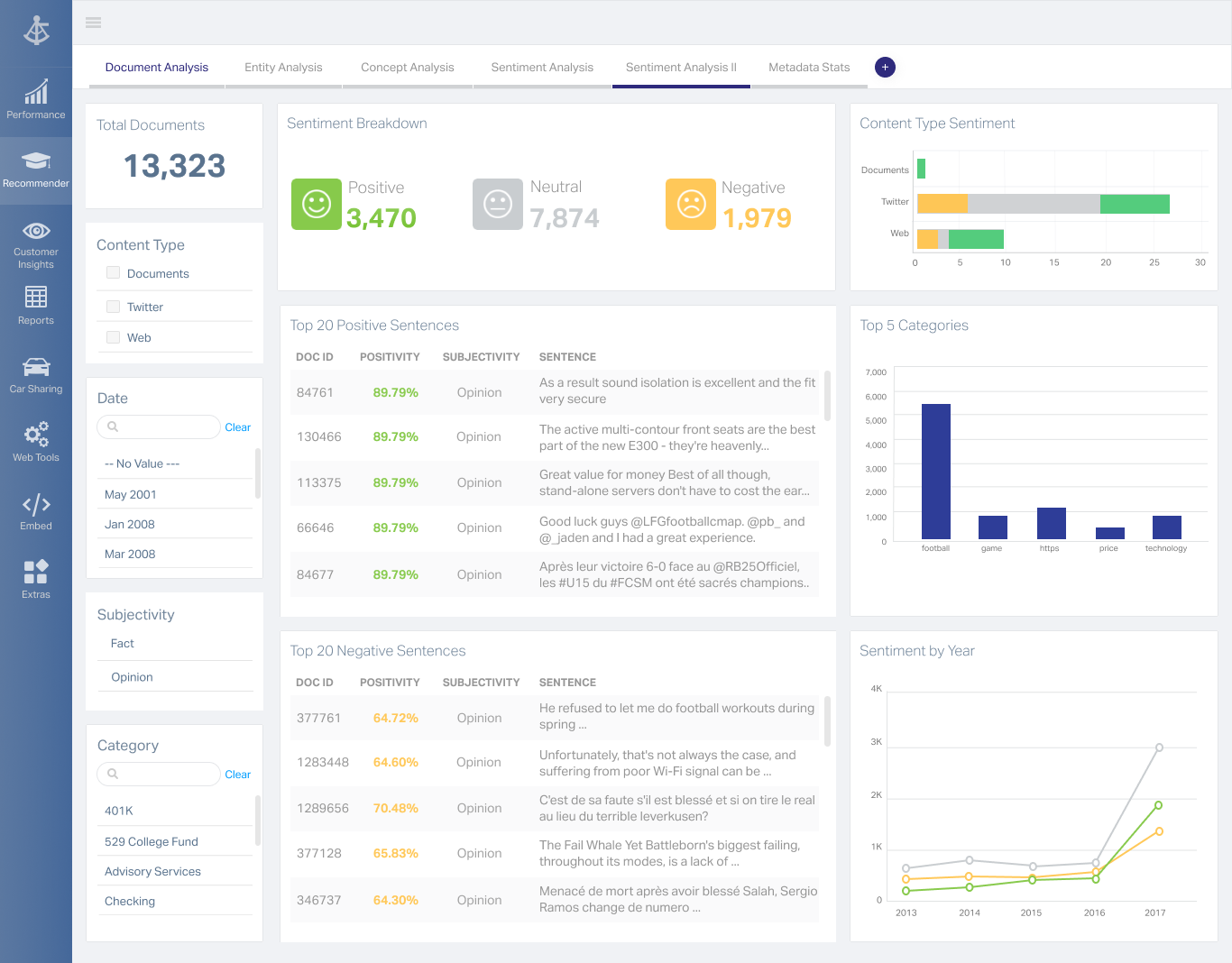
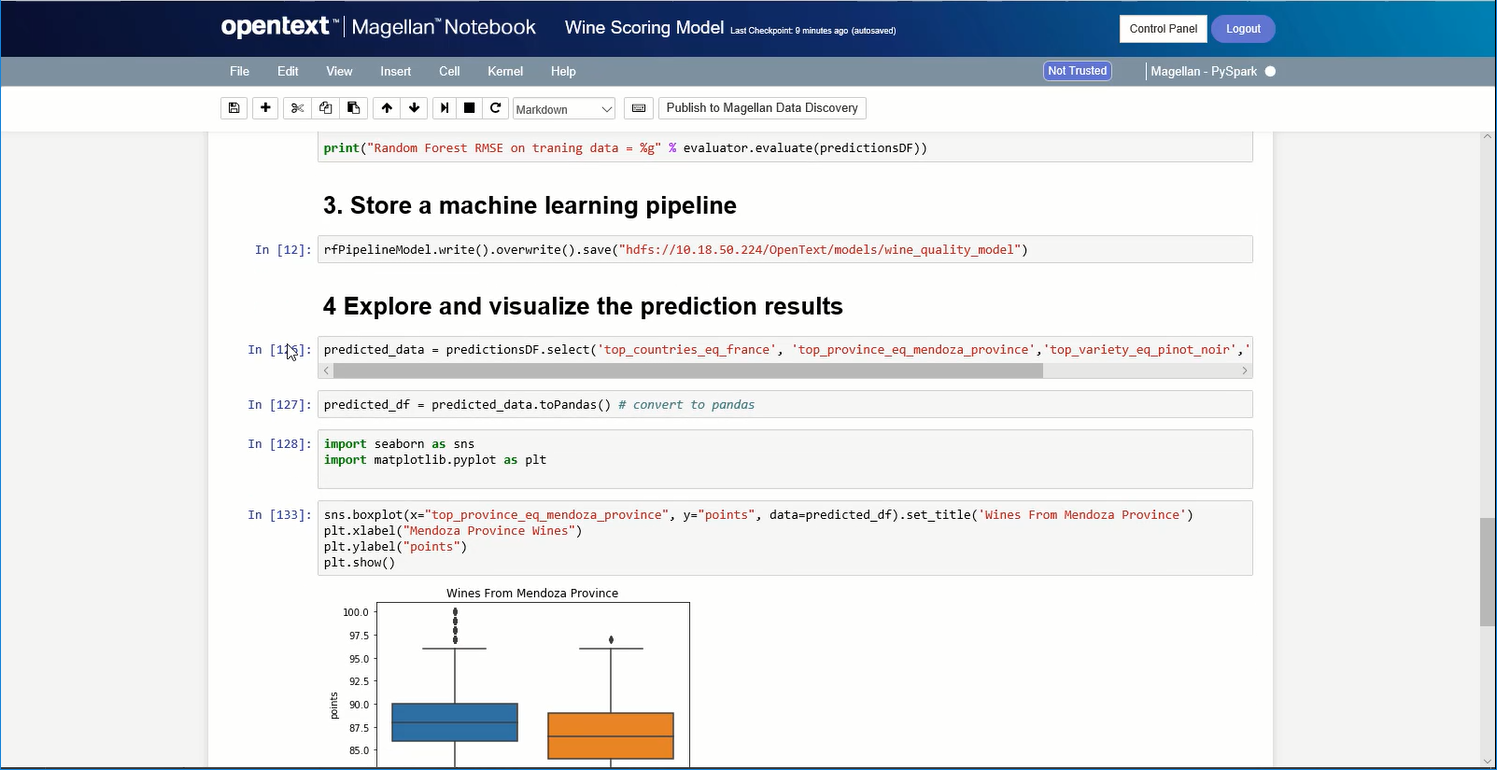
OpenText Magellan Analytics Suite leverages a comprehensive set of data analytics software to identify patterns, relationships and trends through data visualizations and interactive dashboards.
N/A
Pricing
Hypersocket
Middesk
OpenText Magellan
Editions & Modules
No answers on this topic
No answers on this topic
No answers on this topic
Offerings
Pricing Offerings
Hypersocket
Middesk
OpenText Magellan
Free Trial
Yes
No
No
Free/Freemium Version
Yes
Yes
No
Premium Consulting/Integration Services
No
No
No
Entry-level Setup Fee
No setup fee
No setup fee
No setup fee
Additional Details
—
Users may also pay per use if they are expecting a lower volume of usage.
—
More Pricing Information
Community Pulse
Hypersocket
Middesk
OpenText Magellan
Features
Hypersocket
Middesk
OpenText Magellan
BI Standard Reporting
Comparison of BI Standard Reporting features of Product A and Product B
Hypersocket
-
Ratings
Middesk
7.7
1 Ratings
6% below category average
OpenText Magellan
7.0
2 Ratings
16% below category average
Pixel Perfect reports
00 Ratings
8.01 Ratings
00 Ratings
Customizable dashboards
00 Ratings
7.01 Ratings
7.02 Ratings
Report Formatting Templates
00 Ratings
8.01 Ratings
7.01 Ratings
Ad-hoc Reporting
Comparison of Ad-hoc Reporting features of Product A and Product B
Hypersocket
-
Ratings
Middesk
8.0
1 Ratings
0% below category average
OpenText Magellan
8.3
3 Ratings
3% above category average
Drill-down analysis
00 Ratings
8.01 Ratings
8.03 Ratings
Formatting capabilities
00 Ratings
8.01 Ratings
8.03 Ratings
Integration with R or other statistical packages
00 Ratings
8.01 Ratings
9.01 Ratings
Report sharing and collaboration
00 Ratings
8.01 Ratings
8.02 Ratings
Report Output and Scheduling
Comparison of Report Output and Scheduling features of Product A and Product B
Hypersocket
-
Ratings
Middesk
6.4
1 Ratings
25% below category average
OpenText Magellan
8.3
2 Ratings
1% above category average
Publish to Web
00 Ratings
7.01 Ratings
8.02 Ratings
Publish to PDF
00 Ratings
5.01 Ratings
8.02 Ratings
Report Versioning
00 Ratings
5.01 Ratings
9.02 Ratings
Report Delivery Scheduling
00 Ratings
8.01 Ratings
8.02 Ratings
Delivery to Remote Servers
00 Ratings
7.01 Ratings
00 Ratings
Data Discovery and Visualization
Comparison of Data Discovery and Visualization features of Product A and Product B
HyperSocket is very well suited if the resources and budget are made available. There is not much a learning curve for the IT Department or for those users already familiar with two-factor authentication. There will be some education and training requirements for most end-users as the notifications and general verbiage can be confusing for some. It may also show some exploits within some end-users who are unaware of a notification but will use the email to reset an expired password without thinking twice if it may have been a phishing email or the opposite where an end-user deletes or ignores the expiration email notification expecting it to be spam/phishing.
Middesk majorly provides us with real-time access to the data and documents which are required for automating KYB and CIP regulatory compliance, mitigating front and backend risk. In addition, it is the easiest way for financial services companies to verify and monitor their business customers. It for us very much makes the process of onboarding customers very easy.
If you do not have a large budget and are a large organization, I would steer clear of Actuate. If you are looking to do very complex washboarding, I would not use them. Your developers have to be very skilled to work with this. Plan to bring in consultants if necessary to help your process. Adhoc reporting is weak. If your pricing is user based and you expand, this could be very expensive.
Help-Desk functionality similar to OneIdentity Self-Service Password Manager, as it provides additional users that do not require administrative access to assist with managing end-users who may have locked themselves out of HyperSocket Access Manager by forgetting their own security questions.
Too many features which become unusable and feel like the payment plans are not flexible since it's an all-in-one product with one price. It is not necessarily a bad thing as most subscription-based pricing forces a buyer to pay more for an integral service that is only available on the highest price-plan. You really do get what you pay for, but we found many of our use-case scenarios limited the product.
This isn't necessarily against the product, just a personal opinion around Multi-Factor authentication which is always primarily driven mobile devices. Not all companies or end-users have access to a multi-factor device, (or in our case, are allowed to have access to a cell phone while servicing members/clients). This creates a shortfall to allow multi-factor functionality to extend to all users unless there are hardware tokens, which can be miss placed or left out more easily as most users don't treat it the same way they would their personal smartphone.
I am no longer working for the company that was using Actuate but I believe they would continue to use it because the stitching costs would be to high. It would require a complete rewrite of the reports and the never version of Actuate (BIRT) even required an almost complete report rewrite
UI is not as intuitive as other systems we use. For states that require income tax withholding, some of them require registration with multiple agencies - the UI doesn't easily tell you which login credentials are tied to which agency.
It is quite intuitive to use. It is fit specifically for doing sentiment, emotion, and intention analysis as well as text classification and text summarization. I would have given 10 if it is fit for the purpose of doing image processing and analysis as well. There is a huge market to analyze video and image data.
The user experience of this tool must be rearchitected. I am able to observe a lot of lag in the process when initiated. There are sometimes when the tool's navigation becomes difficult. The time taken at times is large to process a request and this can also be highly improved in the future.
Nervepoint Access Manager (NAM) has the ability to deal with multiple domains. While ServiceNow at the time we looked at the solution did not (I do not know if it does now). NAM was a more polished, mature product.
ADP Workforce Now offers a module to handle payroll tax registrations. The interface is confusing and the information is hard to find. The service and support are awful - nobody ever knows who can answer tax account questions, they escalate to a different department and promise a callback but they never call back.
It is vastly superior to these in many ways, for complex reporting it is a much more sophisticated solution. Visualizations are very good. Javascript extensibility is very powerful, others don't support this or as well. Pentaho and MS are both OLAP oriented. Pentaho is moving more toward big data, which was not our primary focus. Others are stuck in the Crystal Reports Band metaphor.
As with any IT Service or Solution, the investment will always be seen as a sunk cost. The only ROI would be the time and resources spent elsewhere rather than with Password Management through an IT Department or similar department. I found that the time spent on password management was about the same, as many users who are frequently forgetting a password are also forgetting their security question & answers.
There are some positives, as it was able to help manage the bulk of their non-windows passwords or passwords related to another online service. The centralized password manager doesn't feel like a true single sign-on but for most users, it replaces a hand-written copy they have taped to a monitor.
It can help with automating some of the active directory workflows with its own user provisioning functionality. Took more time to set up than it was to manage on its own.
Actuate can handle 50 to 60 sub reports inside a report very well.
Dynamically creating the datasource, chart, graph, reports are the main advantages. We can do any level of drilling, and can create a performance matrix dashboard efficiently.