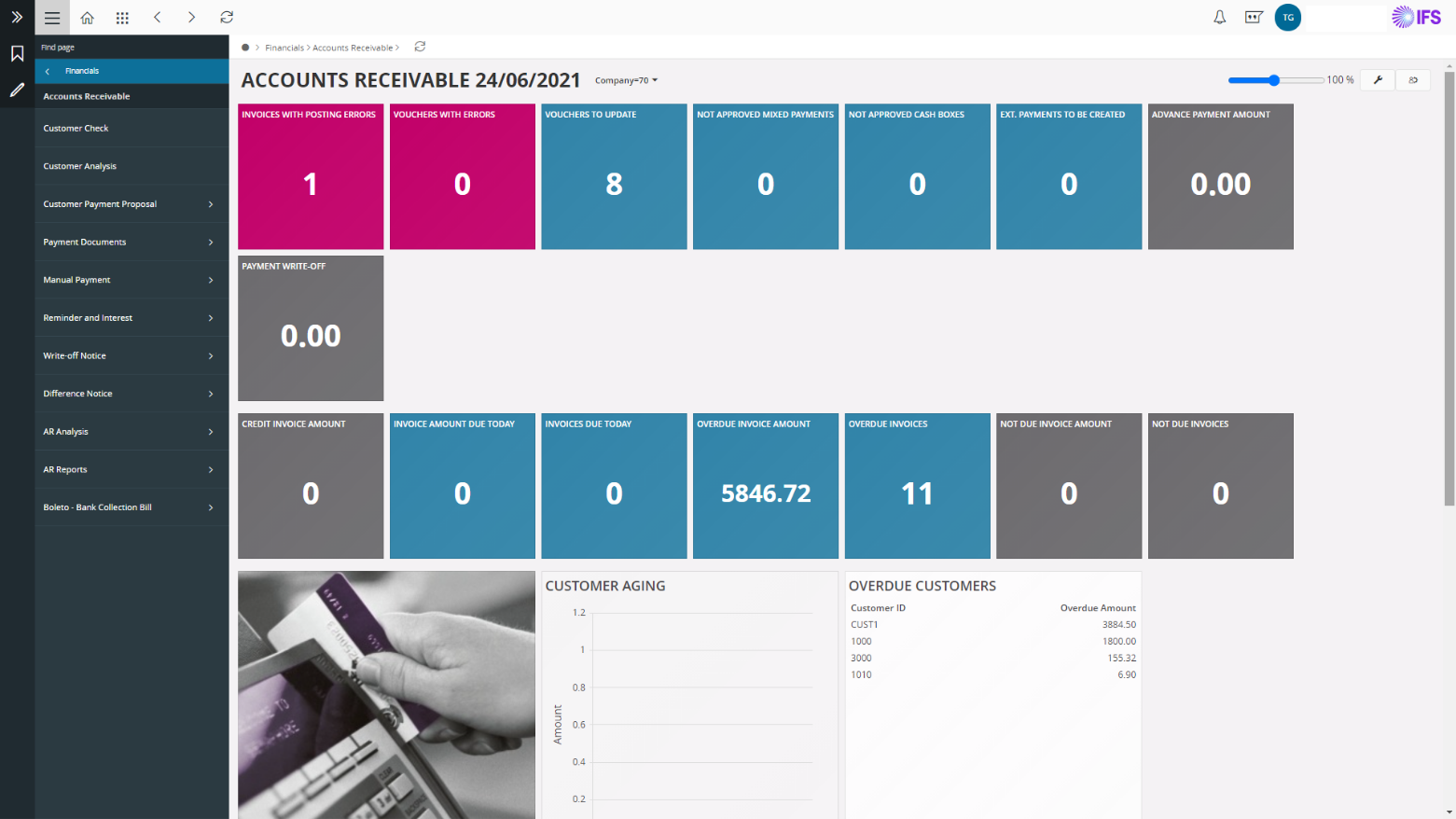
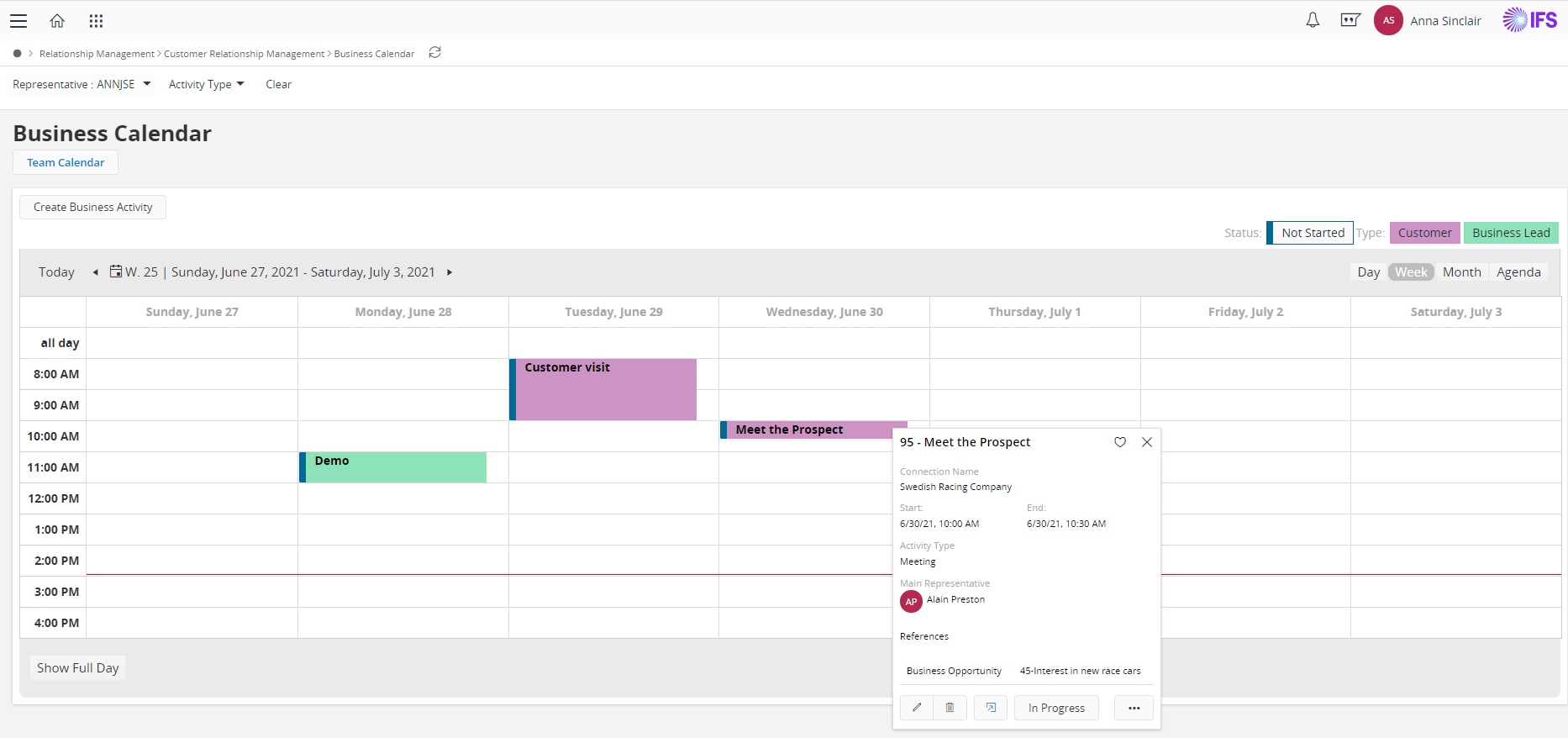
IFS Applications is presented by the vendor as an agile application suite that offers enterprise resource planning (ERP), enterprise asset management (EAM) and enterprise project management, handling 4 core processes: Service & Asset Management Full Enterprise Asset Management (EAM), Maintenance Repair and Overhaul (MRO) and Field Service Management (FSM) Manufacturing Enterprise Resource Planning (ERP) with support for process manufacturing, discrete manufacturing…
N/A
Microsoft Dynamics 365
Score 8.0 out of 10
N/A
Microsoft Dynamics 365 is a CRM providing sales, marketing, and service functionality. It is offered as SaaS and on-premise. Dynamics 365 is part of the larger Dynamics suite of business intelligence and ERP products.
N/A
SAP Cloud ERP
Score 8.6 out of 10
N/A
SAP Cloud ERP (SAP S/4HANA Cloud) is a modular ERP that enables users to run mission-critical operations in real time from anywhere, introduce new business models in any industry, and expand globally. SAP Cloud ERP is a SaaS product and can also be deployed in a hybrid landscape for quicker time to value. SAP Cloud ERP is a foundational component of the
IFS Applications have a very UI rich interface compared to other systems. IFS Applications can be easily and quickly learned with the very good documentation, e learning portals and other learning platforms. The technical implementation of the IFS Applications is very …
IFS Applications is based on Agile Technology which allows organizations to reconfigure user interface as per user requirements and make it user-friendly. Other applications are lagging on many fronts like User Interface, Online help document availability, Implementation …
Microsoft AX, QAD (in continuation of our previous ERP), Sage X3 was an out of the box ERP that was part of initial RFP.
We have chosen IFS based on the compromise between costs & budget, functionality, technical features, and feedback from similar customers that gave their …
I have tried Zoho Books and QuickBooks CRM as well. However, there quiet a few things that were missing from them. Both the CRM were good when it comes to creating the quotes. However, none of them provides the visibility like Microsoft Dynamics 365. Additionally, it was a bit …
Dynamics is the middle ground between the Salesforce ecosystem and the SAP ecosystem: it's versatile enough to rival Salesforce, but its third-party integrations are significantly weaker. At the same time, it has enough capabilities to compete with SAP, even though the German …
Microsoft Dynamics 365 is much more robust, with more customizable features, such as user-specific settings and customer customization options. The system is easy to us,e and all modules can be customized to the exact need of the user. The standard version includes everything …
Microsoft stands different from all of them. It's easy to use and comes with Microsoft's trust. On the basis of security, it's one of the best. It mainly solves the purpose and works as per desire. On the other hand, all the abovementioned items are also suitable for meeting …
We have used Salesforce and a homegrown CRM in the past. Neither gave us as seamless an implementation as Microsoft Dynamics 365 has done. We prefer Microsoft Dynamics 365 features that seems better fit for our enterprise growth than does Salesforce. We've also found that our …
Overall the usability and multi-functionality of Microsoft Dynamics 365 is really what stood out to our leadership team and board. We were able to eliminate the need for multiple platforms and integrate a lot of our processes into one single platform. The idea is we can …
I have also used some bespoke systems, which were much better than any of these. Microsoft Dynamics 365 was selected by senior management, against advice from technical experts. The products I could find in the list were also expensive and inefficient; Microsoft Dynamics …
Interfaces are better, faster in work and more secured. Cost of product is much better with Microsoft Dynamics 365. Moreover Microsoft Dynamics 365 works hard on its updates and tries its best from what I have seen to make a better available product for usage by companies and …
It is Less Costly Compared to the other CRM. For call Centre Management this Works best when we used The dialer. Using Dialer and CRM side by Side gives the best Result.
Microsoft Dynamics was part of a system overhaul for a local school, and we looked at many products. If we had used it for a company with low turnover, then it might have been more feasible. They needed something a new person could learn quickly, someone who might also be …
Microsoft has much better tools and customer support. Everything I need to see is organized in a database and it's easy to get an overview of from the dashboard. Salesforce is just more clunky and I don't really like the way they organize their data. Also, it is not as …
We liked the fact that Dynamics CRM had out of box integrations with O365 applications like Outlook, Power BI, etc. They also are a little more flexible when it came to the implementation. They offered sales and service in a fully cloud based edition while other options in the …
I think that Microsoft Dynamics 365 (formerly Microsoft Dynamics CRM) has made its spot amongst the business world and again, provides your needs based upon what it is your looking for in a cloud-based ERP. We are currently still using the software and so far I can say that it …
We had other applications from Microsoft like ERP applications and we already used Outlook for a mail client. Today, given the choice and having a big amount of money to invest, they would probably choose SalesForce for CRM, having a better mobile app and better reporting for …
While Hubspot CRM starts off as a free software, we went with Dynamics based on the additional features available at this time. MS Dynamics also works well with the other applications we already had in place. Besides that, they do both achieve a similar goal in the CRM field …
The decision is made by the supervisor. However, we can live with that because the impact on the business is manageable. It’s not a bad idea to be prepared now, because the cloud is the future.
Not every Enterprise Resource Planning (ERP) System does not cover all the industry verticals and all the functionalities and requirements for a specific industry as built-in features. Although IFS Applications does not completely cover all the requirements and all the industry verticals, it can be implemented for any industrial company with minimum configurations and customization, which is very good when implementing an ERP system. Since it supports web and mobile versions of the application as well, the users ind it easy to use.
Based on user experience, I would like to recommend this software to my friends or colleagues on the AP Handling. I like AP recording the most because it makes my work easy. I have been using this for the past 2 years, and it's one of the best for this task. Easy to use and user-friendly.
SAP Cloud ERP is best suited for medium- to large-sized organizations seeking scalability, real-time insights, and standardized processes. It will help them streamline financial operations & core HR functions, optimize inventory management & procurement process. Its intelligent automation will help them automate repetitive, routine tasks and use machine learning for predictive analysis.
Some useful out-of-the-box features, like mass uploads of Leads from trade shows or when qualifying a Lead, CRM automatically creates the Opportunity, Contact, and Account for you, etc.
Really powerful customizations through the user interface to improve user experience. Things like Business Rules, for example, if Field A = 1, then Field B = 2 and Field C = 2, if Field A = 2, then Field B and Field C don't apply, so automatically hide them.
Or other functionality that improves user experience, like Business Process Flows. These walk users step by step through our business process, helping them know when certain actions should take place, and at what point other data is now required. We've used this extensively with our Lead to Opportunity to Quote to Order process, helping users understand the business process each step of the way.
Customizations built on top of the platform now called model-driven PowerApps. You can have connections to "typical" data, like Accounts, Contacts, or Opportunities, for example, but then connect that data to custom entities, records that only apply to your specific business. This is all done through the user interface and allows you to customize and automate specific line-of-business applications for your specific needs.
Behind the scenes, D365 CE is built on SQL. So the data conforms to industry standards and makes it much easier to interact with. Your developers and IT team will thank you.
Example: SAP S/4HANA Cloud helps in streamlining and automating various business processes, reducing manual efforts and errors. For instance, it can automate procurement processes, from purchase requisitions to supplier invoice processing, improving efficiency and reducing the risk of human error.
Enhanced User Experience and Interface:
Example: The system offers a user-friendly interface and enhanced user experience. It simplifies complex processes, making it easier for employees to navigate and use the system effectively. For example, the system might offer intuitive dashboards for sales teams to easily track customer orders and preferences.
Microsoft Dynamics 365 storage & license cost can prohibit some large deployments or even cost-sensitive small projects from using the platform (although I'm certain most deployments would realize a positive ROI if implemented correctly with process automation).
The cost and licensing document for Dynamics 365 is 61 pages and will take a rocket scientist to understand it. It's better to just have your Microsoft help estimate the cost if they are willing to help you that.
The documentation on how to first fully understand the Out of the Box default solution and settings is lacking or even non-existing. This has the potential to derail Dynamic 365 launches and implementations from the gitgo. Want to use an out of the box entity?.. well it's probably related to 5 other entities that require configuration and full understanding of it to successful implement. And you ask where is the laymen guide or instructions?... User groups and forums. In Summary, Microsoft can up its game in deployment training and supporting documentation.
Microsoft needs to incentivize more external platforms to build app connectors for easy integration, such as ZenDesk, Slack, Tableau, etc. Even the current connector apps such as Salesforce, MailChimp, Docusign are useless or don't work at all.
Several limitations inhibit successful Dynamics 365 deployments such as: limited number of Rollup field calculations (summarizing fields on child/related records), limited number rows that can exported to Excel via advanced find, Dynamics 365 files, log and database storage size limit is extremely small and will always require purchasing additional storage (for Online deployments).
New user buy-in or acceptance or system platform changes can be difficult if a solid change management plan isn't enacted.
Don't expect much help from Microsoft on implementation or solutions unless it's a technical flaw with the platform. Microsoft relies on their MVP partner network to consult for implementations at a hefty cost. Hiring a knowledgeable and savvy Dynamics 365 System Administrator can reduce the need for consultant support; of course, this is dependant upon many many variables.
CRM has allowed us to keep all of our data in one place that is easy for all users within the company to view. I came into the company after they had been using CRM for about 4 years. They have all said that since we have used this it has helped us control work processes better, it has allowed us to be able to track things so much better, and has been something that has helped unite many processes that used to be all over the place. We are currently using CRM 4.0 and are planning on upgrading in the next 18 months to the 2011 version. Support for 4.0 is almost all but dried up. Understandably so. Some of the customization we have done, and a plugins we use, are now contained within the 2011 version so we are looking forward to that upgrade. We use an email marketing company as well, and they primarily support the 2011 version, but their product connects and is integrated within CRM. This is a great benefit as well so that all of our marketing information can be contained in one location.
SAP S/4HANA Cloud provides strong reliability, compliance, and integration for finance, procurement, and project management, which are core to business operations. Its integration with analytics and AI platforms adds strategic value, making it difficult to replace. However, there may be some challenges around licensing cost, customization flexibility, and dependency on specialized skill sets
In overall, the companies get many advantages, where we can forget most of the things which can be considered for room for improvement. The user interface is good. It supports mobile versions an has several mobile applications for specific areas with Android, IOS and Windows versions. It allows several deployment options such as remote hosting, IFS Cloud hosting and on-premise hosting of the servers. IFS Applications can be easily and safely integrated with other systems.
The system has a generally easy to use interface. This is from log in, to switching of environments, to switching of user roles. Even the Business Central reports are relatively easy to use in comparison to other systems. And knowing that the data in Business Central can easily be made available and reports generated via the Microsoft Power BI makes it even a better a system.
SAP Cloud ERP is a useful solution for automating and streamlining business processes. It offers modern technologies such as built-in AI, machine learning, and real-time data analytics. It offers multi-currency, multi-language support to manage international operations smoothly. It comes with a modern, role-based user interface that enhances your user experience and lets you perform tasks smoothly.
We have been unable to get answers to our questions, solutions to our problems, and they don't seem interested in working in the construction industry.
Our partner, Ledgeview Partners has been FANTASTIC to work with. They are always timely in their response and have taken time to understand our business and our specific needs. We've made a lot of advanced customizations and they have been a great help in making those updates.
The support system I find great as whenever I run into problems they rectify them quickly as possible they never reacted late the support is just up to the mark for me. They provide many solutions to the problems I faced the [technical] team support is always amazing they [listen] to mean work accordingly.
We used a data warehouse to house our data, and our IT team and implementation vendor worked diligently ahead of time to construct idea implementation plans. Out of millions of records- we had less than a dozen errors, which is remarkable. My major insight is simply having a group of completely devoted individuals working towards your goal who fully understand the desired outcome. Focused resources for implementation season are critical to success.
SAP requires a lot of internal and external resources to complete its successful implementation. The cloud version requires a deeper understanding of the different capabilities of the local systems (hardware) and the connection towards your local IT team. We found several problems on our systems that we couldn't foresee before the implementation and roll out.
Microsoft AX, QAD (in continuation of our previous ERP), Sage X3 was an out of the box ERP that was part of initial RFP. We have chosen IFS based on the compromise between costs & budget, functionality, technical features, and feedback from similar customers that gave their feedback. The project manager team and qualification level of technical or consultant teams were differentiating factors too. Finally IFS application was named in the Gartner’s mid-market ERP Magic Quadrant, along with SAP, and helped us to finalize our choice
Microsoft Dynamics 365 is much more robust, with more customizable features, such as user-specific settings and customer customization options. The system is easy to us,e and all modules can be customized to the exact need of the user. The standard version includes everything you need for a small business that is starting out. Additional features can be added as needed.
The platform utilizes advanced predictive analytics to anticipate operational bottlenecks and put them out of commission before the problems become larger. We can proactively develop effective strategies that help keep service quality in the face of unexpected changes in the market, or external disruptions, by continuously analyzing historical performance data as well as elements of the current market
If you know your stuff, this product does just fine. They are always adapting (aren't they all, always?), so expect it to grow and for you to grow with it.
Don't expect new employees, or places with high turnover, to ease into this product quickly, or even on a moderate time table.