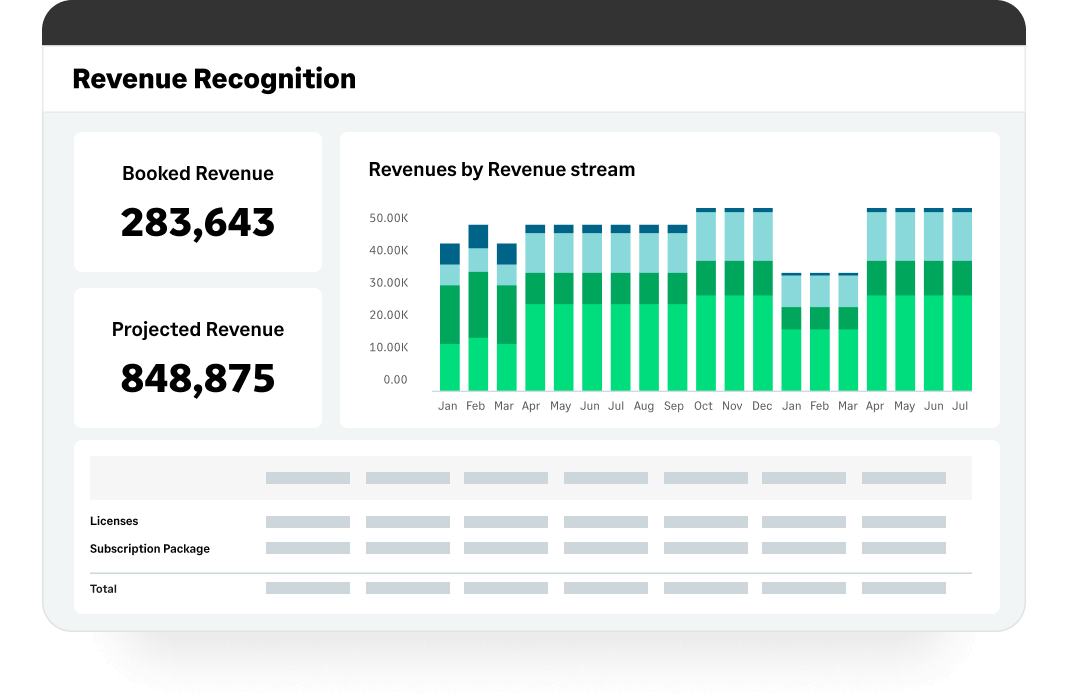
Sage Intacct is a cloud ERP system targeted at high-growth small and medium-sized businesses. Intacct includes applications for core financials and accounting, purchasing, order management, and financial reporting and business intelligence. It also integrates with 3rd party software like Salesforce.
N/A
Microsoft Dynamics 365 Business Central
Score8 out of 10
N/A
Microsoft Dynamics 365 Business Central (formerly Dynamics NAV) is one of the ERP products in the Dynamics family.
The technology is based on the Navision product acquired by Microsoft in 2002. This product is the best-selling Microsoft ERP platform, and is often used by companies in the manufacturing and distribution verticals.
Sage Intacct is far more accessible than the iteration of Microsoft Dynamics NAV I used in a previous job. The interface and documentation of Intacct is far quicker to pick up than NAV. Sage Intacct also has many add-ins that increase the functionality of their product without …
A de minimis incentive was given to thank the reviewer for their time. The incentive was not used to bias or drive a particular response, nor was the incentive contingent on a positive endorsement. More Info
Verified User
Chose Sage Intacct
Sage Intacct was less expensive and provided all of the functionality we needed.
A de minimis incentive was given to thank the reviewer for their time. The incentive was not used to bias or drive a particular response, nor was the incentive contingent on a positive endorsement. More Info
Verified User
Chose Sage Intacct
We felt the integrations and automations were better with Intacct, particularly around the credit control areas.
A de minimis incentive was given to thank the reviewer for their time. The incentive was not used to bias or drive a particular response, nor was the incentive contingent on a positive endorsement. More Info
Verified User
Chose Sage Intacct
I have used Quickbooks which is too simple for company this size, Microsoft NAV which has a terrible look and has many issues with the fixed asset module and the accrual process. I have also used SAP which is very complex and is not needed for a company this size, but even so …
A de minimis incentive was given to thank the reviewer for their time. The incentive was not used to bias or drive a particular response, nor was the incentive contingent on a positive endorsement. More Info
A de minimis incentive was given to thank the reviewer for their time. The incentive was not used to bias or drive a particular response, nor was the incentive contingent on a positive endorsement. TR verified that a representative sample of customers was invited. More Info
Verified User
Chose Sage Intacct
We selected Sage Intacct because we believe it will grow with us well into the future, wherever our strategy plans takes the organization.
A de minimis incentive was given to thank the reviewer for their time. The incentive was not used to bias or drive a particular response, nor was the incentive contingent on a positive endorsement. TR verified that a representative sample of customers was invited. More Info
Controller in Finance and Accounting at Fundamental Labor Strategies, Inc (Transportation/Trucking/Railroad, 11-50 employees)
Chose Sage Intacct
The Microsoft products seem to be stuck in the last century. Intacct's GUI is cleaner, more intuitive for the non-accounting user, and allows for more reporting customization.
A de minimis incentive was given to thank the reviewer for their time. The incentive was not used to bias or drive a particular response, nor was the incentive contingent on a positive endorsement. TR verified that a representative sample of customers was invited. More Info
Verified User
Chose Sage Intacct
Sage intacct provides a better ability to deep delve into transactions and data than other softwares I have used. Its ability to add multiple dimensions to each entry is more advanced than others I have used and therefore provides the most comprehensive reporting abilities in …
A de minimis incentive was given to thank the reviewer for their time. The incentive was not used to bias or drive a particular response, nor was the incentive contingent on a positive endorsement. TR verified that a representative sample of customers was invited. More Info
A de minimis incentive was given to thank the reviewer for their time. The incentive was not used to bias or drive a particular response, nor was the incentive contingent on a positive endorsement. More Info
A de minimis incentive was given to thank the reviewer for their time. The incentive was not used to bias or drive a particular response, nor was the incentive contingent on a positive endorsement. More Info
Verified User
Chose Sage Intacct
Intacct offers a lean, responsive system that, as a cloud-based solution, doesn't require a hefty outlay of capital for servers and administration of same. The ERP has a very user-friendly interface and offers an incredible amount of customization.
A de minimis incentive was given to thank the reviewer for their time. The incentive was not used to bias or drive a particular response, nor was the incentive contingent on a positive endorsement. More Info
Verified User
Chose Sage Intacct
The other two systems we took into consideration when selecting our new accounting package were far too large and too in depth for our organization. Intacct was the perfect size and left plenty of room for us to continue to grow.
A de minimis incentive was given to thank the reviewer for their time. The incentive was not used to bias or drive a particular response, nor was the incentive contingent on a positive endorsement. More Info
Senior Manager Information Services in Information Technology at HBK CPAs & Consultants (Accounting, 201-500 employees)
Chose Sage Intacct
Microsoft Dynamics NAV was one of the accounting solutions that we evaluated alongside of Intacct. While it too offered everything we were looking for in a solution, it just didn't separate itself enough from Intacct to justify the higher cost of investment. NAV seemed to …
A de minimis incentive was given to thank the reviewer for their time. The incentive was not used to bias or drive a particular response, nor was the incentive contingent on a positive endorsement. More Info
Sage Intacct and Microsoft Dynamics 365 Business Central (formerly Dynamics NAV) are both ERP platforms with varying degrees of core accounting capabilities. Both are frequently used by large businesses and enterprises, but cater to slightly different business sizes and use cases.
Sage Intacct is more midsize and large business-focused, and the software places greater emphasis on its accounting capabilities and scalability for growing businesses. In contrast, Dynamics 365 is scaled more for enterprise use, with an ERP-first mindset that also has strong accounting features.
Features
Sage Intacct and Microsoft Dynamics 365 Business Central both have strong capabilities tailored to their respective audiences.
Sage Intacct is designed to provide growing businesses with the customizability to scale up as needed. Reviewers frequently highlight the ability to customize their deployments, data models, and reporting. It also has excellent core accounting capabilities, with additional build-in features like timekeeping that create additional efficiencies.
In contrast, Microsoft Dynamics 365 stands out for its reporting and wide range of ERP capabilities. Microsoft’s flexible reporting capabilities allow users to drill down into the data as needed, granting enterprises enhanced visibility. The platform’s extensive features are enhanced by its robust integrations and add-ons that allow companies to build out the platform to suit their requirements.
Limitations
While both platforms have strong capabilities, Sage Intacct and Microsoft Dynamics 365 also have some limitations.
Intacct’s customizability comes with a steeper learning curve than some smaller or new organizations are accustomed to. The customizability also trades off with less out of the box functionality, especially in areas like reporting. This means businesses should be ready to invest time in optimizing their deployment to their specific needs.
Microsoft’s critiques are less focused on learning curves, and more on the transition and implementation process itself. As companies scale into Dynamics 365, transitioning from a prior accounting or ERP platform is a heavy lift that requires an intense transition process. Some reviewers considered outside consultants or assistance as a must to effectively transition and deploy the platform. This complexity is exacerbated by Dynamics’s reliance on add-ons and integrations to maximize its capabilities.
Pricing
Sage Intacct’s pricing varies with each customer. Concrete pricing numbers are available by quote from the vendor.
Microsoft’s pricing system is extremely complex and variable by use case. Pricing can range from $30/user per month to $1,500/tenant per month.
Features
Sage Intacct
Microsoft Dynamics 365 Business Central
Payroll Management
Comparison of Payroll Management features of Sage Intacct and Microsoft Dynamics 365 Business Central
Feature
Sage Intacct
7.0
359 Ratings
8% below category average
Microsoft Dynamics 365 Business Central
6.6
11 Ratings
13% below category average
Pay calculation
7.05 Ratings
6.211 Ratings
Benefit plan administration
6.45 Ratings
6.39 Ratings
Direct deposit files
7.14 Ratings
6.610 Ratings
Salary revision and increment management
6.94 Ratings
00 Ratings
Reimbursement management
7.5359 Ratings
00 Ratings
Customization
Comparison of Customization features of Sage Intacct and Microsoft Dynamics 365 Business Central
Feature
Sage Intacct
7.6
870 Ratings
0% above category average
Microsoft Dynamics 365 Business Central
8.0
25 Ratings
6% above category average
API for custom integration
7.8817 Ratings
8.124 Ratings
Plug-ins
7.4659 Ratings
7.922 Ratings
Security
Comparison of Security features of Sage Intacct and Microsoft Dynamics 365 Business Central
Feature
Sage Intacct
8.7
1317 Ratings
6% above category average
Microsoft Dynamics 365 Business Central
8.4
29 Ratings
0% above category average
Single sign-on capability
8.81075 Ratings
8.525 Ratings
Role-based user permissions
8.61282 Ratings
8.328 Ratings
Reporting & Analytics
Comparison of Reporting & Analytics features of Sage Intacct and Microsoft Dynamics 365 Business Central
Feature
Sage Intacct
7.8
1410 Ratings
0% below category average
Microsoft Dynamics 365 Business Central
8.4
30 Ratings
11% above category average
Dashboards
7.81269 Ratings
8.326 Ratings
Standard reports
8.01371 Ratings
8.430 Ratings
Custom reports
7.61357 Ratings
8.629 Ratings
General Ledger and Configurable Accounting
Comparison of General Ledger and Configurable Accounting features of Sage Intacct and Microsoft Dynamics 365 Business Central
Feature
Sage Intacct
7.9
1549 Ratings
4% above category average
Microsoft Dynamics 365 Business Central
8.4
30 Ratings
8% above category average
Accounts payable
8.21439 Ratings
8.429 Ratings
Accounts receivable
8.01263 Ratings
8.328 Ratings
Cash management
8.01341 Ratings
00 Ratings
Bank reconciliation
8.11330 Ratings
00 Ratings
Expense management
7.9940 Ratings
00 Ratings
Time tracking
6.9505 Ratings
00 Ratings
Fixed asset management
7.3687 Ratings
00 Ratings
Multi-currency support
7.8517 Ratings
00 Ratings
Multi-division support
8.5846 Ratings
00 Ratings
Regulations compliance
7.6515 Ratings
00 Ratings
Electronic tax filing
7.7383 Ratings
00 Ratings
Self-service portal
7.4645 Ratings
00 Ratings
Global Financial Support
8.0377 Ratings
8.517 Ratings
Intercompany Accounting
8.4892 Ratings
00 Ratings
Journals and Reconciliations
8.71246 Ratings
8.919 Ratings
Enterprise Accounting
8.1535 Ratings
00 Ratings
Configurable Accounting
8.1732 Ratings
7.219 Ratings
Centralized Rules Framework
7.9527 Ratings
00 Ratings
Standardized Processes
8.3856 Ratings
8.720 Ratings
Primary and Secondary Ledgers
00 Ratings
8.416 Ratings
Inventory Management
Comparison of Inventory Management features of Sage Intacct and Microsoft Dynamics 365 Business Central
Feature
Sage Intacct
6.8
499 Ratings
7% below category average
Microsoft Dynamics 365 Business Central
8.6
26 Ratings
8% above category average
Inventory tracking
7.8365 Ratings
8.526 Ratings
Automatic reordering
5.58 Ratings
7.618 Ratings
Location management
8.5464 Ratings
8.222 Ratings
Manufacturing module
5.25 Ratings
00 Ratings
Order Management
Comparison of Order Management features of Sage Intacct and Microsoft Dynamics 365 Business Central
Feature
Sage Intacct
7.5
738 Ratings
2% above category average
Microsoft Dynamics 365 Business Central
8.0
28 Ratings
1% above category average
Pricing
7.7461 Ratings
8.225 Ratings
Order entry
8.0656 Ratings
8.925 Ratings
Credit card processing
7.4466 Ratings
7.517 Ratings
Cost of goods sold
6.314 Ratings
8.422 Ratings
End-to-end order visibility
8.2380 Ratings
00 Ratings
Order Orchestration
00 Ratings
8.313 Ratings
Subledger and Financial Process
Comparison of Subledger and Financial Process features of Sage Intacct and Microsoft Dynamics 365 Business Central
Feature
Sage Intacct
-
Ratings
Microsoft Dynamics 365 Business Central
8.2
20 Ratings
8% above category average
Billing Management
00 Ratings
8.518 Ratings
Cash and Asset Management
00 Ratings
8.619 Ratings
Travel & Expense Management
00 Ratings
7.614 Ratings
Budgetary Control & Encumbrance Accounting
00 Ratings
8.216 Ratings
Period Close
00 Ratings
8.219 Ratings
Project Financial Management
Comparison of Project Financial Management features of Sage Intacct and Microsoft Dynamics 365 Business Central
Feature
Sage Intacct
-
Ratings
Microsoft Dynamics 365 Business Central
8.7
8 Ratings
14% above category average
Budgeting and Forecasting
00 Ratings
10.08 Ratings
Project Costing
00 Ratings
10.07 Ratings
Cost Capture
00 Ratings
10.08 Ratings
Capital Project Management
00 Ratings
8.05 Ratings
Customer Contract Compliance
00 Ratings
10.06 Ratings
Project Revenue Recognition
00 Ratings
8.04 Ratings
Project Execution Management
Comparison of Project Execution Management features of Sage Intacct and Microsoft Dynamics 365 Business Central
Feature
Sage Intacct
-
Ratings
Microsoft Dynamics 365 Business Central
7.6
11 Ratings
7% above category average
Project Planning and Scheduling
00 Ratings
7.510 Ratings
Task Insight for Project Managers
00 Ratings
7.110 Ratings
Project Mobile Functionality
00 Ratings
7.19 Ratings
Definable Resource Pools
00 Ratings
6.910 Ratings
Grants Management
Comparison of Grants Management features of Sage Intacct and Microsoft Dynamics 365 Business Central
Feature
Sage Intacct
-
Ratings
Microsoft Dynamics 365 Business Central
8.9
8 Ratings
18% above category average
Award Lifecycle Management
00 Ratings
6.78 Ratings
Procurement
Comparison of Procurement features of Sage Intacct and Microsoft Dynamics 365 Business Central
Feature
Sage Intacct
-
Ratings
Microsoft Dynamics 365 Business Central
7.9
16 Ratings
11% above category average
Bids Analyzed and Compared
00 Ratings
7.410 Ratings
Contract Authoring
00 Ratings
7.210 Ratings
Contract Repository
00 Ratings
7.510 Ratings
Requisitions-to-Purchase Orders Integrated
00 Ratings
8.114 Ratings
Supplier Management
00 Ratings
7.613 Ratings
Risk Management
Comparison of Risk Management features of Sage Intacct and Microsoft Dynamics 365 Business Central
Feature
Sage Intacct
-
Ratings
Microsoft Dynamics 365 Business Central
8.3
12 Ratings
21% above category average
Risk Repository
00 Ratings
7.211 Ratings
Control Management
00 Ratings
7.411 Ratings
Control Efficiency Assessments
00 Ratings
6.711 Ratings
Issue Detection
00 Ratings
7.511 Ratings
Remediation and Certification
00 Ratings
7.69 Ratings
Logistics
Comparison of Logistics features of Sage Intacct and Microsoft Dynamics 365 Business Central
Feature
Sage Intacct
-
Ratings
Microsoft Dynamics 365 Business Central
7.7
10 Ratings
10% above category average
Transportation Planning and Optimization
00 Ratings
7.88 Ratings
Transportation Execution Management
00 Ratings
7.48 Ratings
Trade and Customs Management
00 Ratings
7.98 Ratings
Fulfillment Management
00 Ratings
7.410 Ratings
Warehouse Workforce Management
00 Ratings
9.27 Ratings
Manufacturing
Comparison of Manufacturing features of Sage Intacct and Microsoft Dynamics 365 Business Central
Feature
Sage Intacct
-
Ratings
Microsoft Dynamics 365 Business Central
8.0
10 Ratings
7% above category average
Production Process Design
00 Ratings
9.27 Ratings
Production Management
00 Ratings
8.88 Ratings
Configuration Management
00 Ratings
7.17 Ratings
Work Execution
00 Ratings
9.27 Ratings
Manufacturing Costs
00 Ratings
7.310 Ratings
Supply Chain
Comparison of Supply Chain features of Sage Intacct and Microsoft Dynamics 365 Business Central
Feature
Sage Intacct
-
Ratings
Microsoft Dynamics 365 Business Central
7.4
12 Ratings
1% above category average
Forecasting
00 Ratings
6.412 Ratings
Inventory Planning
00 Ratings
7.212 Ratings
Performance Monitoring
00 Ratings
6.912 Ratings
Product Lifecycle Management
Comparison of Product Lifecycle Management features of Sage Intacct and Microsoft Dynamics 365 Business Central
It depends on the scale and nature of the organisation, but for a business like ours, i.e. a medium sized business with several entities operating in more than one location with different currencies, I think it is a very good fit. It is relatively easy to get to grips with and provides a good level of functionality.
A de minimis incentive was given to thank the reviewer for their time. The incentive was not used to bias or drive a particular response, nor was the incentive contingent on a positive endorsement. More Info
Microsoft Dynamics 365 Business Central is well suited for inventory management in all aspects. Its accessibility, along with my other apps, when out of the office is unparalleled. I find it easy to work with on a desktop or laptop; however, it could use some work on a mobile device.
A de minimis incentive was given to thank the reviewer for their time. The incentive was not used to bias or drive a particular response, nor was the incentive contingent on a positive endorsement. More Info
Excellent roll-up reporting of various categories of expenses across multiple depts. Data is not siloed when we want to find all revenue sources across business entities, for example, or even down to details such as what is spent on "discretionary" expense elements.
Coding nomenclature is flexible and makes sense across business areas. Again, this allows for both more effective capture of data and with reporting slices and iterations.
Sage Intacct's open architecture (availability of APIs and already existing hooks) has made integration with other system tool-sets easier than we would ever have thought.
A de minimis incentive was given to thank the reviewer for their time. The incentive was not used to bias or drive a particular response, nor was the incentive contingent on a positive endorsement. TR verified that a representative sample of customers was invited. More Info
Automate the creation of bills of materials for production. We can now generate a BoM from a sales order.
Organization of all data pertaining to thousands of parts, assemblies, and finished goods. Engineering and purchasing have a common portal.
We can create sales orders from quotations instead of re-entering them (this did require some bolt-on software). Less redundant work with fewer entry errors.
Accounting can provide reports based on specific criteria stored in NAV. We can pull better and more detailed intelligence.
A de minimis incentive was given to thank the reviewer for their time. The incentive was not used to bias or drive a particular response, nor was the incentive contingent on a positive endorsement. More Info
A de minimis incentive was given to thank the reviewer for their time. The incentive was not used to bias or drive a particular response, nor was the incentive contingent on a positive endorsement. TR verified that a representative sample of customers was invited. More Info
A de minimis incentive was given to thank the reviewer for their time. The incentive was not used to bias or drive a particular response, nor was the incentive contingent on a positive endorsement. More Info
Sage Intacct is continuously evolving and increasing it's functionalities. I am excited to attend conferences to learn what is in the roadmap for future releases. Additionally, using Sage Intacct allows me grow as a professional, I am really enjoy the knowledge that I have within the product to be able to share my experiences.
A de minimis incentive was given to thank the reviewer for their time. The incentive was not used to bias or drive a particular response, nor was the incentive contingent on a positive endorsement. More Info
We've already decided to continue using this software. It is too expensive for us to upgrade so we made a workaround by using the virtual computer with Windows XP installed on it. We did research replacing this software, but it was a better financial decision to keep what we had instead
A de minimis incentive was given to thank the reviewer for their time. The incentive was not used to bias or drive a particular response, nor was the incentive contingent on a positive endorsement. More Info
The ease of use as a seasoned user is wonderful; however, new users struggle to adapt to the program efficiently. Better training videos--all in one location--would be beneficial. The use of a "sandbox" environment is a great tool for new employees or for the fiscal department to test certain journal entries or other transactions to verify accuracy of data.
A de minimis incentive was given to thank the reviewer for their time. The incentive was not used to bias or drive a particular response, nor was the incentive contingent on a positive endorsement. TR verified that a representative sample of customers was invited. More Info
Ever since we deployed it, it has been a one-stop-shop for our organization. Everything we do has been through it, and we do not need to use other vendors to access student records, accounts receivable, procurement records, grades, transcripts, and report cards... they are all in one interface, which has been a solid plus for our organization.
A de minimis incentive was given to thank the reviewer for their time. The incentive was not used to bias or drive a particular response, nor was the incentive contingent on a positive endorsement. More Info
There has only been one occurrence where Sage Intacct was not available to me, however I had already been working a number of hours trying to get a project completed. It honestly allowed me to step back and take a much needed break.
A de minimis incentive was given to thank the reviewer for their time. The incentive was not used to bias or drive a particular response, nor was the incentive contingent on a positive endorsement. More Info
As fas as integration is concerned I don't feel this slows Sage Intacct down at all. However, sometimes I do feel it takes some larger reports more time to load due to all the detail. As well as, I "move very fast" in my motions so sometimes I double click on fuctions too quickly and the system seems to think that I have a duplicate request.
A de minimis incentive was given to thank the reviewer for their time. The incentive was not used to bias or drive a particular response, nor was the incentive contingent on a positive endorsement. More Info
Only a few times have we had to reach out to support, and every time we did, we received a relatively quick response and a solution was found fairly quickly. Only once was there an issue that took longer than a week to resolve, but it still did eventually get solved.
A de minimis incentive was given to thank the reviewer for their time. The incentive was not used to bias or drive a particular response, nor was the incentive contingent on a positive endorsement. TR verified that a representative sample of customers was invited. More Info
It provides one to efficiently be able to manage bookkeeping and inventory without much challenges. One can easily navigate through workflow processes while managing usages and budgets. Being able to produce reports in Word, Excel or PDF means one is able to have a working document to produce trends and graphs or produce pivot tables.
I have taken in person training classes at several of the annual Sage Intacct user conferences. It is very interactive and the trainers are very easy to follow and understand. They are great at getting everyone in the class involved. They also make sure everyone has learned to task before moving to a new one.
A de minimis incentive was given to thank the reviewer for their time. The incentive was not used to bias or drive a particular response, nor was the incentive contingent on a positive endorsement. More Info
The free training is very minimal. For what we pay for the service, I would like more training. We end up training new users in-house because the provided free training is not nearly comprehensive enough. That being said, the training provided, for the material covered, was adequate and relevant for the given topics.
A de minimis incentive was given to thank the reviewer for their time. The incentive was not used to bias or drive a particular response, nor was the incentive contingent on a positive endorsement. TR verified that a representative sample of customers was invited. More Info
I would not use a thrid party administrator to implement your system, especially if you are going to be modifying the system at all. Use Intacct implementors as they will be able to better support you on any issues that come up after you go live.
A de minimis incentive was given to thank the reviewer for their time. The incentive was not used to bias or drive a particular response, nor was the incentive contingent on a positive endorsement. More Info
We evaluated Sage Intacct alongside many other options, but Blackbaud and NetSuite were the frontrunners. They all were cloud-based and capable systems, but for our team, Sage Intacct was the clearer choice for a few reasons. First, usability. Our team has varying levels of accounting experience, and Sage felt more intuitive across those different levels. The others could be powerful, but it also felt like it required more technical depth to navigate day-to-day, which was a concern for a small team. Second, functionality out of the box. Sage Intacct had more of what we needed built in without requiring a significant number of add-ons, which kept the solution simpler and the pricing more predictable. Third, nonprofit fit. Sage Intacct is purpose-built for organizations like ours, and that showed in the functionality available and the system's overall design. And finally, our implementation partner, RSM, was well-versed in Sage Intacct and gave us confidence that we would have the right support behind us. That partnership was part of the overall value of choosing Sage.
A de minimis incentive was given to thank the reviewer for their time. The incentive was not used to bias or drive a particular response, nor was the incentive contingent on a positive endorsement. More Info
I have personally supported all of the Dynamic family of ERP systems and made the decision to concentrate on NAV as the solution of choice. From a support and development standpoint there are few if any packages that can compare. It is not uncommon for most of the companies that I support to only call me once or twice a month after the first year. This is due to the ease of tracking down problems and errors and the ability for a developer to provide the end-user with routines that automatically correct the most basic kind of error
A de minimis incentive was given to thank the reviewer for their time. The incentive was not used to bias or drive a particular response, nor was the incentive contingent on a positive endorsement. More Info
A de minimis incentive was given to thank the reviewer for their time. The incentive was not used to bias or drive a particular response, nor was the incentive contingent on a positive endorsement. More Info
Positive - It runs better than our old software when we all work together, rather than having to sign off on each other and deal with syncing issues.
Negative - It's not as easy to go back to fix an amount, a date, etc. Sometimes, a very small mistake needs to be corrected by voiding and redoing the entire transaction.
We can successfully sync other software we use with Intacct! It reduces workload when things are automated.
A de minimis incentive was given to thank the reviewer for their time. The incentive was not used to bias or drive a particular response, nor was the incentive contingent on a positive endorsement. TR verified that a representative sample of customers was invited. More Info
A de minimis incentive was given to thank the reviewer for their time. The incentive was not used to bias or drive a particular response, nor was the incentive contingent on a positive endorsement. More Info