Looker Studio is a data visualization platform that transforms data into meaningful presentations and dashboards with customized reporting tools.
$9
per month per user per project
QlikView
Score 8.2 out of 10
N/A
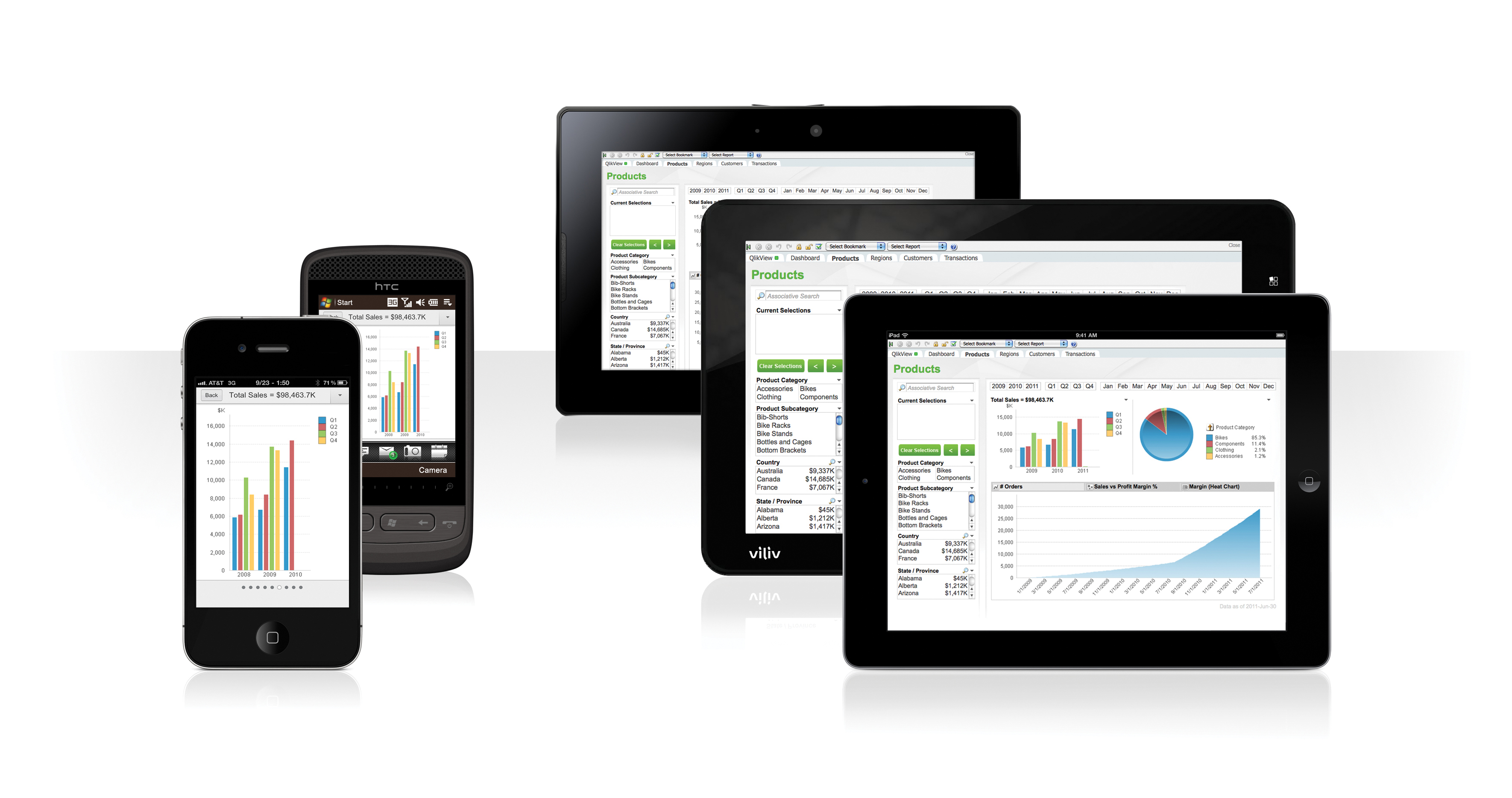
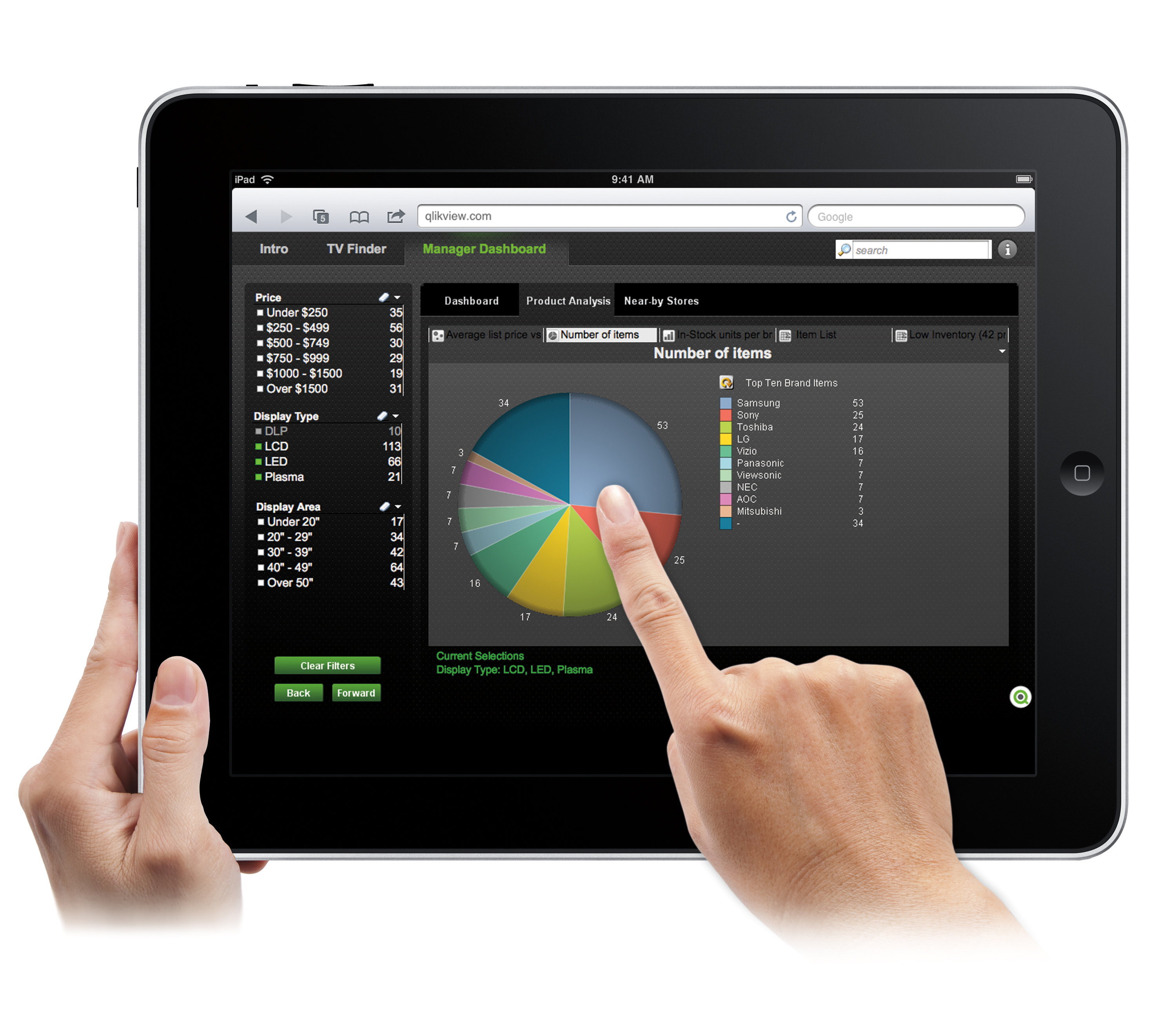
QlikView® is Qlik®’s original BI offering designed primarily for shared business intelligence reports and data visualizations. It offers guided exploration and discovery, collaborative analytics for sharing insight, and agile development and deployment.
N/A
Snowflake
Score 8.7 out of 10
N/A
The Snowflake Cloud Data Platform is the eponymous data warehouse with, from the company in San Mateo, a cloud and SQL based DW that aims to allow users to unify, integrate, analyze, and share previously siloed data in secure, governed, and compliant ways. With it, users can securely access the Data Cloud to share live data with customers and business partners, and connect with other organizations doing business as data consumers, data providers, and data service providers.
N/A
Pricing
Looker Studio
QlikView
Snowflake
Editions & Modules
Looker Studio Pro
$9
per month per user per project
Looker Studio
No charge
QlikView
Custom
per user
No answers on this topic
Offerings
Pricing Offerings
Looker Studio
QlikView
Snowflake
Free Trial
No
Yes
Yes
Free/Freemium Version
Yes
No
No
Premium Consulting/Integration Services
No
Yes
No
Entry-level Setup Fee
No setup fee
Optional
No setup fee
Additional Details
—
On an perpetual license basis, based on server plus number of users.
Contact vendor for pricing.
Google Data Studio is widely available and accessible, can be shared easily, and it only takes 20-30 min to build a rudimentary dashboard. It has very little setup and does not rely on internal data architecture and development. For later development purposes, Tableau, Power …
We selected Google Data Studio because it is easier to make connections with third-party data sources. Also Google Data Studio can understand connections between different tables and databases better that its competitors such as Power BI. Compared to Power BI you do not need to …
QlikView
No answer on this topic
Snowflake
Verified User
Analyst
Chose Snowflake
We needed scalability and a new way of organizing our data; Snowflake allowed us to have a clearer view of our data warehouses and schemas. Snowflake is also way superior in terms of speed and quick insights from the raw data you query, which is very valuable to us.
Visualizing cross-channel campaign performance can blend data from a few different sources to compare performance metrics like spend, clicks, and conversions side-by-side in a single view, which helps in quick budget reallocation decisions. When dealing with massive volumes of data (millions of rows) or highly complex queries, Looker Studio dashboards can become slow, laggy, or even crash. Performance issues are a frequent complaint when working with large datasets, making it unsuitable for enterprise-level companies
Sales data validations have helped manage our justifications in the past, especially with regard to new product development and new business introduction. It has also been helpful in identifying trends with business impact and direction specific to quarter and monthly sales from ERP data as well as decisions to purchase equipment of staffing based on run rates and product demand.
One thing that can get out of hand is data output - if you aren't careful in your query, you may be overloaded with data dumps and drown in the amount of info you have to filter through. This is a user caution, not a comment on the software itself.
Snowflake is well suited when you have to store your data and you want easy scalability and increase or decrease the storage per your requirement. You can also control the computing cost, and if your computing cost is less than or equal to 10% of your storage cost, then you don't have to pay for computing, which makes it cost-effective as well.
Breath of data - the number of ways to interrogate the data is endless, and the options to view metrics alongside each other make for comprehensive datasets.
Data visualisation and customisation - the options for presenting data and separating out across pages allow for clean visuals and segmented information.
Easy shareability/usability - a quick and simple tool to introduce colleagues to, and easy to grant access for them to be able to view the data, without having to understand the setup itself.
Snowflake scales appropriately allowing you to manage expense for peak and off peak times for pulling and data retrieval and data centric processing jobs
Snowflake offers a marketplace solution that allows you to sell and subscribe to different data sources
Snowflake manages concurrency better in our trials than other premium competitors
Snowflake has little to no setup and ramp up time
Snowflake offers online training for various employee types
It needs better handling of complex logic. We often need workarounds to perform complex custom calculations, and it can be really unpleasant at times.
Felt it got slow with a larger data set, and in one minor report, we had to set up time filters so that calculations during spikes could be traced more quickly.
Compare to competition they need to improve with notification things.
We found that QlikView can be a bit slow in supporting some forms of encryption. It is web-based and we needed to upgrade all of our server to not support the older SSL and TLS 1 protocols, only support TLS 1.2 and TLS 1.3. However, QlikView could not run with TLS 1.2 and TLS 1.3. We had to wait over six months to get a version that would handle the newer TLS versions.
There are so many options with QlikView that you can get lost when developing a visualization. There are still items I have not yet figured out, such as labeling a graph with the name of a selected detail item.
QlikView works by pulling the data it is going to use for visualization into its database. I am a security reviewer and I need to make certain that PII and PHI is not pulled by QlikView for a visualization, otherwise this could become a reportable indecent.
Do not force customers to renew for same or higher amount to avoid loosing unused credits. Already paid credits should not expire (at least within a reasonable time frame), independent of renewal deal size.
It is the simplest and least expensive way for us to automate our reporting at this time. I like the ability to customize literally everything about each report, and the ability to send out reports automatically in emails. The only issue we have been having recently is a technical glitch in the automatic email report. Sadly, there is almost no support for this tool from Google, but is also free, so that is important to take into consideration
Ease of use, ability to load from pretty much any data source. today I created an application that loaded time sheets from excel that are not in a table format. With Qlik's "enable transformation steps" I was able to automate loads of multiple spreadsheets and multiple tabs easily. Could not do that with any other tool.
SnowFlake is very cost effective and we also like the fact we can stop, start and spin up additional processing engines as we need to. We also like the fact that it's easy to connect our SQL IDEs to Snowflake and write our queries in the environment that we are used to
Looker Studio is easy to use, and it offers a sufficient variety of predefined visualizations to choose from. It's easy for us, and anyone can set up basic reporting without extensive data visualization skills. The interface layout is easy to understand, and it doesn't take long to get used to.
QlikView is very easy to implement. The installation is very straight forward. QlikView has several different data connectors that can connect to different data sources very smoothly. The user interface to build the reports is very easy to understand. This helps to have a smaller learning curve. Something very helpful is that QlikView is a browser application for the end users. So, you don't need to install any applications on the user's computer.
Because the fact that you can query tons of data in a few seconds is incredible, it also gives you a lot of functions to format and transform data right in your query, which is ideal when building data models in BI tools like Power BI, it is available as a connector in the most used BI tools worldwide.
I give it a lower support rating because it seems like our Dev team hasn't gotten the support they need to set up our database to connect. Seems like we hit a roadblock and the project got put on pause for dev. That sucks for me because it is harder to get the dev team to focus on it if they don't get the help they need to set it up.
My experience with the Qlik support team has been somewhat limited, but every interaction I have had with them has been very professional and I received a response quickly. Typically if there is a technical issue, our IT team will follow up. My inquiries are specific to product functionality, and Qlik has been very helpful in clarifying any questions I might have.
We have had terrific experiences with Snowflake support. They have drilled into queries and given us tremendous detail and helpful answers. In one case they even figured out how a particular product was interacting with Snowflake, via its queries, and gave us detail to go back to that product's vendor because the Snowflake support team identified a fault in its operation. We got it solved without lots of back-and-forth or finger-pointing because the Snowflake team gave such detailed information.
My team attended, but I cannot myself rate, but I think it was good as they've successfully launched a training program at our company themselves for users. It was 3-4 day training.
Training was as expected. The demo environments tend to be more fully featured that our own environment, but the training was clear and well delivered.
"Implementation" can mean a few things... so I'm not sure that this is the answer you want.... but here it goes: To me, implementation means: "Is the user interface intuitive and can I produce meaningful reports with ease?" On that score, I'd say YES. The amount of training required was minimal and the results were powerful. The desktop implementation is a simple, "blank" interface just waiting for your creativity. The pre-populated templates give you a reasonable start to any project -- and a good set of objects to "play around with" if you're just getting started. Finally, note that the "implementation" I used was baked into QuickBooks 2016 Enterprise -- called "Advanced Reporting"..... That integration makes it ultra useful and simple.
Looker Studio is far easier to implement, stand up, and learn. The interface is simpler and user-friendly for various levels of data visualization/analysis knowledge and experience. The biggest benefit of Looker Studio, however, is its ease of connection to GA data and speed. Furthermore, since it is an online program/tool, it requires less CPU/battery/storage on the user's device.
The only other vendor product that I have worked with that provides a similar experience to Qlikview is Tableau. I would recommend Tableau if your use case is to build a fixed dashboard. You can share reports for free without needing to buy additional licenses. I would recommend Qlikview if your users are looking for a more interactive experience. They can create new objects to represent the data which can't be accomplished as easily in Tableau
I have had the experience of using one more database management system at my previous workplace. What Snowflake provides is better user-friendly consoles, suggestions while writing a query, ease of access to connect to various BI platforms to analyze, [and a] more robust system to store a large amount of data. All these functionalities give the better edge to Snowflake.
You can use the free desktop version to do a lot of reporting and analysis work more quickly so the ROI is huge
QlikView is great at finding outliers such as data entry errors
QlikView is great at helping you quickly discover new insights about your business that can prompt you to take action that can immediately affect your cash flow.